
Choosing a 4 Axis Cnc Machining partner is about more than adding a rotary axis. Buyers need repeatable tolerances, capable inspection, clear lead times, and useful engineering support. A fourth axis can machine several faces in one setup. That may reduce repositioning, but it does not guarantee better parts. Tool access, fixturing, material, and operator skill still matter.
The market is expanding. Grand View Research estimated the global CNC machine market at USD 101.22 billion in 2023, with projected growth through 2030. Separately, the International Federation of Robotics reported 4.28 million industrial robots operating worldwide in 2023. These figures describe broader manufacturing trends, not four-axis machining alone. Still, they help explain why global buyers increasingly compare suppliers’ equipment, automation, and quality systems. Reports are useful. They are not factory audits.
Manufacturing-systems expert Dr. David Dornfeld’s work offers a practical reminder: machining performance depends on the whole process, not one machine feature. That distinction matters when assessing the 7 best 4 Axis CNC Machining companies for global buyers. This guide considers technical range, materials, inspection practices, communication, and delivery reliability. A polished website is not enough. Ask for sample inspection records, realistic tolerance guidance, and details about rotary-axis capacity. Then compare what each shop can demonstrate—not only what it promises.
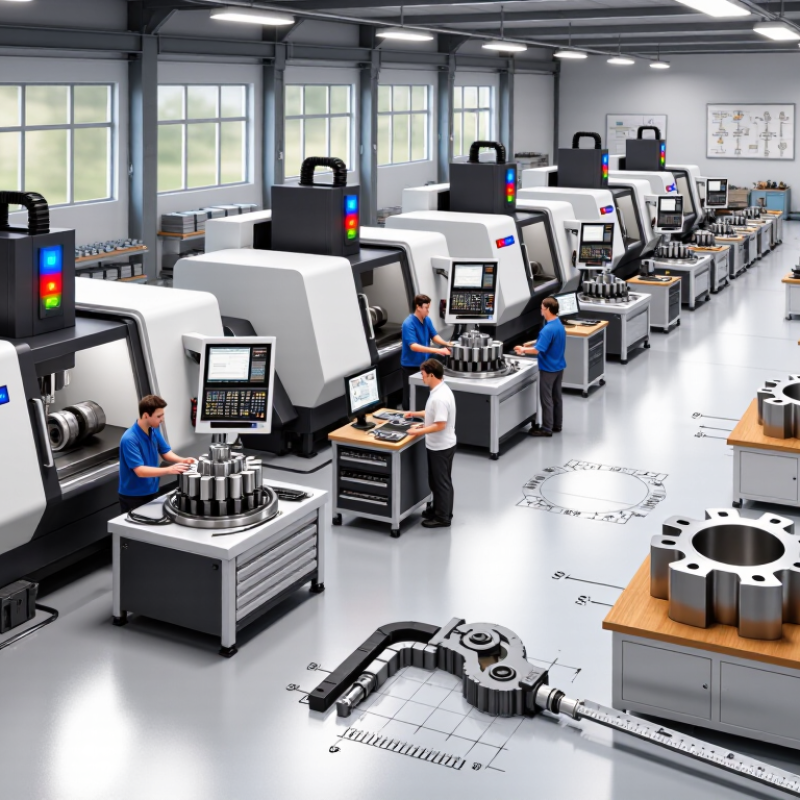
4-axis CNC machining adds a rotary axis to the familiar X, Y, and Z movements. On many machines, a rotary table turns the workpiece while the cutting tool moves across it. This lets the machine reach several sides of a part with fewer manual repositioning steps. Think of a compact aluminum housing with angled faces: the table can rotate it so the cutter reaches those faces in one setup. That matters. The rotary axis may operate in indexed positions or move continuously during cutting; the machine and job determine which method fits.
The process begins with a digital part model and toolpath planning. The operator secures the stock, selects cutting tools, and checks clearances around the rotating part. During indexed machining, the table pauses at set angles before cutting. In simultaneous machining, rotary movement coordinates with the other axes, which can create curved features and smoother transitions. Fewer setups can reduce alignment errors, but they do not guarantee accuracy. Tool deflection, vibration, workholding, and calibration still affect the result. A thin wall may flex under cutting forces, even on a capable machine.
Tips: Ask how the supplier verifies rotary-axis alignment and measures finished features. Share critical tolerances and surface-finish needs early. I would not assume every complex shape requires four axes; sometimes a simpler setup is more stable. Check sample inspection records, too. Small details count.
Evaluating a four-axis CNC machining company begins with the part, not the sales pitch. Check whether its rotary axis supports indexed positioning or continuous machining, then compare that capability with your drawing. Ask for the usable work envelope, typical tolerances, supported materials, and examples of similar geometries. A deep pocket beside a thin wall, for example, can reveal more than a general equipment list. Grand View Research estimated the global CNC machine market at US$101.22 billion in 2023, with projected annual growth of 6.3% from 2024 to 2030. That growth makes supplier choice more consequential, but market size alone says nothing about one shop’s quality.
Look for evidence: inspection equipment, calibration records, first-article reports, and a clear process for handling out-of-tolerance parts. For repeat orders, ask how revisions, tool wear, and measurement results are documented. Deloitte and the Manufacturing Institute estimated that 3.8 million U.S. manufacturing jobs could be needed between 2024 and 2033, with 1.9 million potentially unfilled. That workforce gap makes reliable process documentation worth checking, especially when experienced operators are involved. Still, a polished brochure proves little. Request a sample inspection report and ask how the shop measures a critical feature, such as a 0.02 mm bore tolerance. Compare quoted lead times against capacity and communication practices. One detail is easy to miss: a low unit price may exclude setup, finishing, or export packaging. Ask for those costs in writing.
Seven 4-Axis CNC Machining Companies for Global Buyers
Choosing among seven 4-axis CNC machining companies takes more than comparing hourly rates. A rotary axis lets a shop machine several faces without repeatedly repositioning the part. That can reduce setup time and alignment errors. Ask each supplier for its working envelope, supported materials, tolerance ranges, and inspection method. A sample inspection report is more useful than a broad promise of precision.
The market is expanding. Grand View Research valued the global CNC machine market at USD 83.99 billion in 2024 and projected a 5.5% compound annual growth rate from 2025 to 2030. Deloitte’s 2024 smart manufacturing survey found that 86% of manufacturing executives expected smart manufacturing to drive competitiveness within five years. These figures signal investment, not guaranteed supplier quality. Buyers should still check machine capacity, documented quality controls, and recent experience with comparable parts.
For a practical comparison, send all seven companies the same drawing and request quotes with material, finish, tolerance, lead time, and shipping assumptions clearly stated. Look for close-up evidence: probe records, deburring details, and how the shop protects finished surfaces. Ask who handles changes when a dimension proves difficult to hold. Not always an easy answer. A polished quotation can hide gaps, and even a capable shop may not suit every part. Check communication during the first order, then reassess.
For global buyers comparing seven 4-axis CNC machining companies, assess capability, industry fit, and service coverage together. A rotary axis can machine several faces in one setup, but advertised capacity means little without verified tolerances, workpiece limits, and inspection records. The Grand View Research CNC machine market report estimated a 2023 global market value of USD 101.22 billion and projected 9.3% annual growth through 2030. This signals a broad, expanding supplier landscape—not equal quality. Ask for sample inspection reports and confirm whether quoted accuracy applies to your material and part geometry.
Industry experience matters. Aerospace, medical equipment, automotive, and industrial machinery have different requirements for traceability, surface finish, and production volume. Deloitte and the Manufacturing Institute projected that up to 1.9 million U.S. manufacturing jobs could go unfilled by 2033. That workforce pressure makes responsive engineering support valuable, especially when a drawing needs revision or a production run changes. Check whether the supplier offers design-for-manufacturing feedback, material sourcing, finishing coordination, and clear escalation contacts. A capability sheet alone is not proof; buyers should verify details, even when the supplier sounds confident.
Tips: Send a representative drawing and request a documented quote covering tolerances, lead time, inspection method, packaging, and shipping responsibility. Confirm service coverage by destination, not just sales-office location. Ask how nonconforming parts are handled. Small details count. A weak point in this comparison is that online claims rarely reveal real queue times, so request a recent, anonymized delivery example.
For global buyers, comparing four-axis CNC suppliers means looking beyond hourly rates. Ask for a recent sample inspection report, material certificates, and a setup sheet showing how the part was fixtured. A supplier may achieve tight tolerances on a simple aluminum bracket yet struggle with a deep pocket or a cross-drilled feature. Request evidence tied to your drawing, not a generic capability list. McKinsey’s 2020 supply-chain analysis estimated that disruptions lasting a month or longer occur every 3.7 years on average. That makes backup capacity and documented process controls practical sourcing criteria.
The World Bank’s 2023 Logistics Performance Index assessed 139 economies across customs, infrastructure, shipment tracking, and timeliness. Use those measures to compare delivery risk, but check the actual route: port distance, consolidation schedules, and customs paperwork can change lead times. Compare suppliers using the same RFQ, material grade, tolerance notes, inspection plan, and packaging requirements. Then evaluate landed cost and response speed—not just quoted cycle time. A neat audit file helps, but it cannot guarantee every batch will match.
Tips: Send one representative part for a paid trial run. Check datum consistency, burrs around intersecting holes, and measured dimensions after finishing. Ask who approves deviations and how quickly corrective actions are documented. Small gaps matter. A supplier’s answers may reveal more than its brochure.
Common configurations combine three linear axes with zero, one, or two rotary axes. When comparing suppliers, confirm the machine’s actual axis arrangement and whether the rotary axis can operate simultaneously with the linear axes.
It adds a rotary movement to the usual X, Y, and Z axes. A rotary table can turn a part so the cutter reaches several sides. That helps.
With indexed machining, the table stops at selected angles before cutting. In simultaneous machining, rotary movement coordinates with the other axes. It can shape curves smoothly.
No. Fewer setups can reduce alignment errors, but vibration, tool deflection, and calibration still matter. A thin wall may flex during cutting. Not always.
Ask about its work envelope, materials, tolerance range, and rotary-axis alignment checks. Request an inspection report showing how it measures a critical bore or angled face.
Review calibration records, first-article reports, and procedures for out-of-tolerance parts. Ask how the shop records revisions and tool wear. Small details count.
Send each supplier the same drawing and specify material, finish, tolerances, and delivery needs. Confirm whether setup, finishing, and packaging are included in writing.
A compact housing with angled faces may benefit from fewer repositioning steps. But I would not assume every complex shape needs four axes; a simpler setup may be more stable.
Notice how quickly the shop answers questions and handles difficult dimensions. Check deburring and surface protection on the delivered part. I may be overvaluing smooth communication, so inspect the work too.
This article explains how 4 Axis Cnc Machining works and why adding a rotary axis can help manufacturers machine multiple sides of a part with fewer setups. It outlines the main factors global buyers can use to assess machining suppliers, including equipment and technical capabilities, quality control, material experience, communication, lead times, and production flexibility.
The article then compares seven types of 4-axis machining providers by their capabilities, industries served, and service coverage, helping readers understand how supplier strengths may differ. It also discusses practical considerations for international sourcing, such as reviewing sample parts, confirming specifications and inspection requirements, comparing quotations on an equal basis, and evaluating shipping timelines and ongoing support. Together, these points offer buyers a clear framework for narrowing their options and selecting a supplier suited to their project needs.
