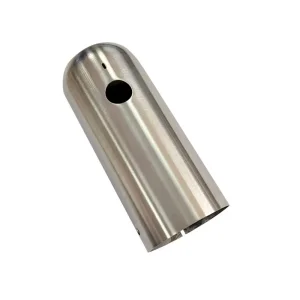
High-Quality Precision Knurled Brass Threaded Connector for Industrial Hubs
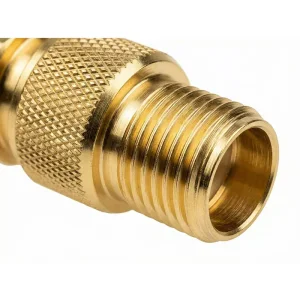
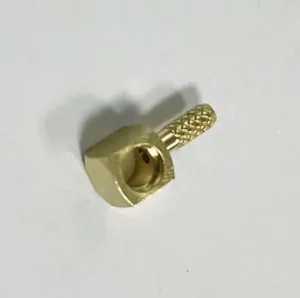
Turned C3604/C3602 lead-free brass with diamond knurl geometry, holding micro-bore coaxiality for high-reliability electrical grounding terminals.
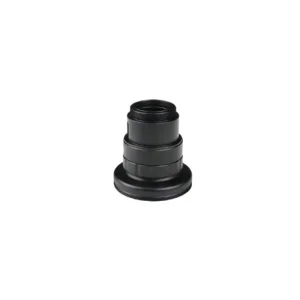
Directly exported to machine integrators, fluid automation developers, and optoelectronic manufacturers in Tokyo, Kanagawa, Aichi, and Osaka. Fully certified with JIS-compliant dimensional inspection and PPAP Level 3 readiness.
Turned C3604/C3602 lead-free brass with diamond knurl geometry, holding micro-bore coaxiality for high-reliability electrical grounding terminals.
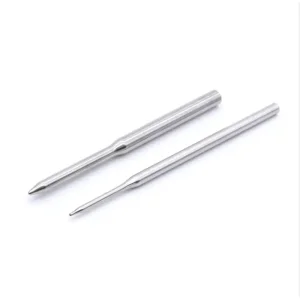
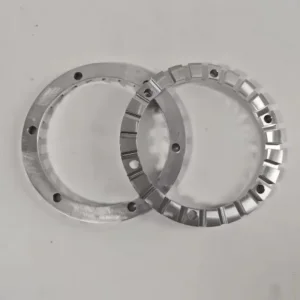
Thin-wall 6061-T6 aluminum with zero-reflection matte black anodizing, machined for machine-vision sensors and semiconductor inspection optics.
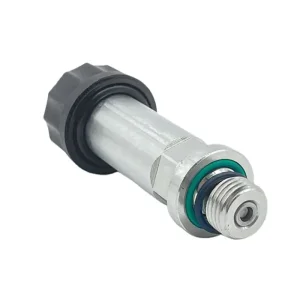
SUS316L Swiss-lathe turned probe bodies with high-integrity pressure resistance, hermetic seal threading, and Ra ≤ 0.4 μm internal finishes.
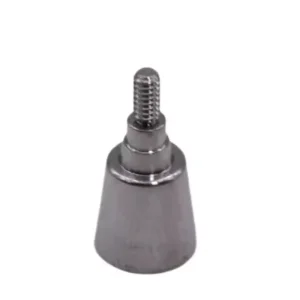
Hardened 12L14 and 4140 chrome-moly hydraulic spools ground and turned to ±0.003 mm cylindrical tolerance to eliminate fluid bypass.
Japan's industrial economy stands at a defining historical inflection point. Long celebrated globally for its uncompromising Monozukuri (the ethos of technical craftsmanship and manufacturing perfection), the domestic precision machining landscape is confronting unprecedented demographic and systemic shifts. As the domestic precision manufacturing workforce ages and small-to-medium specialized machine shops (Machikoba) in industrial clusters like Ota-ku (Tokyo) and Higashi-Osaka face generational succession challenges, Japan's leading Original Equipment Manufacturers (OEMs) are re-engineering their procurement supply chains.
Traditional Tier-1 Japanese procurement relied exclusively on insular, domestic Keiretsu vendor ecosystems. Today, Tier-1 automotive and mechatronics conglomerates in Nagoya, Shizuoka, and Saitama are deliberately diversifying with qualified, agile international turned parts exporters. The driver is clear: securing supply continuity without sacrificing the ultra-stringent process repeatability traditionally expected from domestic machinists.
With Japan's aggressive resurgence in domestic semiconductor foundries—bolstered by nationwide foundry initiatives in Kumamoto (JASM) and Hokkaido (Rapidus)—the demand for micro-turned cleanroom gas valves, fluoro-elastomer sealing gland rings, and ultra-high purity stainless steel fluid connectors has outstripped domestic turning capacity by over 28% year-over-year.
Japan remains the undisputed global capital of precision industrial robotics, housing world leaders such as Fanuc, Yaskawa, and Kawasaki. The rapid transition toward compact collaborative robots (cobots) and electric vehicle drivetrains requires micro-turned shafts, planetary sun gears, and splined armature pins engineered with zero-backlash concentricity and ultra-low noise surface profiles.
Across European, North American, and East Asian production corridors, the precision turned parts sector has transitioned from conventional manual lathe operations to fully integrated multi-spindle Swiss-type CNC turn-mill machining centers. The contemporary export landscape demands not merely raw metal removal, but complete digital lifecycle governance from First Article Inspection (FAI) reports to real-time Statistical Process Control (SPC).
Modern Swiss turning setups now integrate contact probing and high-speed optical vision micrometers directly on the tool turret. By feeding dimensional drift data back into the CNC Fanuc or Siemens controller in real-time, tool-wear thermal expansion is automatically compensated before parts deviate past the ±0.005 mm envelope.
Machining difficult materials such as SUS316L, Titanium Ti-6Al-4V ELI, and Inconel 718 produces severe work hardening and thermal strain. By employing Minimum Quantity Lubrication (MQL) and supercritical liquid CO2 cutting assist, tool edge life is extended by 300% while achieving optical mirror surface finishes of Ra ≤ 0.2 μm without secondary buffing.
Our precision turned components are deployed directly into Japanese supply chains, serving critical sub-assemblies where mechanical failure is intolerable. Below are four key domestic application corridors where our engineering teams provide drop-in interchangeability.
Multi-axis articulated arms require ultra-precise planetary pins, needle bearing shafts, and flexspline retaining hubs turned from carburized SCM415/SCM420 chromium-molybdenum alloy steel with concentricity under 0.004 mm.
Ultra-pure gas (UHP) manifolds manufactured in vacuum arc remelt (VAR) SUS316L. Complex internal passages feature electrochemical polishing, meeting Japanese Semi Standard F19 specifications for toxic silane gas delivery.
Liquid-cooled busbar pins, fast-charging connector inserts, and hydraulic brake actuator spool valves. Turned in high-conductivity tellurium copper (C14500) and hard-anodized aluminum with micro-grooving for sealing O-rings.
Micro-turned SUS304 and titanium cannulas, distal tip articulating bushings, and orthodontic anchor screws. Diameters range down to 0.4 mm with wall thicknesses held to 0.05 mm, fully certified biocompatible.
Japanese procurement officers enforce the world's most exacting quality compliance audits. We bridge cross-border manufacturing gaps by applying strict Japanese Industrial Standards (JIS) alongside ISO 9001:2015 frameworks, verifying every production run using Zeiss CMM, Keyence optical comparators, and Mitutoyo surface roughness testers.
| Dimensional Feature | Achievable Tolerance | Standard Material Grades | Inspection Technology Employed | Japanese Standard Equivalent |
|---|---|---|---|---|
| Outer Diameter (OD Turning) | ±0.003 mm (±3 μm) | SUS303, SUS304, SUS316L, 12L14, S45C | Keyence IM-8000 Flash System / Mitutoyo Laser Micrometer | JIS B 0401 (IT5 - IT6 Grade) |
| Bore / Inner Diameter (ID) | ±0.005 mm (±5 μm) | A5052, A6061-T6, A7075, C3604 Brass | Air Gaging / Zeiss Contura 3D CMM with Scanning Head | JIS B 0401 (H6 - H7 Fit) |
| Thread Pitch & Concentricity | Class 4h / 6g Precision | Titanium Gr. 5, SCM440, Stainless Steel | Optical Thread Comparator & Automated Go/No-Go Gauges | JIS B 0205 Metric Coarse / Fine |
| Surface Roughness (Ra) | Ra 0.2 μm - Ra 0.8 μm | Hardened Tool Steels (SKD11, SUJ2 Bearing Steel) | Mitutoyo Surftest SJ-410 Diamond Stylus Profilometer | JIS B 0601 Surface Texture |
| Cylindricity & Runout | ≤ 0.004 mm Total Indicator Reading | Oxygen-Free Copper (C1020), Brass, POM, PEEK | Roundtest Extreme Cylindricity Analyzer | JIS B 0021 Geometrical Tolerancing |
Every shipment destined for Japanese industrial ports (Tokyo, Yokohama, Nagoya, Kobe) is supplied with complete inspection dossiers: Mill Test Certificates (MTC with spectroscopic chemical breakdown), First Article Inspection Reports (FAIR according to AS9102 / JIS Q 9100 templates), Salt-spray corrosion test logs, and RoHS/REACH SVHC non-use warranties.
To maintain sustainable competitive advantage for Japanese clients facing escalating global cost pressures, our engineering facilities operate along a structured R&D modernization roadmap.
Integration of robotic bar loading, broken-tool acoustic laser monitoring, and 48-hour continuous unmanned turning cells for high-volume automotive and consumer connector programs.
Deployment of specialized ultra-high frequency spindles and vibration-assisted turning (VAT) designed specifically for minimally invasive medical robotics and neuro-vascular catheter tips.
Virtual toolpath emulation matching real-time cutting forces to predict microscopic thermal deformation, reducing physical trial runs to zero for complex multi-axis turn-mill geometries.
Full lifecycle Product Carbon Footprint (PCF) declaration per turned part batch, utilizing 100% recycled certified titanium and solar-powered machining lines matching Japan's 2050 Green Transformation (GX).
Engaging with an overseas precision turned parts manufacturer should never introduce friction. We address the primary pain points Japanese procurement teams encounter when evaluating overseas tier suppliers.
Direct non-disclosure agreements executed under Japanese or international law prior to CAD/STEP drawing transfer. Drawings remain restricted to encrypted engineering servers with strict zero-leakage access controls.
Consignment inventory and safety stock buffering for ongoing programs. Ocean freight from Shenzhen/Hong Kong to Tokyo or Osaka takes just 4 to 5 days, with critical prototype lots delivered via air express in under 48 hours.
Our senior machining engineers analyze part designs to eliminate unnecessary tool changes, optimize radii to match standard Japanese lathe inserts, and minimize cycle times to deliver up to 30% cost savings at volume.
Clear, definitive answers to the commercial, technical, and regulatory questions most frequently posed by Japanese engineering departments and trading companies.
Explore the remaining high-precision turned parts portfolio actively exported to aerospace, optoelectronic, semiconductor, and medical device manufacturers throughout Japan.
Turned 6061-T6 and 7075 aluminum alloy sealing rings with Class 100 cleanroom cleaning, tight concentricity, and hard anodized corrosion barrier.
Medical Grade 5 (Ti-6Al-4V ELI) Swiss turned prosthetic connectors with hexalobular drive geometry and precision biocompatible surface passivations.
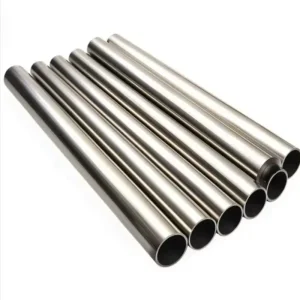
Cold-drawn and Swiss-turned SUS304/SUS316L miniature capillary sleeves with ultra-thin walls and Ra ≤ 0.2 μm mirror bore finish.
Lead-free brass knurled pins turned for ultrasonic or heat-staking into thermoplastic automotive housings, offering exceptional pull-out torque resistance.
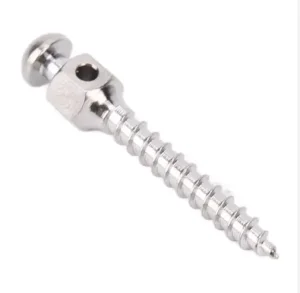
Sub-millimeter micro-turned medical screws with custom self-tapping thread profiles, burr-free microscopic inspection, and ultrasonic degreasing.
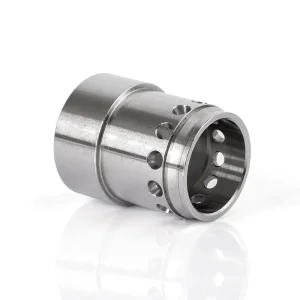
Industrial SUS316 precision sleeves with cross-drilled micro-perforations, chamfered retaining shoulders, and high pressure hydraulic durability.
Turn-milled multi-orifice stainless sleeves holding zero burr tolerances on intersecting oil holes for high-precision proportional hydraulic valves.
Ultra-smooth SUS304 guide bushings turned for laboratory centrifuges, diagnostic imaging equipment, and articulating surgical instruments.