
Precision Turned Assemblies for Key Pakistani Industries
Engineered for mission-critical integration in Pakistani automotive vendor networks, pump assemblies, high-pressure fluid valves, and optical measurement equipment.
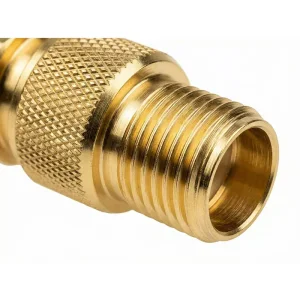
High-Quality Precision Knurled Brass Threaded Connector
Diamond/straight knurled inserts optimized for ultrasonic plastic mounting, electrical terminals, and gas appliance fixtures across Pakistan manufacturing plants.
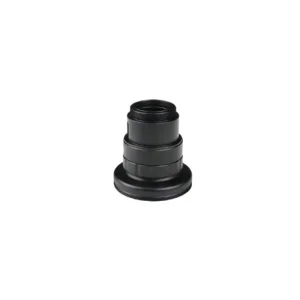
OEM CNC Turned Black Anodized Aluminum Lens Barrel & Housing
Tight concentricity (<0.008 mm) optical housings with MIL-A-8625 Type II anodizing, engineered for surveillance optics and precision lab equipment.
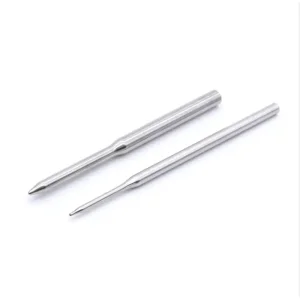
Stainless Steel Waterproof Sensor Probe Housing / Thermowell
AISI 304/316L deep-hole drilled thermowell enclosures resistant to extreme thermal cycles in Pakistani textile boilers, chemicals, and power stations.
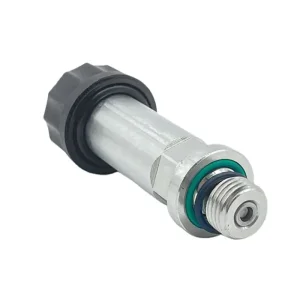
High-Performance Hydraulic Solenoid Valve Core for Machinery
Micro-finished valve spools ground and hardened to 58-62 HRC, providing zero-leakage fluid actuation in earthmoving machinery and agricultural tractors.
Precision Turned Parts Landscape in Pakistan: Modernizing the Manufacturing Base
A comprehensive assessment of localized engineering requirements, bilateral trade corridors, and modern multi-axis turning infrastructure.
Pakistan's manufacturing sector is undergoing an aggressive technical transition. Spearheaded by the China-Pakistan Economic Corridor (CPEC Phase II) and the establishment of dedicated Special Economic Zones (SEZs) like Allama Iqbal Industrial City in Faisalabad, Dhabeji in Sindh, and Rashakai in Khyber Pakhtunkhwa, domestic original equipment manufacturers (OEMs) are pivoting from low-complexity manual fabrication toward high-precision component procurement. Precision turned parts—cylindrical metal or polymer components produced via multi-axis CNC Swiss lathes, turning centers, and multi-spindle automatic screw machines—represent the foundational baseline for this modernization.
Historically, regional industrial clusters across Pakistan have developed distinct specializations. Sialkot has gained global recognition for surgical instrument forging and medical device manufacturing; Karachi houses the nucleus of automotive tier-one assemblies, heavy defense production, and marine equipment; the Lahore-Gujranwala-Sialkot triangle anchors auto-parts fabrication, pump manufacturing, and sanitary hardware; while Faisalabad powers the country's textile machinery infrastructure. However, domestic manufacturers consistently encounter critical capacity ceilings: limited multi-axis CNC machinery, scarce multi-spindle Swiss lathes, fluctuating domestic metallurgical raw material purity, and the absence of sub-micron coordinate measuring metrology (CMM).
Resolving Domestic Production Bottlenecks in Pakistani Machining
To remain competitive against high-throughput international exporters, Pakistani OEMs cannot afford downtime, fluid leakage, or dimensional stacking variances caused by parts turned on conventional manual center lathes. A hydraulic valve spool, a titanium orthopedic bone screw, or a high-pressure diesel injection nozzle cannot tolerate roundness deviations exceeding 3 microns. By integrating Shenzhen Sunmy Hardware's direct CNC manufacturing capabilities, engineering buyers across Pakistan bypass the immense capital expenditure of multi-million-dollar Swiss-lathe machine acquisition, tooling depreciation, and complex CAM programming, securing aerospace-grade cylindrical turn-mill parts delivered directly to Pakistani dry ports and airports.
Surgical & Medical Hardware (Sialkot)
Multi-axis Swiss turning of Grade 5 Titanium (Ti-6Al-4V ELI) and AISI 316L/420 surgical stainless steel for orthopedic bone anchors, dental implant abutments, and endoscopic guide sleeves.
Automotive OEM Supply Chains (Karachi & Lahore)
High-volume turned transmission pins, precision brass fuel valve inserts, brake fluid bleeders, and steering linkage shafts meeting stringent automotive PPAP Level 3 criteria.
Textile Machinery & Fluid Pumps (Faisalabad & Multan)
Dynamically balanced high-speed spinning spindles, ceramic-coated yarn guides, wear-resistant hydraulic spool shafts, and precision brass rotary joints for continuous operation.
Global Technological Benchmarks: Swiss Lathe vs. Conventional CNC Turning
Understanding the engineering paradigm shifts driving international precision cylindrical manufacturing.
In the global precision manufacturing arena, the distinction between standard CNC turning centers and Swiss-type automatic sliding headstock lathes defines component performance. Conventional CNC turning grips the raw stock in a chuck while the cutting tool traverses the Z-axis, creating significant deflection when the workpiece length-to-diameter ratio exceeds 3:1. This deflection results in barrel taper, chatter marks, and inconsistent thread geometry—a common defect in locally sourced parts in developing manufacturing markets.
Conversely, Swiss-type CNC turning guides the bar stock through a carbide guide bushing, with the cutting tool operating millimeters from the support point. This ensures zero workpiece deflection regardless of length, enabling micro-machined parts with length-to-diameter ratios of 20:1 or higher. Features like longitudinal micro-slots, cross-drilled radial oil ports, eccentric milling, and single-point threading are executed in a single synchronized setup, eliminating cumulative fixture stack-up errors.
| Engineering Attribute | Standard Conventional CNC Turning | Advanced Swiss-Type CNC Turning (Sunmy Hardware) | Operational Impact for Pakistani OEMs |
|---|---|---|---|
| Dimensional Tolerance | ±0.025 mm to ±0.050 mm | ±0.005 mm (±0.002 mm upon DFM confirmation) | Eliminates assembly interference in tight hydraulic sleeves & gearboxes. |
| Length-to-Diameter (L/D) Ratio | Limited to 3:1 without tailstock/steady rest | Up to 30:1 supported by sliding guide bushing | Enables long, slender sensor probes, spindles, and medical needles. |
| Surface Roughness (Ra) | Ra 0.8 μm – 1.6 μm (requires post-grinding) | Ra 0.2 μm – 0.4 μm (direct machine turn finish) | Direct metal-to-metal sealing; removes costly secondary polishing. |
| Multi-Process Integration | Separate setups for turning, milling, and drilling | One-setup turn-mill with live Y-axis tooling & sub-spindle | Guarantees exact radial-to-axial concentricity (<0.005 mm runout). |
| Material Versatility | Standard low-carbon steels, aluminum alloys | Titanium Gr. 5, Inconel 718, 316L, 17-4PH, PEEK, Delrin | Supports surgical biocompatibility and high-corrosive chemical handling. |
Through our climate-controlled Shenzhen facility, Sunmy Hardware bridges this technology gap for Pakistani engineering enterprises. We leverage Swiss CNC lathes equipped with high-pressure coolant delivery systems (up to 140 bar) to evacuate micro-chips, prevent thermal workpiece distortion, and achieve flawless optical finishes without manual secondary intervention.
Localized Macro Solutions: Solving Pakistan's Precision Engineering Challenges
Targeted manufacturing strategies engineered to satisfy Pakistan's industrial operating conditions.
1. Supply Chain Resilience & Metallurgical Integrity
One of the primary challenges faced by automotive sub-contractors in Karachi and surgical tool exporters in Sialkot is the batch-to-batch chemical inconsistency of local billet scrap. Non-metallic inclusions and chemical segregation lead to tool breakage, cracking during heat treatment, and premature fatigue failure. Sunmy Hardware utilizes prime-melt certified bars certified to EN 10204 3.1 standards. Every shipment sent to Pakistan includes complete spectroscopic chemical breakdown certificates and mechanical tensile test reports, ensuring our clients pass stringent customer quality audits.
2. Complete DFM (Design for Manufacturability) Protocols
Before metal chips are cut, our senior applications engineers review client CAD models (STEP, IGES, SolidWorks) and 2D blueprints. We assist Pakistani engineering teams in optimizing Geometric Dimensioning and Tolerancing (GD&T), recommending standardized thread relief grooves, eliminating sharp internal radii that cause stress concentrations, and specifying cost-effective raw material equivalents (such as matching GB brass grades to JIS C3604 or ASTM C36000).
3. Environmental Packaging for Monsoonal and Maritime Transit
Goods shipped from southern China to Karachi Port (Qasim or KICT) or routed via air cargo to Lahore (Allama Iqbal International Airport) face significant humidity fluctuations and corrosive marine saline air. To prevent surface oxidation on non-passivated carbon steel and raw brass turned components, Sunmy Hardware implements multi-stage preservation: automated ultrasonic hydrocarbon washing, dewatering rust-preventative oil immersion, individual vacuum sealing in anti-static VCI (Vapor Corrosion Inhibitor) bags, and desiccated inner boxing wrapped in reinforced export cartons.
Technological Roadmap & Future Outlook: Advanced Turning Solutions (2025–2035)
Empowering the next industrial decade through automation, micro-machining, and closed-loop smart metrology.
The global precision turned parts sector is rapidly evolving toward zero-defect, automated manufacturing frameworks. For forward-thinking industrial players in Pakistan, aligning with an international manufacturing partner requires looking beyond basic single-spindle capabilities. Here is the operational roadmap defining our advanced precision turned parts pipeline:
Micro-Machining & Miniaturization
Advancing multi-axis turning down to sub-millimeter component diameters (Ø0.3 mm to 3.0 mm) with internal micro-threading (M0.8 - M1.6), unlocking high-density electronics and neurosurgical implants.
Closed-Loop Optical Metrology
In-process laser touch-probing coupled with automated machine-offset compensation, eliminating thermal drift during prolonged production shifts and stabilizing process capability indices (Cpk > 1.67).
Sustainable Precision Manufacturing
High-efficiency MQL (Minimum Quantity Lubrication), real-time swarf segregation for closed-loop brass/titanium briquetting, and solar-supported facility operations meeting global carbon export mandates.
As Pakistan transitions toward local assembling of high-tier consumer electronics, EV battery enclosures, and precision agritech equipment under national industrial transformation agendas, Sunmy Hardware provides the responsive, agile manufacturing backbone needed to scale from prototype verification to millions of turned units annually.
Engineered Precision Components Catalog for Pakistan
Explore our extensive portfolio of Swiss-turned and mill-turned components manufactured to international ASTM, DIN, and ISO standards.
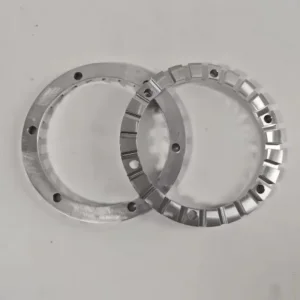
Custom CNC Machined Anodized Sealing Rings
Ultra-flat aluminum & fluoropolymer sealing rings with sub-micron radial flatness for laboratory vacuum enclosures and chemical processing apparatus.
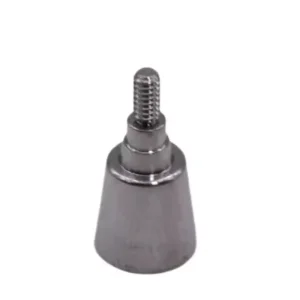
Turned Titanium Abutment Implant Driver & Connector
Medical-grade Grade 5 ELI titanium prosthetic driver with precise hex engagement, tailored for Sialkot dental instrument suppliers.
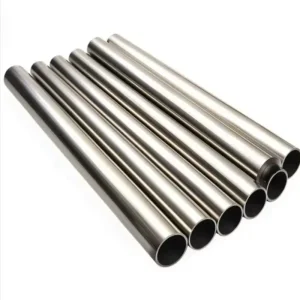
Custom Precision Capillary Stainless Steel Pipe / Tube (OD 1-8mm)
Burr-free cut and polished capillary tubes with tight wall thickness tolerance (±0.01 mm) for pressure sensor nozzles and surgical syringes.
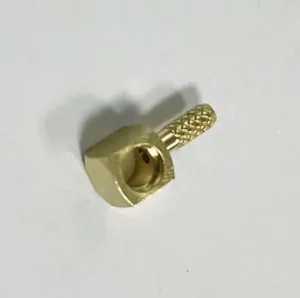
CNC Machining Brass Insert Connector with Knurled Pin
High-conductivity copper-zinc alloy terminal pins featuring spiral knurling for insert molding into automotive fuse boxes and electrical switchgear.
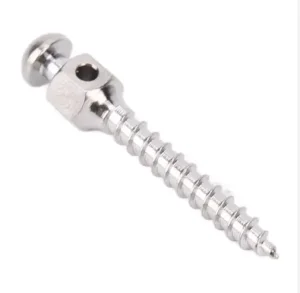
Precision Titanium Orthodontic Micro Implant Screws
Self-tapping micro-threads with electrochemical passivated finish, engineered for cranial, maxillofacial, and orthodontic clinical anchorage.
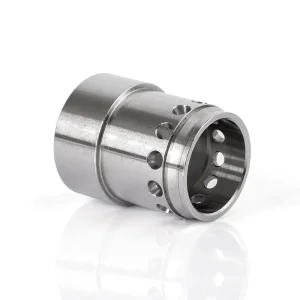
CNC Precision Turned Stainless Steel Filter Sleeve
Heavy-duty industrial grade perforated core sleeves with CNC-turned end flanges for chemical gas scrubbing and heavy fuel filtration.
Stainless Steel Drilled Filter Sleeve & Flow Control Valve Component
Radial array multi-hole drilled valve cylinder components providing laminar hydraulic flow regulation in agricultural irrigation and plant valves.
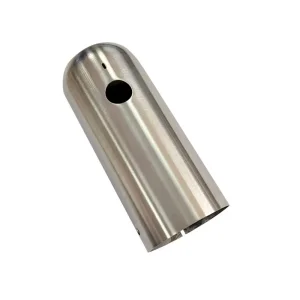
Precision CNC Turned Medical Sleeve Bushing
Low-friction polished concentric bushings with mirror-like internal bore micro-finish, designed for diagnostic centrifuges and surgical articulated arms.
Pakistan Import Compliance, Shipping & Preferential Tariffs (CPFTA)
Streamlined logistics routes and documented compliance for Pakistani purchasing managers.
Importing custom manufactured metal parts into Pakistan requires strict adherence to customs regulations, tariff classifications, and trade agreements. Under the China-Pakistan Free Trade Agreement (CPFTA Phase II), a wide spectrum of precision CNC turned parts and sub-assemblies qualify for preferential duty reductions or zero-tariff entry upon provision of an authentic Certificate of Origin (Form E) issued directly by Chinese customs authorities.
CPFTA Form E Documentation
We furnish genuine Form E certificates verifying origin, enabling Pakistani importers to claim concessionary customs tariffs under bilateral trade schedules.
Flexible Multi-Modal Shipping
From rapid DHL/FedEx courier services for FAI prototypes (3-5 days delivery to Lahore/Karachi) to consolidated LCL/FCL ocean freight into Karachi Port (14-20 days transit time).
Commercial Invoicing & HS Codes
Full harmonization of Pakistani Customs tariff codes (HS 8481, HS 7318, HS 7415, HS 9018) ensuring immediate clearance without regulatory demurrage holds.
Frequently Asked Questions: Sourcing Turned Parts for Pakistan
Detailed engineering and commercial answers to resolve cross-border procurement concerns.
What tolerances can Sunmy Hardware hold on turned parts shipped to Pakistan?
For Swiss lathe and multi-axis turning projects, we regularly hold ±0.005 mm on critical outside and inside diameters. On specialized ground surfaces or tight medical pins, tolerances down to ±0.002 mm can be achieved subject to engineering DFM review. Every batch is validated on our in-house Zeiss CMM.
Can you provide Form E for customs duty exemption under CPFTA?
Yes. As a registered Chinese manufacturer, Shenzhen Sunmy Hardware prepares and issues the Certificate of Origin (Form E) directly under the China-Pakistan Free Trade Agreement. This document enables your clearance broker at Karachi Port or regional dry ports to access reduced tariff rates.
How do you verify material grades (e.g., Titanium Gr. 5 or AISI 316L)?
All raw round bars are sourced from audited mill vendors with batch-traceable EN 10204 3.1 inspection certificates. In addition, we execute internal optical emission spectrometry tests to verify elemental composition prior to loading bars onto automatic bar feeders.
What is your minimum order quantity (MOQ) for custom prototypes?
We support prototype development without prohibitive MOQs. You can order as few as 10 to 50 pieces for First Article Inspection (FAI) testing. Once your R&D engineering team signs off on the FAI report, we transition into volume runs ranging from 10,000 to over 500,000 pieces per year.
How are parts protected against corrosion during ocean shipping to Karachi?
Every turned part undergoes multi-stage ultrasonic degreasing, clean deionized water rinsing, and hot air drying. Carbon and alloy steels receive an environmentally safe solvent-based rust preventative film, followed by individual or bulk packaging within sealed heavy-duty VCI barrier bags with desiccants.
What payment methods do you accept from Pakistani commercial entities?
We offer flexible commercial arrangements including Telegraphic Transfer (T/T) and confirmed, irrevocable Letters of Credit (L/C at sight) opened through reputable international banking channels to accommodate State Bank of Pakistan (SBP) foreign exchange guidelines.