
High-Precision Turned Solutions for Mission-Critical U.S. Assemblies
Engineered for complex dimensional envelopes requiring dual-spindle live tooling, rigorous thread concentricity, and defect-free surface morphology.
Commercial Dynamics of the U.S. Precision Turned Parts Market
A rigorous examination of macro demand vectors, reshoring pressures, capacity deficits, and technological transformation across North American industrial corridors.
1. The Re-Industrialization Landscape: Reshoring vs. Supply Chain Fragility
The manufacturing ecosystem for precision turned parts in the United States is currently experiencing an epochal recalibration. Catalyzed by the CHIPS and Science Act, the Inflation Reduction Act (IRA), and stringent Department of Defense procurement directives (such as DFARS compliant tracking), American industrial procurement officers are systematically restructuring their tier-structured supplier networks. For decades, screw machining and precision rotary fabrication relied either on domestic Job Shops across the Rust Belt and Midwest or on unvetted offshore brokers. Today, supply chain risk management has surpassed initial piece-part pricing as the premier evaluation criterion for procurement directors in Michigan, Ohio, Indiana, Texas, and California.
However, reshoring initiatives encounter deep operational headwinds within the domestic market. The American precision machining sector faces a structural shortage of seasoned CNC setup technicians, multi-axis programmers, and metrologists capable of managing modern multi-channel Swiss-type lathes. According to the National Tooling and Machining Association (NTMA) and industry labor statistics, over 30% of skilled setup operators are approaching retirement age without an equivalent influx of apprentices. Consequently, domestic machine shops across New England, the Great Lakes, and the Sun Belt frequently encounter lead times stretching from 16 to 24 weeks for complex, high-mix turn-mill fabrications. This capacity shortfall creates significant production bottlenecks for tier-1 suppliers serving Boeing, Caterpillar, General Electric, Raytheon, and Medtronic.
2. Strategic Hybrid Procurement: The Modern American Enterprise Model
To circumvent lead-time inflation without sacrificing geometric rigor, leading U.S. enterprises have pioneered a "Bimodal Global Sourcing Architecture." In this paradigm, pilot engineering, rapid prototyping, and emergency line-down revisions are maintained with domestic regional partners, while serialized production runs (from 2,500 to 500,000 units annually) are allocated to vetted global production hubs possessing enterprise-level automated multi-axis capacity. Sunmy Hardware functions directly within this strategic synthesis, providing American industrial buyers with direct-to-factory engineering dialogues, turnkey AS9102 First Article Inspection reports, material heat-lot traceability, and rigorous compliance with ASTM, AISI, and DIN standards.
Through direct engineering engagement devoid of intermediary trading brokerages, procurement departments neutralize the classic pain points of cross-border manufacturing: miscommunicated geometric dimensioning and tolerancing (GD&T) standards, hidden secondary finishing charges, and opaque quality audits. Our direct model guarantees that 2D engineering drawings, STEP files, and material specification sheets interface directly with CAM programming teams using hyperMill and Mastercam, securing zero-deviation component delivery to U.S. ports and assembly floors.
Aerospace & Defense
AS9100 standard processes for extreme-environment flight hardware: Inconel 718 turbine fuel nozzles, titanium structural standoffs, and high-precision avionics connector shells with tight concentricity tolerances.
Medical Technology
ISO 13485 compliant manufacturing of bio-compatible surgical implants, surgical robotics drive components, 316L endoscopic cannulas, and Grade 5 Ti-6Al-4V ELI dental implant abutments.
Semiconductor & Optoelectronics
Ultra-high purity (UHP) gas delivery valve seats, vacuum chambers, PEEK and Teflon insulators, optical sensor housings, and precision drilled flow control sleeves for wafer fabrication tools.
Engineering Superiority: Advanced Turning & Swiss Screw Machining
Unlocking micron-scale repeatability across challenging alloys through state-of-the-art multi-axis sliding headstock kinematics, synchronized sub-spindles, and real-time thermal compensation.
1. Multi-Axis Swiss Lathes vs. Conventional Fixed Headstock Turning
The operational threshold separating standard lathe turning from true high-precision turned parts lies in the kinematic stabilization of the workpiece during the cutting process. In conventional fixed headstock CNC lathes, the bar stock is gripped in a chuck and projects outward into the machining envelope. As length-to-diameter (L/D) aspect ratios exceed 3:1 or 4:1, cutting forces inevitably induce radial deflection, harmonic chatter, and dimensional taper along the Z-axis, necessitating secondary steady rests or multiple operational setups.
Sunmy Hardware deploys high-speed 7-to-9 axis Swiss-type lathes equipped with synchronized guide bushings. The bar stock feeds longitudinally through the guide bushing while cutting tools engage immediately adjacent to the support point—consistently within 1.0mm to 2.5mm of the guide interface. This configuration eliminates radial deflection regardless of part length, empowering our facilities to machine high-aspect-ratio slender shafts, capillary fluid tubes, and delicate bone screws with aspect ratios exceeding 25:1 while maintaining straightness and cylindricity tolerances within ±0.003mm.
2. Exotic Alloy Machinability: Overcoming Work-Hardening and Thermal Drift
Modern U.S. applications in aerospace, energy exploration, and surgical robotics increasingly specify non-ferrous superalloys, reactive refractory metals, and high-nickel formulations. These materials pose formidable machining challenges, notably severe work-hardening, low thermal conductivity, and high chemical affinity for cutting tool carbides:
- Titanium Grade 5 (Ti-6Al-4V ELI): Low elastic modulus causes workpiece "spring-back" against tool flutes. Our engineers apply specialized high-pressure through-spindle coolant delivery (up to 140 bar / 2000 psi) directly targeted at the shear zone to break chips instantly, suppress chemical galling, and safeguard surface integrity down to Ra 0.2µm.
- Austenitic & Precipitation-Hardened Stainless Steels (316L, 17-4PH, Nitronic 60): Tendencies to generate built-up edge (BUE) are mitigated through ultra-fine micro-grain solid carbide tooling featuring specialized AlTiN and TiSiN PVD coatings, running under strictly calculated chip-load regimes to prevent work-hardening passes.
- Oxygen-Free High Conductivity Copper (OFHC) & Tellurium Copper: Critical for high-frequency RF connectors and EV power distribution terminals, where burr formation inside micro-threaded bores is unacceptable. We utilize specialized diamond-coated (PCD) cutting inserts with zero radial runout to guarantee pristine thread flank geometry.
| Kinematic Parameter | Conventional CNC Turning | Multi-Axis Swiss-Type Lathes | Sunmy Dual-Spindle Turn-Mill Center |
|---|---|---|---|
| Achievable Feature Tolerance | ±0.015 mm (±0.0006") | ±0.003 mm (±0.00012") | ±0.002 mm (±0.00008") |
| Length-to-Diameter (L/D) Limits | Max 4:1 without tailstock | Up to 30:1 supported | Up to 35:1 continuous |
| Simultaneous Tool Stations | 8 - 12 Turret positions | 16 - 28 Gang & radial live tools | Up to 36 Live Tool Positions |
| Secondary Milling Capability | Limited indexable milling | Full C-Axis & Y-Axis live tooling | Simultaneous 5-Axis Milling |
| Cycle Elimination Efficiency | Requires secondary mill op | Complete part off the lathe | Single-Setup "Done-in-One" |
| Surface Roughness (As-Turned) | Ra 0.8 - 1.6 µm (32 - 63 µin) | Ra 0.2 - 0.4 µm (8 - 16 µin) | Ra ≤ 0.15 µm (6 µin) Diamond Polished |
Macro Supply Chain Solutions for American Industrial Buyers
How our engineering and logistics framework resolves tariff headwinds, mitigates inventory volatility, and eliminates non-conformance overhead.
Full Quality Transparency & AS9102 FAI
We eliminate quality ambiguities by providing comprehensive inspection documentation before export: full 3D CMM inspection data, optical comparator profile overlays, raw material heat-lot chemistry certs, and certified plating thickness validation.
VMI & Kanban Replenishment Support
Protect assembly lines from ocean freight fluctuations through scheduled release agreements. We support Vendor-Managed Inventory (VMI) models with pre-staged safety stock, buffering supply chain swings across major U.S. freight corridors.
Section 301 Tariff & TCO Optimization
By streamlining DFM (Design for Manufacturability), decreasing cycle seconds through specialized multi-tool gang layouts, and offering consolidated customs compliance, we consistently achieve a 25% to 40% Total Cost of Ownership (TCO) reduction.
Frequently Asked Questions by U.S. Sourcing Directors & Chief Engineers
In-depth technical answers addressing tolerance stack-ups, material provenance, GD&T validation, and lead times.
How does Sunmy guarantee dimensional conformance to U.S. GD&T standards (ASME Y14.5)?
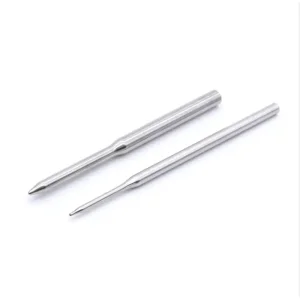
What specific micro-turning capabilities do you maintain for medical micro-implants and optoelectronic pins?
Can you supply raw material mill test certificates (MTR) meeting ASTM, AMS, and DIN standards?
What surface treatment and secondary passivations are performed under strict quality oversight?
What are typical production lead times for shipments into the United States?
How do you ensure zero intellectual property (IP) leakage during engineering transfer?
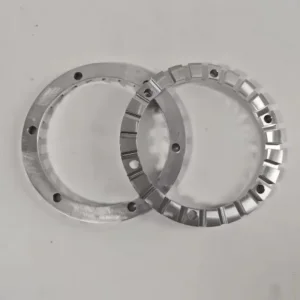
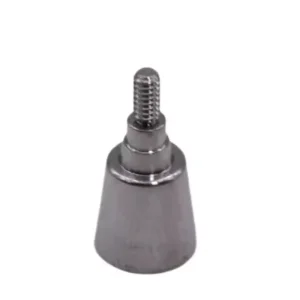
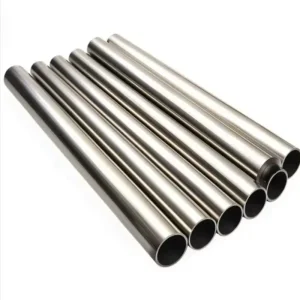
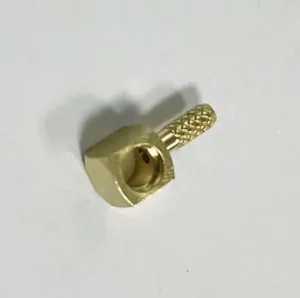
Specialized Precision Turned Parts & Critical OEM Sub-Assemblies
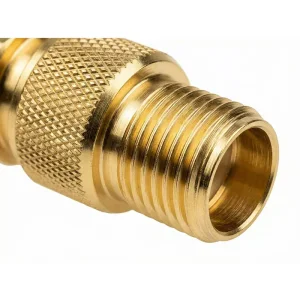
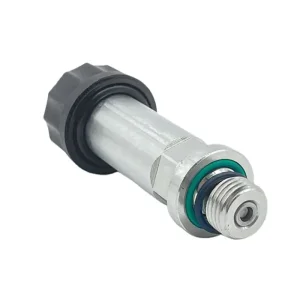
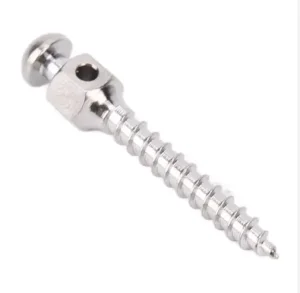
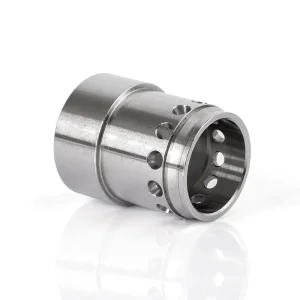
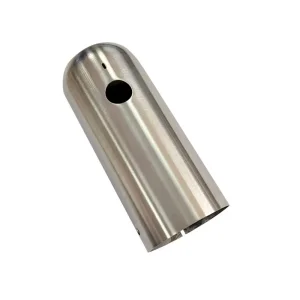
Explore our comprehensive fabrication portfolio encompassing medical implants, fluid control filtration, knurled insert fasteners, and semiconductor seals.
Optimize Your U.S. Precision Turned Supply Chain Today
Upload your 2D engineering drawings (PDF/DWG) and 3D geometric models (STEP/IGES/X_T). Our application engineering team will provide a comprehensive DFM manufacturability evaluation, tolerance stack-up review, and a competitive manufacturing quote.