

High-Quality Custom Wedge-Lock Washer Pairs Product, Quotes
Product Description
Product Overview
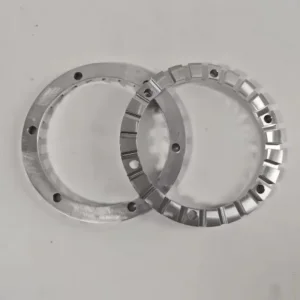
Sunmy manufactures custom wedge-lock washer pairs for bolted joints where vibration-related loosening is a design concern. We work from your drawings or physical samples, with dimensions, materials, hardness, finish and packaging tailored to the application. From prototype evaluation to repeat orders, one coordinated supply scope can include washer pairing, mating components and mechanical assembly.
A wedge-lock pair uses inward-facing cams and outward-facing serrations. When the serrations grip the contact surfaces, relative movement across the cams opposes rotational loosening. The cam angle must exceed the mating thread helix angle; correct preload, surface hardness and installation remain essential. Single serrated washers are a different design and are not interchangeable with a qualified wedge-lock pair.
Process & Manufacturing Insights
At Shenzhen Sunmy Hardware Co., Ltd., the manufacturing route is selected around your geometry, material and order volume. Our review considers tooling investment, profile accuracy, hardening, finishing and inspection together:
Stamping & Precision Coining
For suitable repeat-production designs, blanking and forming/coining can create the annular blank, cam ramps and external serrations. Tool development addresses cam repeatability, serration definition and burr control, with finished profiles and hardness checked against the agreed specification.
CNC Turning & Profile Machining
For suitable prototypes or non-standard geometries, CNC turning establishes diameters and faces, with separate milling or another suitable process for the cam and serration profiles. This route is compared with dedicated forming tools; setup, fixturing and validation costs are included in the quotation.
Material-Specific Hardening & Finishing
Alloy-appropriate hardening routes are reviewed against the required surface hardness and corrosion performance. Finishing is controlled to retain cam engagement and serration definition. The finished washer hardness must suit the bolt head or nut and the clamped contact surface.
Key Technical Specifications
| Product Name | Custom Wedge-Lock Washer Pairs |
|---|---|
| Design & Qualification | Customer-approved drawing and joint requirements; applicable DIN/ISO testing only as agreed and supported by reports. |
| Manufacturing Process | Stamping/forming and coining, or CNC turning plus profile machining, selected by design and volume. |
| Material Options | Specified stainless steel, carbon steel or alloy steel; grade, condition and hardness confirmed before production. |
| Fastener Compatibility | Metric or inch fasteners per drawing; thread pitch, bearing area and mating-surface hardness reviewed together. |
| Dimensions & Profiles | Custom inner/outer diameters, pair thickness, cam ramps and serrations. Size capability confirmed during DFM. |
| Locking Configuration | Matched two-piece pair: cams inward, serrations outward. Joint suitability and installation require verification. |
| Dimensional Tolerance | Per approved drawing. Critical profile geometry and finished pair thickness have agreed inspection criteria. |
| Surface Finish | Passivation or specified coating as appropriate to the alloy; thickness, corrosion and embrittlement risks reviewed. |
| Quality Control | First-article, in-process and final checks per control plan; material, profile and hardness records as agreed. Vibration testing quoted separately. |
| Customization & Assembly | Custom geometry, approved materials, pair pre-gluing, marking, kitting and related mechanical assembly. |
| Samples & Delivery | Prototype and production terms quoted after technical review; MOQ and schedule depend on tooling, quantity and testing. |
Key Features & Advantages
Designed Around the Complete Joint
The DFM review considers cam engagement, fastener geometry and contact-surface hardness together. Defined qualification criteria align the washer design with the preload and vibration conditions of your assembly.
Material & Finish Matched to Service
We review corrosion exposure, temperature, mating materials and coating requirements before confirming the grade and treatment. This keeps the specification focused on the actual operating environment.
Controlled Pairing & Installation
Cam faces are paired inward and serrations face outward. Pre-gluing can assist handling; it is not the locking mechanism. Reuse requires an approved procedure and inspection of wear, damage and contact conditions.
Built to Your Drawing, Not a Fixed Catalog
Inner and outer diameters, pair thickness, cam geometry, serrations, material and finish can be customized. We review design changes against fastener geometry, bearing area and the intended joint before release.
One Source for Parts, Kits & Assembly
Sunmy can coordinate stamped washers with turned spacers, sleeves, machined brackets and specified fasteners. Pairing, marking, kitting and mechanical assembly can be included, with inspection and delivery scope agreed at quotation.
Other Products
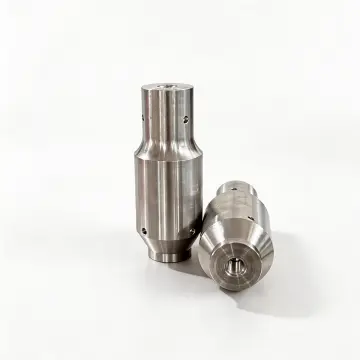
Custom Titanium Ultrasonic Booster
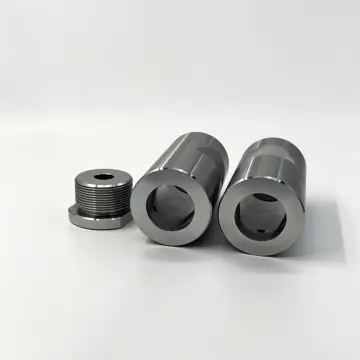
Custom CNC Turned Tooling Sleeves...
Custom Hollow-Shaft Cycloidal Red...
Custom 6-Axis Force/Torque Sensor...
Technical Frequently Asked Questions (FAQ)
Q1: Is stamping or CNC machining the better route for a custom washer?
A: Stamping and coining may suit repeat volumes; machining may suit development or non-standard profiles. The choice depends on the drawing, material, quantity and required verification. Turning alone does not produce the complete cam-and-serration geometry.
Q2: Can you customize the washer and supply a complete assembly?
A: Yes. Send your 2D/3D files or sample, fastener details, mating-part drawings and target quantity. We can review the washer together with related components and define a combined manufacturing, kitting or mechanical assembly scope. A sample-based project is released against an approved drawing.
Q3: What do DIN 25201-4 and ISO 16130 mean for this product?
A: DIN 25201-4 addresses securing bolted joints in railway applications; ISO 16130 describes a transverse-vibration test for aerospace bolted connections. Neither reference alone certifies a washer. Applicable editions, test conditions, acceptance limits and supporting reports must be agreed. A test result does not guarantee performance under every service load.
Q4: What are the MOQ, sample terms and lead time?
A: These are quoted for the specific drawing, material, tooling, finishing, quantity and validation scope. Prototype evaluation and repeat production can be planned separately. Share your batch sizes and delivery target so we can propose a practical supply plan.
Q5: How does a wedge-lock washer prevent bolted joint loosening?
A: A wedge-lock washer pair relies on the cam angle being greater than the thread helix angle. Under vibration, movement occurs across the internal cam faces rather than the threads, creating a wedge effect that increases tension and blocks rotational loosening.
Q6: Can wedge-lock washer pairs be reused?
A: Reuse requires an approved engineering procedure and thorough inspection. Cam and serration surfaces must be checked for wear, deformation, and damage before re-tightening, and proper lubrication and preload must be maintained.
Get a Fast, Technical Quote & Free DFM Review
Don't let tolerance stack-up delay your product launch. Submit your project details, and our engineering team will evaluate your design for manufacturability before the first cut.