High-Precision Machined Hardware & Subsystem Assemblies
Explore custom precision components engineered across our CNC milling, Swiss turn-mill, and EDM wire production cells. Every piece undergoes full First Article Inspection (FAI) with verified dimensional conformity.
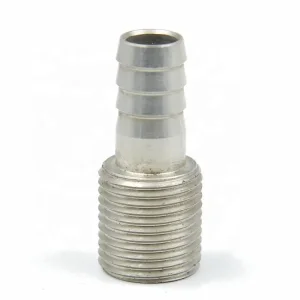
OEM Custom CNC Turned Hose Barb Fittings & Threaded Adapters
View Specifications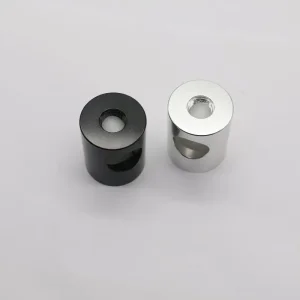
High-Quality Custom Precision CNC Turned Stainless Steel Medical Components
View Specifications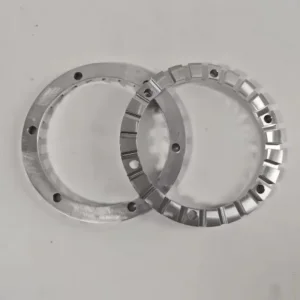
China Custom CNC Machined Anodized Sealing Rings for Semiconductor & Optics
View Specifications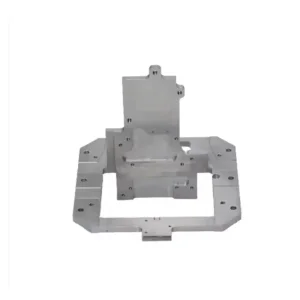
OEM Custom High-Precision CNC Metal Bracket & Structural Frame Wire EDM
View Specifications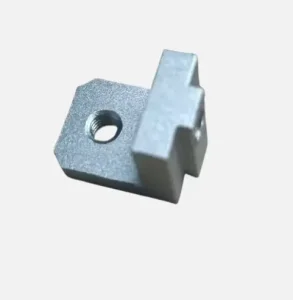
Custom CNC Milled Aluminum Alloy Right Angle Mounting Bracket
View Specifications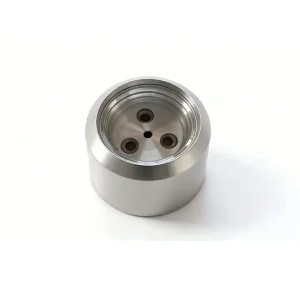
High-Quality Precision CNC Machined High-Voltage Insulator Contact Base
View Specifications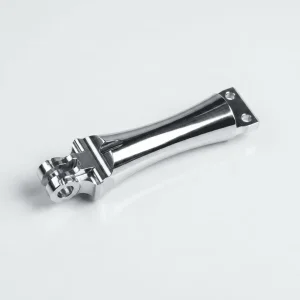
Custom Custom CNC Machined Robot Finger Joint Link Articulations
View Specifications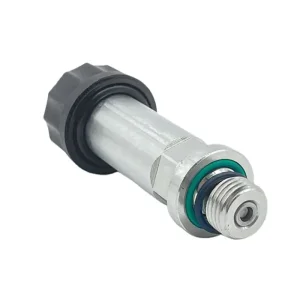
Custom High-Performance Hydraulic Solenoid Valve Core Precision Turning
View SpecificationsMacro Dynamics & Global Enterprise Procurement Demands
As tier-1 original design manufacturers (ODMs) and system integrators pivot toward lightweighting, extreme biocompatibility, and corrosion immunity, procurement leaders face unprecedented engineering challenges across the global supply chain.
The Heat Concentration Dilemma
Titanium features extraordinarily low thermal conductivity (6.7–7.5 W/m·K, compared to 160 W/m·K for aluminum). During cutting, roughly 80% of heat transfers directly into the cutting tool edge rather than chip disposal. Without high-pressure delivery (HPC ≥ 70 bar), rapid tool degradation and thermal micro-cracking compromise part integrity.
Low Elastic Modulus & Springback
With an elastic modulus roughly half that of stainless steel (E ≈ 110 GPa vs 200 GPa), titanium exhibits severe springback deflection against cutting tool pressure. Thin-walled aircraft bulkheads, sensor housings, and miniature medical implants flex under standard feeds, demanding specialized custom hydraulic clamping and dynamic stress-relief tool paths.
High Chemical Reactivity at Temperature
At temperatures above 500°C, titanium reacts avidly with atmospheric oxygen, nitrogen, and tool substrate coatings. This creates a brittle alpha-case surface layer prone to micro-fatigue cracking. Our ODM production processes integrate oxygen-inhibited coolants, optimized spindle surface speeds, and controlled atmospheres for critical aerospace and biomedical applications.
Titanium Machinability & Metallurgical Engineering Matrix
Selecting the precise alloy formulation is the single most influential variable determining final component reliability, fatigue thresholds, and production economics. Below is an engineering guide to primary titanium grades machined in our facility.
| Alloy Grade | Microstructure | Tensile Strength (MPa) | Machinability Index (%) | Corrosion & Thermal Resistance | Core Application Niches |
|---|---|---|---|---|---|
| Grade 1 & 2 (CP-Ti) | Alpha (α) Unalloyed | 240 – 390 | 40% – 45% (Higher ductility) | Exceptional resistance to chlorides and oxidizing acids | Chemical heat exchangers, marine fittings, desulfurization hardware |
| Grade 5 (Ti-6Al-4V) | Alpha-Beta (α-β) | 895 – 1000 | 20% – 22% (Work-hardens rapidly) | Thermal stability up to 400°C, outstanding fatigue life | Aerospace bulkheads, robotic structural nodes, racing connecting rods |
| Grade 23 (Ti-6Al-4V ELI) | Extra-Low Interstitial | 860 – 960 | 22% – 25% (Controlled purity) | Unsurpassed human bio-inertness & high fracture toughness | Orthopedic micro-implants, dental abutments, surgical instruments |
| Grade 7 & 11 (Ti-Pd) | Alpha + Palladium | 240 – 345 | 35% – 40% | Supreme pitting and crevice corrosion immunity in reducing acids | Pharmaceutical processing vats, subsea chemical injection valves |
| Ti-5553 (Near Beta) | Near-Beta (β) Phase | 1150 – 1300 | 12% – 15% (Extremely abrasive) | Ultra-high strength, deep hardenability, heavy load support | Commercial aircraft landing gear assemblies, wing pylons, high-G rotors |
Thermodynamic Control & 5-Axis Kinematic Tooling Strategy
Overcoming titanium's thermal barrier demands an empirical machining methodology that marries cryogenic fluid thermodynamics, micro-grain solid carbide cutting geometries, and active harmonic dampening.
High-Pressure Coolant (HPC 70-140 Bar)
Standard flood coolant forms a vapor blanket at the shear zone, boiling off before touching the cutting edge. We employ internal high-pressure coolant lines targeting the exact wedge interface. This shatters the vapor film, evacuates hot chips instantaneously, prevents chip re-cutting, and extends tool wear life by up to 300%.
Variable Helix & Unequal Flute Pitch
Chatter and harmonic resonance are fatal to titanium surface integrity. Sunmy utilizes custom-ground solid carbide end mills with unequal index flutes (e.g., 38°/41° variable helix). By breaking continuous cyclic harmonics, cutting vibrations are dampened at high feed per tooth, yielding mirror finishes of Ra ≤ 0.4 μm.
Nanostructured AlTiN & AlCrN Coatings
Conventional TiN coatings chemically react with titanium alloys at high cutting heat. We exclusively specify nano-composite Aluminum Chromium Nitride (AlCrN) and diamond-like coatings (DLC). These maintain hardness beyond 1100°C, creating a micro-barrier that completely halts chemical diffusion wear.
Cross-Sector Solutions Engineered for Harsh Real-World Operating Environments
From low-Earth orbit avionics to sub-surface marine exploration and in-vivo surgical reconstruction, Sunmy delivers mission-critical titanium hardware tailored to exact regulatory standards.
Aerospace & Commercial Aviation
Thin-walled airframe brackets, hydraulic flight control blocks, engine bleed valve housings, and satellite sensor mounts. We machine high-purity Ti-6Al-4V while maintaining geometric true-position tolerances within 0.01 mm, drastically lowering overall buy-to-fly ratios.
Biomedical Devices & Surgical Orthopedics
Custom orthodontic micro-anchors, pedicle screws, spinal cages, maxillofacial plates, and titanium surgical robotic articulators. Produced using biocompatible Grade 23 ELI material under ISO 13485 cleanroom protocols with burr-free microscopic finishes under 40x optical inspection.
Semiconductor & Ultra-High Vacuum (UHV)
Non-magnetic plasma chamber components, electrostatic chuck adapters, ion-beam nozzle rings, and chemical vapor deposition (CVD) hardware. Machined with zero silicon or ferrous cross-contamination, ensuring absolute cleanroom chemical neutrality.
Next-Gen Humanoid Robotics & Exoskeletons
Finger linkages, harmonic drive motor housings, torque sensor flexures, and ultra-lightweight structural endoskeletons. Titanium provides the dynamic inertial response required for high-frequency robotic manipulation without premature motor overheating.
Deep-Sea Exploration & Offshore Subsea
Sensor pressure pods, sonar transponder bells, underwater robotics penetrators, and downhole hydraulic subsea couplings. Titanium alloys eliminate cathodic corrosion and stress-corrosion cracking (SCC) even under 10,000+ PSI hydrostatic ocean pressure.
Motorsport & High-Frequency Transducers
Ultrasonic booster horns, turbocharger impellers, valve spring retainers, and suspension pivots. Where cyclical resonance and fatigue limits cause steel and aluminum to fail, our customized titanium parts absorb millions of high-stress cycles reliably.
Technological Roadmap & Future Innovations (2026–2035)
To sustain competitive cost per part and micro-inch surface fidelity, Sunmy Hardware is investing across three advanced manufacturing horizons, leading next-generation titanium processing.
Cryogenic Liquid Nitrogen Machining
Transitioning from water-miscible emulsions to sub-zero LN2 (−196°C) directed through spindle channels. This completely halts tool-material adhesion, prevents work hardening, and eliminates subsequent solvent cleaning in cleanroom-bound medical implants.
AI-Powered Adaptive Feed Control
Integrating high-frequency piezoelectric dynamometers and acoustic vibration sensors into CNC spindles. Machine controllers autonomously throttle feed rates within 2 milliseconds upon detecting tool deflection or chatter spikes, doubling tool life on complex 5-axis profiles.
Hybrid Additive-Subtractive Manufacturing
Synthesizing Laser Powder Bed Fusion (LPBF) near-net-shape titanium blanks with precision 5-axis CNC finishing. This reduces titanium material scrap from 80% to under 15%, slashing raw bar procurement expenditure for high-volume aerospace contracts.
Global Quality Governance, Inspection & Compliance
In high-liability applications, an unverified dimension is a critical system failure risk. Our quality assurance protocol couples continuous in-process gauging with comprehensive coordinate measuring metrology (CMM).
Zeiss CMM Inspection
Equipped with optical and tactile scanning probes yielding spatial resolution down to 0.0005 mm, verifying complex profile contours and true geometric position.
Material Traceability
All raw billets are accompanied by full chemical composition and tensile elongation test reports conforming to EN 10204 3.1 standards with complete lot genealogy.
AS9102 / FAI Documentation
Every initial production run includes standard First Article Inspection packets covering 100% ballooned drawings, GD&T verifications, and surface profilometry records.
Specialized Surface Passivation
In-house chemical cleaning, ultrasonic degreasing, and nitric/citric acid passivation (ASTM F86 / AMS 2700) guarantee zero free-iron micro-contamination on finished parts.
End-to-End ODM Titanium Program Governance
A proven five-stage manufacturing cycle that protects your proprietary intellectual property, eliminates design friction early, and ensures predictable on-time global logistics.
Mutual NDA & Intake
Bilateral non-disclosure agreements executed prior to accepting 3D CAD (.STEP / .IGS) and 2D GD&T drawings.
24-Hour DFM Audit
Tool reach, thin-wall springback, and cutter-path optimization reviewed with direct engineer-to-engineer feedback.
FAI Pilot Machining
First article prototypes produced on designated CNC cells and verified via CMM with complete documentation.
Scalable Mass Output
Automated production with dynamic in-line tool wear compensation and statistical process control (CpK ≥ 1.33).
Clean Pack & Export
Ultrasonic cleaning, vacuum barrier packaging, customs clearance, and DDP direct factory air delivery.
Frequently Addressed Titanium Machining Questions
Clear, unhedged answers to the technical, operational, and commercial questions supplier-quality teams evaluate when qualifying Sunmy Hardware for titanium component programs.
Why is titanium more challenging to machine than stainless steel?
Titanium’s thermal conductivity is approximately one-third that of austenitic stainless steel, meaning cutting heat concentrates severely at the tool edge. Additionally, its lower elastic modulus causes the workpiece to deflect away from the tool and spring back, generating dimensional variation and rapid notch wear unless rigid hydraulic fixturing and low-chatter tool paths are strictly applied.
How does Sunmy achieve ±0.005 mm tolerances on titanium features?
We combine high-rigidity CNC machine centers, thermal growth-compensated spindles, custom shrink-fit toolholders, and dedicated finishing passes with micro-grain carbide tooling. Every critical dimension is validated in an environmentally controlled metrology lab using high-resolution tactile and optical CMM equipment.
What is the standard buy-to-fly ratio optimization process?
For aerospace components, stock titanium bars can produce 80% to 90% scrap weight if machined conventionally. Our DFM team works closely with your CAD models to design near-net-shape billets, optimize 5-axis nested pocketing, and evaluate forged or wire-EDM preforms to cut raw material expenditure.
Can you provide medical-grade titanium with full bio-cleanness?
Yes. We regularly machine medical implants and orthodontic fasteners from ASTM F136 Ti-6Al-4V ELI (Grade 23). Our production protocols enforce zero cross-contamination with ferrous metals, followed by ultrasonic multi-stage cleaning and passivation compliant with ASTM F86 standards.
What surface finishes can you achieve on machined titanium?
As-machined finishes typically reach Ra 0.8 μm (32 μin). With high-speed fine diamond contouring or precision vibratory tumbling, we reliably achieve Ra 0.4 μm (16 μin) or mirror finishes. Secondary operations including bead blasting, color anodizing (Type II / Type III), and micro-arc oxidation are also supported.
How does Sunmy protect customer intellectual property?
All project data is managed under bilateral NDAs. Your CAD models and drawings are processed exclusively on an encrypted internal engineering server without intermediary broker exposure, ensuring total commercial and design privacy.
What quality documentation is included with overseas shipments?
Every shipment includes EN 10204 3.1 raw material certificates, a comprehensive CMM dimensional inspection report, FAI documents (AS9102 format where requested), and RoHS/REACH compliance declarations signed by our QA Director.
What is the typical lead time for prototype vs. production orders?
Rapid functional prototypes and FAI batches are typically produced, inspected, and shipped within 5 to 10 working days. Full production orders scale according to raw bar procurement timelines, with standard delivery cycles running 3 to 4 weeks via direct air or sea freight.
Precision Multi-Metal & Advanced Component Showcase
In addition to our specialized titanium capabilities, Sunmy Hardware provides turnkey precision manufacturing in aluminum, medical stainless steel, engineered brass, and specialized polymers.
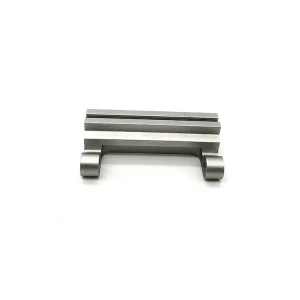
High-Quality Custom CNC Machined Aluminum Hinge Assembly Grey Anodized
View Specifications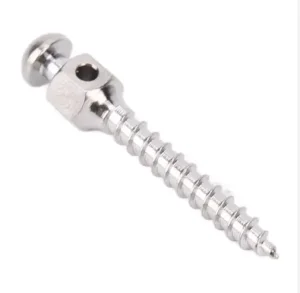
China Custom Precision Titanium Orthodontic Micro Implant Screws
View Specifications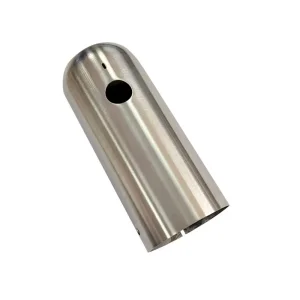
China Custom Precision CNC Turned Medical Sleeve Bushing Components
View Specifications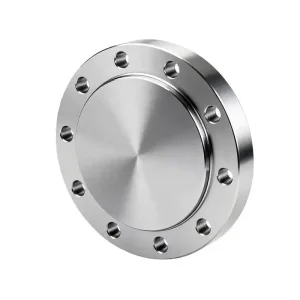
China OEM Precision CNC Machined Stainless Steel Vacuum Flanges
View Specifications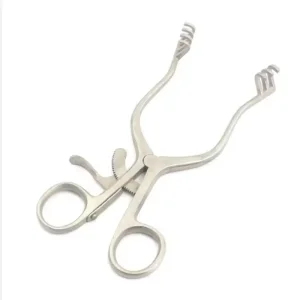
China Professional Quality Stainless Steel Custom Surgical Retractor
View Specifications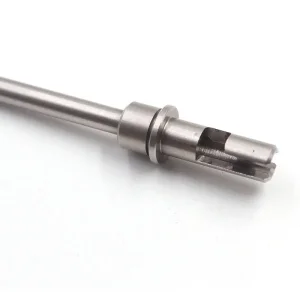
OEM Precision CNC Turned Stainless Steel Multi-Stepped Shaft
View Specifications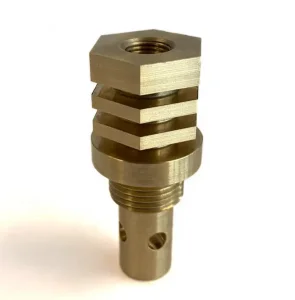
China Custom Precision CNC Machined Brass Micro-Channel Cooling Block
View Specifications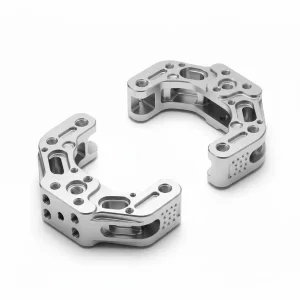
High-Quality Custom CNC Machined Robotic Gripper Jaws Service
View SpecificationsInitiate Your Titanium Machining Program Today
Send your 2D drawings and 3D CAD files (.STEP, .IGES, .X_T) for a complete manufacturability review, tolerance stack analysis, and binding direct-factory quote within 24 hours.
Request Engineering DFM Review