Industrial Procurement Whitepaper · Tokyo Hub
CNC Machining Products & Exporters in the Tokyo Market
Empowering Japan's premier robotics, semiconductor, and aerospace clusters with micron-level 5-axis CNC machining, Swiss-turning, and agile Shenzhen-Tokyo supply chain synergy.
Send Inquiry Now
Precision Engineering Portfolio
Featured Precision Components for Tokyo OEM Applications
Engineered for high-stress automation, semiconductor thermal dissipation, and medical micro-mechanics meeting strict JIS engineering tolerances.
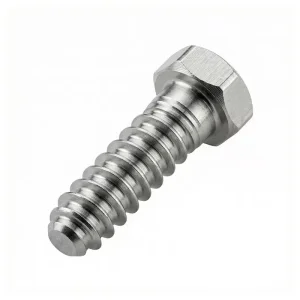
Tokyo Surgical Grade: Custom Titanium Medical Implant / Bone Screw
Explore Component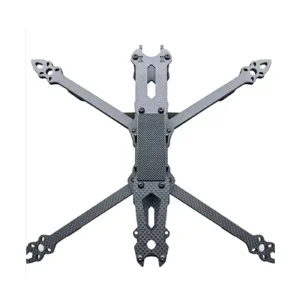
Tokyo UAV & AgTech: Custom CNC Machined Carbon Fiber Drone Frame Kits
Explore Component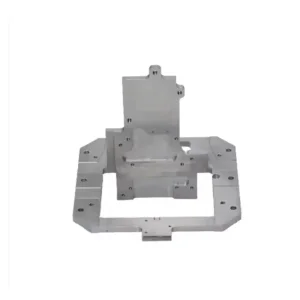
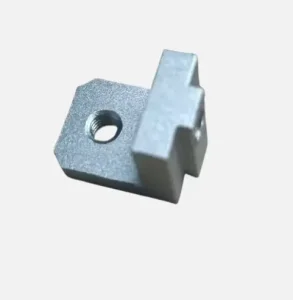
Tokyo Aerospace & EV: OEM Precision CNC Machined Wire EDM Bracket
Explore Component
Industrial Landscape Analysis
Tokyo’s High-Tech Manufacturing Ecosystem & Sourcing Pressures
Analyzing the dynamics of the Greater Tokyo-Keihin industrial corridor and its evolving supply chain requirements.
The Ota-ku Paradigm Shift
Historically, Tokyo's Ota-ku and neighboring Kawasaki housed the pinnacle of domestic precision prototyping. However, an aging skilled machinist workforce (shokunin) and escalating domestic operational overhead have created severe bottlenecks in turnaround cycles for multi-axis batch production, forcing Tokyo R&D engineering divisions to seek reliable international manufacturing redundancy.
Next-Gen Robotics & Cobots
Tokyo serves as the planetary command center for industrial automation giants and disruptive medical robotics start-ups based in Chiyoda and Shinagawa. These systems demand complex 5-axis milled articulating joint housings, harmonic drive flexsplines, and hollow-shaft cycloidal housings that require micron-level positional accuracy and strict balancing.
Semiconductor Metrology Capital
With Japan commanding a massive portion of global wafer-processing chemistry and precision semiconductor lithography modules, Tokyo-headquartered equipment integrators face surging demand for non-magnetic vacuum chambers, PEEK fluidic manifolds, and mirror-finished silicon wafer transport arms free from particulate contamination.
Bilateral Supply Chain Architecture
Shenzhen Factory Direct: The Ideal Strategic Counterpart to Tokyo Engineering
Combining the speed, massive raw material access, and scale of Shenzhen hardware hubs with Tokyo’s relentless standard for zero-defect engineering.
±0.005mm
CNC Feature Tolerance
24 Hours
DFM Engineering Response
100% CMM
Dimensional Verification
3-4 Days
Air Express to Haneda/Narita
Unmatched Raw Material Traceability
Our direct access to specialized certified extrusions, billets, and plate stocks—including aerospace-grade A7075, SUS316L, Ti-6Al-4V, and Japanese JIS equivalents (JIS A6061BD, SUS304)—enables rapid procurement without multi-month mill lead times. Every shipment carries spectroscopic raw material mill certificates matching domestic Japanese chemical composition benchmarks.
Multi-Axis Tooling Without Tier-3 Markups
By conducting continuous 3-, 4-, and simultaneous 5-axis milling, wire EDM, and high-speed Swiss-turning within our own facilities, we bypass the compounding margins of Japanese trading intermediaries (Shosha). Tokyo procurement teams interface directly with bilingual manufacturing engineers who understand GD&T conventions, surface roughness standards (Ra 0.4 µm), and complex tooling strategies.
Quality Assurance & Japanese Compliance
Navigating Japanese Industrial Standards (JIS) & Rigorous QA Protocols
A zero-defect methodology engineered specifically to meet the high trust threshold of Japanese procurement auditing boards.
| Evaluation Parameter | Japanese Domestic Machine Shop (Ota-ku / Kanagawa) | Standard Global Trading Intermediary | Sunmy Direct Shenzhen-Tokyo Agile Model |
|---|---|---|---|
| Prototyping Lead Time | 10 - 21 Working Days (Constrained capacity) | 14 - 30 Working Days (Layered communication) | 3 - 7 Working Days (Dedicated 5-axis capacity) |
| Direct Technical Communication | Native Japanese, limited digital integration | Indirect sales liaisons with limited tooling knowledge | Direct Engineer-to-Engineer DFM review |
| Inspection Documentation | Comprehensive manual inspection sheets | Generic pass/fail declarations | Zeiss CMM full dimensional inspection + FAI reports |
| Compliance Verification | JIS, RoHS domestic standard | Variable, third-party audit risk | Full JIS material cross-referencing, RoHS, REACH |
| Scalability & Secondary Processes | High cost for bridge-to-volume transition | Fragmented subcontracting across scattered suppliers | In-house Milling, Swiss Lathe, Stamping & Die Casting |
Application Matrix
Mission-Critical Custom Parts Serving Tokyo Engineering Frontiers
Precision-machined structural, mechanical, and thermal hardware engineered to withstand demanding production cycles.
Tokyo Cobot & Servo Assemblies
Thin-walled aerospace aluminum housings (A6061-T6 / A7075) with complex internal channels, multi-axis harmonic gearbox flanges, and custom torque-sensor flexure rings requiring pitch accuracy within 5 microns and minimal vibration resonance.
Semiconductor Vacuum & Handling
High-purity solid aluminum optical breadboards, end-effector vacuum wands, and precision slotted wafer cassettes. CNC milled with clean-room compatible coolant protocols and finished with MIL-A-8625 Type III hard anodizing to prevent flaking and outgassing.
Biomedical Micro-Instrumentation
Swiss-turned titanium (Grade 5 Eli) cannulated bone screws, micro-endoscopic trocar bodies, and stainless steel surgical retractors (SUS316L / SUS630) manufactured with zero burrs under 40x optical inspection and fully passivated per ASTM A967.
Procurement Intelligence FAQ
Frequently Addressed Inquiries from Japanese Engineering Buyers
Clear, direct answers regarding communication protocols, intellectual property, logistics, and quality verification.
How are Japanese JIS material designations matched to Chinese GB standards?
Our engineering department utilizes standardized metallurgical cross-referencing tables (e.g., JIS A6061-T6 to GB 6061-T6; SUS304 to 06Cr19Ni10). Before machining, our clients receive full chemical assay sheets and mechanical tensile test reports certifying equivalence or superior mechanical performance.
How does Sunmy protect sensitive proprietary CAD files and IP?
We execute legally binding Non-Disclosure Agreements (NDAs) directly with Japanese corporations prior to receiving any 2D/3D STEP models. We operate a direct factory model with zero third-party broker exposure, securely storing digital engineering data on encrypted localized servers.
What is the typical transit duration from Shenzhen to Tokyo/Yokohama?
For urgent prototype batches, international air courier dispatch (via DHL, FedEx, or SF Express International) delivers directly to Haneda or Narita customs in 2 to 4 business days. For volume manufacturing programs, consolidated sea freight into the Port of Tokyo or Yokohama operates on reliable 7 to 10 day transit schedules.
How does the First Article Inspection (FAI) process operate?
Before launching batch production, we complete a comprehensive First Article Inspection report utilizing computerized CMM, optical profiling, and surface roughness profilometers. Samples are shipped to your Tokyo testing facility alongside ballooned technical drawings for dimensional cross-validation.
Advanced Manufacturing Catalog
Specialized CNC Products & Modular Assemblies for Tokyo Exporters
From 5-axis robotic articulations to clean-room optical breadboards and precision copper busbars.
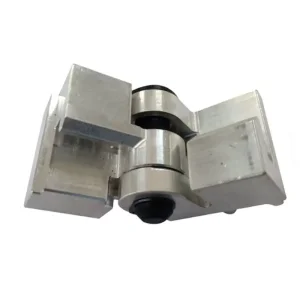
Tokyo Kinematic Systems: Precision CNC Machined Aluminum Hinge Assembly
Explore Component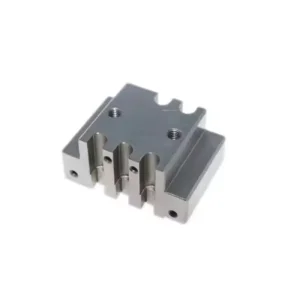
Tokyo Industrial Automation: Custom CNC Machined Aluminum Components
Explore Component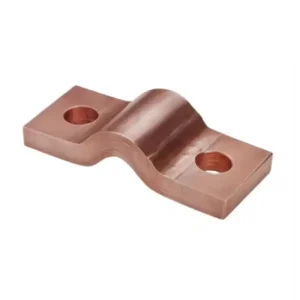
Tokyo E-Mobility: Flexible Laminated Copper Busbar for Battery Units
Explore Component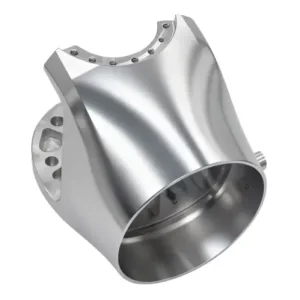
Tokyo Robotics: High-Precision Custom 5-Axis CNC Machined Robot Joint
Explore Component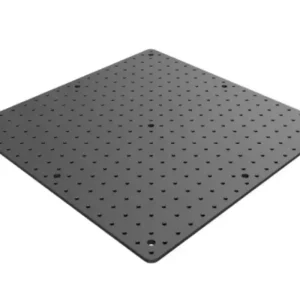
Tokyo Optical R&D: Custom Non-Standard Solid Aluminum Optical Breadboard
Explore Component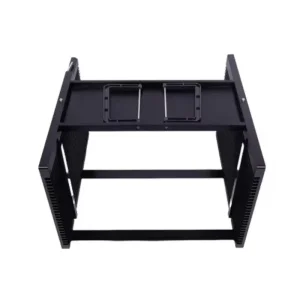
Tokyo Semi-Foundry: OEM 8-Inch CNC Machined Aluminum Wafer Carrier
Explore Component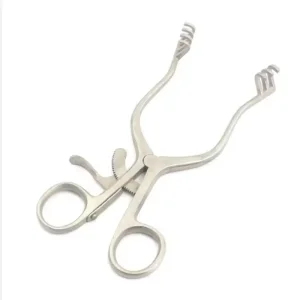
Tokyo MedTech: Professional Quality Stainless Steel Surgical Retractor
Explore Component