High-Precision CNC Machined Parts for South Korea's High-Tech Industries
Engineered to meet the stringent dimensional stability and surface integrity demanded by Seoul-based R&D hubs and advanced manufacturing plants across Gyeonggi-do.
-
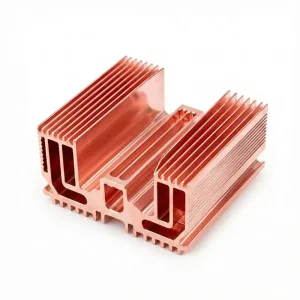
ODM High-Performance Copper Heatsink for Seoul Semiconductor & Server Systems
View Product Details -
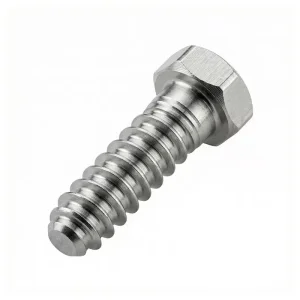
Custom Titanium Medical Implant / Bone Screw for Seoul Orthopedic Manufacturers
View Product Details -
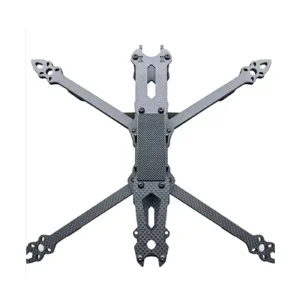
Custom CNC Machined Carbon Fiber Drone Frame Kits for Seoul UAV Automation
View Product Details -
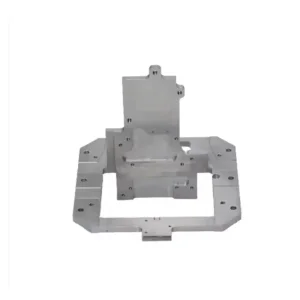
OEM High-Precision CNC Metal Bracket & Wire EDM Frame for Seoul EV Clusters
View Product Details
The Dynamics of Precision CNC Machining in the Seoul Capital Area
A comprehensive examination of industrial synergy across Seoul, Pangyo Techno Valley, and the broader Gyeonggi industrial belt.
The Local Commercial and Industrial Landscape
The Seoul Metropolitan Area represents a formidable concentration of global hardware and electronics design power. Within districts such as Gasan and Guro Digital Complex, alongside peripheral tech engines like Pangyo Techno Valley, South Korea’s leading engineering teams conduct intensive prototyping and pre-production validation for consumer tech, telecommunications, and industrial automation.
Local tier-1 manufacturers increasingly seek specialized CNC machining suppliers capable of handling high-mix, low-to-medium-volume (HMLV) orders with sub-micron positional tolerances. Rather than basic commodity tooling, the demand centers heavily on advanced 5-axis simultaneous milling, micro-hole drilling for advanced semiconductor testing, and Swiss lathe turning for precision sensor bodies.
Global Procurement Friction & Hybrid Strategies
Global procurement teams operating in and sourcing from the East Asian industrial corridor face shifting cost structures, rising domestic labor overheads, and stringent quality gatekeeping requirements. Sourcing managers responsible for projects linked to Hyundai, Samsung, LG, and allied supply lines have transitioned toward hybrid supply models.
These buyers require precision fabrication facilities that combine competitive pricing with full engineering visibility. Bridging rapid engineering feedback (within 24 hours) and end-to-end documentation—including Coordinate Measuring Machine (CMM) verification, First Article Inspection (FAI), and raw material melt traceability—has become non-negotiable for enterprise procurement teams.
End-to-End Solutions for Mission-Critical Engineering Domains
Overcoming material deformation, thermal expansion, and precision constraints across key industries.
Semiconductor Handling & Vacuum Fixtures
Seoul’s semiconductor ecosystem requires vacuum chucks, wafer handling arms, and carrier plates machined from high-purity aluminum alloys (e.g., Al6061-T6, Al7075) and engineering polymers (PEEK, Vespel). We implement stress-relieving heat treatments and vacuum anodizing to guarantee absolute flatness (<0.01 mm over 300 mm span) without outgassing in cleanroom environments.
Robotics & Actuator Structural Elements
Collaborative robotics and autonomous mobile robots (AMRs) originating from Korean automation clusters depend on lightweight, high-torque joint housings and cycloidal drive frames. Our multi-axis machining ensures exact concentricity of bearing seats and tight perpendicularity between mounting flanges, directly preventing vibrational losses and mechanical wear.
Electric Vehicle & Energy Storage Components
With Seoul’s heavy investment in zero-emission transport solutions, we mill structural battery enclosure brackets, cold plate fluid channels with deep micro-fins, and laminated busbars. Tight geometric tolerancing guarantees hermetic sealing in automated gasketed assemblies, preventing coolant leakage under harsh vibration.
The Evolution of Modern CNC Manufacturing (2025–2030)
Anticipating structural shifts in subtractive precision engineering, digital twins, and autonomous machining centers.
In-Situ Metrology & Closed-Loop Feedback
The traditional gap between CNC milling and post-process quality control is collapsing. Modern high-precision manufacturing relies heavily on touch probes and laser tool setters operating directly inside the machine envelope. By measuring workpiece features in-situ, CAM programs automatically offset tool wear, thermal spindle growth, and deflections before parts exit the fixture.
For Seoul-bound high-reliability programs, this real-time compensation system ensures that long production runs achieve capability indexes (Cpk) exceeding 1.67, virtually eliminating dimensional drift across critical aerospace brackets and surgical instrument frames.
Digital Twins & High-Speed Micro-Machining
As micro-fluidics, specialized heat sinks, and optical components scale down, cutter diameters under 0.5 mm running at 40,000+ RPM become commonplace. Machine tool kinematics are simulated inside unified digital twin environments to eliminate tool chatter, optimize chip clearance, and prevent corner deceleration artifacts.
Looking ahead, we are expanding our multi-axis high-speed spindle operations to support exotic materials including Inconel 718, medical-grade Titanium Grade 5 (Ti-6Al-4V ELI), and molybdenum for next-generation vacuum deposition fixtures.
Engineering Compliance, Traceability, and Global Logistics
Built-in quality gates that give international procurement teams complete risk mitigation.
Material Traceability & Chemical Certification
Every shipment is accompanied by complete mill test certificates (MTC) stating the chemical composition and mechanical yield strength of the specific alloy batch. From aerospace-grade AL7075-T651 to ASTM F136 titanium, raw materials undergo PMI (Positive Material Identification) testing before processing begins.
Rigorous IP Protection Protocols
We operate under bilateral Non-Disclosure Agreements (NDAs) enforced prior to drawing exchange. Direct engineer-to-engineer communication eliminates third-party trading intermediaries, protecting proprietary STEP, IGES, and CAD files within encrypted internal engineering silos.
Expedited Logistics to Incheon & Gimpo
Located near major international shipping hubs, our logistics desk coordinates rapid air freight consolidation to Incheon International Airport (ICN) with standard 2–4 business day door-to-door transit times to Seoul addresses, alongside standard ocean freight for production runs.
Frequently Asked Questions: CNC Sourcing for the Seoul Market
Direct answers for sourcing engineers, purchasing managers, and technical founders.
What geometric tolerances can your CNC machining centers maintain for critical Seoul electronics or robotics components?
How do you verify parts dimensional compliance before dispatching to South Korea?
Can you support both rapid prototyping and serial volume production for Korean OEMs?
What surface treatment capabilities are available for industrial aluminum components?
How do you handle intellectual property (IP) security and CAD files?
Precision Turned, Milled & Fabricated Assemblies
Browse our core industrial line-up supplied to multinational equipment builders, aerospace ventures, and tech innovators.
-
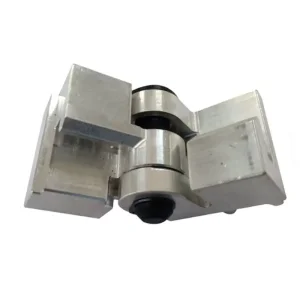
OEM Precision Aluminum Hinge Assembly & Connector for Seoul Robotics Enclosures
View Product Details -
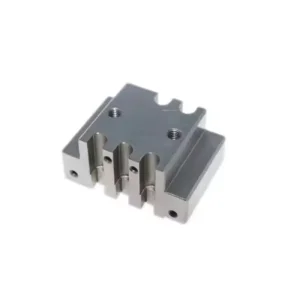
ODM OEM Precision CNC Machined Aluminum Components for Seoul Machinery
View Product Details -
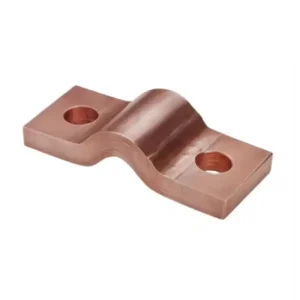
Custom Flexible Laminated Copper Busbar for Seoul EV Battery Packs
View Product Details -
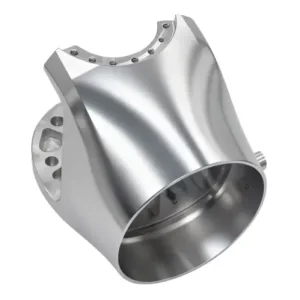
ODM 5-Axis CNC Machined Robot Joint & Housing for Seoul Collaborative Robots
View Product Details -
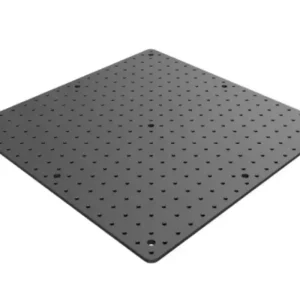
Precision CNC Machined Non-Standard Solid Aluminum Optical Breadboard
View Product Details -
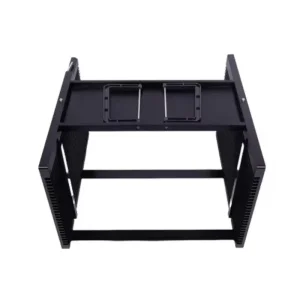
OEM Premium 8-Inch CNC Machined Aluminum Semiconductor Wafer Carrier
View Product Details -
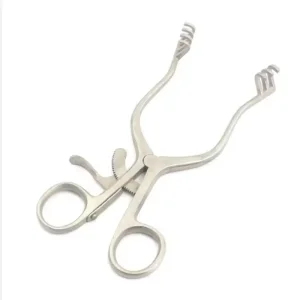
Professional Quality Stainless Steel Custom Surgical Retractor for MedTech
View Product Details -
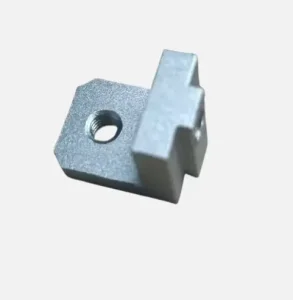
Custom CNC Milled Aluminum Alloy Right Angle Mounting Bracket
View Product Details
Partner with an Audited CNC Manufacturer Delivering to Seoul
Accelerate your development cycle with dedicated engineering support, 24-hour turnaround on technical quotation reviews, and full CMM inspection records for every dispatch.
Send Inquiry Now