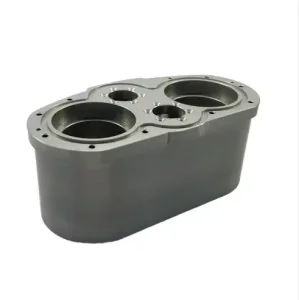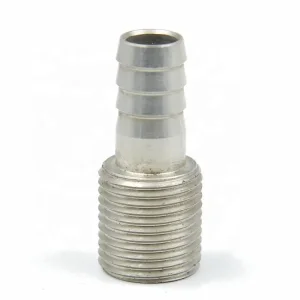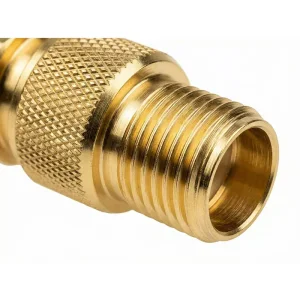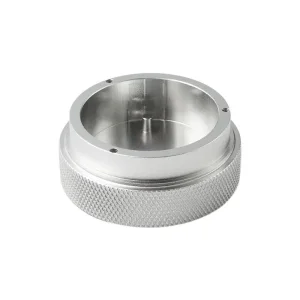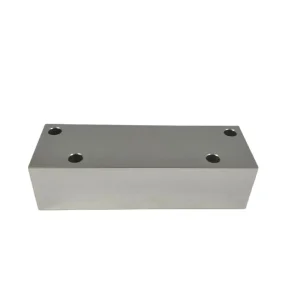
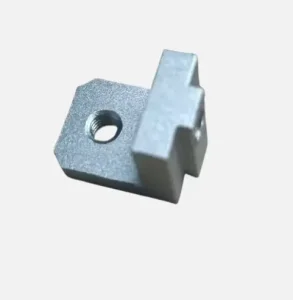
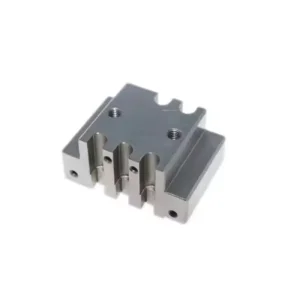
Custom Custom CNC Milled Aluminum Alloy Right Angle Mounting Bracket Manufacturer, Supplier
View Specifications
Direct from Shenzhen production lines: Fully verified high-precision structural mountings, bushings, and customized electro-mechanical hardware built to stringent tolerances.
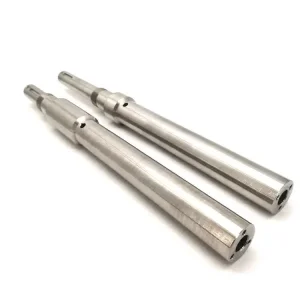
The international manufacturing sector is undergoing an unprecedented shift toward structural lightweighting and thermal consolidation. As tier-1 OEMs accelerate electric mobility, smart grid deployment, and edge robotics, the demand for precision aluminum die casting continues to expand past traditional powertrain applications.
Global original equipment manufacturers are facing dual imperatives: strict carbon abatement policies and rigorous production cost reduction. Thin-wall aluminum die casting yields dramatic weight savings of 30% to 50% compared to cast iron or stamped steel assemblies without sacrificing tensile or yield strength.
Multi-component sub-assemblies historically joined by fasteners, friction welds, or adhesives are being superseded by monolithic HPDC (High Pressure Die Casting) topologies. China's integrated tooling ecosystems allow complex structural geometric integration within single high-tonnage tooling sets.
Offshore sourcing requires rigorous metallurgical predictability. Western procurement divisions increasingly reject non-integrated intermediary broker models in favor of direct factory engagements capable of issuing full EN 10204 3.1 material certs, CMM coordinate maps, and digitalized FAI reports.
The high-pressure die casting arena is shifting from empirical operator adjustments to data-driven, closed-loop industrial processes. Modern factories leverage real-time cavity pressure sensing, thermal modeling, and structural alloy metallurgical enhancements.
By extracting cavity gases to under 50 mbar prior to liquid metal injection, vacuum HPDC prevents trapped gas porosity. This breakthrough allows critical automotive and aerospace castings to undergo post-casting T6 heat treatments and localized laser welding without surface blistering.
Development of silicon-depleted, high-ductility alloys (such as AlMg5Si2Mn and heat-treatment-free alloys like Castasil-37) allows fracture-critical shock towers and crash-relevant rail sections to achieve yield strengths over 130 MPa and elongation rates exceeding 10%.
Integration of piezoresistive acoustic sensors and multi-channel infrared thermal imagers guarantees millisecond-by-millisecond capture of plunger velocity, biscuit compression pressure, and die gate erosion, preempting internal micro-shrinkage defects.
Manual radiography is replaced by automated non-destructive industrial computer tomography (NDT-CT). Every critical casting cross-section is scanned against ASTM E505 porosity benchmarks prior to precision CNC finishing.
Aluminum die casting components engineered in Sunmy's partner foundries and precision-machined in Shenzhen facilities undergo demanding field operations across dynamic thermal, vibratory, and atmospheric envelopes.
Castings must ensure hermetic isolation (helium mass-spec leak test < 1×10⁻⁶ mbar·l/s) for on-board battery trays, integrated e-axle inverter housings, DC-DC converter shells, and high-voltage junction distribution enclosures requiring EMI shielding.
High-thermal-conductivity aluminum alloys (A380, ADC12, custom AL6063 equivalents) formulated into dense cooling fin topologies. Housings feature specialized environmental seal channels rated IP67/NEMA 4X with high salt spray corrosion resistance exceeding 1,000 hours.
Complex articulated joint link housings, harmonic drive brackets, end-of-arm tooling bases, and pneumatic manifold blocks. Parts must balance high rigidity against minimum rotational inertia, verified via in-house coordinate measuring machines (CMM).
Overcoming the fragmentation of tier-2 offshore manufacturing. We coordinate early DFM moldflow simulations, custom mold steel machining (H13, Dievar), high-pressure die casting, and multi-axis CNC surface machining under one unified quality system.
Tooling lifespans exceed 100,000 shots through conformal cooling channels made via additive manufacturing and optimized runner-gate configurations that eliminate thermal fatigue cracking and soldering.
While cast geometry provides rough net shapes with standard DIN 1688 tolerances, our in-house 3, 4, and 5-axis CNC machining centers finish critical datum faces, bearing bores, and O-ring grooves down to ±0.005 mm.
Full in-house finishing lines supporting passivation, trivalent chromium chemical film (SurTec 650 / Alodine), architectural-grade anodizing (Type II / Type III Hardcoat), electrophoretic e-coating, and powder painting.
To sustain metallurgical leadership and support next-generation decarbonized supply chains, our industrial blueprint focuses on closed-loop recyclability, automated metrology, and generative toolpath calculation.
Closed-loop melting programs allowing scrap gating, overflows, and machining chips to be re-refined into secondary A380/ADC12 ingots without loss of mechanical yield integrity or purity standards.
Sub-20 mbar negative pressure systems deployed on multi-cavity machines, eliminating microscopic nitrogen and hydrogen porosity to support safety-critical structural castings for aeronautics.
Deep neural networks evaluating acoustic emission patterns during the third phase intensification stroke, flagging internal micro-cracks before castings reach the trim die.
End-to-end automated casting extraction, infrared quench control, dynamic robotic de-burring, and automated laser marker serialization for granular lot tracing.
Direct answers to core questions from overseas purchasing managers, quality assurance leads, and mechanical design engineers evaluating China die casting suppliers.
Critical CNC-milled and turned features can be held to ±0.005 mm, with ±0.01 mm achievable as a standard on precision features. Final achievable tolerance depends on material, feature size and geometry, and is confirmed during the engineering (DFM) review before production.
CNC machining and metal stamping are performed in Sunmy-owned facilities. Casting and surface finishing are produced by audited partner plants. All final quality control, CMM dimensional inspection and First Article Inspection reports are executed in-house by Sunmy engineers before shipment.
Sunmy signs a Non-Disclosure Agreement with your team by email before any 3D or CAD files are collected, and you communicate directly with the factory, so drawings are not handed off through trading intermediaries.
Material certificates, First Article Inspection (FAI) reports and CMM dimensional reports are available, together with RoHS compliance documentation where required.
Yes. Sunmy supports rapid prototyping and low-volume manufacturing through CNC machining, 3D printing and urethane casting, then scales the same part into die casting, stamping or injection molding for volume production.
Engineers respond to drawings and project requirements within 24 hours, including initial manufacturability feedback on draft angles, parting lines, and cost optimizations.
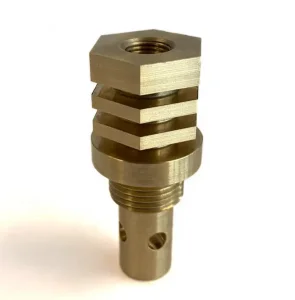
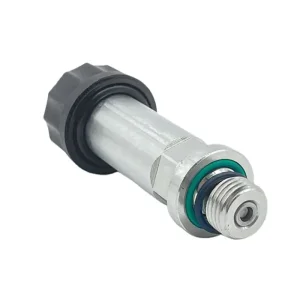
Engineered for extreme operating environments: Medical sleeve assemblies, robotics gearbox shells, brass cooling units, and hydraulic valve cores manufactured to strict geometric dimensioning and tolerancing (GD&T).