
High-Integrity Custom Machined & Cast Products
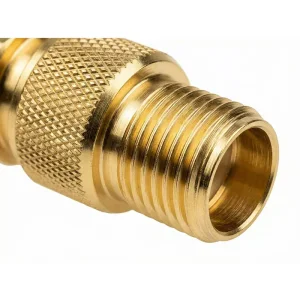
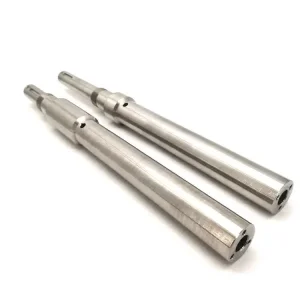
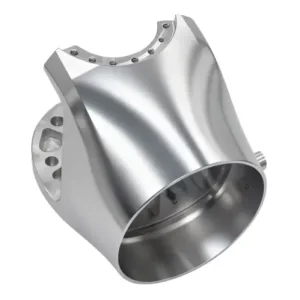
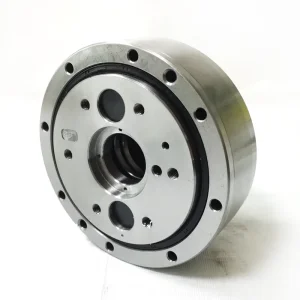
Direct manufacturing execution across high-precision Swiss-turning, 5-axis CNC machining, and specialized metal alloy casting.
Executive Engineering Insight: The Centrifugal Casting Advantage
Understanding directional solidification, gas-inclusion migration, and structural grain density in symmetrical hollow alloys.
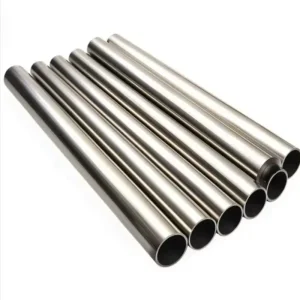
In high-reliability industrial fluid conveyance, subsea exploration, heavy mechanical powertrains, and petrochemical processing, casting defects such as micro-porosity, non-metallic slag entrainment, and dendritic shrinkage cannot be tolerated. Sourcing engineers and plant technical directors turning to a China centrifugal casting supplier seek structural integrity equivalent to forged components, combined with the geometric versatility and economic feasibility of cast production.
Centrifugal casting operates by pouring molten liquid metal—such as duplex stainless steels, high-nickel superalloys, phosphor bronzes, or wear-resistant ductile iron—into a permanent cylindrical mold spinning continuously at rotational velocities producing 60 to 120 times the acceleration of gravity (G-force). The intense centrifugal acceleration establishes directional radial solidification progressing uniformly from the chilled outer mold wall inward toward the rotational bore.
Global Commercial & Industrial Landscape
Navigating global supply chain volatility, alloy price fluctuations, and strict multi-national regulatory frameworks.
Global Energy & Decarbonization
Hydrogen distribution networks, LNG liquefaction lines, and carbon capture infrastructure demand high-alloy, thick-walled pipes that resist hydrogen embrittlement and cryogenic fractures. Centrifugal casting provides seamless integrity without longitudinal seam weld vulnerabilities.
- ASTM A351 CF8M / CF3M austenitic tubes
- Inconel 625 & 718 clad reform tubes
- High-temp reformer pyrolysis furnace coils
Supply Chain Diversification
Global procurement teams in North America and Western Europe face historic lead times from domestic Tier-1 foundries. Leading China centrifugal casting suppliers offer shortened tooling lead times, scalable raw material pools, and integrated CNC turning under one audited roof.
- Rapid mold tooling turnaround in 10-15 days
- Direct procurement of certified pig iron and nickel
- Consolidated export packaging & ocean logistics
Bimetallic Cladding Economics
Monolithic superalloys incur astronomical capital expenditure. Vertical and horizontal centrifugal casting allows dual-metal pouring (bimetallic casting), bonding an abrasive/corrosive inner layer to an economical high-strength carbon steel structural outer shell.
- Complete metallurgical fusion bond (no delamination)
- High-Cr wear-resistant white iron internal liners
- 40% - 60% procurement cost reduction
Comparative Engineering Evaluation: Casting & Forging Routes
Detailed performance, economic, and defect vulnerability comparisons across primary metal-forming processes.
| Evaluation Parameter | Centrifugal Casting | Static Sand / Investment | Seamless Forging |
|---|---|---|---|
| Directional Solidification | 100% Radial Chill Solidification | Omnidirectional / Volumetric Shrinkage Risk | N/A (Solid State Plastic Deformation) |
| Structural Density & Porosity | Extremely dense; micro-porosity floated to bore | Vulnerable to gas pores and centerline shrinkage | Maximum structural density; grain flow alignment |
| Cylindrical Yield & Scrap Ratio | High yield (~85-92%); minimal risers needed | Lower yield (55-65%); heavy gating & risers | Material loss during core piercing and bore out |
| Tooling & Mold Amortization | Low-to-moderate; reusable steel/graphite dies | Pattern consumable or expensive tooling dies | Extremely expensive heavy forging dies and presses |
| Tensile & Yield Isotropy | Isotropic properties across circumferential axis | Generally isotropic but lower mechanical values | Anisotropic (longitudinal vs. transverse grain) |
| Cost vs. Structural Ratio | Optimal Balance for Tubes, Rings, Sleeves | Economical for non-symmetrical, lower stress | High cost; economically viable for critical rotating |
Localized Support & International Compliance Assurance
Bridging global design requirements with ISO-certified, zero-defect manufacturing and full chain-of-custody transparency.
NDT Defect Detection
Every centrifugal sleeve and cylinder undergoes rigorous Non-Destructive Testing. Ultrasonic testing (UT) guarantees subsurface homogeneity, Liquid Penetrant Testing (PT) confirms flaw-free surfaces, and Radiographic Testing (RT) is applied to critical pressure-retaining components.
- ASTM E1444 Magnetic Particle (MT)
- ASTM A609 Ultrasonic Testing Levels
- 100% Hydrostatic pressure containment
Traceable EN 10204 3.1/3.2
True E-E-A-T reliability rests on raw data verification. We supply optical emission spectrometry (OES) chemical analysis, tensile and Charpy V-notch impact testing at ambient and sub-zero temperatures, along with formal EN 10204 3.1 inspection documentation.
- Direct Melt Heat Number Tracking
- Brinell / Rockwell Hardness Surveys
- Third-party SGS / TÜV 3.2 witnessing
In-House Precision CMM
Castings are only as valuable as their post-machined interface tolerances. Our Shenzhen and partner facilities bridge heavy foundry casting with multi-axis CNC lathe turning, deep-hole gun drilling, and CMM dimensional certification up to ±0.005 mm.
- Zeiss Coordinate Measuring Machines
- Surface roughness down to Ra 0.4 µm
- Concentricity & runout < 0.015 mm
International Compliance
We eliminate supply chain regulatory friction by strictly adhering to European Union and North American environmental and safety directives. Direct factory communication ensures intellectual property security under enforceable NDAs.
- RoHS & REACH Compliance Protocols
- PED 2014/68/EU Pressure Equipment
- ASME Boiler and Pressure Vessel Code
Localized Engineering Use Cases & Performance Benchmarks
Where centrifugal casting replaces forgings and fabrications to withstand extreme operational friction and pressure.
Marine Stern Tube & Rudder Bushings
Centrifugal bronze casting (tin bronze CuSn10, aluminum bronze CuAl10Fe5Ni5) provides maritime propulsion systems with unmatched resistance to seawater cavitation, stress corrosion cracking, and bearing friction wear.
Heavy Duty Cylinder Liners & Sleeves
For internal combustion locomotives, marine diesels, and high-displacement gas compressors, alloyed grey and ductile iron liners are horizontally centrifugally cast to generate uniform pearlite matrices with interconnected flake graphite for optimal oil retention.
Refinery Decoking & Pyrolysis Rollers
Petrochemical cracking furnaces utilize vertically and horizontally centrifugally cast high-alloy heat-resistant stainless steel tubes (HK40, HP40-Nb microalloyed with titanium and rare earth elements) operating under constant thermal stress up to 1150°C.
Technical Roadmap & Future Casting Innovations
Integrating artificial intelligence, digital twin thermal modeling, and multi-metal centrifugal solidification.
AI Solidification Simulation
Real-time machine learning integrates infrared pyrometric sensor arrays directly into the spinning mold frame. Thermodynamic models adjust mold RPM dynamically during the pour to optimize the solidification front and eliminate inner bore segregation.
- Dynamic G-force ramp profiles
- Automated pouring velocity control
- Predictive shrinkage zone avoidance
Automated In-Mold Thermal Barrier Coatings
Next-generation automated spray arms apply micron-controlled zircon/ceramic slurry washes inside spinning molds. This precisely manages heat extraction rates, suppressing chill-layer pinholes while doubling permanent steel die service life.
- Consistent sub-surface grain nucleation
- Substantial reduction in machining allowances
- Clean, defect-free outer diameter (OD) skin
Near-Net-Shape Centrifugal Hybridizing
Combining centrifugal spin casting with additive preforms allows internal ribbed, fluted, or textured bores to solidify under high pressure. This drastically reduces secondary CNC cycle times and conserves costly high-alloy material.
- Reduction of raw material consumption by 22%
- Faster thermal stabilization in service
- Lower total carbon footprint per produced ton
Frequently Asked Questions for Sourcing Engineering Teams
Clear, direct metallurgical answers to common qualifying queries raised by international procurement managers.
Explore Additional Custom Engineered Hardware Solutions
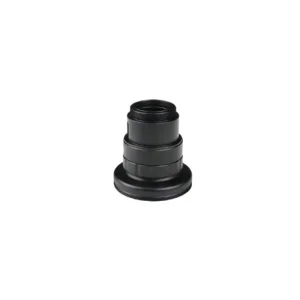
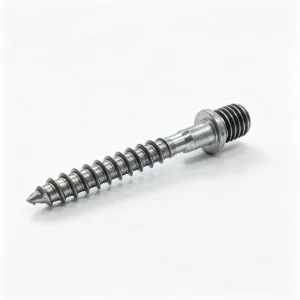
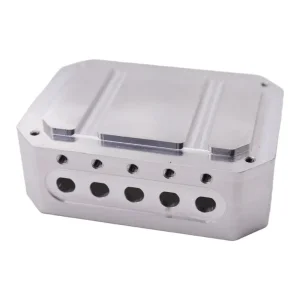
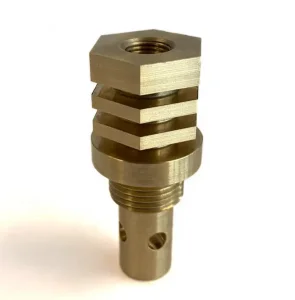
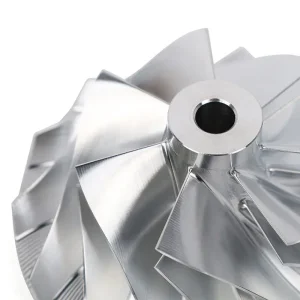
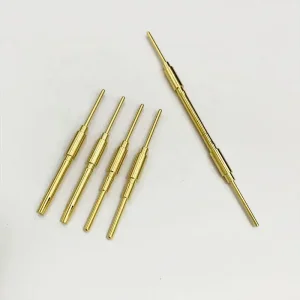
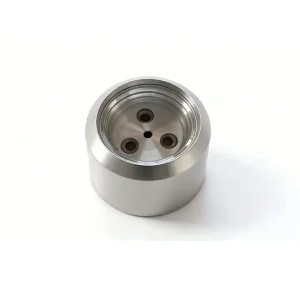
Full-spectrum manufacturing capabilities from CNC milling, turned connectors, to complex thin-wall housings.
Partner with a Certified China Centrifugal Casting Manufacturer
Eliminate trading intermediaries and communication errors. Submit your 2D manufacturing prints (PDF/DWG) and 3D solid models (STEP/IGES) directly to our senior metallurgical engineering team. We guarantee non-disclosure agreement (NDA) execution prior to CAD transfer, providing a comprehensive Design for Manufacturability (DFM) review, mold gating analysis, and competitive tier-1 factory pricing within 24 hours.