Precision Tooling & High-Tolerance Engineered Components
Explore our export-ready custom assemblies, sensor enclosures, turned bushings, and precision mechanical hardware manufactured under strict ISO/CMM quality protocols.
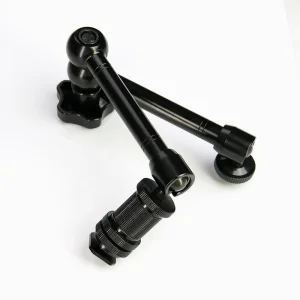
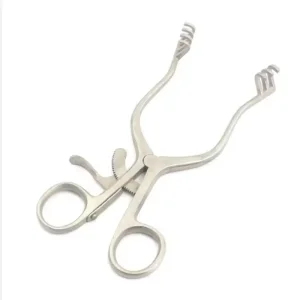
China Professional Quality Stainless Steel Custom Surgical Retractor Service, Exporter
View Technical Details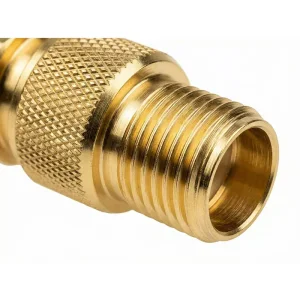
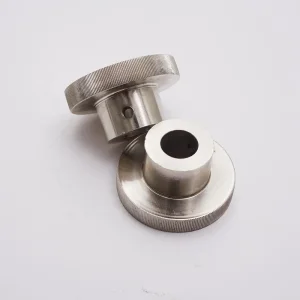
High-Quality Precision Knurled Brass Threaded Connector Manufacturers, Factories
View Technical Details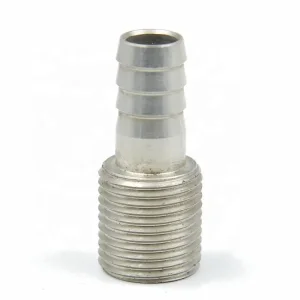
OEM Custom CNC Turned Hose Barb Fittings & Threaded Adapters Manufacturer, Factory
View Technical Details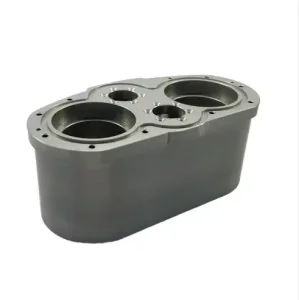
Custom Factory 5-Axis CNC Machined Steel & Aluminum Gearbox Shell for Robotics
View Technical Details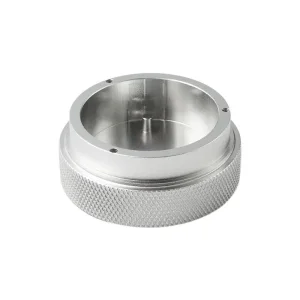
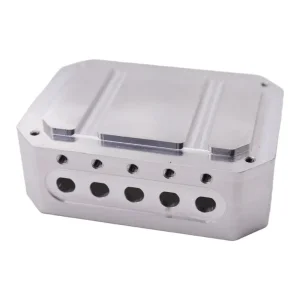
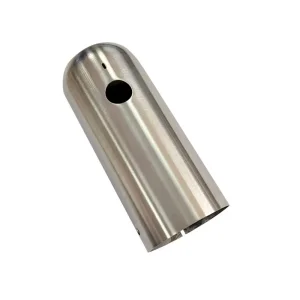
China Custom CNC Machined Aluminum Enclosure for RF & Industrial Sensor Modules
View Technical Details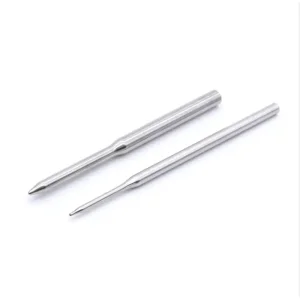
The Shenzhen OEM Plastic Tooling Advantage: Ecosystem Velocity & Precision
Why Tier-1 product developers, medical device innovators, and robotics OEMs consolidate custom mold fabrication and injection tooling within the Greater Bay Area manufacturing corridor.
Aggregated Tooling Supply Chain Velocity
In high-precision injection tooling, time-to-first-article (T1) governs market leadership. Operating within Shenzhen's industrial core gives direct 30-minute access to premium steel merchants (Finkl, Assab, Daido), specialized vacuum heat treatments, PVD surface coaters, and standard component masters (DME, HASCO, Misumi).
- Rapid raw stock block sourcing within 4 hours
- Deep-hole gun drilling and pre-machining integration
- Zero logistics lag on custom mold bases (LKM Standard)
Sub-Micron Multi-Axis Toolroom Machining
Plastic tool longevity and part repeatability start with machine bed rigidity and thermal compensation. Our owned facility utilizes imported 5-axis Makino and GF Machining Solutions high-speed milling centers (up to 42,000 RPM) paired with Sodick mirror EDM and wire-cut electrical discharge machines.
- Electrode spark gap control within ±0.002mm
- Optical mirror finish Ra 0.05µm without hand stoning
- High-speed hard milling of pre-hardened steels (54 HRC)
Cost-to-Precision Arbitrage for Western OEMs
By coupling native engineering labor efficiency with western standard operating procedures (SPI Class 101 mold standards, full PPAP packages, steel certification tracking), Sunmy delivers an average 35% to 50% tooling cost reduction over US/EU domestic toolrooms without risking cavitation balance or core fatigue.
- Genuine DIN / AISI certified steel certificates supplied
- Complete 3D mold designs provided natively in STEP/IGES
- Direct factory communication, zero trading overheads
Emerging Paradigms: Conformal Cooling, Multi-Shot & In-Mold Sensing
Tooling has evolved from passive mechanical cutting into high-throughput cyber-physical systems. Modern OEM injection tooling incorporates direct digital manufacturing to minimize cycle times and eliminate warpage.
DMLS Conformal Cooling Channels
Traditional straight-drilled cooling circuits fail to reach deep cores and complex geometry, leading to hot spots, differential shrinkage, and extended cooling phases. By deploying metal 3D printing (Direct Metal Laser Sintering in Maraging Steel MS1), our tooling engineers sculpt fluid channels along the exact contours of the part.
- 20% to 45% reduction in total injection cycle time
- Eliminates sink marks and residual stress-induced warping
- Uniform heat extraction for PEEK, PPS, and glass-filled resins
AI-Enhanced Moldflow Predictive DFM
Before steel is touched, our engineering department performs comprehensive mold-filling simulations (Autodesk Moldflow Insight) combined with algorithmic gate balancing. We calculate fiber orientation in reinforced polymers, identify weld line vulnerability points, and predict volumetric shrinkage to within ±0.03% accuracy.
- Gate freeze optimization to avoid sink defects
- Air trap venting location calculations down to 0.015mm
- Clamping tonnage and injection pressure requirement models
Multi-Material 2K/3K & Overmolding Tooling
Producing ergonomic grips, hermetic silicone gaskets (LSR), and dual-color aesthetics requires rotary platen, core-back, or robotic transfer tooling. Sunmy engineers multi-station injection molds with hydraulic sequencing and pneumatic core pull mechanisms capable of continuous multi-million cycle stability.
- Mechanical interlock and chemical bonding assurance
- Precision shut-offs preventing flash on secondary elastomer
- Integrated hot runner manifolds (Husky, Yudo, Synventive)
Tool Steel Metallurgy & SPI Mold Classification Matrix
Selecting the precise cavity and core metallurgy determines mold production life, chemical corrosion resistance against outgassing resins, and maintenance intervals.
| SPI Classification | Guaranteed Shots | Recommended Steel | Hardness (HRC) | Target Application & Resilience |
|---|---|---|---|---|
| Class 101 (Extremely High Vol.) | 1,000,000+ | Assab S136 / H13 ESR | 52 - 56 HRC | Abrasive glass-filled resins (PA66-GF), medical Class III, corrosive flame retardants. |
| Class 102 (High Production) | Up to 1,000,000 | 1.2344 / 420 SS | 48 - 52 HRC | Automotive exterior brackets, consumer electronics chassis, high-cycle gears. |
| Class 103 (Medium Production) | Up to 500,000 | NAK80 / 718H / P20 | 32 - 40 HRC | General industrial housings, cosmetic enclosures requiring optical diamond mirror polish. |
| Class 104 (Low Production) | Up to 100,000 | P20 Pre-hardened | 28 - 32 HRC | Niche hardware, bridge tooling, pilot batch builds with minimal tool investment. |
| Class 105 (Prototype Tooling) | Up to 500 - 5,000 | Alloy 7075-T6 / QC-10 | 150 HB | Rapid functional testing, venture validation, clinical trial run components. |
Cross-Sector Deployment: Engineering Plastic Solutions in Action
How our bespoke toolmaking and export capabilities address the stringent regulatory and mechanical requirements of key global industries.
Automotive E-Mobility & Under-Hood
Electric vehicle (EV) battery management modules, high-voltage busbar connectors, and thermal management fluid valves demand high-temperature dielectric polymers (PPS, PA46, PBT-GF30). Tooling requires aggressive venting, vacuum-assisted cavity evacuation, and hot runner needle valve systems to prevent micro-voiding and electrical tracking breakdown.
- IATF 16949-compliant FMEA and APQP documentation
- In-mold metal insert positioning with zero displacement
- Cpk > 1.67 on safety-critical clip dimensions
Medical Diagnostic & Surgical Devices
Manufactured under ISO 13485 quality protocols. Disposable fluidic cartridges, surgical retractor components, and respiratory housings necessitate multi-cavity hot-tip tooling using electro-polished S136 stainless steel hardened to 54 HRC. Cavities run completely oil-free with diamond-like carbon (DLC) coated guide pins and ejector slides.
- Class 100,000 cleanroom compatible dry tool mechanics
- SPI-A1 diamond polish ensuring zero cellular adherence
- 100% bio-compatible resin validation (USP Class VI)
Industrial Robotics & Sensor Enclosures
Industrial IoT sensors, 6-axis robot joint housings, and harsh-environment telemetry require impact-modified polycarbonates (PC/PBT blends) with integrated silicone seals. We engineer complex sliding action tools with lifters, angled ejectors, and internal unscrewing cores that ensure IP67/IP68 ingress protection sealing surfaces.
- Precise parting line matching to eliminate sealing burrs
- Mold-Tech and VDI 3400 chemical texturing standards
- Anti-warpage geometric compensations for flat covers
Global Procurement Architecture: PPAP, Metrology & Export Tooling
Overseas supply chain managers require measurable certainty. Our engineering governance model follows structured European and North American tool qualifying stages.
Standardized APQP & PPAP Deliverables
Every tool manufactured for export ships with a comprehensive Production Part Approval Process (PPAP Level 3) package. We verify dimensional stability over consecutive high-speed trial runs under documented machine barrel temperature, backpressure, and cooling profiles.
- Full First Article Inspection (FAI) on all drawing dimensions
- Process Capability Studies (Cp, Cpk indices > 1.33 / 1.67)
- Mill test certificates and heat treatment hardness charts
Coordinate Measuring Machine (CMM) Verification
Equipped with temperature-controlled metrology laboratories housing Zeiss and Hexagon multi-sensor bridge CMMs, optical profile projectors, and 3D blue-light scanners. Every core, cavity insert, and molded plastic sample is probed against nominal CAD geometry to detect volumetric drift.
- True position, profile of a surface, and GD&T validation
- Color heat-map deviations against original STEP files
- Gauge Repeatability and Reproducibility (GR&R) analysis
Export-Ready Packaging & Ocean Logistics
Export molds must survive intercontinental sea or air freight without corrosion or mechanical misalignment. Sunmy applies military-grade anti-rust spray, locks all slides with external steel locking bars, covers cooling ports with anodized plugs, and encases tools in fumigated hardwood crates.
- Complete set of spare core pins, ejector pins, and seals included
- Fully labeled water circuit schematics and electrical plug standards
- Complete USB with 2D/3D CAD, DFM, and process trial logs
Engineering & Procurement FAQ for Plastic Tooling Exporters
Specific technical answers addressing common supplier evaluation criteria, steel integrity, runner selection, and intellectual property protection.
How does Sunmy guarantee tooling steel authenticity and prevent counterfeit alloys?
We source all tool steel directly from certified tier-1 distributors of Bohler-Uddeholm, Assab, Daido, or Finkl. Every block arrives with traceable mill test certificates documenting chemical composition and ultrasonic flaw test results. We also conduct in-house spectrometry and Rockwell hardness testing before any cutting takes place.
What is the standard procedure for managing engineering change orders (ECO) during tooling?
When design revisions occur mid-production, our team conducts an immediate 3D CAD comparison to isolate affected features. We classify changes as "steel-safe" (adding material) or requiring welded build-up/sub-insert modularization. Detailed cost and timeline impact reports are delivered within 24 hours prior to physical tool modification.
Can you build export molds compatible with western molding presses (DME/HASCO)?
Yes. Over 70% of our tooling output is designed specifically for export to European and North American molders. We configure tools precisely to customer press guidelines, utilizing Inch or Metric fasteners, DME/HASCO guide elements, Parker hydraulics, Staubli water fittings, and DME standard hot runner thermocouple connections.
How are proprietary CAD data and competitive intellectual properties safeguarded?
We execute standard bilateral NDAs enforceable under international jurisdiction prior to data transfer. CAD data is managed on encrypted, air-gapped engineering networks with watermarked revisions. We are an integrated owner-operated facility in Shenzhen, eliminating uncontrolled data handoffs to subcontracted broker firms.
What is the typical lead time from DFM approval to T1 mold trial samples?
Standard prototype aluminum/P20 tooling requires 12 to 18 business days. Complex multi-cavity Class 101 production molds (with hot runners and multi-action slides) average 30 to 45 calendar days. Accelerated fast-track programs can compress schedules by running rough machining and base fabrication concurrently.
Do you support bridge manufacturing before molds are shipped to overseas plants?
Yes. Many global customers engage Sunmy to perform bridge production (running 5,000 to 50,000 parts in our Shenzhen injection molding facility) to satisfy market demand while the primary mold is shipped, customs cleared, and validated in their domestic facility.
Engineered Assemblies, Valve Cores & Precision CNC Turned Products
Complementary precision-engineered metal hardware, hydraulic parts, turned sleeves, and custom industrial mechanisms designed and verified by Sunmy Hardware.
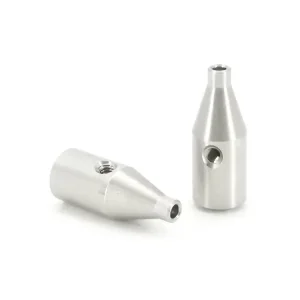
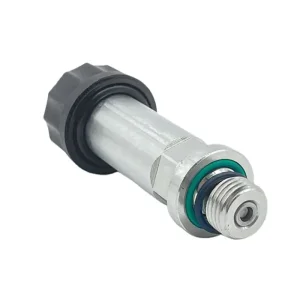
Custom High-Performance Hydraulic Solenoid Valve Core – Precision CNC Turned Parts
View Technical Details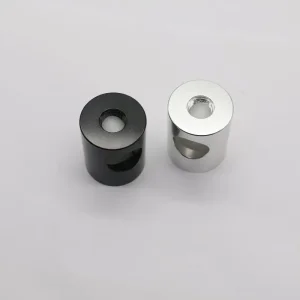
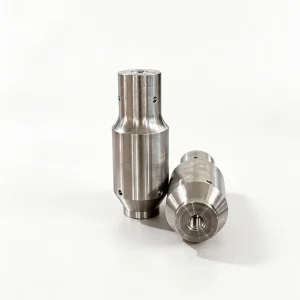
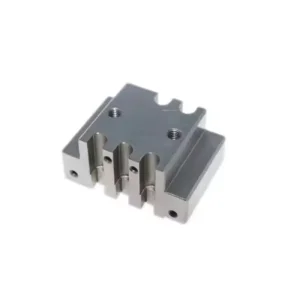
ODM OEM Precision CNC Machining Aluminum Parts & Custom Industrial Components
View Technical Details