
High-Tolerance Structural Substrates & Molded Assemblies (Batch 01)
Engineered metal inserts, multi-axis robotic joints, and complex turned interfaces manufactured in-house to guarantee flawless mechanical bonding during subsequent TPE encapsulation.
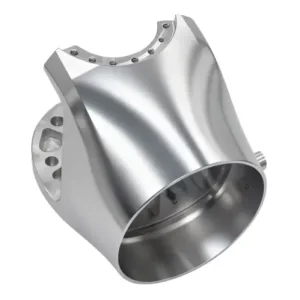
ODM High-Precision Custom 5-Axis CNC Machined Robot Joint & Housing Parts Product, Quotes
View Product Details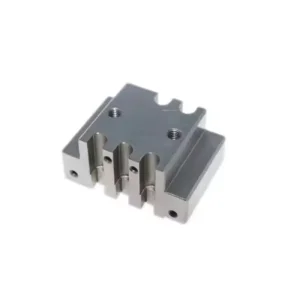
ODM OEM Precision CNC Machining Aluminum Parts & Custom Industrial Components Exporters, Quotes
View Product Details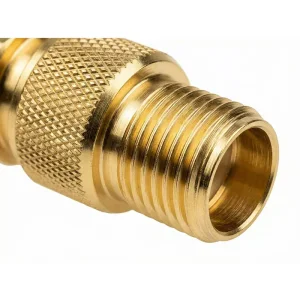
High-Quality Precision Knurled Brass Threaded Connector Manufacturers, Factories
View Product Details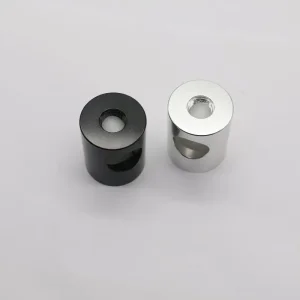
High-Quality Custom Precision CNC Turned Stainless Steel Medical Components Products, Exporter
View Product Details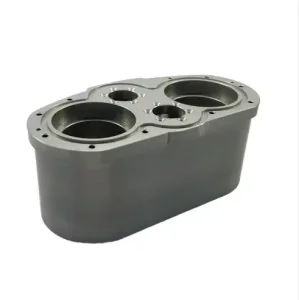
Custom Factory Custom 5-Axis CNC Machined Steel & Aluminum Universal Joint Base and Gearbox Shell for Robotics & Drone Industry Products, Exporters
View Product Details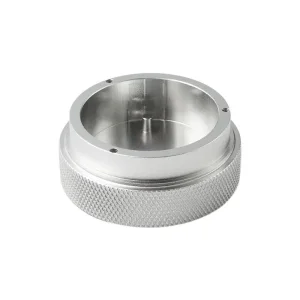
High-Quality Premium Custom CNC Machined Aluminum Control Knobs Manufacturer, Exporters
View Product Details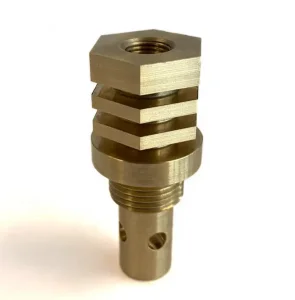
China Custom Precision CNC Machined Brass Cooling Block Factories, Quotes
View Product Details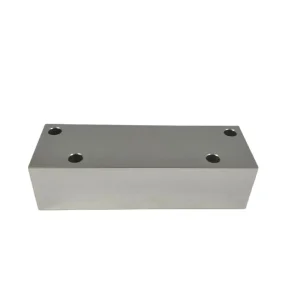
ODM Custom CNC Machined Aluminum Vacuum Manifold Block Manufacturer, Products
View Product DetailsThe Global Shift Toward High-Performance TPE Molding Ecosystems
Why Tier-1 medical, automotive, and industrial technology developers are partnering directly with integrated Chinese precision manufacturing clusters to conquer thermal degradation, tactile ergonomics, and complex overmolding adhesion.
Across the international industrial landscape, Thermoplastic Elastomers (TPE) and Thermoplastic Vulcanizates (TPV) have superseded conventional thermoset vulcanized rubber. The elimination of long chemical curing cycles, coupled with total recyclability and infinite polymer compounding flexibility, has transformed how original equipment manufacturers conceive multi-material structures. However, navigating the procurement landscape for China TPE molding factories demands far more than catalog searching; it mandates a granular understanding of polymer micro-rheology, interfacial chemical bonding, and precision tooling stability under repetitive thermal and mechanical stresses.
Historically, global sourcing managers separated metal machining vendors from thermoplastic molders. This fragmented supply chain led to rampant yield losses: CNC-machined cores, inserts, or stamped terminals produced by Company A suffered oxidation, dimensional drift, or residual oil films, which subsequently prevented covalent cross-linking when overmolded with TPE at Company B. Shenzhen Sunmy Hardware Co., Ltd. (operating since 2016) engineered a vertically integrated model. By anchoring high-precision CNC 5-axis milling, Swiss-turning, and progressive stamping directly adjacent to high-tonnage injection and cleanroom overmolding presses, Sunmy unifies the entire substrate-to-elastomer chain under one quality management system verified by First Article Inspection (FAI) and Coordinate Measuring Machines (CMM).
Interfacial Adhesion Chemistry
TPE overmolding relies on two core mechanisms: molecular interdiffusion (chemical affinity) and mechanical undercuts. In SEBS/PP-based compounding, optimizing melt temperature (typically 190°C–230°C) is required to micro-melt the rigid substrate surface without creating dimensional warping.
- Compatible with PP, PA6/PA66, ABS, PC, POM
- Plasma & chemical priming for metal inserts
- Peel resistance exceeding 45 N/cm ASTM D903
Rheological Cavity Dynamics
Elastomeric polymers exhibit high shear-thinning behavior under pressure. Without sophisticated Moldflow gate-placement analysis, toolings suffer from flow hesitation, jetting, micro-void entrapment, and premature freeze-off in thin-wall cross sections under 0.6 mm.
- Balanced hot runner and valve-gate designs
- Sub-micron venting channels (0.008–0.015 mm)
- Zero flash on critical shut-off lines
Thermal & Cycle Time Optimization
TPE has a lower thermal conductivity compared to rigid engineering polymers, mandating conformal cooling channels in steel tooling (H13, NAK80, or S136 hardened to 48–52 HRC) to compress cycle times while eliminating residual internal stresses.
- Conformal 3D-printed tool cooling inserts
- Fast cycle optimization (18–35 seconds)
- Automated robotic pick-and-place demolding
Comprehensive Material & Process Selection Architecture
Comparing elastomer compound classifications across chemical compatibility, mechanical properties, and tooling requirements to inform your project's Design for Manufacturability (DFM).
| Elastomer Class | Hardness Range | Tensile Modulus (MPa) | Compression Set (70°C/22h) | Optimal Substrates | Tooling Shrinkage (%) | Primary Industrial Use-Case |
|---|---|---|---|---|---|---|
| TPS (SEBS/SEP Compound) | 00 Shore A – 90 Shore A | 1.2 – 15.0 | 22% – 35% | PP, PE, PS, Over-Metal | 1.2% – 2.5% | Consumer devices, soft grips, medical gaskets |
| TPV (EPDM/PP Cross-linked) | 35 Shore A – 50 Shore D | 3.5 – 28.0 | 18% – 28% | PP, Glass-filled Polyamide | 1.5% – 2.8% | Under-hood automotive seals, bellows, boots |
| TPU (Polyurethane Base) | 60 Shore A – 75 Shore D | 8.0 – 65.0 | 25% – 42% | PC, ABS, Nylon (PA), PBT | 0.6% – 1.4% | Industrial wheels, abrasion bumpers, phone cases |
| TPE-E / COPE (Copolyester) | 28 Shore D – 82 Shore D | 45.0 – 380.0 | 30% – 48% | PBT, PET, Metal Inserts | 1.0% – 1.8% | High-load silent gears, hydraulic air ducts |
| TPA / PEBA (Polyether Block Amide) | 40 Shore A – 70 Shore D | 15.0 – 190.0 | 20% – 32% | Nylon 11, Nylon 12, Titanium | 0.5% – 1.2% | Athletic performance, aerospace acoustic damping |
Engineered TPE Solutions Across Critical Industrial Verticals
Demonstrating functional resilience in high-wear, ingress-protected, and vibration-attenuated operating environments.
Robotics & Drone Systems
Joint dust seals, elastomeric gimbal vibration dampers, and robotic EOAT suction cup pads. We fuse 5-axis milled titanium and 7075 aluminum brackets directly with high-damping TPE to suppress motor harmonic resonances up to 1.8 kHz.
IP67 / IP68 IngressMedical Diagnostics & Tools
USP Class VI and ISO 10993 compliant soft-touch ergonomic handles, diaphragms for fluid delivery pumps, and needle-free injection ports. Produced in controlled cleanrooms with in-line visual automated defect detection.
Cytotoxicity PassedAutomotive Electrification (EV)
High-voltage laminated copper busbar encapsulations, weatherstrips, charging gun grip assemblies, and underbody battery pack perimeter gaskets designed for resistance to glycols, battery electrolytes, and UL94 V-0 flame ratings.
UL94 V-0 Self-ExtinguishingIndustrial Controls & Metrology
Drop-proof dual-material instrument enclosures, tactile silicone-free keypads, rotary knob co-molding, and hermetic thermowell cable gland seals capable of enduring harsh cleaning solvents and UV exposure.
Impact IK08 / UV ASTM G154Enterprise-Grade Assurance for International Procurement Audits
Eliminating intellectual property vulnerabilities, customs bottlenecks, and hazardous substance liabilities through transparent documentation.
Guaranteed NDA & Direct IP Custody
Unlike third-party export brokers, Sunmy operates directly as the manufacturing facility. Non-Disclosure Agreements are bilaterally executed before receiving STEP, IGES, or CAD packages. All design files are stored on isolated, encrypted air-gapped servers accessible only by designated project engineers.
Full Regulatory & Environmental Attestation
We supply verifiable third-party SGS/TUV testing certifications for every resin batch. Compliance paperwork includes RoHS Directive (EU) 2015/863, REACH SVHC declarations (Regulation EC 1907/2006), California Proposition 65, and FDA 21 CFR 177.2600 food-contact attestation.
In-House Metrology & FAI Sign-off
Every initial mold trial (T0, T1) produces a formal First Article Inspection report mapping critical-to-quality (CTQ) dimensions via Mitutoyo CMM, optical 2.5D projectors, and laser profile scanners. No production tool moves to mass volume without customer sign-off.
The Evolution of TPE Injection: Microcellular, Bio-based & Smart Overmolding
How cutting-edge Chinese engineering facilities are navigating carbon neutrality mandates and Industry 4.0 precision tolerances.
The next decade of precision elastomeric molding is governed by three major engineering disruptions: sustainable circular compounds, supercritical fluid foaming, and in-mold electronic integration (IME).
1. Bio-Circularity & Post-Industrial Recycled (PIR) Formulations
Driven by the European Union's Corporate Sustainability Due Diligence Directive (CSDDD), tier-1 hardware brands are requiring measurable Product Carbon Footprints (PCF). Sunmy Hardware is leading qualification trials for ISCC PLUS-certified bio-circular TPE compounds derived from pine oils and non-fossil feedstocks. These compounds deliver identical Shore hardness stability, UV weathering performance, and bonding affinity to standard petroleum-based SEBS without requiring retooling of existing molds.
2. Microcellular Injection (Mucell / Supercritical N2/CO2 Foaming)
For large structural parts in robotics and automotive battery brackets, microcellular foaming technology introduces supercritical nitrogen directly into the plasticizing barrel. During injection, billions of micro-voids expand within the core of the part while preserving an unfoamed solid structural skin. This cuts part weight by up to 22%, dramatically mitigates sink marks over varying rib thicknesses, and reduces cavity clamp-force requirements by 30%.
3. In-Mold Electronics (IME) & Sensorized TPE Overmolding
The merging of conductive flexible circuits, capacitive touch sensors, and elastomeric overmolding is transforming human-machine interfaces. Sunmy's cleanroom overmolding processes utilize ultra-low injection pressures and controlled melt temperatures to encapsulate printed silver conductors and micro-LED arrays into sealed, waterproof elastomeric surfaces without shearing microscopic circuitry.
Frequently Asked Questions: Sourcing & Tooling Engineering
Authoritative technical answers to common queries from global sourcing directors, tooling leads, and mechanical design engineers.
What is the key differentiator between standard plastic injection and TPE overmolding?
How does Sunmy prevent flash on TPE parts, particularly around parting lines and metal inserts?
Which mold steel is recommended for high-volume TPE vs. abrasive TPU molding?
Can Sunmy assist in optimizing my CAD files for DFM prior to mold tooling fabrication?
What are typical production lead times for prototype molds versus export-ready production tools?
What documentation accompanies export shipments destined for Europe or North America?
High-Tolerance Structural Substrates & Molded Assemblies (Batch 02)
Specialty non-standard fixtures, multi-hole plates, optical benches, and waterproof sensor probes manufactured under strict CMM dimensional inspection.
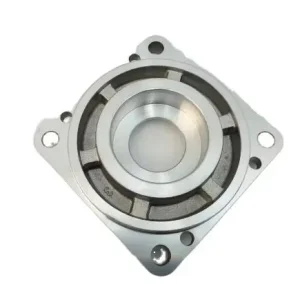
OEM Custom CNC Machining Parts / Precision Bearing Housings / Flanged Bearing Support Components Manufacturers, Service
View Product Details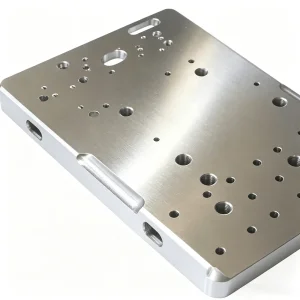
OEM Custom CNC Machined Aluminum Multi-Hole Mounting Plate Manufacturer, Suppliers
View Product Details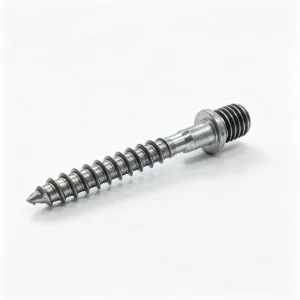
OEM Custom Precision Turned Stainless Steel Dual-Thread Hanger Bolt Manufacturer, Factory
View Product Details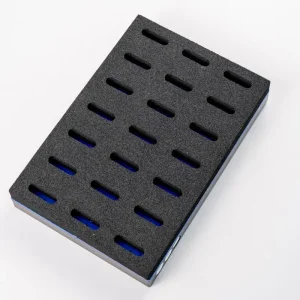
China Custom CNC Machined Foam Vacuum Gripper Plates for Robotic EOAT Manufacturer, Service
View Product Details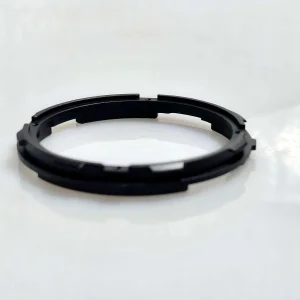
Custom Custom CNC Turn-Milled Bayonet Mount & Locking Ring Supplier, Suppliers
View Product Details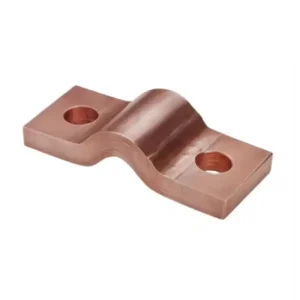
Custom Custom Flexible Laminated Copper Busbar for Battery & Electrical Equipment Service, Products
View Product Details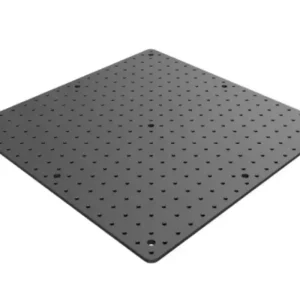
China OEM Custom Precision CNC Machining Non-Standard Solid Aluminum Optical Breadboard Product, Factory
View Product Details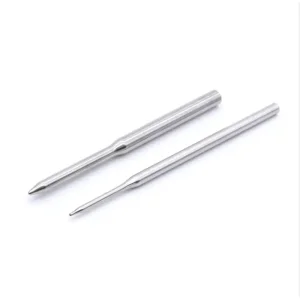
OEM Custom Stainless Steel Waterproof Sensor Probe Housing / Thermowell (OEM Support) Manufacturer, Suppliers
View Product DetailsReady to Initiate DFM Review for Your TPE Molding Program?
Transfer your 2D drawings and 3D CAD files (.STEP, .IGES, .X_T) directly to Sunmy Hardware's Shenzhen engineering team under strict NDA. Receive a comprehensive manufacturability assessment, tooling gate layout, and firm quotation within 24 hours.