
Integrated Precision Machining & Hardware Components
Explore our manufactured solutions engineered directly from client CAD specifications. Built in our Shenzhen facilities with rigorous metallurgical validation, tight concentricity control, and direct factory-to-door delivery.
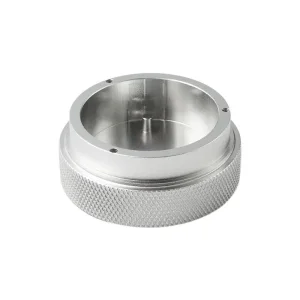
High-Quality Premium Custom CNC Machined Aluminum Control Knobs Manufacturer, Exporters
View Specifications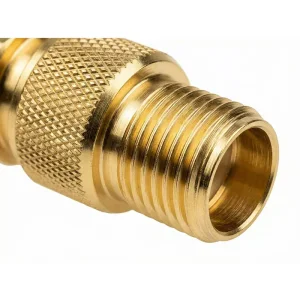
High-Quality Precision Knurled Brass Threaded Connector Manufacturers, Factories
View Specifications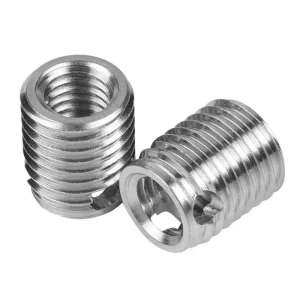
Custom Custom Self-Tapping Threaded Inserts Product, Exporters
View Specifications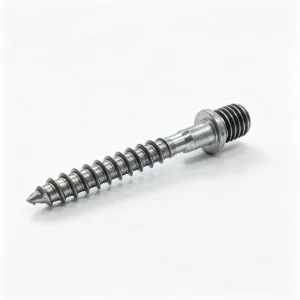
OEM Custom Precision Turned Stainless Steel Dual-Thread Hanger Bolt Manufacturer, Factory
View Specifications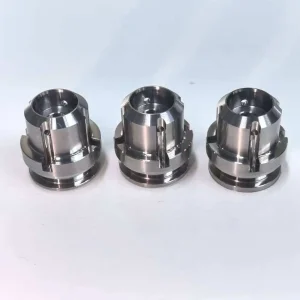
High-Quality Custom Precision Turned Stainless Steel Valve Component Exporter, Factories
View Specifications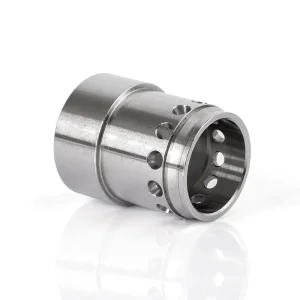
China Custom CNC Stainless Steel Drilled Filter Sleeve & Flow Control Valve Component Supplier
View Specifications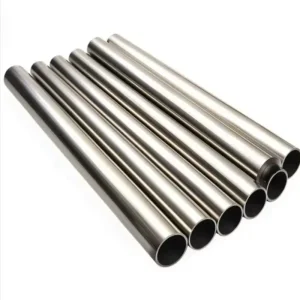
High-Quality Custom Precision Capillary Stainless Steel Pipe / Tube (OD 1mm - 8mm) Supplier
View Specifications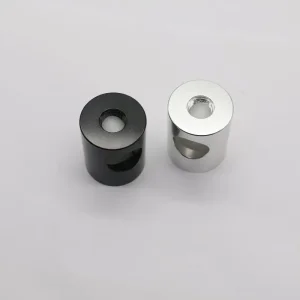
High-Quality Custom Precision CNC Turned Stainless Steel Medical Components Products, Exporter
View SpecificationsThe Paradigm Shift from Machined Metals to Engineered Plastic Gears
Modern kinematic drivetrains demand aggressive noise-vibration-harshness (NVH) attenuation, weight reduction, and maintenance-free lifecycle operation. High-performance injection molded polymer gearing is replacing cut bronze and steel across global OEM supply chains.
NVH Attenuation & Acoustic Damping
Polymer gears inherently possess higher viscoelastic damping than metals, absorbing meshing shocks and tooth deflection impacts. This cuts acoustic sound pressure levels by up to 12 dB in electric vehicle actuators, smart medical pumps, and automated consumer drives without secondary soundproofing.
Mass Reduction & Inertial Efficiency
Weighing approximately 15% to 20% of structural steel, plastic gearing reduces the mass moment of inertia significantly. In high-dynamic servo mechanisms and robotic joint modules, reduced rotating inertia decreases peak motor torque demands, extending battery life and reducing thermal buildup.
Self-Lubrication & Zero Maintenance
By compounding base resins with internally dispersed solid lubricants like Polytetrafluoroethylene (PTFE), Silicone fluid, or Molybdenum Disulfide (MoS2), custom molded gears achieve friction coefficients as low as 0.08. They operate dry for life in cleanroom, food, and surgical environments.
High-Performance Resins Formulated for Precision Gear Kinetics
Gear geometry is only as reliable as the underlying polymer matrix. Sunmy Hardware works with certified, traceable resin formulations optimized for dimensional stability, low hygroscopic expansion, and high fatigue endurance under cyclical contact stress.
| Polymer Base Grade | Key Modifiers & Fillers | Tensile Modulus (MPa) | Heat Deflection (HDT @ 1.8MPa) | Primary Industrial Applications |
|---|---|---|---|---|
| POM-C / Delrin (Acetal Copolymer) | Unfilled, PTFE-lubricated, Silicone | 2,800 - 3,200 | 110 °C | Precision spur/helical gears, automotive door actuators, office equipment. |
| PA66 / PA46 (Nylon Matrix) | 15-30% Short Carbon / Glass Fiber + MoS2 | 5,500 - 9,500 | 190 - 240 °C | Heavy-duty worm drives, power tool reductions, high impact steering gearsets. |
| PEEK (Polyetheretherketone) | Carbon Fiber, PTFE, Ceramic Powder | 8,500 - 14,000 | 280 - 310 °C | Aerospace actuators, downhole fluid metering, surgical tool drive trains. |
| PPS (Polyphenylene Sulfide) | 40% Glass/Mineral Matrix | 12,000 - 15,000 | 260 °C | Automotive under-hood fluid pumps, chemical exposure valves, zero water uptake. |
| PBT (Polybutylene Terephthalate) | 20% Glass Bead / Low Shrink | 4,200 - 6,000 | 165 °C | High dimensional stability electronic timer gears, optical encoders, camera zoom tracks. |
Decoupled Scientific Molding & Cavity Shrinkage Engineering
Molding involute gear teeth demands micron-level mold tooling. Non-linear differential shrinkage, polymer chain orientation, and gate placement must be modeled to prevent weld lines at high-stress tooth roots.
Moldflow® Simulation
Simulating true volumetric shrinkage, fiber orientation vectors, and gate fill balance to eliminate air traps and core deflection.
Precision Wire EDM
Tooth cavities cut with submerged multi-axis AgieCharmilles wire EDM with tolerances held to ±0.002mm on hardened steel (HRC 54-58).
Conformal Cooling
Vacuum-brazed or DMLS 3D printed conformal cooling circuits maintain uniform thermal gradients around the gear circumference to prevent warpage.
In-Cavity Sensor Decoupling
Kistler quartz pressure sensors capture packing transition at the precise freeze point, holding tooth root density uniform shot-to-shot.
Automated Demolding
Balanced multi-pin ring ejection system applies zero localized bending stress on gear rims, preventing mechanical pitch variations.
Custom Gear Configurations Built for Demanding Motion Profiles
Whether you require sub-millimeter micro-gears for medical microfluidics or heavy multi-stage planetary gearboxes, our engineering infrastructure executes all standard and custom tooth profiles.
Spur & Involute Gears
Engineered parallel-axis gearsets with optimized pressure angles (14.5°, 20°, 25°), tip relief, and root fillet crowning to minimize tooth bending stress under cyclic high shock loads.
Helical & Herringbone
Continuous contact tooth mesh design engineered with specialized multi-piece unscrewing mold cores. Drastically reduces gear whine in high-RPM servo transmissions and power drives.
Planetary Sun & Ring Gears
Internal ring gears with zero-draft tooth geometry combined with insert-molded metallic sun gears, delivering compact torque density in high-ratio coaxial gearboxes.
Worm Drives & Bevel Gears
Self-locking worm gears and intersect-angle bevel gear sets with customized lead profiles. Low coefficient of friction compounds prevent localized thermal galling.
Unified Manufacturing Ecosystem: From Insert Pinions to Assembled Gearboxes
A precision polymer gear rarely works alone. Shenzhen Sunmy Hardware integrates precision CNC metal shaft turning, die-cast aluminum transmission housings, and automated sub-assembly under a single quality audit umbrella.
Metal-Plastic Insert Overmolding
Using high-speed Swiss-lathe turned knurled steel or brass pinions (machined to ±0.005mm in our Shenzhen facilities), we overmold self-lubricating plastic gear rings. This marries the high torsional strength of metal shafts with the silent, low-wear meshing properties of polymers, eliminating press-fit slipping failures.
Die Cast & Machined Gearbox Shells
We manufacture matching structural housings using thin-wall high-pressure die casting (A380, ADC12 aluminum or Zamak zinc), followed by 5-axis CNC bore finishing. This guarantees precise gear center-to-center distances, parallel shaft alignments, and proper involute backlash across severe thermal ranges.
Kinematic Sub-Assembly & Testing
We supply more than loose components. Our clean assembly lines assemble complete planetary gearheads, install low-friction ball bearings, apply measured quantities of damping grease, and run dynamic torque, efficiency, and acoustic spectrum tests prior to export shipment.
In-House Zeiss CMM & Double-Flank Involute Metrology
Quality claims are meaningless without traceable inspection data. Our quality center inspects plastic gears using coordinate measuring systems equipped with specialized analytical gear software, providing verifiable AGMA and ISO data packages.
Total Composite Error (TCE)
Double-flank gear testers roll parts against AGMA Class 13 master gears to verify radial composite deviations, pitch errors, and tooth runout in real-time continuous curves.
Zeiss 3D Scanning CMM
Equipped with high-sensitivity scanning probes to map full 3D involute surface profiles, lead crowning, and pitch line concentricity against native CAD STEP models.
FAI & PPAP Level 3
Complete quality paperwork packages including First Article Inspection (AS9102 / ISO standard format), CPK capability studies on critical pitch diameters, and resin material certifications.
Endurance & Torsion Rig
In-house life testing rigs evaluate tooth wear limits, boundary temperature rise, and cyclic tooth shear strength under accelerated continuous and stall-torque conditions.
Emerging Frontiers in Precision Gear Molding Technology
Explore the manufacturing methodologies shaping next-generation micro-mobility, robotic humanoids, and zero-carbon industrial drives.
Nano-Graphene & Carbon Nano-Tube Matrices
Compounding engineering polymers with functionalized graphene and carbon nano-tubes increases thermal dissipation along the tooth contact flank by up to 200%. This removes thermal flash limits and enables polymer gears to operate at surface speeds previously reserved for lubricated steel.
AI Closed-Loop Dynamic Cavity Feedback
By connecting in-cavity piezoelectric pressure and acoustic sensors directly to the molding machine controller, intelligent algorithms dynamically modulate injection holding pressure shot-to-shot. This stabilizes pitch variation to within sub-micron bands regardless of resin batch viscosity shifts.
Bio-Based High-Temp Polyamides
Adoption of 100% bio-derived PA56 and PA11/10 resins with over 50% renewable carbon content. These specialized engineering grades match petroleum-derived PA66 in shear modulus and impact toughness while reducing embodied production carbon footprints for global automotive OEMs.
Engineering FAQ: Custom Plastic Gear Molding & Tooling
Detailed answers to direct engineering queries asked by mechanical designers, sourcing managers, and DFM teams qualifying high-precision polymer gearing suppliers.
How do you compensate for non-uniform shrinkage across asymmetrical gear teeth?
We deploy empirical cavity pre-compensation backed by iterative Moldflow warp simulation. By utilizing multi-point pin or diaphragm gating directly onto the hub or web rather than tooth tips, melt flow spreads radially. Tool steel EDM electrodes are intentionally cut with elliptical and modified involute geometries so that post-cooling shrink yields nominal AGMA tooth thickness and pitch angles.
What gear quality standards (AGMA / ISO / DIN) can Sunmy Hardware reliably guarantee?
In standard production runs using high-stability resins like POM, PBT, or PPS, we reliably achieve AGMA Quality Class 9 to 10 (equivalent to ISO 1328 Grade 7 to 8). For specialized tight-tolerance micro-drives, using single-cavity prototype tools with in-cavity pressure control and fully stabilized materials, AGMA Class 11 is attainable. Every production lot includes full CMM involute inspection graphs.
How do you eliminate dangerous weld/knit lines from forming at the gear tooth root?
The root fillet of a gear tooth is where bending stress concentrates during tooth engagement. Having a weld line at the root typically reduces fatigue life by 40% to 60%. We eliminate this through precise single-gate center sprue layouts or multi-gate ring feeds that force weld lines into thicker web regions or hub voids where operational shear forces are minimal.
When should an engineer specify metal-plastic overmolding instead of an all-plastic gear?
Insert overmolding is recommended whenever output torque requires a press-fit shaft connection exceeding the shear yield point of plain polymers, or when thermal cycling would cause a plastic hub to loosen from a steel shaft due to differential CTE. Our custom-turned diamond-knurled metal inserts provide mechanical interlocking that withstands high cyclic reversing loads.
What is your procedure for managing moisture absorption in Nylon (PA66 / PA46) gears?
Polyamides absorb atmospheric water (up to 2-3% by weight), causing dimensional swelling of pitch diameters and lowering modulus while increasing ductility. For high-humidity applications, our DFM team recommends either switching to low-moisture polyamides (PA12, PA46), polyphenylene sulfide (PPS), or running tightly controlled post-mold conditioning baths to stabilize gear dimensions prior to CMM sign-off.
How does Sunmy Hardware safeguard client CAD files and proprietary gear profiles?
We execute legally binding Non-Disclosure Agreements (NDAs) prior to receiving proprietary STEP, IGES, or DWG drawings. You work directly with our owned facility engineering team in Shenzhen with zero third-party broker or sub-tier trading company handoffs. All engineering workstations and cloud vaults run encrypted access controls with strict audit logs.
High-Precision Turned, Milled & Robotic Components
Seamlessly pair custom injection molded gears with complementary precision-machined elements from Sunmy Hardware. From 5-axis robotic joints to titanium micro-pins and flanged bearing housings, we supply the complete mechanical bill of materials.
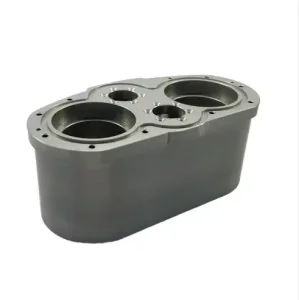
Custom Factory Custom 5-Axis CNC Machined Steel & Aluminum Universal Joint Base and Gearbox Shell for Robotics & Drone Industry Products, Exporters
View Specifications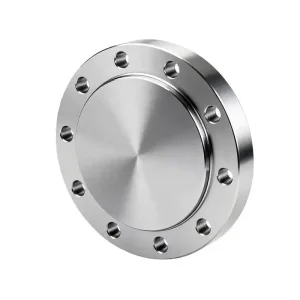
China OEM Precision CNC Machined Stainless Steel Flanges Suppliers, Exporter
View Specifications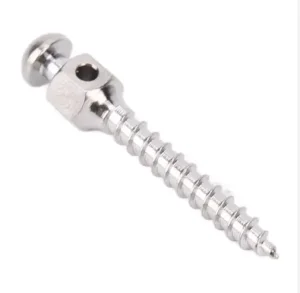
China Custom Precision Titanium Orthodontic Micro Implant Screws Manufacturers, Factories
View Specifications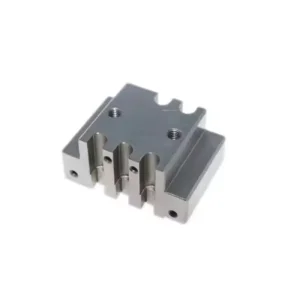
ODM OEM Precision CNC Machining Aluminum Parts & Custom Industrial Components Exporters, Quotes
View Specifications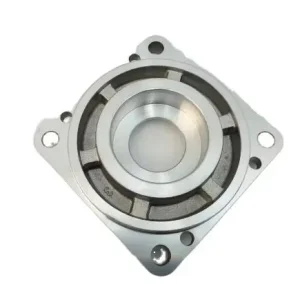
OEM Custom CNC Machining Parts / Precision Bearing Housings / Flanged Bearing Support Components Manufacturers
View Specifications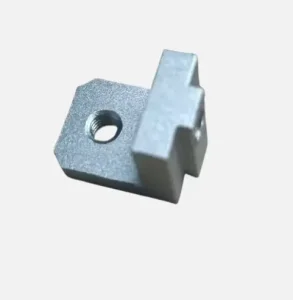
Custom Custom CNC Milled Aluminum Alloy Right Angle Mounting Bracket Manufacturer, Supplier
View Specifications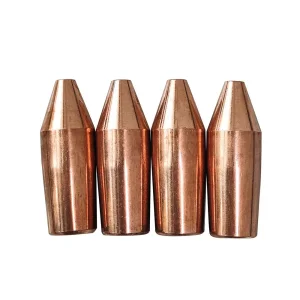
OEM Custom Resistance Spot Welding Electrode Caps Exporters, Factories
View Specifications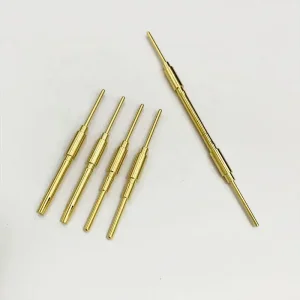
ODM Custom CNC Turned Contact Pins & Test Probe Components Manufacturer, Exporters
View SpecificationsReady to Validate Your Custom Plastic Gear Design?
Send your 2D drawings and 3D CAD models (.STEP, .IGES, .X_T) directly to our toolroom. A senior tooling engineer will evaluate your involute profile, draft angles, gate locations, and provide a comprehensive DFM report with an itemized quote within 24 hours.