
CNC · SEMICONDUCTOR
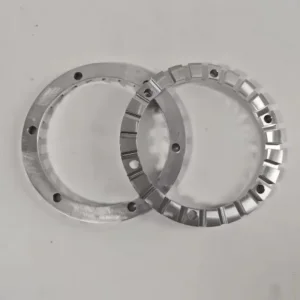
China Custom CNC Machined Anodized Sealing Rings for Semiconductor & Optical Instruments Factories, Factory
View Specifications
Direct OEM manufacturing utilizing audited alloy traceability, high-pressure die casting, and 5-axis CNC machining centers holding critical tolerances to ±0.005 mm.
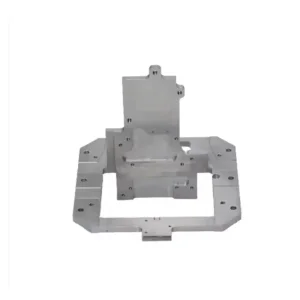
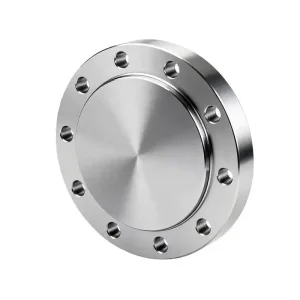
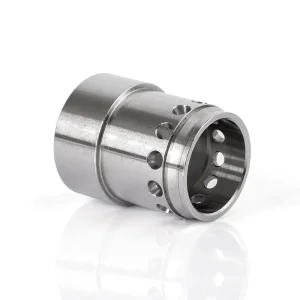
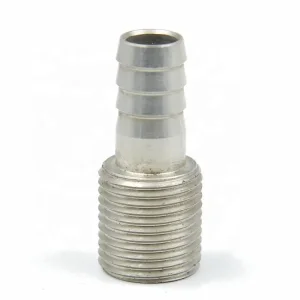
An authoritative technical evaluation of how zamak alloys and miniature high-pressure zinc casting (HPDC) are revolutionizing structural miniaturization, thermal management, and RF-shielded electronic architectures across global industrial ecosystems.
Zinc alloys exhibit superior fluidity and a lower melting temperature (approx. 380°C to 420°C) compared to aluminum alloys (660°C). This allows for multi-cavity hot-chamber casting with cycle times up to 400% faster, exceptional tool longevity (>1,000,000 shots), and castable wall thicknesses down to 0.35 mm without pre-solidification shrinkage defects.
Due to the virtual absence of thermal distortion and exceptional dimensional stability, custom zinc die castings eliminate up to 90% of secondary machining operations. Complex internal threads, gear tooth geometries (AGMA Class 8), and airtight labyrinth seals can be cast directly to tolerance, reducing the total cost of ownership (TCO) across mass production assemblies.
With an inherent bulk electrical conductivity and high physical density (approx. 6.6 to 6.7 g/cm³), cast zinc provides superior electromagnetic interference (EMI) attenuation exceeding 85 dB across 10 MHz to 10 GHz frequencies. It is the premier substrate for galvanic chrome plating, electro-coating, PVD, and decorative mirror polishing without pinhole blister failure.
Engineered selection guide for global procurement and R&D teams. Selecting the optimal alloy chemistry is paramount to balancing tensile strength, ductility, creep resistance, and post-machining dimensional stability.
| Alloy Grade (ASTM / EN) | Nominal Composition | Tensile Strength (MPa) | Yield Strength (MPa) | Elongation (%) | Impact Strength (J) | Optimal Industrial Application |
|---|---|---|---|---|---|---|
| Zamak 3 (ZL0400 / ZP3) | Zn - 4% Al - 0.035% Mg | 283 | 221 | 10.0 | 54 | Universal benchmark: High dimensional stability, superior plating and finishing. Ideal for automotive brackets, electronics, and optical housings. |
| Zamak 5 (ZL0410 / ZP5) | Zn - 4% Al - 1% Cu - 0.05% Mg | 328 | 250 | 7.0 | 48 | Enhanced tensile strength and hardness due to copper addition. Moderate ductility reduction; best for high-stress gears, fasteners, and lock bodies. |
| Zamak 2 (ZL0430 / ZP2) | Zn - 4% Al - 3% Cu - 0.03% Mg | 359 | 290 | 3.0 | 35 | Highest strength and creep resistance among standard Zamaks. Excellent wear resistance for sliding bearing surfaces and mechanical cams. |
| Zamak 7 (ZL0401 / ZP7) | Zn - 4% Al - Ultra-low Mg + Ni trace | 283 | 221 | 13.0 | 58 | High purity and superior fluidity. Specifically chosen for extreme thin-wall casting (<0.50 mm) and secondary cold-forming / staking operations. |
| ZA-8 (High-Al Performance) | Zn - 8.4% Al - 1% Cu - 0.02% Mg | 374 | 290 | 6.0 | 42 | Hot-chamber castable high-aluminum zinc alloy. Superior tensile and structural load capability for aerospace structural hinges and fluid fittings. |
| ZA-27 (Structural Giant) | Zn - 27% Al - 2.2% Cu - 0.015% Mg | 426 | 365 | 2.5 | 20 | Cold-chamber only. Extremely high strength, superior to standard cast aluminum (A380); replaces cast bronze in severe dynamic wear bushings. |
Sunmy Hardware provides integrated engineering, DFM flow simulations, and CNC tight-tolerance finishing across diverse tier-1 manufacturing sectors.
Sunmy produces steering column lock housings, sunroof drive pinions, seat belt retractor reels, and sensor heat sinks in Zamak 5. Zinc’s dynamic damping prevents acoustic chatter and withstands stringent salt-spray testing exceeding 720 hours post-electrophoresis.
5G micro-base station cavity filters, RF-tight industrial sensor transceivers, and optical transceiver housings. Direct casting of intricate internal wall partitions ensures isolation between frequency channels, providing leak-proof EMI attenuation without secondary EDM.
Surgical endoscope articulators, dental positioning hubs, and laser optical carriage brackets. Zinc provides thermal expansion matching stainless steel mated assemblies, high rigidity, and biological passivation suitability when coated with specialized parylene or medical chrome.
Biometric fingerprint deadbolt shells, security escutcheons, and luxury hardware handles. Zamak 3 provides heavy, tactile ergonomics combined with destructive torque resistance. Accommodates mirror-finish multi-layer copper-nickel-chrome or physical vapor deposition (PVD) titanium plating.
Planetary gear carriers, joint motor end-bells, and robotic wrist tendon guides. Sunmy machines the critical bearing bores to within ±0.005 mm on multi-axis CNC machines while utilizing cast zinc for high-shock dissipation during emergency stops.
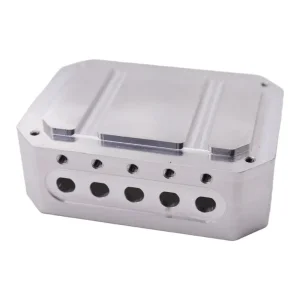
Miniature pneumatic manifold blocks, flow regulator housings, and fuel connector valves. Our vacuum-assisted die casting eliminates gas entrapment and shrinkage micro-porosity, easily passing helium mass spectrometer leak tests up to 35 bar pressure.
How Sunmy Hardware is combining real-time IoT injection control, sub-millimeter vacuum die casting, and circular metal recovery into a single turnkey OEM solution.
Global supply chains demand single-source accountability. Rather than managing separate die makers, casting foundries, CNC finish shops, and plating subcontractors, Sunmy Hardware owns the end-to-end chain in Shenzhen with direct English-speaking engineering governance.
Full MAGMASoft flow simulation evaluates gating velocities, gate freeze, shrinkage cavitation, and venting points before H13 steel tool block cutting.
H13 / DIN 1.2344 vacuum heat-treated tool inserts (50-52 HRC) designed with modular slides to produce complex side-actions and zero-draft internal pins.
Hot-chamber multi-stage injection with dynamic hydraulic closed-loop transducers. Plunger velocity is continuously adjusted to prevent turbulent oxide formation.
Zeiss CMM dimensional measurement, optical profile projection, optical emission spectrometry (OES) for alloy verification, and complete AS9102-style FAI documentation.
Every zinc alloy part is optimized against volume, functional load, and surface aesthetics to balance upfront tooling investment against per-unit piece cost.
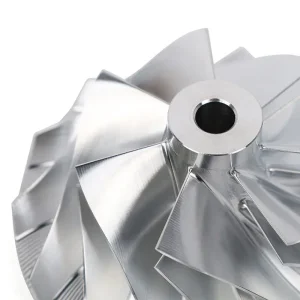
Bridge the gap between initial concept and steel tool fabrication. We utilize high-resolution SLA/SLM 3D printing and precision 5-axis CNC billet machining to validate mechanical geometry, transitioning seamlessly into high-cavitation steel die casting tooling.
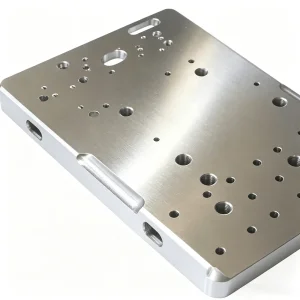
While die casting achieves near-net shape, tight bearing diameters, optical seating surfaces, and high-tolerance O-ring grooves require sub-micron precision. In-house Brother and Mazak CNC machining centers mill critical features to ±0.005 mm.
Complete surface finishing suites including automated vibratory deburring, shot blasting, decorative copper-nickel-chrome electroplating, cataphoretic e-coating, durable electrostatic powder coating, and laser etching with traceable 2D data-matrix codes.
Comprehensive value-added assembly: helicoil thread insertion, ultrasonic brass insert staking, rubber gasket placement, custom hardware kitting, and ESD vacuum blister packaging formulated for international transoceanic air and maritime freight.
Critical answers to questions posed by global sourcing heads, lead mechanical engineers, and quality assurance directors.
Due to zinc’s low melting temperature (~400°C) versus aluminum (~660°C), thermal shock and die soldering on tool steels are vastly reduced. A hardened H13 die casting mold for zinc routinely exceeds 1,000,000 to 2,000,000 shots, whereas aluminum dies degrade via thermal fatigue cracking after 80,000 to 150,000 shots. This results in significantly amortized tooling costs over mass production.
As-cast dimensional tolerances can be held to standard precision limits of ±0.02 mm to ±0.04 mm per 25 mm of dimension, thanks to negligible solidification shrinkage. When mating features, bearing bores, or dowel pin locations require ultra-precision, our in-house CNC post-machining operations achieve ±0.005 mm consistently, verified on our Zeiss CMM.
Porosity is governed by trapped gas or thermal shrinkage. We deploy computer-aided gate and runner design, vacuum-assisted die extraction (pulling cavity pressure down to <50 mbar before shot release), and high-pressure dynamic squeeze pins. Critical parts undergo 100% industrial X-ray or micro-CT scanning to confirm structural density for pressure-tight applications.
Yes. Zamak alloys are the preferred metallic substrate for decorative and functional electroplating. Because the outer skin of a zinc casting is virtually non-porous when cast under high velocity, it requires minimal mechanical buffing prior to the deposition of acid copper, bright nickel, and hard trivalent or hexavalent chrome layers, resisting thermal cycling peel tests.
We execute legally binding bilateral Non-Disclosure Agreements (NDAs) before collecting STEP, STP, or IGES engineering models. Customers work directly with Sunmy Hardware's Shenzhen engineering personnel—not third-party brokers or trading resellers—guaranteeing that design blueprints and trade proprietary geometries remain strictly confidential.
Each production run includes raw ingot chemical composition test certificates (spectrometric analysis), First Article Inspection (FAI) reports with complete ballooned drawing correlation, CMM multi-point dimensional data sheets, and RoHS/REACH compliance documentation verifying the absence of restricted heavy metals (lead, mercury, cadmium).
Advanced high-precision manufacturing solutions across medical, optical, telecommunication, and automated industrial machinery.
Upload your 3D CAD files (.STEP, .IGES, .X_T) alongside 2D dimensional prints indicating critical tolerance requirements and finish specs. Our engineering lead in Shenzhen evaluates parting line location, draft angles, ejector pin placements, and gating routes prior to tool steel commitment.
3D: STEP (.step, .stp), IGES, Parasolid (.x_t)
2D: PDF, DWG, DXF with GD&T callouts