Precision Cast & CNC Machined Powertrain & Structural Components
Featured custom solutions engineered in Shenzhen facilities with micron-level tolerances (±0.005 mm), in-house CMM verification, and stringent DFM protocol compliance.
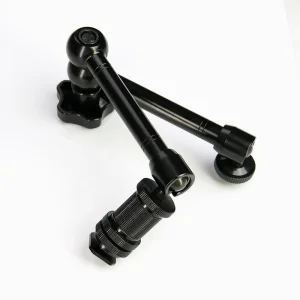
OEM 7-Inch CNC Aluminum Articulating Magic Arm for Camera & Monitor Service
View Product Spec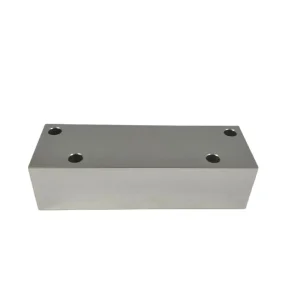
ODM Custom CNC Machined Aluminum Vacuum Manifold Block Manufacturer
View Product Spec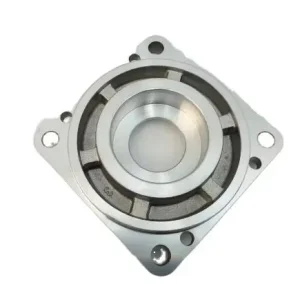
OEM Custom Precision Bearing Housings & Flanged Support Components
View Product Spec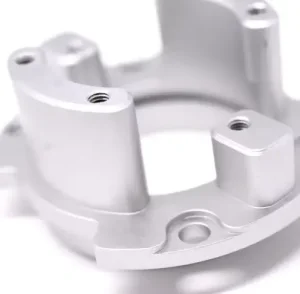
High-Quality Precision 5-Axis CNC Machined Aluminum Mounting Bracket
View Product Spec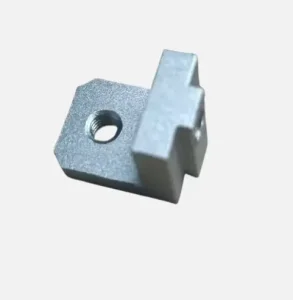
Custom CNC Milled Aluminum Alloy Right Angle Chassis Mounting Bracket
View Product Spec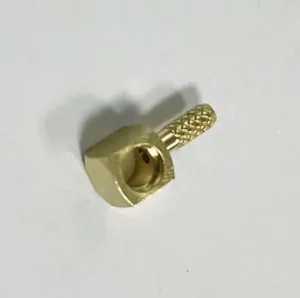
High-Quality Custom CNC Machining Brass Insert Connector with Knurled Pin
View Product Spec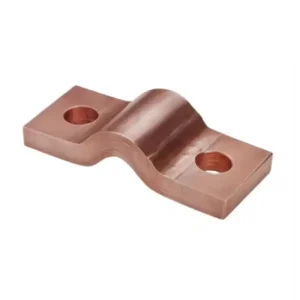
Custom Flexible Laminated Copper Busbar for EV Battery & Electrical Units
View Product Spec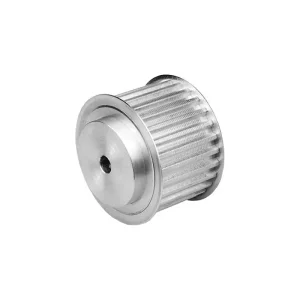
OEM Custom CNC Machined HTD 3M Aluminum Timing Belt Pulley Supplier
View Product SpecThe Paradigm Shift: Automotive Casting in the Era of Electrification
From complex legacy multi-part internal combustion engine (ICE) assemblies to ultra-integrated single-piece structural castings, the global automotive supply chain is experiencing its most aggressive transformation in eighty years.
The Megacasting & Giga-Press Revolution
Traditional vehicle chassis architectures rely on stamping, spot-welding, and fastening together anywhere between 70 to 120 discrete sheet-metal pieces. High-Pressure Die Casting (HPDC) utilizing clamping forces from 6,000 to 12,000 tons has revolutionized automotive body-in-white (BIW) engineering.
- Elimination of 300+ robotic welding joints per underbody module
- Significant reduction in dimensional stack-up tolerances
- Cycle time compressed from hours of manual welding to sub-120-second casting bursts
- Consolidated structural integrity with enhanced energy absorption during impact testing
Alloy Metallurgy & Non-Heat-Treated Innovations
Gigantic cast components cannot undergo traditional T6 solution heat treatment without severe thermal warping and blistering during high-temperature quenching. Chinese metallurgical labs and foundry partners have pioneered novel, proprietary aluminum-silicon-magnesium alloys.
- Yield strength (σ0.2) exceeding 130–150 MPa in as-cast condition
- Tensile elongation reaching over 10–12% without blister-inducing quench steps
- Low iron (Fe < 0.15%) formulations coupled with trace strontium modification for fine eutectic morphology
- Minimized greenhouse gas intensity via certified low-carbon recycled aluminum feeds
Thermal & Electrified Powertrain Integration
As internal combustion blocks decline, castings for Electric Drive Units (EDUs), multi-in-one e-axle housings, hairpin stator water cooling jackets, and inverter heatsinks demand micro-porosity containment that conventional foundries fail to deliver.
- Helium mass spectrometry leak testing down to 10-5 mbar·l/s for dielectric fluids
- Intricate internal cooling channels with zero sand inclusions
- High thermal conductivity die casting alloys (>150 W/m·K)
- Electromagnetic interference (EMI) shielded structural housings
China Factory 4.0: Autonomous Casting, Rapid Tooling & Agility
Why Tier-1 automotive procurement leaders in North America, Germany, Japan, and the UK rely on Shenzhen’s concentrated industrial cluster for rapid iteration, tooling longevity, and risk-resilient serial production.
Closed-Loop Robotic Die Casting Cells
Modern Chinese facilities have superseded manual ladling with automated dosing furnaces, robotic ladle transfer, high-speed multi-axis spraying heads, and collaborative robotic extraction.
Thermal management of mold steel (utilizing Dievar or premium H13 ESR tool steels) is governed by multi-channel mold temperature controllers that monitor hot spots in real time, preventing thermal shock, heat checking, and premature tool fatigue.
In-Line Smart CT & Automated X-Ray NDT
To eliminate sub-surface defects before costly CNC finishing operations, Industry 4.0 casting clusters integrate automated robotic X-ray vaults directly post-degating.
AI computer-vision inspection algorithms classify internal shrinkage, gas pores, and cold shuts against ASTM E505 reference radiographs in under 30 seconds per component, feeding back thermal adjustment parameters directly to the HPDC injection sleeve controller.
Full-Spectrum Tooling & Prototyping Speed
Where Western tooling houses often require 16 to 24 weeks for complex automotive die builds, the Pearl River Delta industrial ecosystem delivers complete hardened production dies in 4 to 6 weeks, supported by:
In-house 5-axis high-speed CNC milling (up to 30,000 RPM), mirror EDM machining, Moldflow simulation verification, and immediate prototype validation via 3D metal sand printing and rapid CNC billet hogging.
| Casting Process | Typical Automotive Applications | Wall Thickness Capability | Dimensional Tolerance | Economic Volume Threshold |
|---|---|---|---|---|
| High-Pressure Die Casting (HPDC) | Gearbox housings, subframes, shock towers, battery trays | 1.5 mm – 4.0 mm | ±0.05 mm (As-Cast) / ±0.005 mm (Post-CNC) | > 5,000 units/year (High tooling ROI) |
| Low-Pressure Die Casting (LPDC) | Suspension control arms, steering knuckles, alloy road wheels | 3.5 mm – 8.0 mm | ±0.20 mm | > 2,500 units/year |
| Vacuum High-Integrity Casting | Weldable chassis structural nodes, B-pillar reinforcements | 1.8 mm – 3.2 mm | ±0.08 mm | > 10,000 units/year (Safety critical) |
| Precision Investment Casting (Lost Wax) | Turbocharger impellers, stainless exhaust manifolds, locking pawls | 1.0 mm – 6.0 mm | ±0.10 mm | 500 – 100,000 units/year |
| Gravity Sand & Resin Shell Casting | Heavy truck axle housings, differential carriers, prototype blocks | 4.5 mm – 20.0 mm | ±0.50 mm | 100 – 3,000 units/year |
Global Procurement Requirements: What Tier-1 OEMs Demand
Overseas sourcing directors don't buy casting metal—they purchase risk mitigation, traceability, and relentless adherence to international automotive engineering standards.
PPAP Level 3 & APQP Discipline
Every automotive production kick-off follows the strict Advanced Product Quality Planning framework. Buyers receive complete PPAP Level 3 documentation dossiers prior to series authorization:
- Design Failure Mode and Effects Analysis (DFMEA) & Process FMEA (PFMEA)
- Process Control Plans (PCP) aligning casting parameters with critical characteristics (KPCs)
- Full dimensional balloon drawings paired with multi-cavity CMM statistical studies
- Initial Process Capability studies demonstrating Cpk > 1.67 on critical safety features
In-House Metrology & Lab Audits
Quality claims require verifiable laboratory infrastructure. Shenzhen Sunmy Hardware maintains a full metrology department ensuring complete component validation without external delays:
- Carl Zeiss CNC Coordinate Measuring Machines (CMM) holding volumetric length measurement errors within 1.5 + L/350 μm
- Optical 3D scanning systems (GOM ATOS) for full-field surface deviation and warp analysis
- Direct-reading optical emission spectrometers (OES) for molten batch chemical verification
- Metallurgical microscopes for dendrite arm spacing (SDAS) and eutectic silicon modification scoring
Zero-Defect PPM & Leak Tightness
Fluid management and battery enclosure applications mandate stringent particulate and pressure-decay metrics to prevent catastrophic vehicle failure:
- Cleanliness testing following ISO 16232 / VDA 19 standards, managing residual particulate mass (<2.0 mg/part) and particle size (<200 μm)
- Differential air decay leak testers and pressurized underwater submersion fixtures
- Vacuum resin impregnation (MIL-I-17563C compliant) for microscopic microporosity sealing on high-pressure fluid manifolds
- Barcoding and laser dot-peen serialization for 100% individual batch traceability over 10-year vehicle lifecycles
Deep-Dive: Specialized Automotive Casting Use Cases
A closer engineering view of how precision cast and post-machined components perform across vital automotive functional subsystems.
1. Electric Drive Unit (EDU) Housings
EDUs require dual-chamber housings that integrate the high-speed traction motor (operating up to 20,000 RPM) with the planetary reduction gearbox and electronic inverter. Sunmy coordinates multi-slide die casting with high-speed 5-axis machining to maintain bearing bore coaxiality within ±0.008 mm, minimizing gear whine and thermal distortion across dynamic operating temperatures (-40°C to +125°C).
2. Structural Chassis Shock Towers & Subframes
Cast in high-ductility AlSi10MnMg alloy using high-vacuum HPDC, these structural nodes absorb critical road vibrational loads and suspension rebound shocks. High vacuum ensures absolute weldability (MIG and self-piercing riveting SPR) to adjacent aluminum sheet and extruded side rails without porosity explosions or seam embrittlement.
3. ADAS Sensor Brackets & LiDAR Casings
Autonomous driving relies on optical cameras, mmWave radar, and roof-mounted LiDAR. Sensor brackets demand exceptional geometric stability across thermal expansion regimes. Precision investment and aluminum die castings with black hard-anodized or powder-coated finishes ensure zero sensor drift, optical alignment fidelity, and IP67/IP69K environmental ingress protection.
Need Early-Stage DFM & Tooling Cost Modeling?
Connect directly with our bilingual senior metallurgical and tooling engineers in Shenzhen. Send your 3D CAD/STEP packages under NDA for comprehensive draft, gating, and tolerance stack-up feedback within 24 hours.
Frequently Asked Questions: Sourcing Automotive Castings from China
Technical, logistical, and commercial inquiries answered by automotive supply chain specialists.
What are the key differences between standard die casting and automotive structural casting?
How does Sunmy Hardware guarantee zero internal porosity in critical hydraulic or pneumatic blocks?
What is the standard tooling lifespan for high-pressure automotive die cast molds?
How are Intellectual Property (IP) and proprietary CAD files protected during quoting and production?
What secondary machining and surface treatments are conducted in-house?
What are the lead times for prototyping versus production tooling?
Precision Turned, Machined & Fabricated Engineering Assemblies
Broadening custom component manufacturing from specialized titanium micro-hardware and surgical implants to heavy-duty resistance welding and electrical vehicle heatsinks.
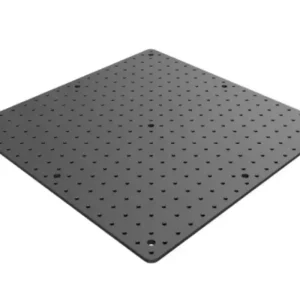
China OEM Custom Precision CNC Machining Solid Aluminum Optical Breadboard
View Product Spec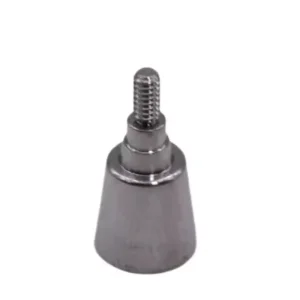
Custom CNC Turned Titanium Abutment Implant Driver & Prosthetic Connector
View Product Spec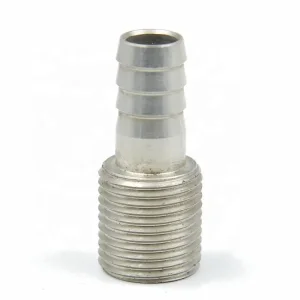
OEM Custom CNC Turned Hose Barb Fittings & Threaded Fluid Adapters
View Product Spec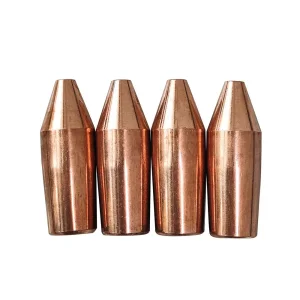
OEM Custom Resistance Spot Welding Electrode Caps Exporters, Factories
View Product Spec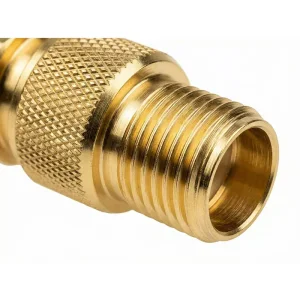
High-Quality Precision Knurled Brass Threaded Connector Manufacturers
View Product Spec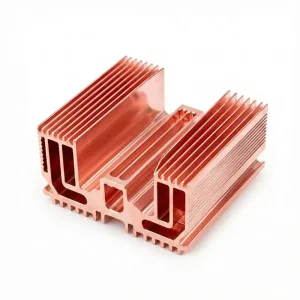
ODM High-Performance Copper Heatsink for High-Power Automotive Power Electronics
View Product Spec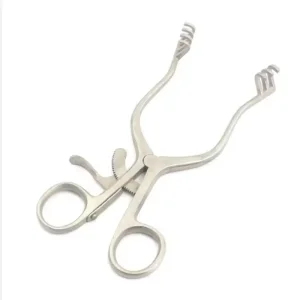
China Professional Quality Stainless Steel Custom Surgical Retractor Service
View Product Spec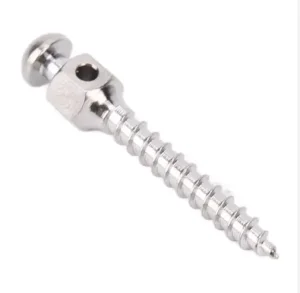
China Custom Precision Titanium Orthodontic Micro Implant Screws
View Product SpecAccelerate Your Automotive Casting Program
Bridge the gap between design engineering and high-volume mass production. Partner with a proven Shenzhen precision manufacturing facility committed to measurable quality and international compliance.
1. Technical CAD Package
Submit 3D solid models (.STEP, .IGES, .X_T) paired with formal 2D engineering drawings detailing critical datum targets, GD&T callouts, surface roughness specifications, and leak tightness ratings.
2. Rapid DFM & Feasibility
Within 24 hours, our engineering review flags parting lines, draft angles, core slide complexities, and potential thermal hot spots, suggesting alloy and process optimizations to reduce overall piece price.
3. Seamless Export Logistics
From Shenzhen container terminals to port of arrival (DAP, DDP, FOB, CIF), all export wooden crating, anti-corrosion VCI packaging, customs documentation, and certificates of origin are managed in-house.