
High-Precision Custom Manufactured Components
Explore production-grade hardware, CNC machined geometries, and urethane master patterns crafted with verified dimensional integrity and traceable metallurgy.
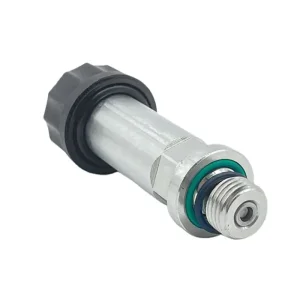
Custom Hydraulic Solenoid Valve Core Precision Turned Parts
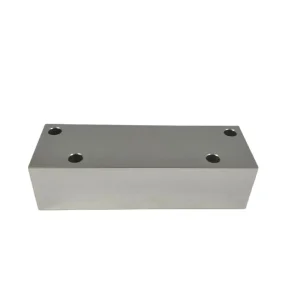
ODM CNC Machined Aluminum Vacuum Manifold Block
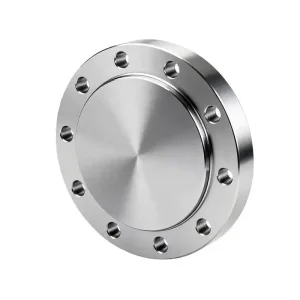
China OEM Precision CNC Machined Stainless Steel Flanges
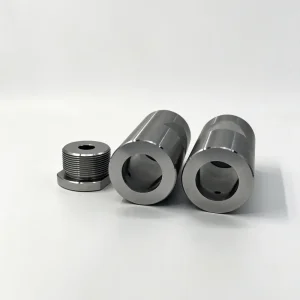
CNC Turned Tooling Sleeves & Threaded Retaining Plugs
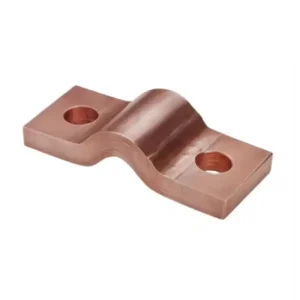
Custom Flexible Laminated Copper Busbar for Battery Packs
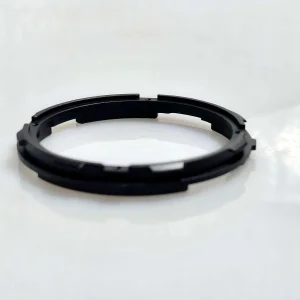
Custom CNC Turn-Milled Bayonet Mount & Locking Ring
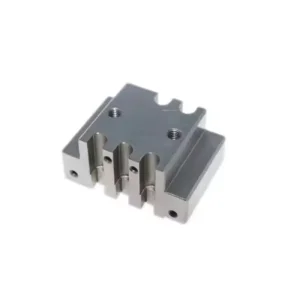
Precision CNC Machining Industrial Aluminum Housing Parts
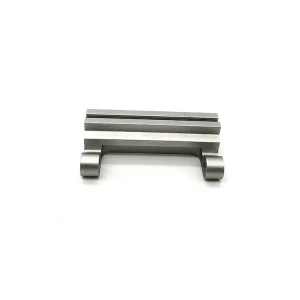
Custom CNC Machined Aluminum Hinge Assembly Grey Anodized
Engineering Fundamentals: Polyurethane Vacuum Casting Architecture
Understanding how modern silicone tooling bridges the critical gap between early 3D printed concept models and multi-million-dollar hard steel injection tooling.
Urethane casting—frequently designated in enterprise manufacturing specifications as room temperature vulcanization (RTV) silicone tooling or vacuum casting—represents an irreplaceable pillar in contemporary agile product development. In high-stakes sectors such as automotive pre-series validation, medical diagnostic hardware, humanoid robotics, and specialized telecommunications, deploying full-scale steel or aluminum injection mold tooling carries immense capital exposure and catastrophic lead-time drag. A single iteration error on a complex Class-A surface mold can necessitate tens of thousands of dollars in EDM re-tooling and months of program delays.
China's industrial manufacturing ecosystem has catalyzed the evolution of urethane casting from an artisanal prototyping method into a rigorous, repeatable bridge manufacturing solution. By synthesizing ultra-high-resolution stereolithography (SLA) and multi-axis CNC machined master patterns with multi-component liquid polyurethane elastomers degassed and injected under deep vacuum (-0.098 MPa to -0.1 MPa), Chinese facilities achieve surface finishes, mechanical properties, and cosmetic textures that are indistinguishable from end-use injection-molded polymers such as ABS, polypropylene, nylon, and elastomeric TPU.
Core Engineering Fact: Vacuum urethane casting eliminates air entrapment voids at the molecular level. Liquid polyols and isocyanates are mechanically metered and combined under sub-atmospheric pressure, cascading into translucent platinum-cure silicone molds that reproduce intricate draft-free undercuts, micro-textures, and overmolded threaded brass inserts with zero sinking or weld lines.
1. Master Pattern Precision
Every polyurethane casting is only as accurate as its parent master. We combine 5-axis high-speed micro-milling and industrial SLA with layer slices down to 0.05 mm.
- Surface roughness smoothed to SPI-A2 / VDI 3400 standards
- Thermal expansion and shrinkage compensation mapped via CAD
- Custom chemical release barriers to preserve silicone mold life
2. RTV-2 Platinum Silicones
We utilize two-component addition-cure platinum silicones offering superior tear strength (up to 30 N/mm) and minimal linear shrinkage under 0.15%.
- Multi-segment parting lines for zero-draft side actions
- Integrated risers and micro-vents preventing flow starvation
- Cavity life sustained across 20 to 25 aggressive resin pours
3. Vacuum Metering & Cure
Automated vacuum chambers eliminate human variance, executing precision de-airing, volumetric blending, and temperature-controlled post-curing cycles.
- High-vacuum degas cycle down to 0.5 mbar prior to pour
- Forced convection post-curing at 65°C - 80°C for cross-linking
- Ultimate tensile and flexural properties matching molded resins
Engineering Resins: Replicating Production Thermoplastics
A broad formulation library replicating production injection molded resins from rigid polycarbonate to high-elongation elastomeric seals.
| Resin Formulation | Simulated Thermoplastic | Shore Hardness | Tensile Strength (MPa) | Heat Deflection (HDT @ 0.45 MPa) | Primary Industrial Applications |
|---|---|---|---|---|---|
| PU-8150 / Hei-Cast 8150 | ABS / High Impact | 82 - 85 Shore D | 55 - 65 MPa | 85°C - 95°C | Automotive bezels, consumer electronics, handheld enclosures |
| PU-3266 / UP-5690 | Polypropylene (PP) / PE | 75 - 78 Shore D | 35 - 45 MPa | 70°C - 80°C | Living hinges, automotive ductwork, fluid containers, clips |
| Axson PX-223 / PX-521 | Polycarbonate (PC) / Acrylic | 85 Shore D | 65 - 75 MPa | 120°C - 130°C | Optical light pipes, medical lens covers, clear fluid sight-glasses |
| PU-9080 (Flame Retardant) | UL94-V0 Polycarbonate/ABS | 83 - 86 Shore D | 50 - 60 MPa | 90°C - 105°C | Server chassis, high-voltage battery modules, aerospace cockpits |
| UP-6000 Elastomeric Series | TPU / Silicone / EPDM | 35 Shore A to 90 Shore A | 12 - 25 MPa | N/A (Elongation 300-600%) | Gaskets, overmolded grips, soft-touch buttons, robotic suction cups |
| Glass-Filled PU-8700 | PA66-GF30 (Glass Nylon) | 88 - 90 Shore D | 80 - 95 MPa | 140°C - 160°C | Structural brackets, drone motor mounts, power tool motor housings |
Why Tier-1 Global OEMs Source Urethane Casting from China
Combining world-class chemical procurement, hyper-dense precision hardware supply chains, and seasoned toolmaking craftsmanship into a high-yield manufacturing workflow.
Rapid Tooling Speed
Silicones are prepped, poured, and cured in 24/7 dedicated ovens. While Western machine shops quote 4 to 6 weeks for cast prototypes, Chinese facilities deliver First Article Inspected (FAI) parts in 5 to 7 calendar days.
Hardware Ecosystem
Direct proximity to Shenzhen and Dongguan precision hardware hubs provides same-day access to mil-spec threaded brass inserts, stainless helicoils, custom knurled studs, and NdFeB rare-earth magnets for seamless insert overmolding.
Master Pattern Agility
In-house hybrid capabilities allow rapid switching between SLA photopolymer masters and CNC-machined 6061-T6 aluminum masters for high-tolerance cylindrical or cosmetic optical requirements.
Significant Capex Savings
Silicone mold labor, master finishing, hand-deburring, and custom color-matching pigments (Pantone/RAL) cost a fraction of Western domestic service bureaus, reducing total bridge prototype budgets by 60% to 75%.
Localization Support, Regulatory Compliance & Quality Controls
Stringent verification workflows ensuring prototype batches meet strict Western aerospace, medical device, and automotive regulatory frameworks.
ISO 9001 & ISO 13485 Compliance
Our manufacturing and partner facilities adhere strictly to ISO 9001:2015 for industrial parts and ISO 13485:2016 for medical prototypes. All raw polyurethane resins arrive with certified certificates of analysis (COA) documenting batch traceability and thermal stability.
RoHS, REACH & UL94 Flammability
Assemblies destined for the European Union and North American retail markets receive comprehensive SVHC declaration under REACH and hazardous chemical ban verification under RoHS 3 (Directive 2015/863). Specialty electronics resins carry official UL94-V0 vertical flame ratings.
ITAR-Compliant IP Protection
Drawings and 3D CAD data are stored on isolated, encrypted servers with biometric access control. Bilingual binding Non-Disclosure Agreements (NDAs) governed by internationally recognized legal jurisdictions are executed prior to data transmission.
CMM & Optical Metrology Standards: Every first article undergoes 3D laser coordinate scanning and CMM inspection using Zeiss and Mitutoyo multi-sensor platforms. Dimensional deviation color-maps comparing native CAD geometries against cast urethane parts are delivered with every order, alongside Shore durometer hardness verification and gloss/color spectrophotometer reports.
High-Impact Engineering Applications Across Global Sectors
From pre-production vehicle interiors to surgical robotic arms, polyurethane vacuum casting delivers verified mechanical performance under real-world operating loads.
Automotive Mobility
Pre-series HVAC louvers, center console instrument clusters, lighting lens prototypes, bumper fascias, and under-hood wire harness brackets for physical crash and wind-tunnel testing.
Medical Diagnostic Devices
Ergonomic handpieces, autoclave-compatible diagnostic cart cowlings, dialysis monitor bezels, and bio-compatible elastomeric fluid seals subjected to FDA 510(k) usability validation.
Robotics & Automation
Robot End-of-Arm Tooling (EOAT) soft gripper fingers, impact-resistant articulated limb shells, sensor bump-guards, and multi-durometer overmolded conveyor feed wheels.
Consumer Hardware
Flagship drone aerodynamic canopies, smart home thermostat housings, wearable virtual reality headgear frames, and high-fidelity cosmetic models for tier-1 Kickstarter and retail debuts.
Emerging Industry Trends in Chinese Polyurethane Casting
How artificial intelligence, multi-material hybrid molding, and circular bio-based resins are redefining the economics of low-volume production.
AI-Driven Shrinkage Compensation
Machine-learning predictive models analyze complex non-uniform wall thicknesses, gate placements, and exothermic thermal reaction profiles to algorithmically alter master pattern CAD files, eliminating anisotropic warpage before silicone pouring.
Co-Molding & Multi-Durometer Casting
Advanced dual-stage silicone tooling enables chemical bond overmolding without mechanical fasteners. Hard rigid ABS-like cores can be seamlessly cast with soft-touch elastomeric TPU grips and clear optical lens inserts in a single consolidated part.
Bio-Based & Recyclable Polymers
Next-generation green polyols derived from sustainable plant oils reduce the carbon footprint of pilot-run hardware by up to 35% while retaining identical tensile strength, flexural modulus, and dielectric breakdown voltage as petroleum-derived urethanes.
Frequently Asked Questions: Sourcing Urethane Casting from China
Exhaustive engineering and procurement answers regarding mold longevity, tolerance control, shipping logistics, and material equivalency.
What is the standard dimensional tolerance achievable in Chinese urethane casting?
How many usable parts can be poured from a single silicone mold cavity?
Can cast polyurethane parts duplicate Mold-Tech or VDI surface textures?
How does urethane casting compare financially and mechanically against 3D printing (SLS/MJF)?
What is the typical turnaround lead time from CAD upload to global delivery?
How are intellectual property and sensitive defense/automotive CAD files safeguarded?
Precision Turned, Machined & Tooling Components
Review our advanced CNC turned stepped shafts, robotics gripper jaws, and semiconductor-grade hardware engineered to tight micrometric tolerances.
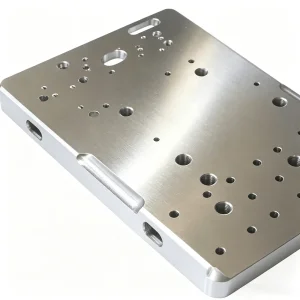
OEM Custom CNC Machined Aluminum Multi-Hole Mounting Plate
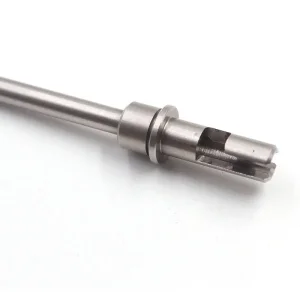
Precision CNC Turned Stainless Steel Stepped Shaft
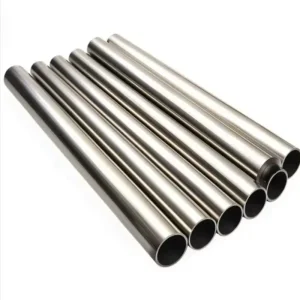
Precision Capillary Stainless Steel Pipe / Tube (OD 1mm - 8mm)
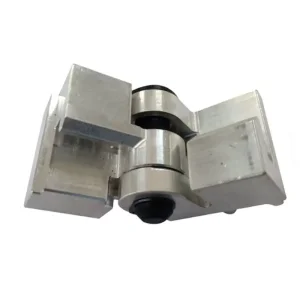
Precision CNC Aluminum Hinge Structural Connector
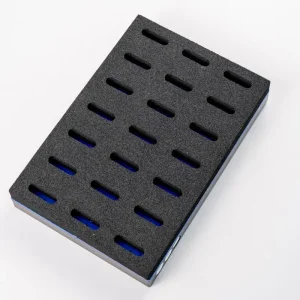
CNC Machined Foam Vacuum Gripper Plates for Robotic EOAT
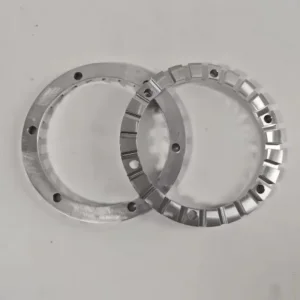
CNC Machined Anodized Sealing Rings for Semiconductor Optics
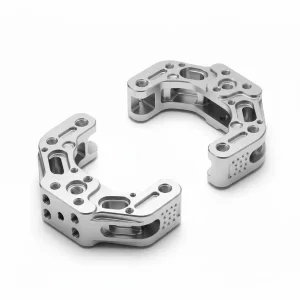
Custom CNC Machined Precision Robotic Gripper Jaws
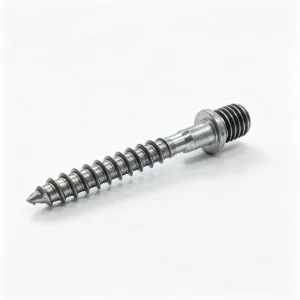
Precision Turned Stainless Steel Dual-Thread Hanger Bolt
Launch Your Rapid Urethane Casting Program Today
Send your 3D CAD files (.STEP, .STP, .IGS, .X_T) and 2D engineering drawings. Our engineering team returns a full Design for Manufacturability (DFM) assessment, material resin recommendation, and formal quotation within 24 hours.