ISO 9001:2015 & IATF 16949 Engineering Standard
Custom Low Pressure Die Casting Products & Quotes
Industrial-grade precision LPDC solutions, high-density structural integrity, and end-to-end metallurgical engineering. Direct Chinese factory pricing coupled with global regulatory compliance.
Product Catalog — Section A
Custom Precision LPDC & Machined Assemblies
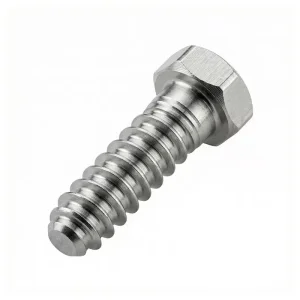
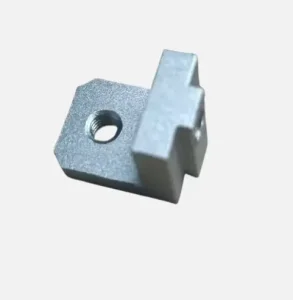
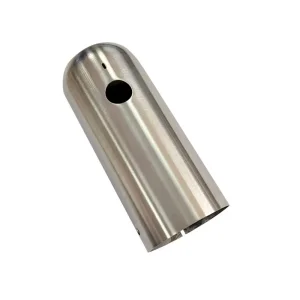
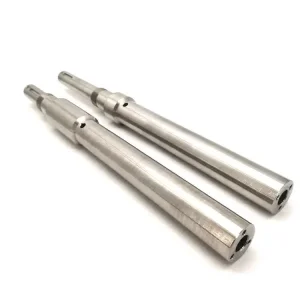
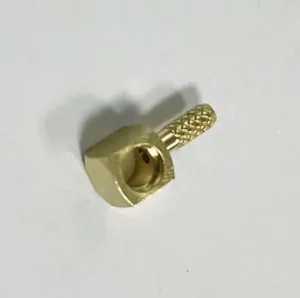
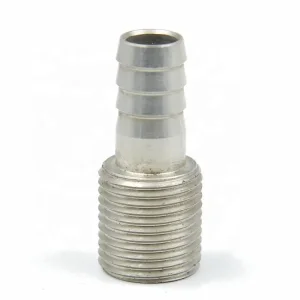
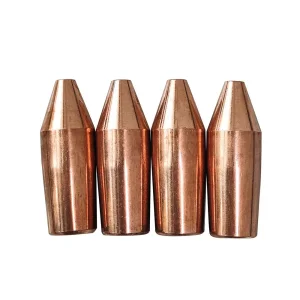
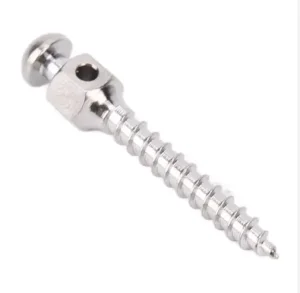
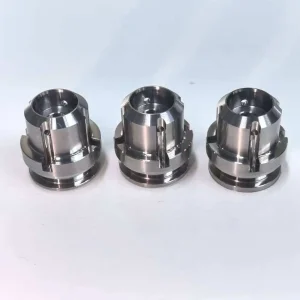
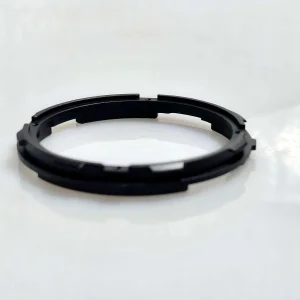
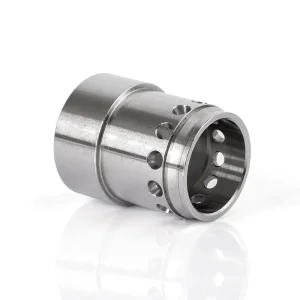
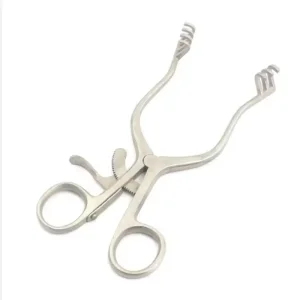
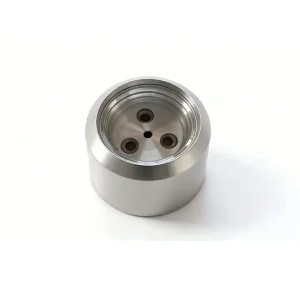
Explore our tight-tolerance precision turned fittings, titanium dental fixtures, and thin-walled structural cast components manufactured to client CAD specifications.
Technical Whitepaper Breakdown
Engineering Architecture: The Low Pressure Die Casting Advantage
Low Pressure Die Casting (LPDC) operates typically at 0.2 to 1.5 bar, providing uniform bottom-up mold filling that suppresses air entrapment and yields non-porous metallurgical matrices.
0.2–1.5bar
Controlled Injection Pressure
92%+
Raw Metal Yield Efficiency
<0.05%
Gas Inclusions & Porosity Rate
T6Heat
Full Thermal Treatability
Laminar Ascending Solidification
Unlike High Pressure Die Casting (HPDC) where turbulent atomization causes internal oxidation and gas pores, LPDC introduces liquid alloy through a central stalk from below. This unidirectional solid front virtually eliminates shrinkage cavitation and microporosity, enabling safety-critical certifications.
Full T4 / T6 Heat Treatability
Because structural air bubbles are eliminated during low pressure filling, LPDC components can undergo high-temperature solutionizing and artificial aging (T6 heat treatment) without blistering or dimensional warping. Yield strength and elongation values match forged alloy properties.
Extreme Fluidic Integrity
Components deployed in liquid coolant jackets, hermetic EV powertrain shells, and hydraulic distributor manifolds require zero-pressure drop across operation. LPDC density eliminates macro-leak paths, passing 100% helium mass-spectrometer and dry-air bubble leak inspections.
Decision Matrix
LPDC vs. HPDC vs. Gravity Casting: Technical Benchmark
Evaluating dimensional precision, metallurgical density, mechanical performance, and tooling investment across high-volume casting alternatives.
| Evaluation Parameter | Low Pressure Die Casting (LPDC) | High Pressure Die Casting (HPDC) | Gravity Permanent Mold (GDC) |
|---|---|---|---|
| Porosity & Internal Inclusions | Extremely Low (Near-Zero Bubble Defect) | Moderate to High (Air Entrapment Common) | Moderate (Risk of Turbulence Shrinkage) |
| T6 Heat Treatment Capability | Fully Compatible (No Surface Blistering) | Incompatible (Requires Specialized Vacuum) | Compatible |
| Tensile & Yield Strength | Very High (Enhanced via Thermal Aging) | Medium (Fast Cooling, Brittle Core) | High (Coarse Grain Structures) |
| Surface Finish (Ra) | Ra 3.2 – Ra 6.3 μm | Ra 1.6 – Ra 3.2 μm | Ra 6.3 – Ra 12.5 μm |
| Metal Yield Rate | 90% – 95% (No Runners / Cold Slugs) | 50% – 60% (Heavy Gating Discards) | 65% – 75% (Substantial Risers Required) |
| Tooling Cost & Amortization | Moderate ($10,000 – $35,000) | Very High ($30,000 – $120,000+) | Low to Moderate ($8,000 – $25,000) |
Strategic Ecosystem
Shenzhen Industrial Supply Cluster & International Compliance
Combining localized upstream metallurgical refining, rapid multi-axis CNC secondary finishing, and Western regulatory conformance for Tier-1 supply chains.
Greater Bay Integrated Supply Chain
Situated within the Pearl River Delta industrial manufacturing zone, our facility coordinates ingot smelting (A356, A380, AlSi7Mg, AlSi10Mg), automated tool steel machining, and post-casting 5-axis trimming within a 50 km logistics radius. This vertical consolidation eliminates intermediate transport markups and compresses tool-to-sample cycles down to 18–25 days.
Global Compliance & Traceability
Exporting to Germany, Japan, and North America necessitates unyielding adherence to statutory baselines. Every single production heat is accompanied by EN 10204 3.1 chemical spectrometry certifications, RoHS & REACH chemical safety verification, and PPAP Level 3 documentation dossiers. Critical components undergo real-time digital radiographic (X-ray) non-destructive testing.
Localized Engineering Support
We eliminate offshore communication friction via English/German-fluent lead mechanical engineers. Our engineers conduct pre-mold solidification simulations using Magma/AnyCasting platforms, resolving hot spots, negative draft, and air entrapment points before physical tooling steel (H13 / 1.2344) is locked into multi-axis CNC mills.
Industrial Roadmaps & Trends
Mission-Critical Applications & Next-Gen Horizons
From high-voltage electrification to structural aerospace frames, LPDC serves as the benchmark foundation where mechanical failure is not an option.
EV Battery Packs & Motor Stators
Electric vehicle architectures require lightweight, pressure-sealed enclosures capable of thermal conductivity and electromagnetic shielding. Our LPDC aluminum enclosures withstand 5.0 bar internal burst pressures while integrating internal micro-channel liquid-cooling paths directly within the cast geometry.
Aerospace Suspensions & Wheels
LPDC remains the gold standard for aircraft landing gear hubs, lightweight automotive wheels, and drone sub-frames. The microstructural grain refinement ensures uniform elongation under high cyclical loads, resisting dynamic fatigue and thermal stress cracking.
Automated Cyber-Physical Casting
Industry 4.0 casting cells integrate automated closed-loop dosing furnace controls, non-contact infrared thermal imaging for mold temperatures, and robotic extractor arms. This ensures zero heat-to-heat variance across 100,000+ unit production contracts.
Procurement & Technical FAQ
Frequently Asked Questions: LPDC Engineering & Sourcing
Direct engineering clarity covering metallurgical selections, dimensional tolerances, minimum batch volumes, and rapid quotation parameters.
What typical dimensional tolerances can be held directly in cast form versus post-machined features?
For raw as-cast LPDC features, standard linear tolerances align with ISO 8062-3 Grade CT6 to CT8 (typically ±0.3 mm to ±0.8 mm depending on dimensional length). For critical mating bores, sealing grooves, bearing surfaces, and threaded interfaces, our in-house 4-axis and 5-axis CNC machining centers post-machine tolerances to ±0.005 mm (5 microns) with Ra 0.8 μm surface finishes.
Which aluminum alloy formulations are optimal for low pressure die casting?
The primary alloys for LPDC are hypoeutectic and near-eutectic aluminum-silicon-magnesium blends:
• A356 / AlSi7Mg0.3: Superior strength and elongation after T6 heat treatment; ideal for automotive suspensions, marine components, and safety-critical wheels.
• A380 / AlSi9Cu3: Enhanced fluidity and machinability for thin-walled pump bodies and motor housings.
• AlSi10Mg: Outstanding corrosion resistance and electrical conductivity for thermal heat sink shrouds and electrical enclosures.
How does Sunmy Hardware verify and document zero internal porosity?
Every production lot undergoes rigorous multi-layer non-destructive evaluation (NDE). We utilize Real-Time Radioscopic Inspection (Digital X-ray) in accordance with ASTM E505 standards to check structural cores. Fluidic housings undergo pressurized helium mass spectrometer testing (up to 6 bar) with allowable leakage thresholds below 1×10⁻⁶ mbar·l/s. Metallurgical cross-sections and density balances confirm ASTM grain size and lack of shrinkage porosity.
What technical inputs are required to generate an actionable LPDC manufacturing quote?
To provide a formal DFM review and competitive quotation within 24 hours, our engineering team requires:
1. 3D CAD files (.STEP, .STP, .IGES, or Parasolid .X_T) for volume, wall thickness, and draft assessment.
2. 2D PDF engineering drawings specifying GD&T, critical fits, threaded holes, and surface roughness callouts.
3. Desired alloy specification and heat treatment condition (e.g., A356-T6).
4. Estimated Annual Usage (EAU) and initial prototype batch quantities to determine single-cavity vs. multi-cavity tool amortization.
What is the typical lead time for LPDC steel tooling and sample qualification?
Precision H13 tooling design, thermal channel integration, and mold fabrication typically require 20 to 30 calendar days. First Article Inspection (FAI) samples with full CMM dimensional scans, chemical spectrometry data, and T6 mechanical pull test records are dispatched immediately via air express for customer sign-off.
Product Catalog — Section B
Specialty High-Precision Machined & Cast Components
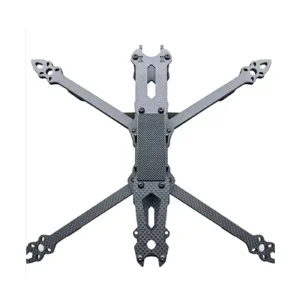
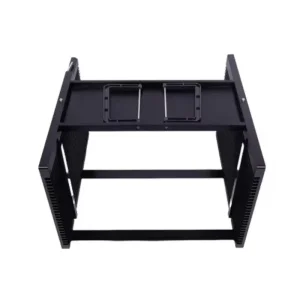
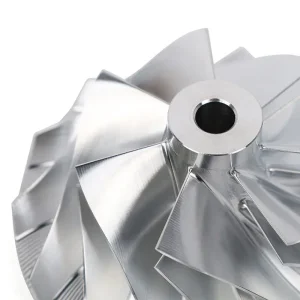
Explore our custom aerospace composite frames, semiconductor wafer holders, 5-axis impellers, and medical precision assemblies manufactured under direct OEM factory governance.