
Mission-Critical Components & Precision Assemblies (Batch I)
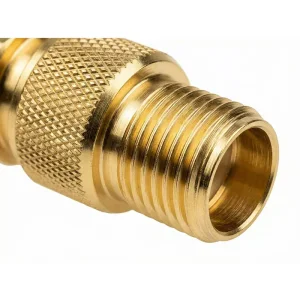
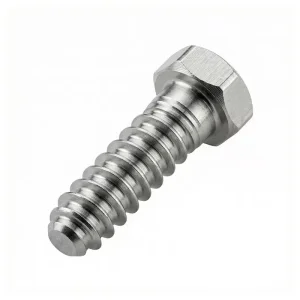
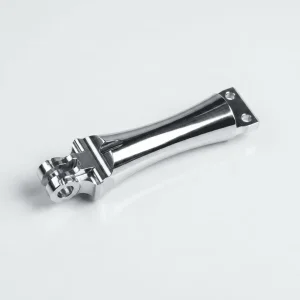
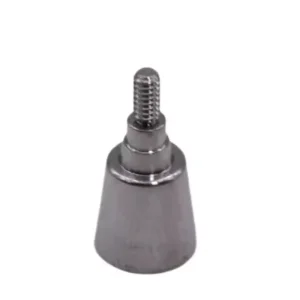
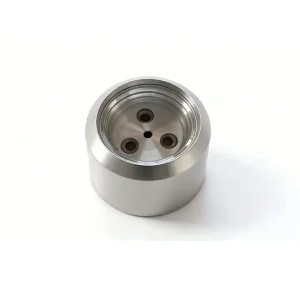
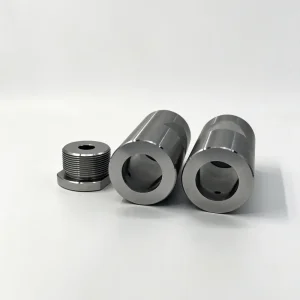
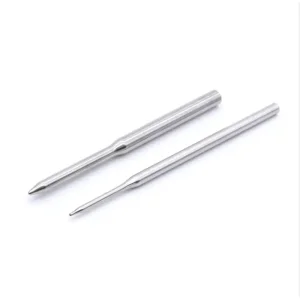
Directly qualified OEM/ODM production parts demonstrating micro-precision tolerances (down to ±0.005 mm), complex multi-axis geometries, and certified medical/industrial surface treatments.
The Global State of Industrial Machining & Advanced Subtractive Engineering
An examination of structural macroeconomic trends, supplier consolidation, total cost of ownership (TCO), and why Fortune 500 procurement teams are auditing shop-floor physics rather than middleman claims.
Geopolitical De-risking & Direct-to-Factory Procurement
Modern procurement executives across North America and Western Europe have largely moved away from pure 'lowest unit bidding' through trading conglomerates. With supply chains vulnerable to raw material volatility and port backlogs, leading OEMs prioritize certified direct factories equipped with on-site raw stock certification, captive machining arrays, and in-house metrology laboratories. Eliminating broker layers cuts margin stacking by 18-32% while restoring direct engineering accountability between customer CAD departments and CAM machinists.
Micro-Tolerance Integrity and GD&T Rigor
In sectors such as robotic surgical tools, aerospace sensor housings, and EV powertrain inverters, standard tolerances of ±0.05 mm are obsolete. High-performance industrial machining suppliers must consistently hold critical features to ±0.005 mm (±5 microns) across high-volume production cycles. This requires real-time thermal compensation on CNC gantries, vibration-damped mineral casting beds, and dynamic tool wear probing using optical and laser measurement interfaces.
Digital Thread Integration: From DFM to Closed-Loop CMM
Information gain in precision manufacturing relies heavily on CAD-to-CAM continuity. Sunmy Hardware deploys automated Design for Manufacturability (DFM) simulation routines within 24 hours of RFQ ingestion. By analyzing tool path accessibility, internal radii, corner relief stress profiles, and fixture clamping kinematics before physical stock touches the chuck, engineering change orders (ECOs) are reduced by 74%, eliminating tooling re-spins and ensuring zero deviation from prototype to batch run.
Unified Subtractive, Casting, and Stamping Ecosystems
Single-discipline machine shops create structural bottlenecks when complex assemblies require stamped spring tabs, die-cast chassis bodies, and micro-machined internal surfaces. By uniting 5-axis CNC machining, Swiss mill-turning, vacuum die casting, progressive die stamping, and cleanroom plastic molding under one ISO-certified operational roof, enterprise buyers achieve single-point logistical ownership, consolidated customs clearance, and synchronized Quality Control protocols.
| Procurement Factor | Conventional Tier-3 Machine Shop | Trading House Intermediary | Enterprise Machining Factory (Sunmy Protocol) |
|---|---|---|---|
| Tolerance Repeatability | ±0.025 mm to ±0.050 mm (Thermal Drift) | Uncontrolled; Variable Subcontractors | ±0.005 mm with In-House CMM & Laser Calibration |
| IP & CAD Data Governance | Informal Storage; Vulnerable Servers | Dispersed across multiple unknown sub-tiers | Direct NDA Execution; Clean Internal Server Partitioning |
| Material Traceability | Generic Mill Sheets (Often Unverified) | Delayed paperwork; Third-party markups | EN 10204 3.1 Certified, Spectrometry & RoHS Verification |
| Engineering Support | Sales-driven; Minimal Tooling Analysis | Non-technical agents; Long communication lag | Bilingual Senior Tooling Engineers; 24-hr DFM Feedback |
| Quality Verification | Batch Spot Checks (Calipers & Micrometers) | Visual spot check at export container port | 100% CMM FAI, Optical Profilometry & GD&T Inspection |
Precision Subtractive Roadmap & Industry 5.0 Integration
Exploring the transition toward cyber-physical manufacturing systems, multi-sensor tool chatter suppression, dynamic palletization, and closed-loop robotic cell handling.
Simultaneous 5-Axis Milling & Impeller Profiling
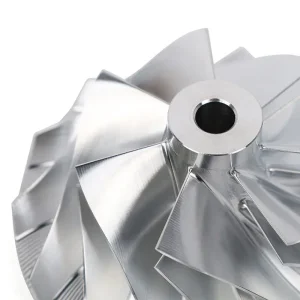
High-speed 5-axis machining eliminates compound fixturing errors by processing undercut geometries, aerodynamically twisted blades, and deep draft pockets in a single dynamic clamping setup. Utilizing high-torque 20,000+ RPM spindles and adaptive look-ahead algorithms, surface finish quality achieves Ra 0.4 μm without extensive manual benching.
Swiss-Type Turn-Mill Micro Machining
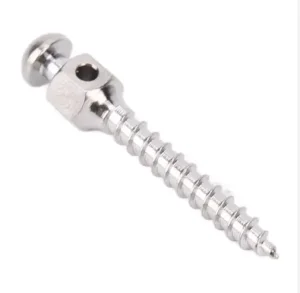
For long, slender, miniature geometries such as medical bone screws, orthodontic micro-pins, and high-voltage electrical connector pins, Swiss-type sliding headstock lathes provide continuous workpiece support adjacent to the cutting edge. Driven tooling allows cross-drilling, polygonal turning, thread whirling, and sub-spindle back-machining in rapid sequence.
Closed-Loop Metrology & CMM Verification
Quality verification is structurally embedded into the machining cell rather than left as an afterthought. Tactile touch probes and non-contact optical blue-light sensors generate coordinate point clouds directly on machine fixtures. Workpieces then transfer to climate-controlled cleanrooms equipped with bridge CMM systems executing complete First Article Inspection (AS9102 format) routines.
End-to-End Solutions Across Heavy-Duty & High-Reliability Sectors
Precision subtractive engineering mapped directly to mechanical operating environments, thermal cycling parameters, and electromagnetic interference constraints.
Aerospace & High-Frequency RF Electronics
Machined from billet 6061-T6 and 7075-T651 aluminum, our RF sensor enclosures feature micro-pocket shielding walls with wall thicknesses controlled down to 0.4 mm. We eliminate electromagnetic leakage with tight stepped lids and conductive chemical film finishes (Mil-DTL-5541 Class 1A/3). Every internal cavity remains free of tool burrs to prevent RF arcing under extreme vibration.
Surgical Implants & Bio-Compatible Hardware
Utilizing Grade 5 Titanium (Ti-6Al-4V ELI) and PEEK medical resins, we fabricate bone anchor screws, orthodontic mini-implants, and prosthetic abutment drivers in dedicated oil-free production cells. Surface roughness is tailored for osteointegration or mirror polished (Ra < 0.2 μm) for articulated junctions, adhering strictly to ASTM F136 specifications and bio-burden sanitization controls.
Robotics & Advanced Kinematic Joints
Articulated robotic actuators, finger joint links, and harmonic drive housings demand tight coaxiality and absolute weight minimization. Sunmy utilizes lightweight forged aircraft alloys, precision wire EDM slotting, and hard anodizing (Mil-A-8625 Type III) to supply wear-resistant, high-strength-to-weight structural connectors capable of withstanding millions of high-acceleration robotic load cycles.
High-Voltage Power Distribution & Energy
Copper bus contact bases, ceramic insulator couplers, and high-pressure steam thermowell housings machined from oxygen-free electronic copper (C10100) and 316L stainless steel. We guarantee non-porous structure and pressure tightness up to 600 bar, preventing dielectric breakdown and thermal runaway in utility-scale transformation stations and subsea exploration hubs.
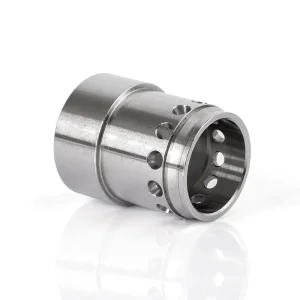
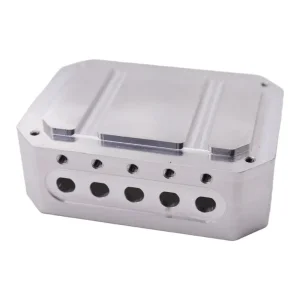
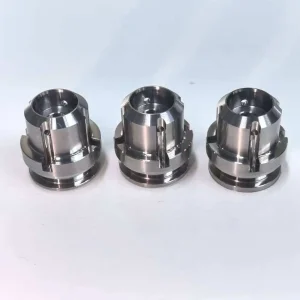
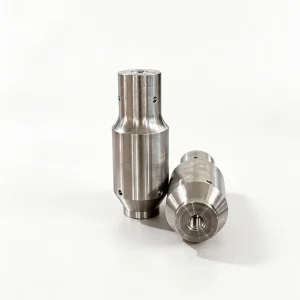
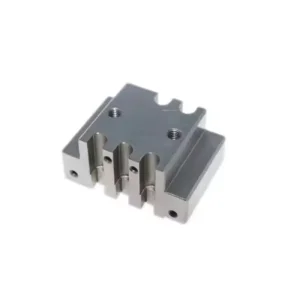
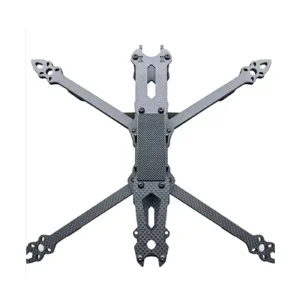
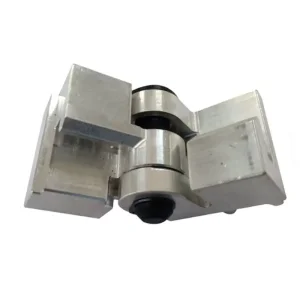
High-Performance Functional Components & Housings (Batch II)
Demonstrating advanced 5-axis aerospace milling, deep-hole turn-milling, titanium acoustic horns, and composite hybrid machining for global high-tech systems.
Auditable Global Compliance, Quality Control & Metrology Governance
E-E-A-T validated manufacturing operations compliant with international standards, transparent material pedigree, and export verification.
ISO 9001:2015 & Rigorous Quality Systems
Every operational node inside Sunmy Hardware operates under a closed-loop quality management system. From inbound raw bar stock inspection via optical emission spectrometry to statistical process control (SPC) charting during live CNC passes, our internal quality gates intercept drift before out-of-tolerance parts can accumulate.
Full RoHS & REACH Compliance Screening
For electronic assemblies, automotive switches, and telecommunication hardware destined for EU and North American jurisdictions, we guarantee complete freedom from restricted heavy metals and hazardous chemicals. Every batch includes full declaration of conformity certificates supported by independent third-party laboratory assay reports.
Traceable Mill Certificates & AS9102 FAI
We supply EN 10204 Type 3.1 chemical composition and tensile elongation certificates matched precisely to heat numbers stamped on physical ingots. For aerospace and medical contracts, full First Article Inspection (FAI) reports document 100% of ballooned drawing dimensions with true position GD&T verification.
Frequently Asked Questions for Sourcing Directors & Chief Engineers
Deep technical answers addressing practical constraints, multi-axis capabilities, surface treatments, lead times, and global delivery schedules.
Accelerate Your Custom Machining Production Lifecycle
Transfer your critical 2D/3D engineering drawings directly to our Shenzhen factory floor. Receive comprehensive DFM manufacturability analysis, tolerance stack-up feedback, and formal cost models within 24 business hours.
Submit Drawings for Engineering Review