Precision Engineering Portfolio
High-Spec Machined & Fabricated Components (Phase I)
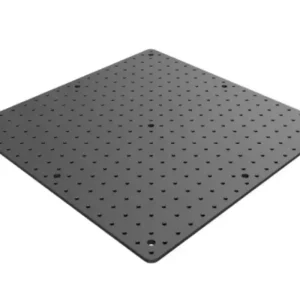
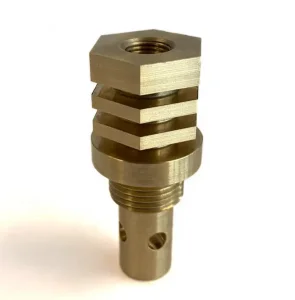
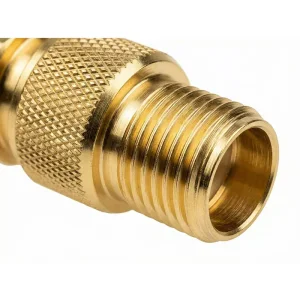
Verified dimensional conformity through coordinate measuring machines (CMM) and First Article Inspection (FAI) with zero-tolerance stack-up design.
±0.005mm
CNC & Hybrid Tolerance Limit
22.4%
Additive CAGR (2024–2032)
100%
In-House FAI & CMM Inspection
5,000t
Annual Specialized Metal Throughput
Executive Sourcing Brief
The Global Landscape: Additive Manufacturing Industrial Migration
In the contemporary manufacturing paradigm, Additive Manufacturing (AM) has transcended its historical limitation as a rapid prototyping mechanism to establish itself as a core volume-production technology. Driven by industrial requirements across aerospace turbomachinery, robotic joint kinematics, medical implants, and high-frequency RF waveguides, additive technologies like Selective Laser Melting (SLM), Electron Beam Melting (EBM), and Direct Metal Laser Sintering (DMLS) now construct components that were previously un-machinable via traditional 3-axis or 5-axis subtractive milling.
However, industrial deployment faces the severe technical hurdle of the "as-built surface reality." Powder bed fusion processes, while geometrically unfettered, routinely yield surface roughness averages (Ra) between 6.3 µm and 15 µm, alongside internal residual stress lattices and anisotropic grain boundaries. Global engineering organizations now require ODM Hybrid Manufacturing—an integrated delivery framework where laser powder bed sintering is structurally married to multi-axis Swiss turning, 5-axis high-speed CNC contouring, and hot isostatic pressing (HIP) under a single engineering oversight.
Key Engineering Standard: Modern procurement guidelines require suppliers to deliver comprehensive traceability from raw atomized spherical powder geometry (ASTM B214/B215) through in-situ layer monitoring to secondary precision geometric tolerancing (ISO 2768-mK / ISO 1101).
The China Factory Efficiency Advantage in ODM Engineering
China's industrial clustering—most notably demonstrated within the Shenzhen-Dongguan hardware manufacturing ecosystem—provides an unprecedented structural advantage for global enterprises seeking high-reliability ODM additive manufacturing. Unlike regional machine shops constrained by single-machine capabilities or protracted raw material lead times, Chinese export-oriented facilities orchestrate ultra-dense supply networks that collapse development lifecycles.
By co-locating industrial 3D printing equipment (SLA, SLS, SLM) alongside thousands of multi-axis CNC machines, heat treatment vacuum furnaces, and in-house metrology facilities, our factory architecture enables continuous iterations from digital STEP models to First Article Inspection within 72 hours. This density slashes non-recurring engineering (NRE) overheads, absorbs raw material volatilities in high-grade alloys (Inconel 718, Ti-6Al-4V, 17-4PH), and delivers high-mix, variable-volume production matrices without middleman surcharges.
Metrology & Process Matrix
Engineering Trade-Off Analysis: Additive vs. Hybrid ODM
Understanding the dimensional, mechanical, and economic thresholds for production-scale sourcing.
| Evaluation Parameter | Standalone Additive (SLM/DMLS) | Subtractive Sub-contracting | Integrated Sunmy ODM Hybrid |
|---|---|---|---|
| Dimensional Tolerance | ±0.1 mm to ±0.2 mm | ±0.005 mm (Isolated setups) | ±0.005 mm (Datum-matched in-house CNC) |
| Surface Texture (Ra) | Ra 6.3 – 12.5 µm (Porous/Raw) | Ra 0.4 – 1.6 µm | Ra 0.2 – 0.8 µm (Precision turn-milled & polished) |
| Geometric Complexity | Unlimited (Conformal cooling channels) | Severely limited by tool clearance | Optimized (Internal AM channels + precision interfaces) |
| IP Transfer Risks | Medium (Requires multiple post-processors) | High (Brokered across distributed shops) | Zero Risk (NDA-secured, direct single-plant execution) |
| First Article Lead Time | 5 – 7 business days | 14 – 20 business days | Within 72 Hours (Direct factory DFM pipeline) |
Real-World Deployments
Localized Industrial Use-Cases & High-Reliability Demands
Field-proven components designed to perform in extreme mechanical, thermal, and regulatory environments.
Aerospace & Thermal Management
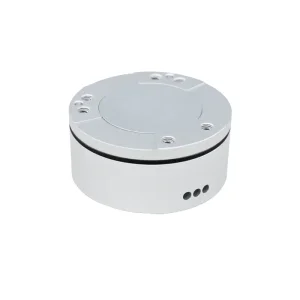
Conformal cooling plates, heat pipe blocks, and lightweight titanium structural brackets. Integrating 3D-printed internal micro-channels with CNC-milled vacuum seal O-ring grooves to prevent thermal throttles in satellite avionics and high-output semiconductor test fixtures.
Surgical & Class II/III Medical Devices
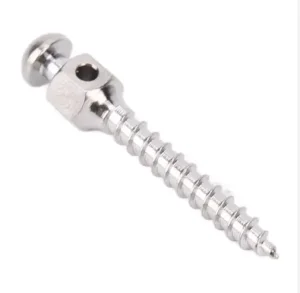
Titanium abutments, trabecular bone plates, and orthopedic micro-screws. Additive manufacturing yields osteoconductive porous surfaces, followed by high-speed Swiss lathe threading and automated passivating to comply with ISO 13485 cleanroom sterilization standards.
Robotics & Multi-Axis Kinematics
Multi-axis torque sensor housings, hollow cycloidal reducer pins, and articulated robotic wrist collars. Lightweight lattice geometry absorbs torsional resonance while high-accuracy sub-micron boring secures bearing raceway concentricity and zero-backlash drive transfer.
Global Quality Assurance
Answering Tier-1 Procurement Protocols & Supply Security
Engineered systematically to fulfill the strict vendor qualification frameworks of European and North American engineering buyers.
Direct-to-Factory IP Security
Tier-1 procurement mandates rigorous IP ring-fencing. Every project is handled directly by factory-floor mechanical engineers under bilateral NDAs. Your proprietary CAD, STEP, and SolidWorks geometry is stored on air-gapped engineering networks without passing through third-party brokers.
Full Inspection Documentation (FAI/CMM)
Every delivery includes raw material melt/chemical mill test certificates (EN 10204 3.1), coordinate measuring machine (CMM) multi-point dimensional validation, coating thickness records, and RoHS/REACH declarations directly signed off by certified quality managers.
Continuous Design for Manufacturability (DFM)
Receive comprehensive engineering reviews within 24 hours of CAD transmission. Our teams assess print orientation, overhanging stress lines, support reduction strategies, thermal distortion profiles, and tool access clearing before capital expenditure is initiated.
Industrial Catalog Execution
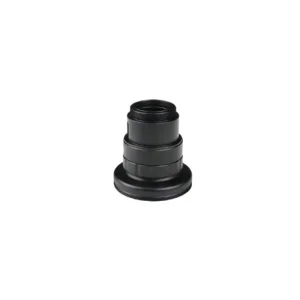
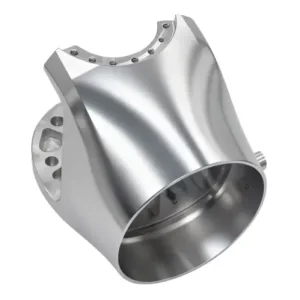
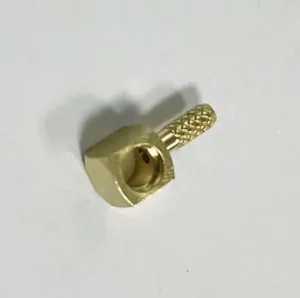
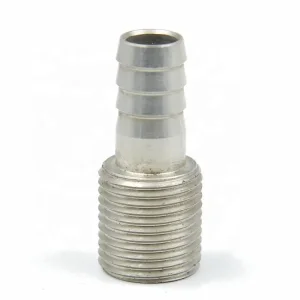
Mission-Critical Turned, Milled & Molded Assemblies (Phase II)
Seamlessly scalable from initial hybrid additive prototypes into high-output die casting, stamping, and multi-cavity injection production.
Market Horizon
Emerging Technology Shifts: The Next 5 Years of ODM Additive Manufacturing
The industrial landscape is actively migrating toward Multi-Laser Powder Bed Fusion (LPBF) platforms capable of handling multi-material functionally graded structures—such as blending copper alloys directly into high-strength nickel matrices to create components with localized, differential thermal and structural performance.
Simultaneously, machine learning-driven computational DFM platforms are being integrated directly into our CNC post-processing pipeline. By running real-time thermal deformation simulation maps, our multi-axis toolpaths adaptively adjust cut profiles to compensate for unpredictable residual cooling distortion before the metal billet or printed blank touches the spindle, driving true zero-defect production economics.
Engineering Help Desk
Frequently Asked Questions: Technical & Sourcing Governance
Clear, direct answers regarding tolerances, material provenance, intellectual property, and supply contract management.
What tolerances are reliably achievable across hybrid additive-machined parts?
While standalone additive manufacturing processes (SLM/DMLS) achieve nominal tolerances around ±0.1 mm, Sunmy integrates secondary in-house 5-axis CNC milling and Swiss lathe turning to achieve critical feature tolerances down to ±0.005 mm (such as bearing bores, optical barrel seating, and sealing faces), verified on CMM.
How does Sunmy Hardware secure client IP and CAD data integrity?
We execute strict, legally binding Non-Disclosure Agreements (NDAs) directly with your engineering group before CAD transfer. Our internal networks isolate sensitive models, preventing public cloud uploads. You interface directly with Chinese factory engineers, eliminating third-party distribution leaks.
Which manufacturing operations are managed directly in-house?
Sunmy directly owns and operates our CNC machining centers, turning lines, wire EDM, metal stamping equipment, and CMM metrology laboratories in Shenzhen. Specialized heat treatment (vacuum annealing, HIP) and cosmetic surface coatings (hard anodizing, PVD) are handled through audited partner facilities under direct Sunmy QA oversight.
What quality certifications and metrology reports are included with exports?
Every shipment is delivered with comprehensive compliance documentation: batch-specific EN 10204 3.1 chemical & physical material certs, complete CMM dimensional inspection sheets, First Article Inspection (FAI) reports, and standard RoHS / REACH substance conformity declarations.
Can you transition low-volume additive designs into mass production?
Yes. Our engineering ecosystem is explicitly designed for lifecycle bridging: validating early mechanical assemblies via industrial 3D printing or urethane casting, then smoothly migrating production tooling into high-pressure aluminum/zinc die casting, stamping, or multi-cavity injection molding as volumes expand.
What is the standard turnaround time for technical RFQs and DFM feedback?
Our mechanical engineering group delivers an actionable DFM analysis and firm cost breakdown within 24 hours of receiving your 3D CAD (.STEP / .STP / .X_T) models and 2D GD&T drawings, identifying geometry bottlenecks, tooling paths, and optimization options before kickoff.