High-Integrity OEM / ODM Custom Machined & Cast Components
Explore precision-engineered hardware fabricated under stringent dimensional control, advanced multi-axis CNC milling, turning, and foundry-level metallurgical surveillance.
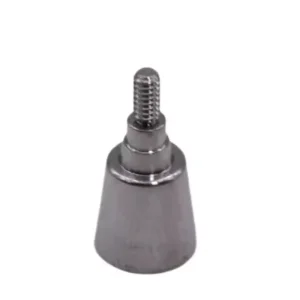
Custom CNC Turned Titanium Abutment Implant Driver & Prosthetic Connector
Explore Component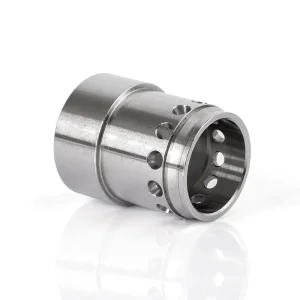
China Custom CNC Stainless Steel Drilled Filter Sleeve & Flow Control Valve Component
Explore Component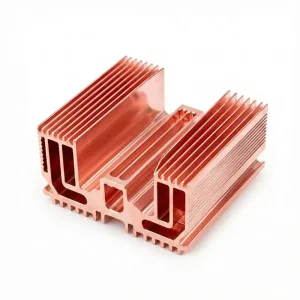
ODM High-Performance Copper Heatsink Manufacturer, Thermal Subsystems
Explore Component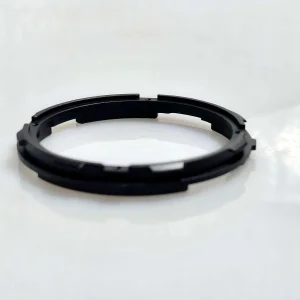
Custom Custom CNC Turn-Milled Bayonet Mount & Locking Ring Couplers
Explore Component
ODM Custom CNC Precision Turned Stainless Steel Filter Sleeve (OEM/ODM Industrial)
Explore Component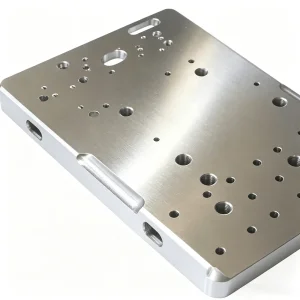
OEM Custom CNC Machined Aluminum Multi-Hole Structural Mounting Plate
Explore Component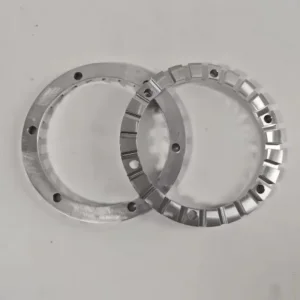
China Custom CNC Machined Anodized Sealing Rings for Optical & Semi Instruments
Explore Component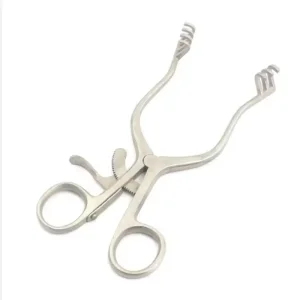
China Professional Quality Stainless Steel Custom Medical Retractor Assemblies
Explore ComponentMacro-Industrial Dynamics & Global Procurement Strategic Realignment
A technical assessment of global carbon steel casting supply chains, fluctuating raw alloy markets, nearshoring trade dynamics, and total cost of acquisition (TCO) benchmarks.
Supply Chain Reshoring vs. Precision Clusters
Global mechanical OEM enterprises across North America and Europe confront intense cost-resilience trade-offs. While raw castings face localized freight volatility, precision-cast and CNC-machined carbon steel solutions from Shenzhen Sunmy Hardware integrate low-defect casting clusters with five-axis finish machining, bypassing fractured subcontracting loops and cutting lead time variance by over 38%.
Total Cost of Acquisition (TCO) Economics
Procuring raw unmachined castings shifts downstream deburring, sub-surface porosity discovery, and secondary CNC setup failures onto the buyer's balance sheet. Sunmy delivers certified semi-finished and finished machined components subjected to pre-shipment hydrostatic, ultrasonic, and Coordinate Measuring Machine (CMM) validation, directly driving zero-defect line installation at downstream plants.
Decarbonization & Green Foundry Conformance
Modern carbon steel investment foundries must comply with strict environmental, energy efficiency, and low-sulfur melting criteria. Utilizing medium-frequency electric induction furnaces, automated silica sol ceramic shell reclamation, and scrap-stream closed-loop recycling enables us to deliver carbon steel parts with full material traceability and verified RoHS/REACH environmental compliance.
Carbon Steel Metallurgy, Castability & Microstructural Control
A comprehensive examination of alloy selection, deoxidation mechanisms, grain refinement, and thermal treatments governing ductile-to-brittle transition temperatures (DBTT) in harsh environments.
Low Carbon Steels (≤0.25% C)
Grades: ASTM A216 WCA, AISI 1020, LCB. Excellent weldability and ductility with minimal quench-hardening tendencies. Ideal for pressure vessel flanges, valve bodies, and components demanding high Charpy V-Notch toughness down to -46°C under ASTM A352 protocols.
Medium Carbon Steels (0.25-0.60% C)
Grades: ASTM A216 WCB/WCC, AISI 1045, GS-52. The foundational balance between tensile capacity, fatigue resistance, and machinability. Readily responsive to normalizing, quenching, and tempering to produce tempered martensite or refined pearlite-ferrite matrixes.
Low-Alloy Carbon Steels (Cr-Mo-Ni)
Grades: AISI 4130, 4140, 8620, ASTM A217 WC6. Micro-alloyed with chromium, molybdenum, or nickel to elevate hardenability, depth of hardness penetration, and creep resistance at operating temperatures exceeding 450°C in high-pressure steam and turbine applications.
High-Carbon & Wear Resistant (>0.60% C)
Grades: AISI 1070, 1084, High-C Castings. Designed for extreme abrasive wear, impact sliding contact, heavy mining buckets, shredder hammer heads, and agricultural ground-engaging tools. Surface induction hardening delivers surface hardness exceeding 58 HRC.
Metallurgical Deoxidation & Grain Boundary Solidification Control
In raw carbon steel casting, inadequate deoxidation triggers severe sub-surface carbon monoxide pinholes and brittle Type II grain-boundary sulfide inclusions. Sunmy operates a strict vacuum-assisted ladle refining practice incorporating calibrated aluminum-zirconium deoxidation and argon purging. This precipitates benign globular Type III manganese sulfides (MnS), eliminating notch sensitivity and guaranteeing notch toughness conformity during low-temperature Charpy V-notch testing at -46°C.
| Material Standard / Grade | UNS / Equiv. | Tensile Strength (min. MPa) | Yield Strength (min. MPa) | Elongation in 50mm (%) | Hardness (HBW / HRC) | Primary Industrial Use-Case |
|---|---|---|---|---|---|---|
| ASTM A216 WCB | J03002 | 485 MPa | 250 MPa | 22% | 137 - 187 HBW | Pressure Valves & Flanges |
| ASTM A216 WCC | J02503 | 485 - 655 MPa | 275 MPa | 22% | 143 - 192 HBW | High-Pressure Fluid Bodies |
| ASTM A352 LCB | J03003 | 450 - 585 MPa | 240 MPa | 24% | 137 - 179 HBW | Cryogenic / Low Temp (-46°C) |
| AISI / SAE 1025 | G10250 | 450 MPa | 230 MPa | 25% | 120 - 160 HBW | Welded Structural Brackets |
| AISI / SAE 1045 | G10450 | 630 MPa | 370 MPa | 16% | 170 - 220 HBW | Shafts, Gears & Couplings |
| AISI 4140 (Cr-Mo) | G41400 | 850 - 1050 MPa | 650 MPa | 12% | 28 - 34 HRC (Q&T) | Heavy Pinions & Planetary Gears |
| AISI 8620 (Ni-Cr-Mo) | G86200 | 750 MPa | 480 MPa | 15% | 58 - 62 HRC (Case) | Carburized Wear Bushings |
Precision Casting Methodologies: Silica Sol vs. Sand vs. Lost Foam
Aligning component geometry, wall thickness boundaries, internal core complexity, and production economics with the optimal casting process route.
Silica Sol Investment Casting
The definitive process for complex, thin-walled net-shape components. Utilizes multi-layer colloidal silica refractory slurries without sodium silicate contamination, eliminating surface decarburization. Produces surface finishes of Ra 3.2 - 6.3 μm with linear casting tolerances within ISO 8062-3 DGT-4 to DGT-6 (CT4-CT6), drastically cutting machining allowance down to 0.8-1.2mm.
Furan Resin Precision Sand Casting
Engineered for medium to large structural carbon steel assemblies from 50kg up to 5,000kg. Furan self-hardening resin sand provides mold rigidity exceeding 1.8 MPa, minimizing mold-wall movement and volumetric shrinkage porosity. Ideal for heavy pump casings, mining counter-weights, eccentric links, and high-horsepower engine brackets.
Lost Foam (EPC) Casting
Excels in intricate carbon steel geometries with internal fluid passages, zero-draft requirements, and consolidated multi-piece fabrications. Expandable polystyrene (EPS) patterns evaporate under liquid metal contact. Eliminates parting-line flash and core-shift errors, making it superior for fluid power manifolds and intricate railway brackets.
CAE Gating & Thermal Simulation
AnyCasting & MAGMA numerical simulations eliminate shrinkage cavities, air entrapment, and premature gate freezing prior to die fabrication.
Robotic Ceramic Shell Layering
Constant temperature (22±1°C) and controlled humidity automated dipping booths build 6-8 layers of high-purity zircon and mullite slurries.
Medium Frequency Induction Melt
Spectrometer analysis validates chemical composition per heat lot before automated pneumatic bottom-pouring at 1580°C - 1620°C.
Post-Cast CNC Machining & CMM
Continuous five-axis milling centers hold tight critical tolerances down to ±0.005mm, verified with Zeiss CMM and AS9102 FAI documentation.
Mission-Critical Applications Across Key Industrial Sectors
Deploying specialized carbon steel casting solutions engineered to overcome dynamic fatigue, mechanical vibration, thermal cycling, and high-pressure media containment.
Severe Service Valves & Petrochemical Piping
Castings for ball valves, globe valves, triple-offset butterfly valves, and high-pressure manifold blocks manufactured in ASTM A216 WCB/WCC and A352 LCB. Subjected to 100% radiographic inspection (RT) per ASME Section VIII, Div 1, App 4 and hydrostatic burst testing exceeding 1.5x design pressure to ensure zero fugitive emissions.
Heavy Earthmoving & Mining Wear Hardware
Mining hydraulic shovel bucket teeth, track shoes, crusher toggle plates, and excavator articulation links cast from modified AISI 4140 and 8620 alloys. Controlled differential heat treatment establishes ultra-hard wear surfaces (>52 HRC) supported by high-toughness impact-absorbing pearlitic-ferritic shock cores.
Rail Rolling Stock & Powertrain Couplers
Bogies, axle box housings, draft gear yokes, and braking knuckle assemblies complying with EN 13674 and AAR (Association of American Railroads) standards. Castings undergo magnetic particle inspection (MPI) and 100% ultrasonic volumetric examination (UT) per EN 12680-1 Class 2 to eliminate planar fatigue defects.
Defect Mitigation Protocols, Metrology & Regulatory Certifications
A rigorous quality management architecture from raw ingot spectral assay to coordinate metrology and First Article Inspection (FAI) reports.
Spectrometer Melt Verification
Optical Emission Spectrometry (OES) conducts multi-point elemental analysis before furnace tapping and post-shakeout. Carbon, manganese, silicon, phosphorus, and sulfur content are logged in mill test certificates per EN 10204 Type 3.1 standards.
Volumetric NDT Non-Destructive Testing
Ultrasonic Testing (UT per ASTM A609) detects sub-surface gas pockets and micro-porosity. Liquid Penetrant (PT per ASTM E165) and Magnetic Particle Inspection (MPI per ASTM E709) verify zero crack indications on machined seal lands and dynamic fillet radii.
In-House Zeiss CMM Coordinate Metrology
Multi-sensor Bridge CMMs probe spatial datum positions, true position tolerances, roundness, perpendicularity, and profile accuracy against customer 3D STEP models, consistently certifying tight CNC tolerances within ±0.005mm.
Global Regulatory & PED Conformance
Full conformance to European Pressure Equipment Directive (PED 2014/68/EU), ISO 9001:2015, and RoHS/REACH chemical directives. Every export consignment is sealed with batch heat number stamping and traceable inspection documentation.
| Casting Defect Classification | Physical Root Cause in Carbon Steel | Foundry Prevention Protocol & Engineering Solution | Verification & Screening Method |
|---|---|---|---|
| Shrinkage Porosity (Internal) | Volumetric contraction during liquid-solid phase change without adequate riser feed. | CAE feeder placement, insulated riser sleeves, and progressive directional solidification gating. | Ultrasonic Testing (ASTM A609) & Industrial X-ray (RT) |
| Hot Tearing & Solidification Cracks | High residual stress on intricate casting geometries during rapid cooling contraction. | Optimizing mold collapsibility, adjusting Cr/Mo alloy ratios, and elevating corner fillet radii to >R3mm. | Fluorescent Magnetic Particle Inspection (MPI) |
| Slag / Non-Metallic Inclusions | Oxidized furnace refractories or air re-oxidation during molten steel ladle transfer. | Zirconia ceramic foam filters in runner tracks and closed bottom-pour stopper ladle pouring. | Surface Penetrant Testing (PT) & Sectioning FAI |
| Gas Pinholes & Subsurface Porosity | Entrapped atmospheric moisture or insufficient ceramic shell de-binding firing. | High-temperature vacuum shell preheating (950°C - 1050°C) and ladle argon de-gassing. | CMM Rough Machining Skinning & Proof Boring |
Precision Five-Axis CNC Machining & Turn-Mill Integration
Eliminating third-party subcontracting risks by pairing raw foundry output with proprietary Shenzhen CNC facilities equipped with high-torque, five-axis machining centers.
Single-Setup Datum Machining
By establishing initial optical locating pins on complex cast blanks, our 5-axis CNC machining centers finish multi-face boring, thread milling, and O-ring groove turning in a unified clamping setup. This avoids accumulated tolerance stacking errors and secures true position accuracy within ±0.01mm on bearing centerlines.
High-Torque Hard Milling & Turning
Post-quenched carbon steels (up to 45-55 HRC) demand specialized carbide and CBN tooling with high-pressure internal coolant. We achieve fine bearing journals with surface finishes down to Ra 0.4 μm directly on CNC lathes, eliminating costly cylindrical grinding operations.
IP Protection & Direct Factory Direct Liaison
We execute standard Non-Disclosure Agreements (NDAs) prior to receiving CAD/STEP files. Clients communicate directly with our bilingual metallurgical and manufacturing engineers, guaranteeing complete intellectual property isolation and rapid DFM iterations within 24 hours.
Foundry 4.0: The Next Generation of Carbon Steel Casting
Exploring binder-jet 3D sand printing, real-time pyrometric artificial intelligence, and digital twin gating simulations driving zero-defect production.
Binder-Jet 3D Sand Printing
Eliminating pattern tooling for rapid functional prototypes and low-volume pilot runs. 3D printed silica sand molds allow complex re-entrant angles, undercut coring, and conformal cooling channels castable in ASTM A216 WCB within 7 business days.
AI Optical Pyrometry & Melt Control
Thermal infrared camera arrays monitor the pouring stream at 120 frames per second. Machine learning neural nets identify pouring temperature anomalies (±2°C), dynamically triggering automatic slag cut-off stoppers to safeguard melt purity.
Digital Twin Process Traceability
Every casting lot receives an integrated 2D DataMatrix code laser etched onto the unmachined boss. The digital twin logs furnace chemical spectral heats, mold cavity temperature logs, shell drying humidity histories, and CMM inspection profiles.
Carbon-Neutral Green Melting
Transitioning to 100% green-certified renewable grid power for induction furnaces, supported by closed-cycle dust collection, zero-effluent wastewater neutralization, and high-efficiency ceramic shell calcining heat recovery.
Advanced Industrial Machined & Fabricated Engineering Solutions
A continuation of Sunmy Hardware’s high-precision manufacturing catalog, showcasing complex turned shafts, fluid valve cores, brass connectors, and medical grade components.
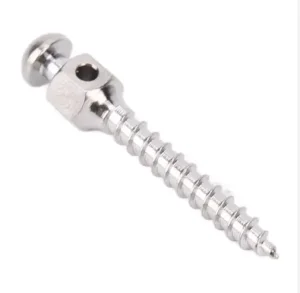
China Custom Precision Titanium Orthodontic Micro Implant Anchor Screws
Explore Component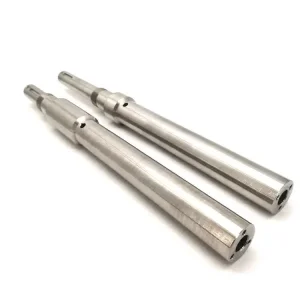
Custom Custom CNC Turned Stainless Steel Stepped Shafts with Precision Keyways
Explore Component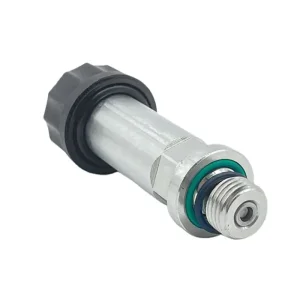
Custom Hydraulic Solenoid Valve Core – Precision Excavator Replacement Spares
Explore Component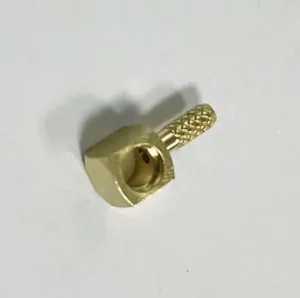
High-Quality Custom CNC Machining Brass Insert Connector with Knurled Pin
Explore Component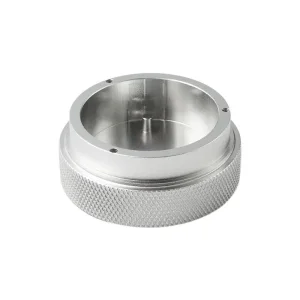
High-Quality Premium Custom CNC Machined Aluminum Control Knobs
Explore Component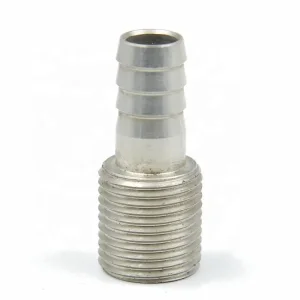
OEM Custom CNC Turned Hose Barb Fittings & Threaded Hydraulic Adapters
Explore Component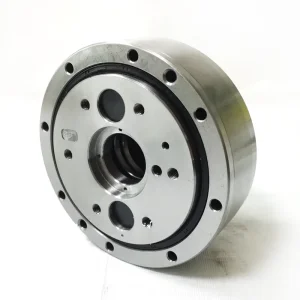
ODM Custom Hollow-Shaft Cycloidal Reducer | OEM Sub-Assemblies
Explore Component
Custom Titanium Medical Implant / Cannulated Bone Screw Precision Spares
Explore ComponentFrequently Asked Questions From Global Sourcing & Engineering Teams
Authoritative metallurgical, manufacturing, and commercial answers regarding carbon steel casting tolerances, lead times, NDT capabilities, and export compliance.