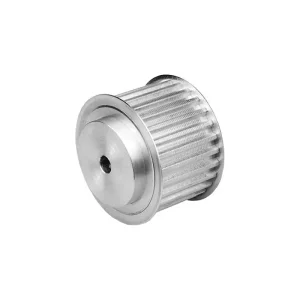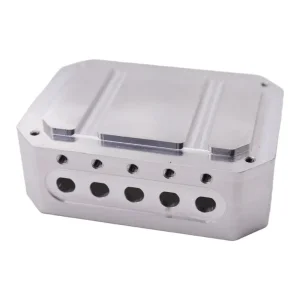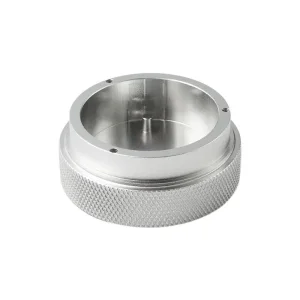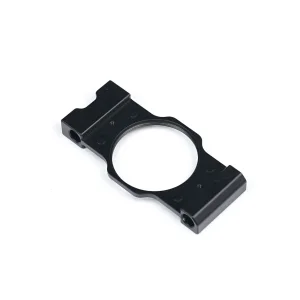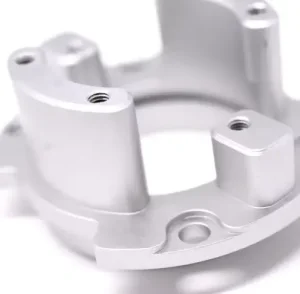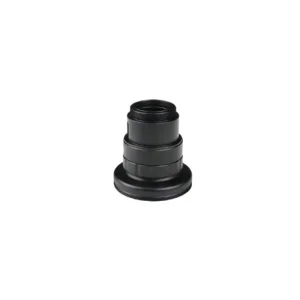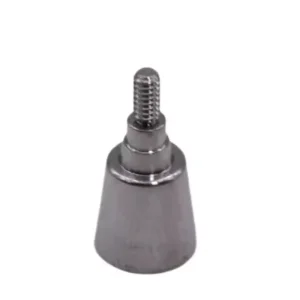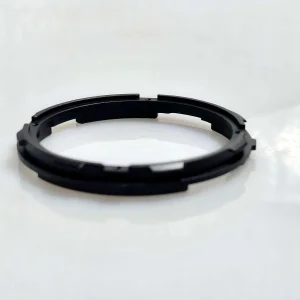
Precision Flange Assemblies & Specialized Kinematic Enclosures
Explore custom-engineered mechanical components, multi-axis sensory housings, and high-performance precision flange products fabricated to micron-grade geometric dimensional tolerances.
The Global Commercial Landscape of Industrial Flange Machining
Navigating structural supply chain shifts, digital thread integration, and tight geometric tolerance requirements across international process industries.
Global Market Realignment
The industrial flange machining sector is undergoing a massive geopolitical and operational transition. As global infrastructure expands in clean energy, liquefied natural gas (LNG), semiconductor lithography, and high-pressure hydrogen transit, traditional forging and rough-turning facilities no longer suffice. Contemporary original design manufacturers (ODMs) must provide turnkey subtractive engineering capable of maintaining dimensional tolerances to ±0.005 mm.
Tier-1 procurement organizations are consolidating suppliers, preferring full-stack manufacturing hubs in specialized industrial clusters like Shenzhen, China, where raw billet forging, live-tooling CNC turn-milling, and in-house Coordinate Measuring Machine (CMM) metrology operate concurrently under strict Non-Disclosure Agreements (NDAs).
Tightening Structural Standards
Regulatory frameworks such as ASME B16.5, ASME B16.47 Series A/B, API 6A/17D, DIN EN 1092-1, and ISO 7005 dictate severe compliance criteria for hydrostatic sealing. However, bespoke mission-critical applications—such as robotic 6-axis kinematic joints, aerospace gimbal rings, and nuclear containment valves—demand ODM customization far beyond standardized commodity catalogs.
Our engineering services resolve persistent industry pain points: flange face waviness, bolt-hole circle pitch errors, serrated spiral phonographic groove micro-chatter, and residual stress warping caused by uncontrolled localized heat generation during high-feed milling passes.
The Shenzhen Supply Ecosystem
Sunmy Hardware capitalizes on Shenzhen’s advanced precision tooling ecosystem. Combining direct mill-source metallographic tracking, multi-axis Swiss-turning, heavy-duty 5-axis vertical turning lathe (VTL) centers, and direct engineering-to-client technical communication, we eliminate multi-tier brokerage markup and engineering translation latency.
From initial Design for Manufacturability (DFM) analysis to First Article Inspection (FAI) reports with AS9102 traceability, our ODM flange machining solutions bridge the gap between complex digital CAD geometry and mission-ready industrial field deployment.
End-to-End ODM Flange Engineering Methodologies
Comprehensive custom manufacturing covering metallurgy, rough machining, thermal stress relief, micro-precision finishing, and surface modification.
| Flange Classification | Common Materials | Machining Strategy | Critical Tolerances | Primary Industrial Sector |
|---|---|---|---|---|
| Weld Neck & Slip-On Flanges | ASTM A105, 316L, Duplex 2205 | Heavy CNC Turning + Live-tool drilling | Flange Face Ra 3.2 - 6.3 µm, Bore ±0.02 mm | Petrochemical, Midstream Pipeline, Power |
| ConFlat (CF) & ISO-KF Flanges | 304L, 316LN ESR, OFHC Copper | Single-setup turn-mill + Diamond burnish | Knife-edge angle ±0.2°, Ra < 0.4 µm | Semiconductor, Synchrotrons, High Vacuum |
| API 6A / 17D Subsea Flanges | AISI 4130, Inconel 625 Clad, F22 | Multi-axis VTL + Ring groove plunge | Ring Groove Depth ±0.01 mm, Perpendicularity 0.015 mm | Deepwater Wellheads, HPHT Subsea Manifolds |
| Aerospace Kinematic Flanges | Ti-6Al-4V Gr.5, 7075-T6, Invar 36 | Simultaneous 5-Axis Milling + Trochoidal milling | Position Ø 0.008 mm, Flatness 0.005 mm | Satellite Mounts, Jet Propulsion Gimbaling |
| Cryogenic Hydrogen Coupling Flanges | Hastelloy C-276, 316Ti, Monel 400 | High-speed cryogenic machining (-196°C CO2 flush) | Seal face runout < 0.005 mm, Zero micro-burrs | LH2 Distribution, Space Launch GSE |
Sub-Micron Surface Integrity
Controlling phonographic spiral serration pitch (45–55 grooves per inch according to ASME PCC-1) or concentric continuous gramophone groove profiling. We guarantee gasket bite characteristics without tool micro-dwell gouging.
Complex Bolt Circle Geometry
CNC multi-spindle drilling and thread milling eliminate tap-breakage risks in hardened alloys. Positional true tolerance maintained within Ø0.01 mm relative to datum bores and hub alignments.
Thermal & Residual Stress Mitigation
Intermediate vibratory stress relieving (VSR) and sub-critical annealing cycles prevent post-machining out-of-flatness in large-diameter thin-wall custom flanges.
Advanced Metallurgy and In-House Metrological Governance
Stringent physical and chemical material validation backed by ISO 9001 and AS9102 First Article Inspection protocols.
Corrosion-Resistant Alloys
Expert processing of duplex, super duplex (UNS S32750), Hastelloy, Monel, and 316LN ESR steels. Optimized feed, speed, and chip-breaker geometries eliminate work hardening during interrupted face cuts.
Zero Porosity Verification
Ultrasonic (UT) testing in accordance with ASTM A388 and Dye Penetrant Inspection (DPI) per ASTM E165 ensure billet and weld-overlay cladding integrity before the cutting tool touches the workpiece.
In-Situ Zeiss CMM Scanning
Equipped with temperature-controlled measuring labs and Renishaw 5-axis scanning probes. Continuous circularity, true runout, and sealing profile coordinates verified across 100% of high-pressure lots.
Complete Traceability Package
Every delivery includes 3.1 EN 10204 Mill Test Certificates (MTC), mechanical impact and tensile data, positive material identification (PMI), and precision profilometer surface charts.
Mission-Critical Industry Deployments
From deep-sea hydrocarbon extraction to satellite vacuum interfaces, examine how our ODM precision flanges satisfy extreme operational parameters.
Subsea HPHT Oil & Gas
Operational Environment: 3,000 meters subsea depth, up to 15,000 psi hydrostatic pressure, hydrogen sulfide (H2S) sour gas exposure.
Engineering Response: Forged F22/4130 base cores clad with corrosion-resistant Inconel 625 using automated weld overlay, followed by precision CNC turn-milling of BX-150 through BX-160 ring joint grooves. Tolerances on ring pitch diameter held to ±0.012 mm with zero micro-tool gouges to ensure gas-tight metal-to-metal seating.
Semiconductor Ultra-High Vacuum (UHV)
Operational Environment: 10⁻¹⁰ Torr vacuum levels, cleanroom Class 1/10 environments, corrosive fluorine and chlorine etching plasma.
Engineering Response: Electro-slag remelted (ESR) 316LN stainless steel machined on 5-axis turn-mill centers. CF knife-edge profiles machined using single-point natural diamond tools to prevent micro-fissuring. Completed with internal electro-polishing reaching Ra < 0.2 µm and helium mass spectrometer leak testing (< 1×10⁻¹¹ mbar·L/s).
Liquid Hydrogen & Cryogenics
Operational Environment: Cryogenic temperatures down to 20 Kelvin (-253°C), extreme molecular hydrogen permeability, thermal expansion mismatch.
Engineering Response: Machining of stabilized austenitic stainless steel (316Ti) and nickel superalloys. CNC thread-milling of customized Belleville spring-washer bolt patterns to maintain constant clamp force across extreme thermal transitions from ambient to deep cryogenic equilibrium.
Technology Roadmap: Flange Machining 2025–2035
Pioneering the intersection of artificial intelligence, additive-subtractive hybridization, and digital twin metrology.
AI-Adaptive Toolpaths
Implementation of neural-network-driven CNC CAM algorithms that dynamically adjust cutting feed and spindle velocity based on real-time acoustic emission and vibration sensors, eliminating chatter on high-aspect-ratio flange lips.
In-Situ Optical Interferometry
Direct on-machine optical scanning of sealing face serrations. Surface roughness parameters (Ra, Rz, Rmax) are captured and evaluated without unclamping the part, reducing non-productive cycle time by 35%.
Hybrid DED Flange Additive
Directed Energy Deposition (DED) additive manufacturing of graded alloy compositions (e.g., Inconel faces on carbon steel hubs) followed immediately by 5-axis CNC finish machining, slashing expensive superalloy scrap waste by 60%.
Digital Twin FEA Verification
Generation of an individual digital twin for each serialized critical flange. Finite Element Analysis (FEA) validates simulated bolt-preload stress concentrations against physical CMM point-cloud data prior to final shipment.
Closed-Loop Zero-Carbon Cells
Fully automated lights-out robotic machining cells powered by renewable energy, utilizing minimum quantity lubrication (MQL) and cryogenic CO2 cooling to eliminate chemical cutting fluid disposal and achieve net-zero manufacturing.
Frequently Asked Technical Sourcing Questions
Comprehensive engineering insights into custom flange machining parameters, tolerances, material certifications, and export quality controls.
What specific geometric tolerances and surface roughness can Sunmy Hardware maintain on custom ODM flanges?
How does your engineering team address the challenge of machining difficult superalloys like Inconel 625, Hastelloy, and Titanium?
What metallurgical documentation and material verification accompany each shipment?
Can Sunmy Hardware reverse-engineer legacy flanges or support prototype-to-volume transition?
How does Sunmy protect overseas clients' intellectual property and proprietary engineering drawings?
What surface treatment, plating, and coating capabilities are provided in-house or through audited partners?
Integrated Industrial Components & Custom Turned Solutions
Review our broader range of ODM/OEM precision machined mechanical assemblies, specialized sensor enclosures, and high-tolerance industrial hardware.