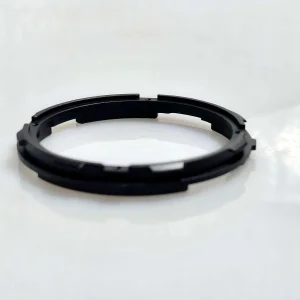
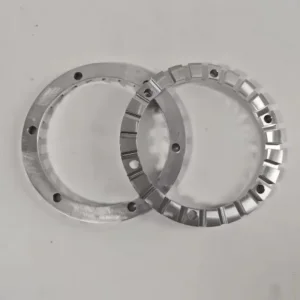
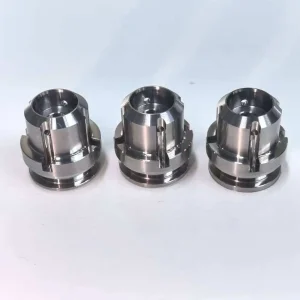
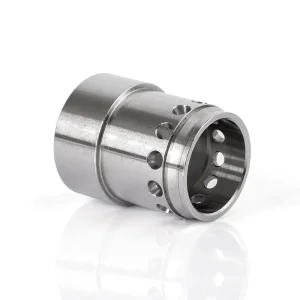
Custom Custom CNC Turn-Milled Bayonet Mount & Locking Ring Supplier, Suppliers
View Product Details
Verified dimensional conformity through ISO 9001 certified DFM and multi-axis CMM inspection lines.
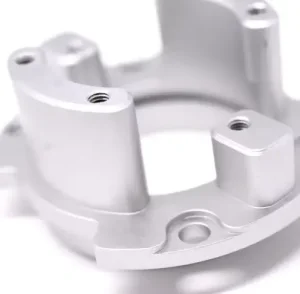
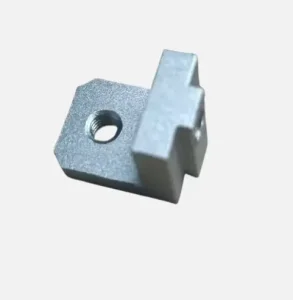
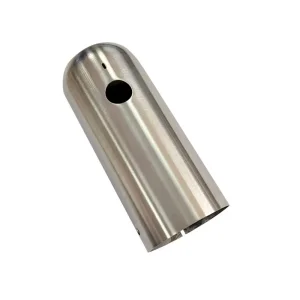
How the convergence of high-vacuum die casting (HVDC), rheocasting, and predictive flow simulation is redefining high-yield manufacturing.
Thin walls exhibit blistering solidification rates (exceeding 100°C/s). Without thermal balance, rapid dendritic growth chokes feed paths. Advanced ODM toolmakers apply multi-zone conformal cooling channels fabricated via metal additive manufacturing to equalize gradient flux.
By extracting air down to less than 30 mbar prior to liquid metal injection, high-vacuum die casting eliminates interfacial gas entrapment. This enables ductile heat treatments (such as T6/T7) without blister formation, unlocking elongations greater than 10%.
Gate velocities in thin-wall casting regularly breach 60 m/s with filling durations under 20 milliseconds. Precise real-time closed-loop hydraulic control ensures laminar transition without scouring die walls or introducing erosive tool degradation.
"Lightweighting is no longer just a metric of mass reduction; in electrification and mobile robotics, each 10% reduction in structural wall mass directly correlates to a 6.5% boost in dynamic battery range and payload frequency response." — Advanced Metallurgy & Structural Design Council
How Shenzhen and the Pearl River Delta industrial cluster compress development iterations from months to days.
Within a 50km radius in Guangdong, raw ingot smelters, ultra-hard tool steel importers (H13, Dievar), precision wire-EDM facilities, and PVD coating centers coexist. This dense localization eliminates logistics latency, shrinking prototype tool manufacturing from 8 weeks to 18 working days.
Unlike fragmented global vendors who outsource secondary CNC post-machining or passivation, our facility handles high-tonnage casting, 5-axis CNC indexing (±0.005mm), automated robotic deburring, anodizing, and Zeiss CMM scanning within a unified QA audit trail.
Clients interface directly with seasoned structural casting metallurgists rather than sales intermediaries. Non-disclosure agreements (NDAs) precede file ingress, backed by role-based CAD encryption and direct export control clearance.
A rigorous metallurgical comparison of production viability across volume, complexity, and mechanical limits.
| Evaluation Parameter | High-Vacuum Thin Wall HPDC | Investment Casting (Lost Wax) | Multi-Axis CNC Billet Milling | Progressive Stamping & Deep Draw |
|---|---|---|---|---|
| Min. Wall Profile | 0.65 mm – 1.20 mm | 1.50 mm – 2.50 mm | 0.50 mm (Prone to vibration chatter) | 0.30 mm – 1.00 mm (Uniform thickness only) |
| Geometric Complexity | Exceptional (Integrated ribs/bosses) | High (Internal undulations) | Moderate to High (Tool reach restricted) | Low to Moderate (Prone to draw marks) |
| Mechanical Isotropy | High (Fine grain skin solidification) | Moderate (Equiaxed core grains) | Extremely High (Wrought grain direction) | Anisotropic (Rolling grain directionality) |
| Tooling Cost & Amortization | High upfront; lowest unit cost @ >5,000 pcs | Moderate tooling; high recurring labor | Zero tooling; high operational spindle cost | High upfront tooling; low unit cost |
| Typical Cycle Time | 15 – 45 Seconds | Hours (Slurry build & burnout) | 20 – 120 Minutes | 1 – 3 Seconds |
Real-world integration across electrification, precision optics, automation, and aerospace systems.
Thin-walled AlSi10Mg housings provide IP67 fluid sealing while incorporating micro-channel pin fin arrays directly on the casting floor for direct liquid cooling of SiC power modules, eliminating intermediary thermal interfaces.
Substituting heavy multi-piece bolted brackets with monolithic thin-wall magnesium and aluminum castings drops chassis mass by up to 40% while preserving strict EMI/RFI attenuation across gigahertz telemetry spectra.
High-yield thin-walled articulating arms reduce joint inertia, enabling collaborative robots (cobots) to operate with elevated sensitivity and speed without demanding higher torque motor envelopes.
A stringent quality blueprint covering non-destructive testing (NDT), metallurgical traceability, and dimensional verification.
Thin walls hide microscopic gas pore clusters. Modern qualification requires non-destructive 3D X-ray CT scanning to map pore size distribution in volumetric percentages (< 0.5% in sealing planes) according to ASTM E505 standards.
Every melt batch undergoes optical emission spectrometer (OES) chemical characterization. Ingot certificates, degassing records (density index < 1.0%), and mechanical tensile pull specimens are paired directly with shipping manifests.
Due to residual cooling stresses, thin structural parts require specialized restraint fixtures during CMM scanning. Complete First Article Inspection (FAI) reports document datum-referenced profile tolerances according to ASME Y14.5-2018.
Authoritative metallurgical and sourcing answers for project managers and mechanical design leads.
For high-pressure die casting using high-fluidity alloys such as A380, ADC12, or specialized AlSi9Cu3, practical production walls reach 0.8mm across broad surfaces and down to 0.6mm in localized ribs. In investment casting (lost wax), 1.2mm to 1.5mm is common. Achieveability depends directly on flow length-to-thickness ratio (L/t), requiring advanced CAD Moldflow verification prior to cutting steel.
We deploy closed-loop vacuum-assisted evacuation down to < 30 mbar, paired with multi-stage molten metal degassing (rotary nitrogen purge targeting density index < 1.0%). Flow simulation guides high-speed shot gate geometry to prevent turbulent melt fronts, ensuring blistering cold-shut-free fills tested under ASTM E505 X-ray standards.
Standard die castings cannot be T6 heat-treated because trapped air causes surface blistering. However, by leveraging our High-Vacuum Die Casting (HVDC) process combined with low-iron structural alloys (e.g., AlSi10MnMg or Silafont-36), blistering is eliminated, unlocking post-weld capabilities and full T6/T7 structural temper treatments.
Rapid prototype tooling (P20 steel) delivers First Article Inspection Reports with full CMM inspection records within 18 to 22 business days. Hardened serial tooling (H13/Dievar core and cavity, 100,000+ shots) typically requires 28 to 35 calendar days inclusive of full Moldflow validation and coordinate mapping.
Comprehensive custom components manufactured under stringent ISO/RoHS standards.