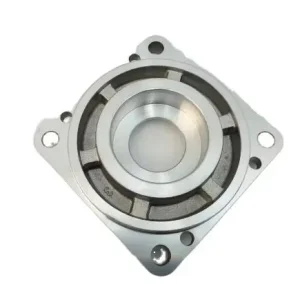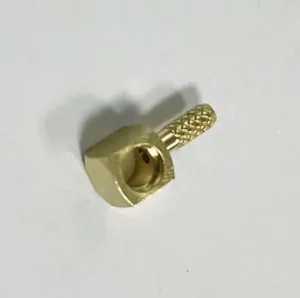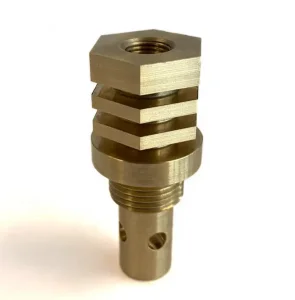
High-Precision OEM Components & Assembly Systems
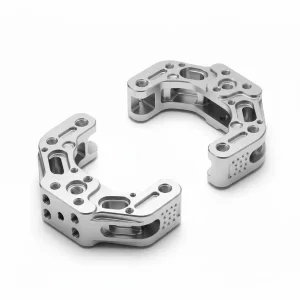
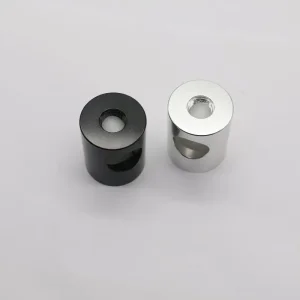
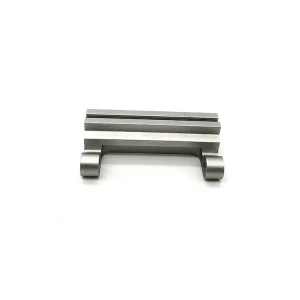
Explore our custom manufactured tooling components, machined sub-assemblies, and precision optical fixtures manufactured under stringent First Article Inspection (FAI) controls.
State of Global ABS Injection Molding: Engineering Realities & Demand Dynamics
Acrylonitrile Butadiene Styrene (ABS) serves as the primary structural polymer across global automotive, consumer electronics, healthcare instruments, and industrial telematics. In high-reliability applications, precision ABS molding bridges physical structural integrity with complex, aesthetic design freedom.
Terpolymer Triad Mechanics
ABS balances acrylonitrile (chemical resistance, thermal rigidity), butadiene (impact toughness down to -40°C, crack attenuation), and styrene (glossy surface finish, dimensional stability, injection shear fluidity). This balance makes it the default thermoplastic for enclosures subject to high mechanical stress.
Dimensional Predictability
With an isotropic volumetric shrinkage rate typically between 0.4% and 0.7%, ABS yields predictable cavity-to-part replication compared to semi-crystalline polymers like polyamides or polypropylene. This enables tight ±0.05 mm assembly tolerances on multi-component chassis without secondary machining.
Regulatory Compliance Profiles
From medical instrumentation under ISO 10993 cytotoxicity parameters to UL94 V-0 flame-retardant blends for EV charging stations, OEM ABS injection processes conform to global REACH, RoHS, and WEEE directives, supporting cross-border deployment across North American and European markets.
Why Global Tier-1 Brands Anchor ABS Injection in China
The Greater Bay Area manufacturing ecosystem delivers deep supply-chain integration, sub-micron mold cutting speeds, and comprehensive material availability that reduce development cycles by over 60% compared to Western tooling houses.
Compressed Tooling Time-to-Market
Western toolmakers frequently quote 10 to 14 weeks for hardened P20 or S136 multi-cavity injection molds. Sunmy Hardware operates an integrated internal CNC machining and EDM shop in Shenzhen, completing mold design, high-speed 5-axis electrode fabrication, wire cutting, and initial T1 injection trials within 18 to 25 calendar days.
Resin Traceability & Masterbatch Customization
Direct relationships with chemical formulators (Chi Mei, LG Chem, Covestro, SABIC) allow prompt compounding for Pantone/RAL matching, anti-UV weathering stabilizers, glass-fiber reinforcements (10% to 30%), and permanent anti-static additives, accompanied by batch material certs and melt flow index (MFI) analysis.
Secondary Finishing Ecosystem
Within a 15-kilometer radius of our facilities, parts move through specialized secondary operations: CNC post-machining of mating interfaces, brass threaded insert ultrasonic installation, cleanroom class 10,000 spray painting, conductive EMI/RFI copper shielding, pad printing, and laser marking.
ABS Resin Classifications, Mold Physics & DFM Parameters
Review the physical and mechanical properties governing tool design, thermal shrinkage, and gate selection for structural ABS and ABS-alloyed components.
| Material Classification | Tensile Strength (MPa) | Izod Impact (kJ/m²) | HDT @ 0.45 MPa (°C) | Volumetric Shrinkage | Target Industrial Application |
|---|---|---|---|---|---|
| General Purpose ABS (High Flow) | 42 – 48 | 16 – 22 | 88 – 95 | 0.4% – 0.7% | Consumer electronic shells, consumer drones, smart-hub covers |
| Flame Retardant ABS (UL94 V-0) | 40 – 46 | 12 – 18 | 82 – 90 | 0.4% – 0.6% | Power supply enclosures, server racks, EV charging stations |
| Heat Resistant ABS | 46 – 52 | 14 – 19 | 100 – 112 | 0.4% – 0.7% | Automotive instrument clusters, HVAC ducting, engine bay bezels |
| PC/ABS Alloy (Polycarbonate Blend) | 54 – 65 | 35 – 55 | 110 – 128 | 0.5% – 0.7% | Crash-rated automotive pillars, medical diagnostics, rugged IoT |
| Electroplating Grade ABS | 44 – 50 | 18 – 24 | 90 – 98 | 0.4% – 0.65% | Bright chrome sanitary fixtures, luxury cosmetics, premium trims |
| Glass-Fiber Reinforced ABS (10-30% GF) | 65 – 92 | 6 – 11 | 102 – 118 | 0.15% – 0.35% | Robotic internal skeletal frames, high-torque gear housings |
Wall Thickness & Rib Design
Maintain nominal wall thicknesses between 1.8 mm and 3.5 mm. Internal structural stiffening ribs should never exceed 50% to 60% of the adjacent nominal wall thickness to prevent localized cosmetic sink marks on Class-A cosmetic surfaces.
Draft Angles & Texture Ejection
A minimum draft angle of 1.0° to 1.5° per side is essential for untextured ABS walls. When specifying VDI 3400 or Mold-Tech (MT) EDM grain finishes, add 1.0° of draft angle for every 0.02 mm of surface texture depth to prevent scuff marks during mold opening.
Gate Typology & Weld Lines
Using Moldflow CAE simulations, Sunmy engineers strategically position valve gate hot runners, submarine gates, or edge gates to relocate weld lines away from load-bearing bosses and aesthetic view angles.
Target Application Scenarios for OEM ABS Components
How leading OEM and ODM customers integrate our precision injection molded ABS components across mission-critical product architectures.
Medical & Life Science Diagnostics
Handheld analyzers, monitor housings, and blood centrifuge cowlings requiring medical-grade ABS resistant to isopropyl alcohol, hospital disinfectants, and repeated chemical wipe-downs, molded in Class 100,000 cleanroom environments.
Automotive Interior Cockpit Subsystems
Instrument cluster bezels, air conditioning louvers, glovebox assemblies, and audio trim plates molded from low-VOC, heat-stabilized ABS and PC/ABS alloys that pass strict thermal aging and cabin vibration testing.
Industrial IoT & Telematics Enclosures
IP65 and IP67 weather-resistant telemetry gateways, DIN-rail electrical junction housings, and smart metering units featuring integrated silicone overmolding, ultrasonic weld joints, and conductive internal coatings.
Robotics & Automated End-Effector Tooling
Lightweight, impact-absorbing arm covers, drone airframes, and sensor housings that shield delicate electronics while reducing overall payload mass to optimize robotic battery life and dynamic acceleration.
Smart Commercial Appliances
Class-A cosmetic chassis requiring piano-black high-gloss finishes, textured leather grain mold erosion, metallic masterbatch styling, and insert-molded brass bushings for high-torque fastening.
Engineering Problem-Solving: From Tooling Flaws to Zero-Defect Delivery
Documented case histories highlighting root-cause diagnosis, Moldflow optimization, and mechanical improvements delivered for international OEM clients.
Aluminum Alloy & ABS Enclosure Assembly
Challenge: An international electronics OEM faced 0.08 mm gap variations between an injection-molded ABS battery cover and a CNC-machined 6061-T6 aluminum chassis, causing high reject rates during final snap-fit assembly.
Root Cause & Engineering Solution: Sunmy tooling engineers identified non-uniform cooling line placement in the mold core that was inducing uneven residual thermal stress. We re-machined the mold insert with conformal beryllium copper cooling cores and tuned holding pressure profiles.
PC/ABS High-Temperature Telemetry Gateway
Challenge: Parts exhibited visible weld lines directly over structural screw bosses, causing catastrophic brittle fracture during 3.5 Nm torque assembly tests in OEM automotive qualification.
Root Cause & Engineering Solution: Relocated the sub-gate location via Moldflow simulation to push the resin flow-front knit line into a non-structural peripheral overflow well. Switched from cold runner to hot tip gating to preserve melt temperature.
Flame-Retardant ABS Sensor Shell with Insert Molding
Challenge: Micro-cracking and internal air-pocket porosity around insert-molded knurled brass connector pins following salt spray and thermal cycling (-30°C to +85°C).
Root Cause & Engineering Solution: Inadequate pre-heating of brass inserts caused thermal shock in the contacting ABS resin. Implemented automated induction insert pre-heating to 105°C and adjusted injection decompression parameters.
CMM Verification, First Article Inspection & Compliance
Quality claims require documented verification. Sourcing teams receive complete empirical metrology reports, material batch certificates, and GD&T validation with every production run.
In-House CMM Inspection
Bridge-type Zeiss coordinate measuring machines verifying true position, profile of a surface, and concentricity down to ±0.005 mm.
Full FAI (First Article)
AS9102 / ISO standard 100% balloon drawing dimensional measurement on initial T1 sample shots before tool sign-off.
Resin Mill Test Reports
Traceable material certifications verifying melt flow index, density, tensile modulus, and RoHS/REACH SVHC non-detect status.
CPK Statistical Control
Ongoing SPC tracking ensuring CPK ≥ 1.33 on all designated critical-to-quality (CTQ) dimensions across mass production runs.
Frequently Answered Technical Questions for ABS Molding
Key design, tooling, and intellectual property questions addressed by our engineering directors.
What tolerances can be reliably held on injection-molded ABS parts?
Under controlled production conditions utilizing high-grade tool steel (such as ASSAB S136 or NAK80) and scientific molding monitoring, we consistently maintain commercial injection tolerances of ±0.05 mm on features up to 100 mm. For larger structural dimensions or high-flow resin runs, DIN 16901 standard tolerance Table 1 (Grade 110) serves as our baseline reference.
How do you safeguard client intellectual property and 3D CAD files?
We execute bilingual Non-Disclosure Agreements (NDA) with enforceability across international and Chinese jurisdictions prior to receiving 2D/3D datasets. Files remain strictly within secure internal engineering networks. As an integrated manufacturer without middleman trading brokerages, your proprietary CAD geometries never pass through unverified third parties.
Can you transition low-volume prototypes into mass production molds?
Yes. We specialize in phased lifecycle ramp-ups. For EVT/DVT stages, we provide 5-axis CNC-machined ABS engineering prototypes or rapid aluminum tooling (500 to 2,000 shots). Once mechanical fit is frozen, we design and cut hardened steel multi-cavity production tooling (up to 1,000,000 shots) using identical master CAD files.
What is your procedure for mitigating sink marks and weld lines in ABS?
Every project undergoes Moldflow simulation before tool steel is cut. We ensure rib-to-wall ratios remain below 60%, design internal coring into thick sections, optimize gate locations to ensure weld lines form in non-load-bearing areas, and utilize mold temperature controllers with high thermal conductivity copper inserts to eliminate localized sinks.
Integrated Precision Machining & Robotic Assemblies
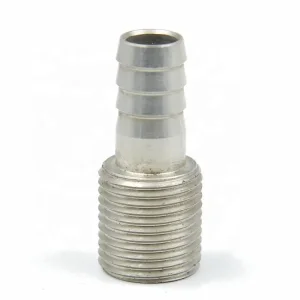
Explore our custom turned connectors, robotic end-effector plates, flanged housings, and high-heat brass components engineered to strict tolerances.