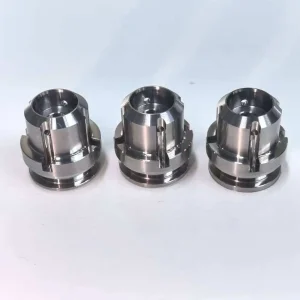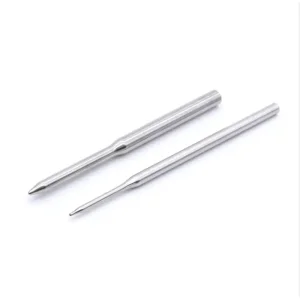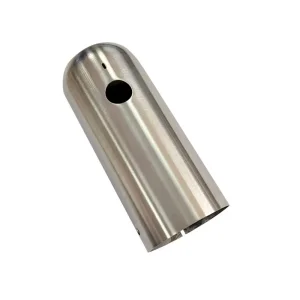
High-Performance Components & Precision Machining Showcase
Engineered directly from customer CAD models, incorporating rigorous DFM reviews, stable metallurgical grain boundaries, and repeatable dimensional tolerances.
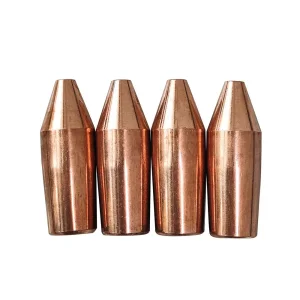
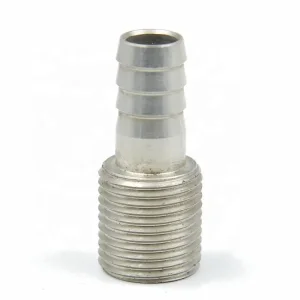
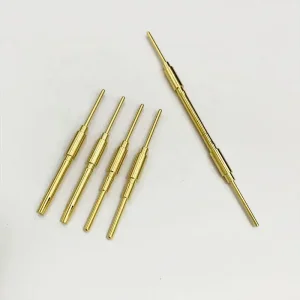
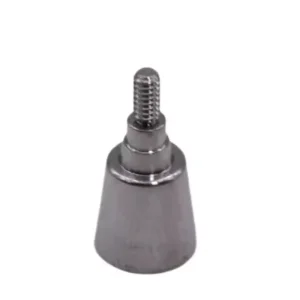
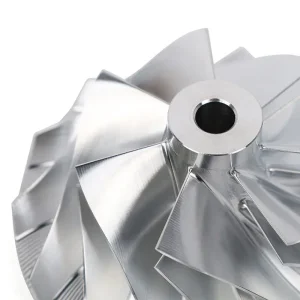
Global Industrial Landscape of Gravity Casting (Permanent Mold Casting)
Analyzing structural densification, thermal equilibrium, and why leading tier-1 OEMs are shifting high-stress applications from traditional sand and die casting to gravity tilt casting.
The Metallurgical Transition in Global Manufacturing
In the contemporary realm of high-performance manufacturing, the global commercial demand for lightweight, high-strength metallic structures has experienced unprecedented growth. Gravity casting—commonly recognized as permanent mold casting—occupies an indispensable niche between high-pressure die casting (HPDC) and sand casting. While HPDC provides rapid cycle times, it frequently introduces turbulent fluid flow, entrapping atmospheric gases that cause internal micro-porosity and prevent reliable solution heat treatment (such as T6 quenching and artificial aging).
Gravity casting addresses this fundamental limitation. By utilizing reusable steel or cast-iron metallic dies and filling the cavities under the controlled force of gravity (frequently augmented by automated hydraulic tilt mechanisms), the molten aluminum flows in a strictly laminar fashion. This yields superior metallurgical integrity, minimal dendritic cell sizes, and exceptional density throughout thick wall cross-sections.
Engineering Fact: Heat Treatment Capability
Unlike standard HPDC components which blister and distort at elevated solution temperatures (535°C–545°C), gravity-cast components can undergo full T6 thermal heat treatment, elevating tensile strengths beyond 310 MPa and elongation figures up to 7–10% in high-integrity A356/AlSi7Mg0.3 alloys.
Meeting Strict Leak-Tight & Structural Requirements
Global aerospace, defense, and electric vehicle (EV) manufacturers are operating under severe operating pressures where fracture toughness and hermetic sealing are mission-critical. Hydraulic valve manifolds, high-voltage battery cooling blocks, turbocharger compressor covers, and electrified railway knuckles cannot tolerate even microscopic gas pockets that risk hydraulic fluid leaks or catastrophic brittle failure.
By enforcing directional solidification from the thinnest sections toward strategically dimensioned thermal risers, our gravity casting operations guarantee sound metallurgical cores. Combined with high-efficiency sand cores for intricate internal channels, permanent mold casting delivers internal geometries that are impossible to machine from solid billet while eliminating the high tooling amortization costs associated with massive multi-ton high-pressure dies.
Consequently, OEMs worldwide utilize OEM gravity castings suppliers to capture optimal cost-per-part ratios across medium-to-high annual production volumes (ranging from 1,000 to 100,000 units), capturing forging-like mechanical robustness with casting-level geometrical freedom.
China Factory Efficiency & The Shenzhen Industrial Cluster
How the Greater Bay Area’s integrated manufacturing ecosystem shortens new product introduction (NPI) lead times from months to mere weeks.
Rapid Die Fabrication & Moldflow DFM
Operating within Shenzhen’s high-precision manufacturing hub, tooling engineering teams complete comprehensive AnyCasting/MAGMASOFT thermal simulation within 24 hours of receiving customer STEP files. Die manufacturing utilizes in-house CNC toolrooms equipped with high-speed wire EDM and graphite electrode machining centers, compressing permanent mold delivery timelines by up to 55% compared to North American or European die houses.
Turnkey Post-Cast Machining Synergy
A common pain point in overseas procurement is the operational fragmentation between the foundries that pour raw castings and the machine shops that finish critical tolerances. Sunmy Hardware solves this by unifying casting and multi-axis CNC machining under one quality governance system. Critical locating datums are qualified directly from the foundry cell to 3-axis, 4-axis, and 5-axis machining centers holding positional true position within ±0.005 mm.
Full-Spectrum Metallurgical Quality Assurance
Chinese tier-1 operations leverage state-of-the-art laboratory instrumentation directly alongside the foundry floor. In-line spectrometer melt chemistry verification, real-time degassing rotary nitrogen purgers, reduced pressure test (RPT) density index analyzers, industrial X-ray non-destructive testing (NDT), and Zeiss Coordinate Measuring Machines (CMM) ensure complete traceability and adherence to ISO 9001 and IATF 16949 standards.
Comprehensive Surface Finishing Clusters
Shenzhen provides unparalleled proximity to fully audited chemical finishing plants. Castings undergo automated vibratory deburring, shot blasting with stainless cut wire, automated hard-coat anodizing, chemical conversion coatings (SurTec 650 / Alodine), electrophoresis (E-coating), and automotive-grade electrostatic powder coating—all managed under stringent environmental and RoHS compliant certifications.
Gravity Casting vs. High Pressure Die Casting vs. Sand Casting
A rigorous engineering comparison to evaluate yield strength, mold longevity, porosity risks, and total cost of ownership across your production lifecycles.
| Evaluation Parameter | Permanent Mold Gravity Casting | High Pressure Die Casting (HPDC) | Precision Sand Casting |
|---|---|---|---|
| Solidification Kinetics | Controlled, progressive laminar flow | Extremely rapid, highly turbulent jet filling | Slow, non-chilled thermal dissipation |
| Internal Gas Porosity | Negligible (<0.05%); vacuum dense | High risk of microscopic entrapped gas | Moderate to high micro-shrinkage risks |
| T6 Heat Treatment Feasibility | Fully compatible; zero surface blistering | Incompatible without exotic vacuum methods | Fully compatible, though coarse grain limits yield |
| Ultimate Tensile Strength (A356) | 290 – 325 MPa (T6 Condition) | 220 – 260 MPa (As-Cast condition) | 210 – 250 MPa (T6 Condition) |
| Elongation at Break (%) | 5% – 10% (High fracture toughness) | 1% – 3% (Prone to brittle failure) | 2% – 4% (Average ductility) |
| Tooling Investment Costs | Moderate ($4,000 – $18,000) | Very High ($25,000 – $150,000+) | Low ($1,500 – $6,000) |
| Economic Production Volume | 1,000 to 100,000 parts / year | >50,000 to 1,000,000+ parts / year | 10 to 2,000 parts / year |
| Dimensional Repeatability | ±0.20 mm as-cast (±0.005 mm machined) | ±0.10 mm as-cast | ±0.80 mm to ±1.5 mm as-cast |
Mission-Critical Industry Applications & Case Histories
Demonstrated performance across harsh operational environments requiring metallurgical sound castings, hermetic pressure envelopes, and cyclic fatigue resistance.
Electric Vehicle (EV) Powertrain & Inverter Housings
EV inverter enclosures and stator jackets require high thermal conductivity combined with strict dielectric isolation. Gravity tilt casting in A356-T6 alloy with sand core water jackets enables intricate serpentine coolant galleries without external brazing. Helium leak testing down to 10⁻⁶ mbar·l/s guarantees complete containment of ethylene glycol coolants under high vibrational operating conditions.
- Elimination of coolant leak paths through monolithic casting
- Thermal conductivity exceeding 160 W/m·K
- Post-machining true position of O-ring grooves within 0.02 mm
High-Voltage Switchgear & Grid Electrical Housings
Medium and high-voltage SF6-gas circuit breaker enclosures and GIS switchgear insulators demand pore-free cast aluminum structures capable of withstanding explosive internal pressure shocks and high gas containment integrity. By executing tilt pour casting with computerized degassing, dissolved hydrogen is reduced below 0.10 cm³/100g Al, passing rigorous 5.0 MPa hydrostatic rupture tests without crack propagation.
- Cast in high-purity AlSi7Mg0.3 or A380 modified alloys
- Zero SF6 micro-permeability through grain refinement
- 100% digital radiographic X-ray inspection to ASTM E155 Grade B
Robotics Articulation Arms & Cycloidal Reducer Housings
Industrial articulated robots and collaborative robots (cobots) require ultralight arm linkages displaying high natural harmonic frequencies and high modulus of elasticity. Gravity permanent mold casting delivers fine-grain microstructures that absorb continuous cyclic fatigue. Multi-axis CNC milling performs line-boring of dual cycloidal bearing bores in a single clamping setup to preserve coaxiality under 0.008 mm.
- 40% weight reduction relative to ductile iron castings
- Elimination of harmonics-induced dynamic chatter
- Integrated cable ducting via pre-formed soluble ceramic cores
Marine Hydraulics & Offshore Fluid Handling
Subsea and offshore marine valves operate under aggressive chloride environments and constant hydrostatic working pressures reaching 350 bar. Utilizing specialized aluminum bronze or copper-free AlMg5 permanent mold castings, our components offer exceptional pitting corrosion resistance while retaining yield strengths above 280 MPa, outperforming welded fabrications and loose sand cast alternatives.
- Immunity to micro-galvanic corrosion cell formation
- Burst pressure safety margins exceeding 4:1 design factors
- Certified EN 10204 3.1 chemical and mechanical documentation
Emerging Technological Trends in Gravity Die Casting
How automation, algorithmic solidification modeling, and closed-loop process control are reshaping quality consistency for global supply chains.
Automated Servo-Driven Tilt Pouring
Conventional static gravity casting carries inherent vulnerability to operator pouring technique: variations in ladle height, pouring angle, and velocity can introduce air entrainment and surface oxide skins into the casting mold. The industry standard has now decisively shifted to programmable servo-driven tilt pouring machines.
In this automated workflow, the mold begins at an angled orientation (often 90 degrees) with the pouring cup filled with molten metal. A multi-axis robotic actuator tilts the mold smoothly toward vertical at an exact, programmable angular speed matched to liquidus meniscus velocity. This non-turbulent transfer ensures zero air entrapment, eliminates oxide inclusion defects, and yields uniform grain boundaries throughout wall thickness transitions.
Closed-Loop AI Thermal Monitoring & Conformal Cooling
Tooling longevity and defect prevention in gravity casting hinge upon mold temperature stabilization. Advanced OEM facilities now embed high-frequency infrared thermography and fiber-optic thermocouple arrays directly into the permanent H13 and DIEVAR mold cavities.
These sensors transmit real-time telemetry into edge-AI controllers. When regional overheating is detected, computerized solenoids selectively activate high-pressure oil or pressurized water conformal cooling channels, preserving precise thermal gradients necessary for progressive solidification. This real-time loop reduces cycle times by up to 28% while completely eradicating hotspot shrinkage voids at thick bosses and rib intersections.
Global Enterprise Sourcing & Engineering Qualification Guide
Crucial criteria applied by multinational procurement directors and lead mechanical engineers when auditing OEM gravity casting partners.
1. Material Traceability & Melt Chemistry
Global procurement requires complete pedigree verification for every heat number. World-class suppliers must provide certified optical emission spectrometry reports detailing primary alloying elements (Si, Mg, Cu, Fe, Ti) and grain refiners (AlTiB), ensuring strict iron limit control (<0.15% Fe in structural grades) to prevent brittle needle-like intermetallic phase formation.
2. Integrated DFM & Mold Shrinkage Compensation
An exceptional supplier does not merely execute drawings; they optimize them. Sourcing teams prioritize vendors that evaluate draft angles (1.5°–3° on internal faces), transition radii (preventing notch stress), parting line positioning, and non-uniform wall thickness transitions before mold steel is touched, ensuring predictable metal contraction.
3. Metrology Equipment & FAI Documentation
Audits must evaluate on-site inspection capability: multi-axis bridge CMMs, optical 3D scanners, surface profilometers (Ra < 0.8 μm), and digital X-ray non-destructive testing for internal voids. All First Article Inspection (FAI) reports should adhere strictly to AS9102 or PPAP Level 3 protocols with ballooned drawings and Gage R&R validation.
4. IP Security & Supply Chain Redundancy
Direct communication with the manufacturing facility avoids third-party brokerage leakage. Enforcing bilateral Non-Disclosure Agreements (NDAs), encrypted CAD transfers, and localized multi-plant raw material backup agreements guarantees uninterrupted deliveries despite global macroeconomic fluctuations.
Frequently Asked Questions: Sourcing & Engineering Gravity Castings
Comprehensive engineering answers to the most common questions raised by procurement managers, metallurgical engineers, and quality assurance auditors.
What are the key technical advantages of Gravity Casting over High-Pressure Die Casting (HPDC)?
Which aluminum alloys are most commonly utilized in OEM gravity permanent mold casting?
• AlSi10Mg: Excellent for thin-walled housings requiring elevated corrosion resistance and moderate structural strength.
• A380 / ADC12: Used when high-pressure leak-tightness is secondary to machinability and structural stiffness.
• A319 / AlSi5Cu3: Utilized for internal combustion engine blocks, oil pans, and manifolds with high compressive load demands.
• Aluminum Bronze (CuAl10Fe): Specified for high-wear marine hardware, pump impellers, and corrosion-resistant valves.
What standard tolerances can be held on as-cast vs. CNC post-machined features?
How does Sunmy Hardware ensure internal sound quality and zero porosity?
1. Melt Processing: Rotary impeller degassing with high-purity argon gas, combined with spectrographic melt monitoring to maintain dissolved hydrogen under 0.10 ml/100g.
2. Moldflow Simulation: Rigorous numerical modeling of gating, filtering, and riser positioning to enforce progressive directional solidification from mold cavity to riser.
3. Non-Destructive Testing (NDT): Real-time digital industrial X-ray radiography inspection to ASTM E155 standards, coupled with 100% helium mass-spectrometer leak tests for pressure vessels.
4. Impregnation: For extreme fluid containment, vacuum anaerobic resin impregnation is applied as a secondary safety envelope against micro-porosity paths.
What is the typical tooling lifespan and amortized lead time for gravity casting molds?
Can gravity casting incorporate complex hollow undercuts and cooling passages?
Integrated Precision Castings & Turned Parts
Comprehensive manufacturing solutions integrating permanent mold castings, precision turned fasteners, sensor housings, and high-purity medical-grade assemblies.