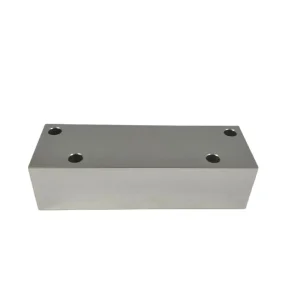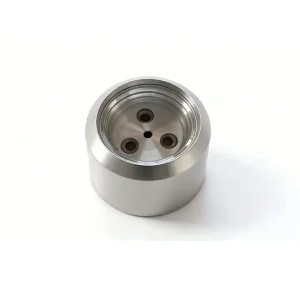
Precision OEM Engineering Hardware & Custom Assemblies
Explore our foundational precision parts ecosystem manufactured alongside custom tooling programs. Each component reflects our microscopic CNC tolerance control, advanced metallurgy, and strict first-article validation standard.
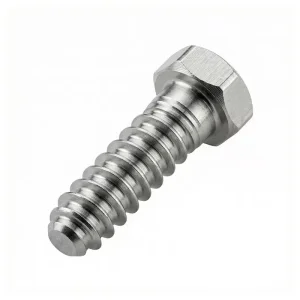
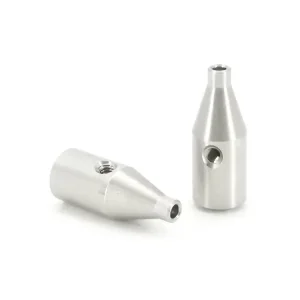
ODM OEM Precision CNC Machining Aluminum Parts & Custom Industrial Components Exporters, Quotes
Request Quote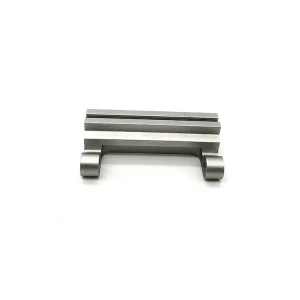
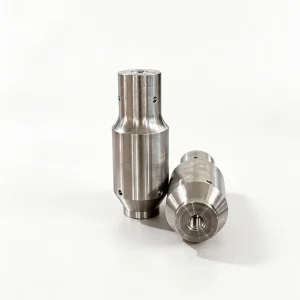
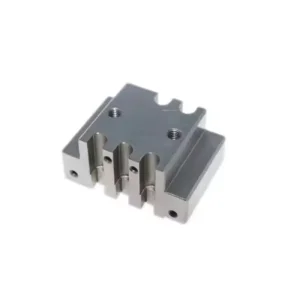
High-Quality Custom CNC Machined Aluminum Hinge Assembly | Grey Anodized Finish Supplier, Quotes
Request Quote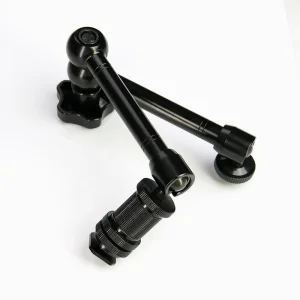
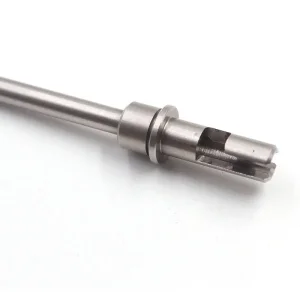
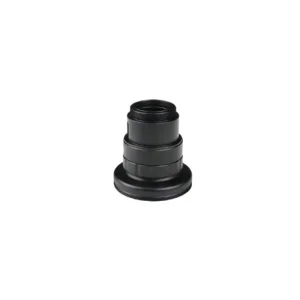
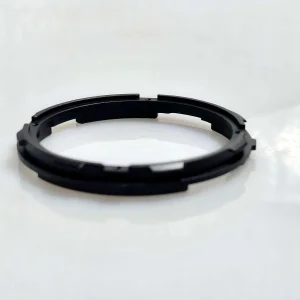
OEM Custom Precision CNC Turned Black Anodized Aluminum Lens Barrel & Optical Housing Components Manufacturer, Product
Request Quote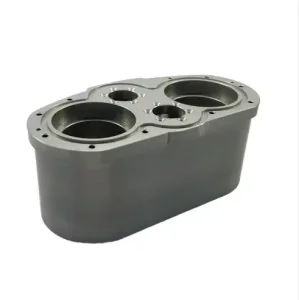
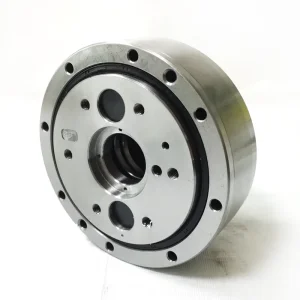
Custom Factory Custom 5-Axis CNC Machined Steel & Aluminum Universal Joint Base and Gearbox Shell for Robotics & Drone Industry Products, Exporters
Request Quote
Macro Dynamics & Global Procurement Demands for Unscrewing Molds
Procuring unscrewing injection molds is no longer merely about acquiring tooling steel—it is an exercise in thermodynamic synchronization, mechanical kinematics, and long-term Unit Cost of Manufacturing (UCM) optimization. OEM procurement leads face stringent regulatory hurdles, high cavitation mandates, and zero-defect requirements across critical verticals.
Medical & Diagnostic Fluidics
Global medical device manufacturers sourcing unscrewing molds require stringent compliance with ISO 13485 and cleanroom Class 8 compatibility. Applications such as Luer-lock syringes, intravenous fluid connectors, centrifuge tube closures, and endoscopic cannula collars require absolute seal integrity without flash or particulates.
- Zero-particulate grease-free rotating cores
- 100% burr-free thread start lead-ins
- Stainless steel 420ESR hardened cavity inserts
Automotive & Industrial Fluid Lines
Under-the-hood components, brake line couplings, quick-connect fuel housings, and sensor housings demand deep, reinforced mechanical threads in engineering polymers like PA66-GF30, PPA, and PPS. These highly abrasive materials rapidly degrade substandard core steels without specialized metallurgical engineering.
- PVD-coated Vanadis 4 Extra & DC53 cores
- Thermal compensation for glass-fiber shrinkage
- High-torque servo gear transmissions
FMCG, Dispensing & Cosmetics
In high-speed consumer packaging, profitability hinges upon sub-second cycle time reductions. Multi-cavity unscrewing molds (16 to 64 cavities) for shampoo dispensing pumps, tamper-evident beverage caps, and child-resistant pharmaceutical closures must rotate simultaneously with absolute zero pitch backlash.
- Synchronized multi-tier gear trains
- Direct cooling within rotating unscrewing cores
- Rapid-cycle hot runner valve-gate integration
Macro Engineering Solutions: Unscrewing Drive Kinematics Compared
The structural core of any unscrewing mold supplier quote lies within the actuation method selected for internal thread release. Sourcing teams must evaluate initial CAPEX against long-term maintenance overhead, cavitation capacity, and stroke repeatability.
Electric Servo Motor Drives
The gold standard for modern unscrewing molds. Dedicated servo motors drive high-precision planetary gearboxes or multi-spur gear systems, offering digital programmable control over RPM, rotational acceleration, deceleration, and thread start position down to 0.01°.
- Complete independence from machine hydraulic circuits
- Cleanroom Class 10,000 / ISO 7 compliance
- Simultaneous de-molding during mold opening stroke
Hydraulic Rack & Pinion
A proven, robust actuation method employing heavy-duty hydraulic cylinders mounted directly onto the mold base. The linear stroke of the cylinder translates directly into rotary motion via heat-treated gear racks engaging spur pinions affixed to the core shafts.
- Exceptional breakaway torque for aggressive threads
- Economical CAPEX for low-to-medium cavitation
- Controlled via standard injection press core-pull signals
Mechanical Lead-Screw & Helix
Kinematic de-molding driven directly by the mechanical opening movement of the machine platen. A high-helix drive nut traverses a ground lead-screw shaft, converting linear press daylight directly into rotation without external auxiliary power.
- Zero electrical or hydraulic hookup required
- Immune to external circuit lag or hydraulic fluctuation
- Ideal for standardized commodity thread geometries
| Actuation Technology | Rotary Repeatability | Max Cavitation | Cleanroom Suitability | Cycle Time Impact | Target Industries |
|---|---|---|---|---|---|
| Servo Electric Direct-Drive | ±0.005 mm (±0.02°) | Up to 64 Cavities | Optimal (Zero Fluid Contamination) | Fastest (Rotates during clamp stroke) | Medical Devices, Diagnostics, Micro-fluidics |
| Hydraulic Cylinder + Rack | ±0.025 mm (±0.10°) | Up to 32 Cavities | Requires Containment Seals | Moderate (Sequence pause required) | Automotive Under-hood, Industrial Fittings |
| Mechanical High-Helix Screw | ±0.035 mm (±0.15°) | Up to 16 Cavities | Acceptable (Dry lubrication) | Platen Stroke Dependent | Caps & Closures, Household Plumbing |
| Collapsible Thread Core (Alternative) | ±0.040 mm | Up to 48 Cavities | High Cleanroom Friendly | Fast (Push-pull stroke, no rotation) | Interrupted Threads, Shallow Undercuts |
Technological Roadmap: The Future of Unscrewing Injection Tooling
Modern precision tooling has transitioned into the era of cyber-physical production. Below is our engineering roadmap outlining where advanced unscrewing tooling is headed over the next five-year cycle.
DMLS Conformal Cooling Cores
Utilizing direct metal laser sintering (DMLS) 3D printing in maraging steel 1.2709, spiral conformal cooling channels are routed within 1.0mm of the rotating thread crests. This reduces in-core heat stagnation, slashes cycle times by up to 34%, and eliminates part ovality and thread shrinkage distortion.
Harmonic Drive Multi-Spur Synchronization
Replacing traditional heavy gear meshes with zero-backlash harmonic strain-wave gearing and ground helical gear transmission racks. This architectural upgrade ensures that across a 32-cavity layout, cavity #1 and cavity #32 experience identical rotational torque and synchronized thread disengagement.
Embedded In-Mold IoT Telemetry
Integrating miniature piezoelectric pressure sensors, non-contact Eddy-current core displacement probes, and thermocouple arrays directly behind the rotating core support plates. Real-time telemetry prevents unscrewing collision damage before mechanical catastrophic jam events occur.
Diamond-Like Carbon (DLC) Tribology
Advanced multi-layered CrN + DLC nanocomposite coatings deposited via PACVD at sub-200°C. Delivers a coefficient of friction below 0.08, providing dry run-in resistance, preventing galling between high-speed rotating cores and bronze guide bushings, and ensuring grease-free cleanroom operation.
Commercial Realities: Balancing Tooling Capital with Unit Economics
Engineering procurement executives must manage trade-offs between initial tooling investments, production downtime, and multi-year supply chain reliability. Unscrewing molds represent high CAPEX investments where sub-tier supplier shortcuts cause astronomical assembly failures downstream.
Tier-1 Qualification Standards
Leading Western OEMs require comprehensive mold design validation packages before metal is cut. Tooling suppliers must provide rigorous Autodesk Moldflow 3D analyses verifying rotational de-molding temperatures, thread shear stresses, and residual gate blush locations.
- Complete 2D/3D CAD tool design sign-off in native formats
- Kinematic interference clash simulation
- Full bill of materials with standardized components (DME, Hasco, Misumi)
Total Cost of Ownership (TCO)
A cheaper unscrewing mold often conceals compromised gear steels, omitted water jackets, or unhardened slide tracks that lead to premature wear. Our Class 101 molds utilize premium European or Japanese steels (e.g., Böhler, Uddeholm, Assab) guaranteed for multi-million shot lifespans.
- Class 101 SPI guarantee: 1,000,000 to 3,000,000+ cycles
- Interchangeable core inserts for fast on-press changeouts
- Comprehensive spare parts packages (racks, pinions, seals)
Global Tooling Logistics & Commissioning
Cross-border mold delivery presents risk if proper trial documentation is absent. Every unscrewing mold undergoes complete Dry-Cycle Endurance Trials (typically 3,000 to 5,000 continuous dry cycles) and full CPK dimensional statistical studies before international crating.
- Complete T1 trial video records and parameter datasheets
- CMM 3D scan verification of mold components
- Sea/Air vacuum packaging with humidity mitigation
Localized Engineering Support, Quality Assurance & Compliance
Trust in high-precision tooling rests upon transparent metrology and auditable compliance protocols. From raw material heat-treatment certificates to First Article Inspection (FAI) dimensional reports, our quality assurance architecture protects your brand reputation.
Material Traceability
Mill test certificates and ultrasonic metallurgical testing verifying zero internal voids, grain boundary uniformity, and verified Rockwell/Vickers hardness levels.
CMM Thread Metrology
Tactile Zeiss/Mitutoyo coordinate measuring machines (CMM) and optical thread profile analyzers documenting pitch diameter, flank angle, and concentricity to ±0.003mm.
IP Protection NDA
Direct non-disclosure agreements prior to CAD transfer. Zero trading-company intermediaries ensuring your product patents and tooling files remain strictly proprietary.
Compliance Ready
Molds engineered in strict conformance to SPI Class 101, DIN 16749, CE machinery safety directives, and RoHS/REACH environmental compliance standards.
Frequently Asked Questions: OEM Unscrewing Tooling & Quotes
Comprehensive technical answers addressed to tooling engineers, quality directors, and global procurement specialists inquiring about unscrewing mold manufacturing.
What specific engineering details are required to provide an accurate Unscrewing Mold quote?
To prepare a definitive fixed-price tooling quotation and comprehensive DFM report, our engineers require: (1) 3D CAD files (.STEP, .IGES, or native Creo/SolidWorks) detailing part geometry; (2) 2D drawings highlighting critical internal/external thread GD&T, pitch tolerances, flank angles, and surface finish (VDI/SPI); (3) Raw resin specification including exact polymer grade, shrinkage rate, and fiber-fill percentages (e.g., PA66-GF30); (4) Annual projected volume or target cavitation (e.g., 4, 8, 16, 32 cavities); and (5) Preferred drive actuation (Servo electric vs. hydraulic cylinder rack-and-pinion).
How do you resolve core overheating during continuous rotary unscrewing operations?
Rotating unscrewing cores inherently struggle with heat dissipation due to continuous spinning within fixed bushings. We overcome this thermal bottleneck through two architectural methods: First, where core diameters permit (≥8mm), we utilize high-precision rotary water unions coupled with internal bubbler tubes feeding coolant directly to the rotating core tip. Second, for micro-threads, we integrate high-conductivity Copper-Beryllium (CuBe2) or Ampcoloy alloy core shafts paired with 3D-printed DMLS conformal cooling jackets within the surrounding cavity inserts.
When is a Servo Motor drive preferred over Hydraulic Rack & Pinion mechanisms?
Servo direct drives are strongly recommended under the following parameters: (1) Cleanroom Class 100 to 10,000 (ISO 5–7) manufacturing where hydraulic oil mist or leakage is strictly prohibited; (2) Multi-cavity molds (>8 cavities) where precision rotational synchronization across all cavities prevents thread cross-stripping; (3) Applications requiring ultra-fast cycle times, as servo rotation can initiate seamlessly during the mold opening clamp movement; and (4) Parts with multi-start threads or high pitch angles requiring programmable angular deceleration.
How do you guarantee thread concentricity and pitch accuracy across millions of cycles?
Thread pitch precision and coaxiality are maintained via pre-loaded dual angular contact needle roller bearings supporting each rotary core, eliminating radial and axial play down to ≤0.003mm. Core steel is hardened to 52–56 HRC (using premium Stavax ESR or DC53) and finished via CNC jig grinding and high-speed hard turning. Furthermore, precision ground AGMA Class 11 / DIN Class 6 spur gears ensure pitch engagement without rotational lash, backed by DLC anti-friction coatings.
What is the standard lead time for an OEM Unscrewing Injection Mold project?
A standard Class 101 unscrewing mold typically requires 40 to 60 calendar days from formal DFM approval and CAD freeze to T1 sampling. Phase 1 (DFM & 3D Kinematic Simulation): 3–5 days. Phase 2 (Steel Roughing & Mold Base Preparation): 10–14 days. Phase 3 (Hard Machining, High-Precision CNC Turning, Thread EDM & Jig Grinding): 15–20 days. Phase 4 (Bench Assembly, Gear Fitting & Dry-Cycle Verification): 7–10 days. Phase 5 (T1 Sampling, CMM Dimensional Inspection & Video Review): 3–5 days.
What documentation and validation packages accompany our finished tooling shipment?
Every exported unscrewing mold is accompanied by an audit-ready engineering dossier containing: (1) Full 2D/3D final as-built tooling drawings in native STEP/DWG formats; (2) Certified raw material mill test certificates and heat-treatment vacuum furnace logs; (3) CMM dimensional inspection reports for all critical wear components and T1 molded parts; (4) Standardized component source catalogs (Hasco/DME/Misumi/Yudo); (5) Recommended maintenance schedule and step-by-step disassembly SOP; and (6) A complete spare parts kit containing extra cores, seals, bearings, and drive pinions.
Initiate Your OEM Unscrewing Mold Project Today
Connect directly with our tooling engineers to evaluate your thread design, run mold kinematics simulations, and receive a transparent, competitive quote within 24 hours. No sales brokers—direct engineering ownership from CAD to factory floor.
Precision Turned & Milled Hardware Complementing Custom Tooling
Unscrewing molds frequently operate alongside custom metal inserts, rotary couplings, drive shafts, and high-precision mating assemblies. Discover our high-volume precision turning and 5-axis CNC machining output.
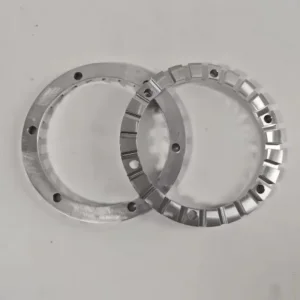
China Custom CNC Machined Anodized Sealing Rings for Semiconductor & Optical Instruments Factories, Factory
Request Quote
High-Quality Custom Precision CNC Turned Stainless Steel Medical Components Products, Exporter
Request Quote