
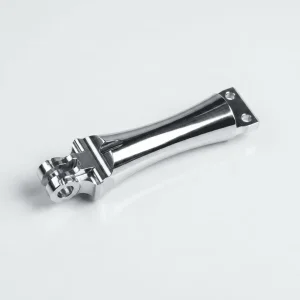
Precision Engineering Solutions
Featured Telecommunication & Precision Components (Batch A)
Explore high-performance precision parts manufactured via precision CNC machining, structural casting, and micro-alloy turning to meet rigorous telecommunications and mission-critical specifications.
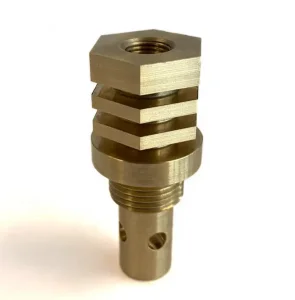
China Custom Precision CNC Machined Brass Cooling Block Factories, Quotes
Configure Specification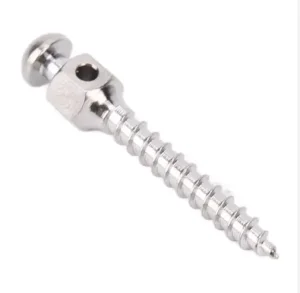
China Custom Precision Titanium Orthodontic Micro Implant Screws Manufacturers, Factories
Configure Specification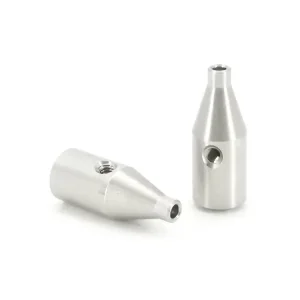
China Custom CNC Turned Aluminum Nozzle & Adapter Bodies Exporter, Factory
Configure Specification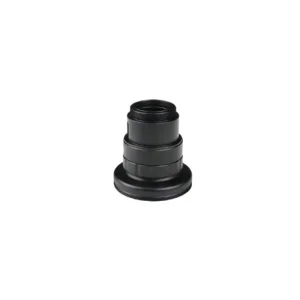
OEM Custom Precision CNC Turned Black Anodized Aluminum Lens Barrel & Optical Housing Components
Configure Specification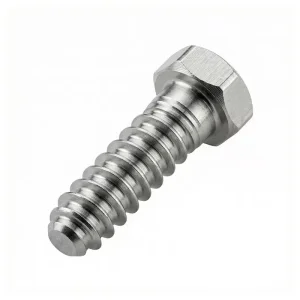
Custom Titanium Medical Implant / Bone Screw Exporter, Factories
Configure Specification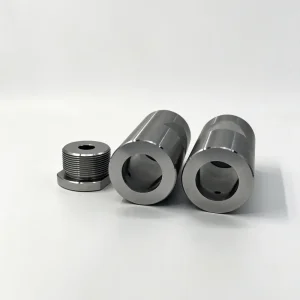
China Custom CNC Turned Tooling Sleeves & Threaded Retaining Plugs Products, Exporter
Configure Specification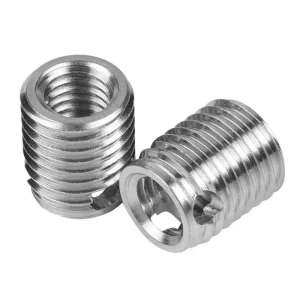
Custom Custom Self-Tapping Threaded Inserts Product, Exporters
Configure Specification
Global Telecommunications Metrology
Engineering White Paper: Telecommunication Castings in Next-Gen Networks
The aggressive rollout of 5G Advanced (5.5G), early 6G sub-THz radio prototyping, and Low Earth Orbit (LEO) phased-array satcom nodes has fundamentally altered mechanical design parameters. Telecommunication parts casting has evolved from conventional structural housing into active electromagnetic-thermal co-engineered system architectures.
180~210
W/(m·K) Thermal Conductivity in Specialized Low-Fe Al Alloys
±0.005mm
CNC Secondary Finishing Precision on RF Sealing Surfaces
1.2~1.5mm
Ultra-Thin Wall High-Pressure Die Casting (HPDC) Boundaries
IP68 / 100dB
Environmental Sealing & Radio Frequency Shielding Effectiveness
In modern 64T64R and 32T32R Active Antenna Units (AAUs), power amplifier densities generate upwards of 1,200W to 2,000W of concentrated thermal flux. Traditional multi-piece fabricated enclosures introduce interfacial thermal resistances (θint) and intermodulation distortion (PIM) at bolted joint interfaces. Modern Chinese telecommunication casting factories overcome this failure mode by producing monolithic, vacuum-assisted high-pressure die cast housings that integrate high-aspect-ratio cooling fins, internal RF wave-trap cavities, liquid flow channels, and waveguide interfaces directly into a single molten shot.
Achieving this level of physical integration demands an overhaul of metallurgical chemistry. Conventional hypoeutectic casting alloys such as A380 or standard ADC12 possess thermal conductivities restricted to 96–115 W/(m·K) due to iron-manganese intermetallic needle precipitation (β-Al5FeSi). Sunmy Hardware and partner casting laboratories utilize advanced low-iron strontium-modified alloys (such as modified AlSi10MnMg and customized Al-Mg-Si series) delivering 180 to 210 W/(m·K) while preserving melt fluidity for micro-fin geometries up to 85mm in depth with 1.5° draft angles.
Passive Intermodulation (PIM) Mitigation in High-Yield Foundry Operations
Passive Intermodulation (≤ -160 dBc @ 2×43 dBm) is the paramount acceptance metric for 5G cavity filters and transceiver chassis. Micro-porosity, crystalline micro-cracks, and localized iron segregations in die castings create non-linear metal-to-metal contact junctions under high RF currents. Our Shenzhen foundry facility pairs vacuum extraction down to ≤ 30 mbar with direct 5-axis CNC machining, ensuring mating lands retain zero micro-burrs and are electroplated with pore-free silver or passivated with trivalent chromium meeting MIL-DTL-5541 Type II standards.
Mission-Critical Field Deployments
Localized Application Scenarios for Telecommunication Castings
From arctic cell towers enduring continuous -40°C thermal cycles to saline offshore small-cell networks, precision telecommunication castings operate under extreme environmental stress profiles.
5G/6G Massive MIMO Active Antenna Units (AAU)
Monolithic chassis casting integrating 192 cavity resonators and high-density pin-fin matrices. Cast in 2800T to 4500T cold-chamber machines, maintaining dimensional stability under severe wind loading, solar radiation, and cyclic thermal expansion.
LEO Phased Array & Ground Satcom Terminals
Lightweight magnesium-aluminum structural enclosures engineered for Ku/Ka-band mobile and fixed satcom antennas. Combines high specific stiffness with precision gasket channels supporting IP67 submersion resistance and electromagnetic shielding attenuation exceeding 90 dB.
Outdoor Micro Base Stations & Small Cells
Compact pole-mount and street-furniture housings engineered for urban cell densification. Integrated chimney convective heat dissipation zones eliminate audible fan cooling, while UV-resistant fluorocarbon powder coats ensure longevity in smog-dense metro centers.
Millimeter-Wave (mmWave) Cavity Filters & Diplexers
Thin-wall castings holding cavity resonance volumes to tight geometric envelopes (≤ 0.03 mm). Post-casting multi-axis CNC surface machining achieves Ra 0.4 μm roughness, eliminating skin-effect transmission losses across 26 GHz to 40 GHz bands.
Edge AI & Cloud-RAN Server Chassis
Ruggedized castings installed in telecom equipment closets and outdoor pole enclosures. Features vibration-damped structural ribs designed to ISO 16750-3 vibration profiles, protecting high-density PCIe GPU accelerators and optical fabric cards.
Subsea & Coastal Optical Repeater Housings
Heavy-wall corrosion-resistant castings operating under continuous hydrostatic immersion and high humidity. Utilizing naval-grade passivated alloys with dual O-ring compression interfaces verified via mass spectrometer helium sniffing.
R&D Horizons
Technology Roadmap: High-Integrity Die Casting Metallurgy
The transition from legacy networks to 5G-Advanced and 6G requires breakthroughs in casting kinematics, semi-solid physics, and robotic tool path integration.
Phase 01 • Active Standard
High-Vacuum HPDC (Vacural)
Evacuating shot sleeves down to ≤ 30 mbar prior to intensification. Reduces trapped air gas porosity below 1.0%, allowing downstream T6 heat treatments and blister-free powder coating up to 220°C.
Phase 02 • Industrialized
Semi-Solid Rheocasting (SSR)
Controlled induction stirring generates a globular, non-dendritic microstructure in aluminum slurries at 40-50% solid fraction. Eliminates shrinkage voids and provides superior yield strength for thin RF walls.
Phase 03 • Deployment 2025-2027
Integrated Friction Stir Welding (FSW)
Die-cast base units with integral liquid cooling channels closed by automated Friction Stir Welding covers. Eliminates failure-prone rubber gaskets and leak paths under high-pressure ethylene-glycol cooling loops.
Phase 04 • 6G sub-THz Prototype
Thixomolding & Composite Alloys
Magnesium alloy injection molding with embedded graphite nanofiber matrices. Delivers 35% mass savings over aluminum while maintaining isotropic thermal conductivities reaching 240 W/(m·K).
| Alloy Specification | Thermal Conductivity | Tensile Strength (Rm) | Elongation (A5) | Primary Telecom Application | Process Compatibility |
|---|---|---|---|---|---|
| AlSi10MnMg (Silafont-36) | 150 - 175 W/(m·K) | 280 - 320 MPa | 7 - 12 % | AAU Chassis, Structural Radiator Bodies | High Vacuum HPDC |
| Custom High-K Low-Fe Series | 190 - 215 W/(m·K) | 210 - 240 MPa | 4 - 8 % | Passive Base Station Heat Sinks & Fins | HPDC / Rheocasting |
| A380 (Standard Engineering) | 96 - 105 W/(m·K) | 320 MPa | 2.5 - 3.5 % | Low-thermal Bracketry, Power Supply Enclosures | Conventional HPDC |
| AZ91D / AM60B Magnesium | 51 - 72 W/(m·K) | 230 - 260 MPa | 3 - 8 % | Ultra-lightweight LEO Handheld Satcom Bodies | Hot Chamber / Thixo |
| C11000 / Brass Alloys (Machined) | 385 - 395 W/(m·K) | 200 - 300 MPa | 15 - 35 % | Cold-Plates, Direct-to-Die Contact Blocks | CNC / Brazed Assembly |
Industrial Ecosystem Dynamics
China Supply Chain Resilience & Efficiency Advantages
The Greater Bay Area (Shenzhen-Dongguan-Huizhou industrial belt) provides an unmatched concentration of mold tooling shops, die-casting tonnage, multi-axis CNC finishing, and accredited plating operations within a 45-minute transport radius.
Compressed Tooling Cycles
Accelerating hard mold development from the 45-day Western norm down to 18-24 calendar days using domestic H13/Dievar tooling blocks, high-speed 5-axis mold CNCs, and Moldflow-backed virtual validation.
Full Tonnage Flexibility
Direct access to cold-chamber die casting machines spanning 400T to 5000T, enabling instant transitions from miniature optical transceivers up to 45kg unibody Massive MIMO base antenna frames.
Clustered Finishing Ecosystem
Integrated local surface treatments: conductive trivalent passivation, micro-arc oxidation (MAO), matte electroless nickel plating, pore-free silver electroplating, and salt-spray-resistant powder finishes under one compliance framework.
Direct DFM Cost Deflation
Direct bilateral engineering with our Shenzhen-based toolmakers removes trading house markups (typically 25-40%), surfacing draft-angle optimizations, slide consolidations, and runner balance efficiencies before metal is poured.
Market Dynamics & Global Sourcing
Global Telecom Landscape: Open RAN, CAPEX Pressures & Sourcing Realities
Tier-1 telecom OEMs and Open RAN (O-RAN) white-box hardware vendors navigate a dual reality: aggressive carrier CAPEX cutbacks alongside the imperative to transition to lightweight, low-carbon physical layer enclosures.
The standardisation of Open RAN has disrupted proprietary vendor lock-in, enabling emerging system integrators to field multi-vendor base station platforms. However, software flexibility is constrained by physical packaging. A poorly cast radio head results in thermal throttling, dropped carrier bandwidth, and premature power amplifier breakdown. Telecom infrastructure teams in North America, Europe, and Asia look to Chinese die-casting hubs for several pragmatic reasons:
- Thermal-Weight Parity: Reducing tower-top weight is critical. Every 1kg shaved off an AAU reduces pole-load engineering costs by over $1,200 across a 1,000-cell urban rollout. Modern Chinese thin-wall die casting achieves 1.3mm nominal wall structures without structural micro-buckling.
- Near-Zero Rejection Rates: In-line X-ray computed tomography (CT) and real-time optical non-contact scanning capture dimensional deviations and cavity porosity at the foundry stage, avoiding costly post-machining scrap.
- Sustainable Metal Sourcing: Utilization of certified green hydroelectric-smelted primary ingots and audited closed-loop recycling reduces Scope 3 carbon intensity, aligning with European Union Corporate Sustainability Due Diligence (CSDDD) mandates.
Open-RAN Modular Standardization
Enclosures designed around modular backplanes where antenna arrays, digital beamforming boards, and RF modules can be hot-swapped without remanufacturing the heavy exterior structural casting chassis.
Total Cost of Ownership (TCO) Deflation
By shifting from CNC billethog milling to near-net-shape structural casting with targeted multi-axis CNC surface passes, component-level unit procurement costs drop by 60% to 75% at volume scale (> 5,000 units/year).
Geopolitical Risk Mitigation Strategies
Dual-tooling policies: high-longevity steel dies built in China can be dual-qualified for pilot runs and volume runs locally, or exported seamlessly to domestic facilities in compliance with global trade arrangements.
Audit-Ready Governance
Localized Sourcing Support, Compliance & Quality Assurances
Reliable international contract manufacturing hinges on uncompromising compliance frameworks, full metallurgical traceability, and auditable metrology verification.
ISO 9001 & IATF Grade QMS
Operational workflows follow strict AIAG PPAP Level 3 disciplines. From raw ingot spectrographic assays to First Article Inspection (FAI) per AS9102/telecom requirements, every batch ships with documented proof of conformity.
Hermetic Sealing & Salt-Spray Durability
100% helium mass spectrometer leak testing verifying cavity leak rates ≤ 1×10⁻⁶ mbar·l/s for true IP67/IP68 ingress protection. ASTM B117 / ISO 9227 neutral salt-spray validation exceeding 1,000 hours without substrate pitting.
Direct Factory NDA & IP Protection
Enforceable bilateral Non-Disclosure Agreements executed prior to CAD exchange. Work directly with in-house bilingual engineering teams in Shenzhen—no third-party sourcing brokers, preventing data leaks or drawing misinterpretations.
Technical Verification
Frequently Asked Technical Questions (Engineering Sourcing FAQ)
Detailed answers to the critical engineering, quality assurance, and metallurgy questions overseas procurement teams ask before qualifying our China die casting foundry.
How do you resolve thermal conductivity bottlenecks when using die-cast aluminum instead of CNC billet copper/aluminum?
Standard die casting alloys (such as ADC12 or A380) deliver thermal conductivities limited to 96–115 W/(m·K) due to high iron and copper content forming needle-like β-phase intermetallics. We solve this by adopting high-purity, strontium-modified low-iron aluminum alloys (e.g., AlSi10MnMg variants and customized high-thermal series) that achieve 180 to 210 W/(m·K) in the as-cast state. Furthermore, for localized hotspots (such as direct RF power amplifier ICs), we integrate cast-in copper heat spreaders or liquid-cooling nickel-brazed tubes directly inside the die mold prior to injection.
What measures are taken to guarantee Passive Intermodulation (PIM) compliance below -160 dBc?
PIM degradation is caused by microscopic non-linear contacts, subsurface micro-voids, and ferromagnetic contamination. We control PIM through: (1) Vacuum-assisted die casting down to ≤ 30 mbar to eliminate gas porosities along RF transmission paths; (2) High-speed 5-axis CNC finishing of all cavity seating surfaces to maintain surface roughness under Ra 0.4 μm without tearing; (3) Strict exclusion of ferromagnetic contaminants (iron, nickel) on RF contact surfaces; and (4) High-purity silver electroplating or trivalent chromium conversion conforming to MIL-DTL-5541 Type II with 100% PIM chamber sample verification at 2×43 dBm.
Can your factory cast tall, ultra-dense heat-sink fin matrices without short shots or cold shuts?
Yes. Modern telecom heat sinks require fin heights exceeding 60–85 mm with tip thicknesses under 1.2 mm and draft angles as small as 1.0°–1.5°. We achieve this via real-time multi-stage shot speed profiling (> 6.5 m/s gate velocities), precision mold heating through localized oil-circulation temperature regulators, specialized vacuum evacuation, and high-flow strontium modification ensuring the molten aluminum maintains adequate fluidity until the fin tips are completely filled.
How do you verify internal porosity and mechanical integrity before parts undergo expensive CNC machining?
Our quality control regimen integrates non-destructive testing directly into the production flow. Every production batch is subjected to high-definition industrial X-ray radiography and 3D Computed Tomography (CT) per ASTM E505 Reference Radiographs to classify shrinkage and gas pores. Critical O-ring sealing channels and threaded boss areas are required to meet Class Level 1/2 criteria (zero detectable voids > 0.5 mm in critical zones). Furthermore, raw castings undergo resonance frequency testing to catch hidden internal micro-cracks before they enter our CNC lines.
What is the typical tooling lifespan and turnaround time for a custom 5G AAU casting die?
For medium-to-large telecom chassis dies (1600T to 3500T machine platens), standard tool development is completed in 20 to 28 working days, inclusive of DFM analysis, mold flow modeling, mold machining, and T1 sample shooting. We utilize premium imported or certified domestic electro-slag remelted (ESR) hot-work tool steels (Bohler W300, Uddeholm Dievar, or premium H13) hardened to 46–48 HRC with multi-layer PVD anti-soldering coatings. Expected mold lifespan ranges from 80,000 to 120,000 shots depending on geometry, alloy chemistry, and thermal cycling parameters.
How does Sunmy Hardware ensure intellectual property and proprietary CAD data security?
We enforce strict digital and physical confidentiality protocols. Before any STEP, IGES, or DWG drawings are transmitted, a legally binding Non-Disclosure Agreement (NDA) is executed directly between your organization and Shenzhen Sunmy Hardware Co., Ltd. Our engineering data repositories are encrypted, restricted by role-based access controls, and audited to prevent unauthorized distribution. Customers interface directly with our in-house engineering leads, ensuring zero third-party agent exposure.
Precision Engineering Solutions
Featured Telecommunication & Precision Components (Batch B)
Explore additional multi-industry precision components, advanced busbars, turned adapters, structural linkages, and drone frame components manufactured in our Shenzhen production base.
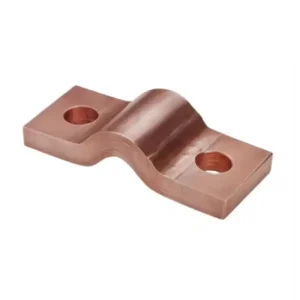
Custom Custom Flexible Laminated Copper Busbar for Battery & Electrical Equipment Service, Products
Configure Specification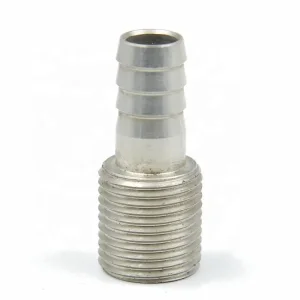
OEM Custom CNC Turned Hose Barb Fittings & Threaded Adapters Manufacturer, Factory
Configure Specification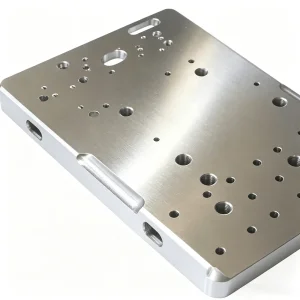
OEM Custom CNC Machined Aluminum Multi-Hole Mounting Plate Manufacturer, Suppliers
Configure Specification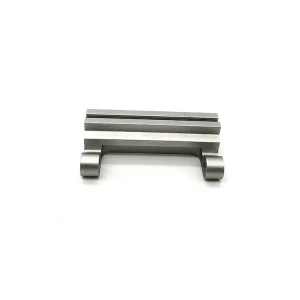
High-Quality Custom CNC Machined Aluminum Hinge Assembly | Grey Anodized Finish Supplier, Quotes
Configure Specification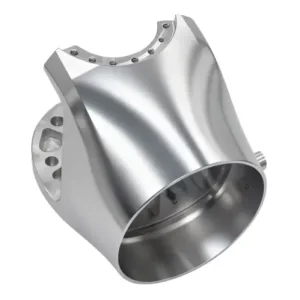
ODM High-Precision Custom 5-Axis CNC Machined Robot Joint & Housing Parts Product, Quotes
Configure Specification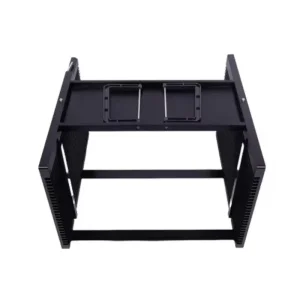
OEM Premium 8-Inch CNC Machined Aluminum Semiconductor Wafer Carrier Factories, Quotes
Configure Specification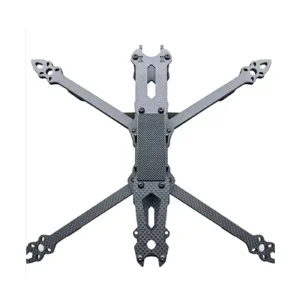
China Custom CNC Machined Carbon Fiber Drone Frame Kits | High-Performance Quad/Hexacopter Frames
Configure Specification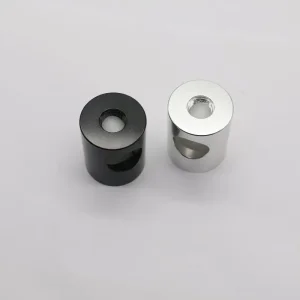
High-Quality Custom Precision CNC Turned Stainless Steel Medical Components Products, Exporter
Configure Specification
Rapid DFM & Quotation Gateway
Request an Engineering DFM Review for Telecom Castings
Upload your 3D models (.STEP, .IGES, .X_T) and 2D GD&T drawings. Our Shenzhen metallurgical and tooling team will return a comprehensive Design for Manufacturability (DFM) assessment, thermal dissipation estimate, and tooling breakdown within 24 hours under NDA.