Mission-Critical 5-Axis Components & Structural Enclosures
Engineered for complex aerodynamics, robotics kinematics, and optical housings requiring tight multi-axis geometric dimensioning and tolerancing (GD&T).
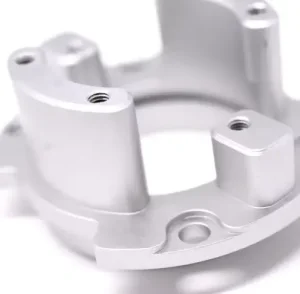
High-Quality Precision 5-Axis CNC Machined Aluminum Housing Mounting Bracket for Aerospace & Automotive Suppliers, Exporter
View Specifications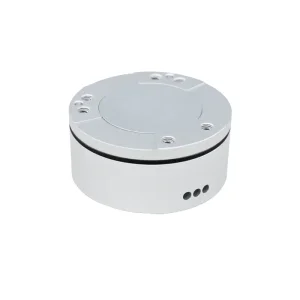
China Custom 6-Axis Force/Torque Sensor Housings & Elastic Elements | OEM/ODM Service, Factories
View Specifications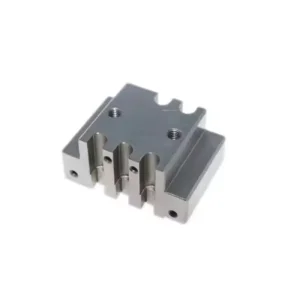
ODM OEM Precision CNC Machining Aluminum Parts & Custom Industrial Components Exporters, Quotes
View Specifications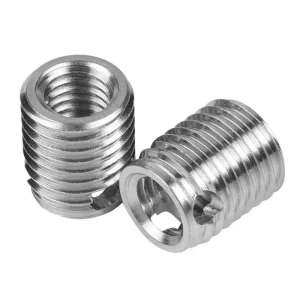
Custom Custom Self-Tapping Threaded Inserts Product, Exporters
View Specifications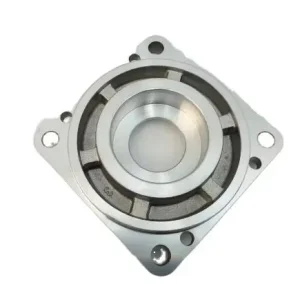
OEM Custom CNC Machining Parts / Precision Bearing Housings / Flanged Bearing Support Components Manufacturers, Service
View Specifications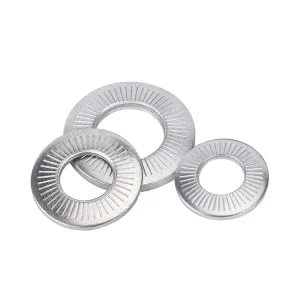
High-Quality Custom Wedge-Lock Washer Pairs Product, Quotes
View Specifications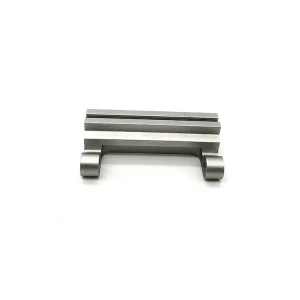
High-Quality Custom CNC Machined Aluminum Hinge Assembly | Grey Anodized Finish Supplier, Quotes
View Specifications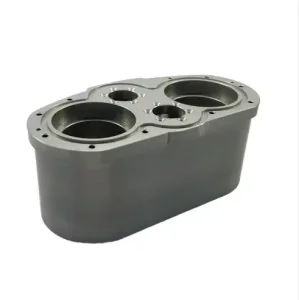
Custom Factory Custom 5-Axis CNC Machined Steel & Aluminum Universal Joint Base and Gearbox Shell for Robotics & Drone Industry Products, Exporters
View SpecificationsThe Macroeconomic Landscape and Engineering Imperatives of Custom 5-Axis CNC Machining
In high-precision manufacturing, the transition from conventional 3-axis and 3+2 positional indexing to true continuous 5-axis simultaneous CNC machining represents a watershed technological shift. Modern engineering procurement requires geometries of unprecedented complexity: organic bionic heat exchangers, multi-axis robotic torque sensor flexures, monolithic aerospace structural bulkheads, and bio-compatible orthopedic implants. The demand for suppliers who can integrate CAD/CAM post-processing, multi-axis volumetric compensation, and direct metrological feedback has transformed CNC machining from a simple subtractive trade into an algorithmic science.
Shenzhen Sunmy Hardware Co., Ltd., established in 2016, operates at the convergence of advanced kinematic hardware and rigorous digital process governance. In modern global supply chains, international original equipment manufacturers (OEMs) and Tier-1 integrators in North America and Western Europe face intense pressure to condense production lead times, mitigate vendor handoff errors, and guarantee absolute geometric dimensioning and tolerancing (GD&T) repeatability. By eliminating the cumulative stacking errors endemic to multi-fixture setups, continuous 5-axis CNC machining enables single-setup completion for six-sided prismatic and sculptured components, achieving tight positional tolerances down to ±0.005 mm.
Kinematic Advantage of Simultaneous 5-Axis Integration
Unlike 3+2 indexed machining, where rotary axes lock into position during cut sequences, continuous 5-axis machining maintains continuous simultaneous motion across three linear axes (X, Y, Z) and two rotary axes (either A/B, B/C, or A/C). This allows the cutting tool to constantly orient perpendicularly or tangentially to complex organic surfaces, drastically shortening effective tool overhang, eliminating tool deflection, and achieving mirror-grade surface finishes without secondary polishing operations.
Kinematic Architectures: Comparing Trunnion vs. Articulated Head Systems
The selection of machine tool kinematic topology directly influences the structural rigidity, cutting envelope, and thermal stability of custom 5-axis manufacturing. Sunmy Hardware deploys specialized machine kinematics tailored specifically to part geometry and material machinability indexes:
| Kinematic Topology | Rotary Axis Configuration | Dynamic Inertia Profile | Primary Application Envelope | Tolerancing Capability |
|---|---|---|---|---|
| Trunnion Table (Table-Table) | A-axis tilting, C-axis rotary platter | High workpiece inertia; zero head tilting mass deflection | Prismatic housings, small-to-mid sensor bodies, complex brackets | True positional accuracy ≤ 0.005 mm; high angular stiffness |
| Swivel Head (Head-Table) | B-axis spindle swivel, C-axis rotary table | Balanced mass distribution; deep interior cavity accessibility | Deep-draw housings, aerospace frames, surgical retractor tooling | Contour accuracy ≤ 0.008 mm; large volumetric capability |
| Articulated Gantry (Head-Head) | B/C or A/C dual-axis articulating spindle head | Workpiece remains stationary; handles heavy components | Large optical breadboards, automotive chassis bucks, aerospace bulkheads | Volumetric accuracy ≤ 0.010 mm across spans > 1200 mm |
High-Complexity Industrial Sectors Solved by 5-Axis Precision
How simultaneous multi-axis kinematics resolve mission-critical engineering bottlenecks across global aerospace, robotics, surgical, and optical applications.
Aerospace & Space Systems
Machining thin-walled monolithic structural frames, blisks, turbopump impellers, and satellite mounting brackets from Aerospace-grade 7075-T651 aluminum and Inconel 718. By maintaining continuous optimal cutter contact angles, our 5-axis lines prevent harmonic chatter, mitigating stress concentrations and keeping wall thicknesses uniform below 0.8 mm without heat-induced warping.
Robotics & Humanoid Kinematics
Custom 6-axis force/torque sensor housings, cycloidal drive internal dynamic profiles, and articulated robot finger joint links. These parts require strict concentricity and perpendicularity between complex bearing journals and thin internal flexure springs, where even a 0.003 mm deflection invalidates sensor strain calibration.
Medical Implants & Surgical Robotics
Implantable grade-5 titanium (Ti-6Al-4V ELI) polyaxial pedicle bone screws, orthopedic trauma plates, and custom 316L stainless steel surgical retractors. Multi-axis continuous profiling generates complex thread pitches and organic anatomically contoured surfaces in a single machining cycle, eliminating burrs and cross-contamination risks.
Optomechatronics & Laser Metrology
Black-anodized high-precision optical lens barrels, non-standard solid aluminum optical breadboards, and laser prism housings. 5-axis turning-milling achieves coaxiality within 0.005 mm between mounting flanges and internal optical stop threads, preventing tilt aberrations in multi-element beam-shaping systems.
Semiconductor Equipment Housings
Vacuum-grade wafer handling robot chucks, showerhead gas distribution plates, and thermal baseplates. Machined from ultra-pure aluminum alloys with strict limits on micro-porosity and grain boundaries. Finished components undergo coordinate metrology to guarantee flatness across broad spans under high thermal cycling.
EV Inverters & Liquid Cooling Systems
Complex 3D helical liquid-cooling cold plates and battery module structural frames. Tool clearance angles in 5-axis configurations allow deep, continuous micro-channel carving with tight corner radii, maximizing coolant flow turbulence while cutting hydraulic resistance throughout the vehicle thermal cycle.
Design for Manufacturability (DFM) Protocols & In-Process Metrology Architecture
Executing high-precision 5-axis CNC machining requires rigorous proactive engineering before cutting begins. At Shenzhen Sunmy Hardware, every incoming customer STEP, IGES, or parasolid file undergoes a comprehensive Geometric & Kinematic DFM Audit within 24 hours. Our senior CAM simulation engineers verify tool vector paths, evaluate spatial clearances against 3D spindle models, and verify whether undercut features require custom form tools, ball-end contouring, or Wire EDM secondary ops.
Closed-Loop In-Process Probing vs. Post-Machining CMM Auditing
To eliminate cumulative setup error, Sunmy utilizes on-machine optical touch probes (Renishaw multi-channel inspection systems). By automating workpiece datum alignment, dynamic tool wear offset updates, and mid-cycle geometric verification, our machine controllers dynamically adjust tool center point (TCP) coordinates in real time, compensating for ambient thermal drift and tool nose degradation.
Upon final part ejection, parts enter our climate-controlled metrology laboratory (maintained strictly at 20°C ± 0.5°C and 45% relative humidity). Complete dimensional qualification is performed using bridge-type coordinate measuring machines (Zeiss CMM), optical non-contact profile projectors, and surface roughness profilometers. Every single critical datum point identified on the client's 2D blueprint is recorded, cross-referenced, and packaged into standard AS9102 First Article Inspection (FAI) dossiers accompanied by authentic 3.1 mill material test certificates.
Thermal Drift Compensation in Continuous Multi-Hour Cutting
High-speed continuous 5-axis toolpaths often generate significant internal heat across spindle bearings and ball screws. Sunmy leverages dual-loop internal spindle chillers paired with active machine controller kinematic software. Real-time thermal sensors monitor Z-axis elongation and rotary platter thermal expansion, automatically executing algorithmic length adjustments to maintain absolute positioning accuracy during 18-hour continuous shifts.
Material Machinability Matrix: Mastering Exotic and Structural Alloys
5-axis tool control gives machinists the freedom to adjust effective cutting angles on the fly. This capability is critical when working with high-temperature alloys and abrasive materials that work-harden quickly:
| Material Specification | Thermal Conductivity & Hardness | 5-Axis Toolpath Strategy | Critical Machining Challenge | Target Surface Finish (Ra) |
|---|---|---|---|---|
| Titanium Grade 5 (Ti-6Al-4V) | 6.7 W/m·K | 36 HRC | High-feed trochoidal milling, constant tool engagement angle, high-pressure through-spindle coolant | Rapid work-hardening and excessive localized heat at the tool cutting edge | Ra 0.4 µm to Ra 0.8 µm |
| Alloy 7075-T651 | 130 W/m·K | 150 HBW | Ultra-high-speed HSC paths (>18,000 RPM), high dynamic chip removal rates | Asymmetrical internal residual stress relief causing thin-wall deformation | Ra 0.2 µm to Ra 0.4 µm |
| Inconel 718 | 11.4 W/m·K | 42 HRC | Reduced peripheral cutting speed, rigid ceramic or CBN tooling, continuous tool vectoring | Extreme abrasive tool wear, BUE (built-up edge), high shear strain rate | Ra 0.4 µm to Ra 0.6 µm |
| PEEK-CF30 (Carbon Filled) | 0.29 W/m·K | 85 Shore D | PCD diamond-coated endmills, razor-sharp rake angles, dry cryogenic air blasts | Abrasive fiber pull-out, localized delamination, thermal glass-transition melting | Ra 0.6 µm to Ra 0.8 µm |
Technological Roadmap: The Evolution of Intelligent 5-Axis Manufacturing
Sunmy Hardware's multi-year investment pipeline bridges automated algorithmic CAM generation, digital twin machine simulations, and autonomous smart-factory operations.
Digital Twin Virtual Proving
Before any physical raw stock is loaded onto a machine platter, post-processed G-code runs inside a full-scale kinematic digital twin simulation. This mirrors exact machine kinematics, axis acceleration limits, workholding fixtures, and spindle profiles. Collision risks, gouges, and rotational singularity limits are identified in software, cutting physical tryout scrap rates to near zero.
AI Adaptive Feed Optimization
By integrating predictive dynamic spindle load feedback, our cutting routines monitor cutting torque and vibration in real time. CAM toolpaths adjust feed rates dynamically based on actual tool engagement angles. This prevents chatter across deep pockets, prolongs cutter longevity, and maintains a consistent surface finish throughout complex multi-hour operations.
Lights-Out Palletization
We combine multi-axis machining centers with automated multi-pallet changers (FMS) and standardized zero-point clamping systems (Erowa/System 3R). Workpieces are pre-fixtured, scanned for part alignment, and routed to available 5-axis spindles automatically. This automation allows us to run overnight shifts with minimal manual intervention, drastically shortening high-volume production schedules.
Frequently Asked Questions for Sourcing & Engineering Teams
Clear, direct technical answers regarding tolerances, quality records, engineering reviews, and international shipping protocols.
High-Precision Mechanisms, Turned Elements & Medical Systems
Explore custom surgical instruments, optical barrels, structural brackets, and specialized timing components machined to tight GD&T tolerances.
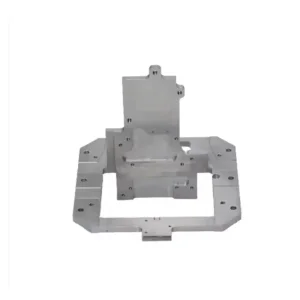
OEM Custom High-Precision CNC Machined Metal Bracket & Structural Frame Wire EDM & Milling for Aerospace & Automotive Applications Manufacturer, Quotes
View Specifications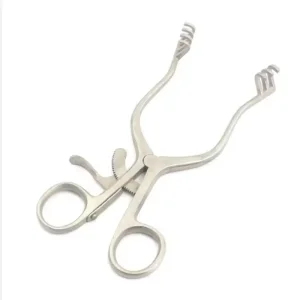
China Professional Quality Stainless Steel Custom Surgical Retractor Service, Exporter
View Specifications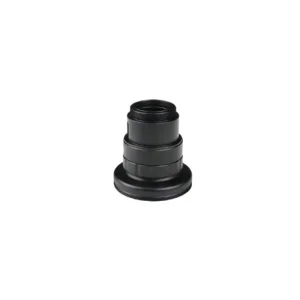
OEM Custom Precision CNC Turned Black Anodized Aluminum Lens Barrel & Optical Housing Components Manufacturer, Product
View Specifications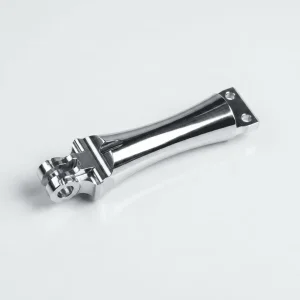
Custom Custom CNC Machined Robot Finger Joint Link Manufacturers, Exporter
View Specifications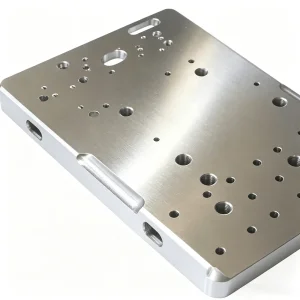
OEM Custom CNC Machined Aluminum Multi-Hole Mounting Plate Manufacturer, Suppliers
View Specifications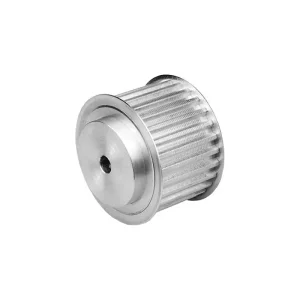
OEM Custom CNC Machined HTD 3M Aluminum Timing Belt Pulley Supplier, Products
View Specifications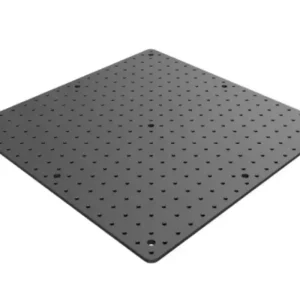
China OEM Custom Precision CNC Machining Non-Standard Solid Aluminum Optical Breadboard Product, Factory
View Specifications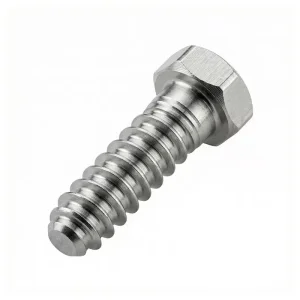
Custom Titanium Medical Implant / Bone Screw Exporter, Factories
View SpecificationsReady to Move Your 5-Axis CAD Package Into Production?
Work directly with Sunmy Hardware's senior engineering team in Shenzhen. We sign mutual NDAs before file transfer, review your tolerances within 24 hours, and deliver full FAI and CMM inspection documentation with every shipment.
Engineering File Formats Accepted
Native 3D models and 2D blueprints with GD&T callouts: