
Precision Turned & Milled Component Hardware
Industrial OEM mechanical parts, sub-assemblies, and precision cylindrical interfaces custom manufactured to extreme dimensional constraints.
The Global Landscape of Precision Shaft Machining
How shifting mechanical engineering demands in automotive electrification, surgical robotics, and extreme-environment aerospace drive unprecedented accuracy thresholds for high-speed rotational hardware.
Supply Chain Reshoring & Hybrid Sourcing
Global procurement teams across North America and Europe face compounding pressure to balance cost efficiency with rigid quality thresholds. While basic shaft manufacturing has commoditized, precision shafts requiring complex thermal management, case hardening, and multi-axis turn-milling require high-tier agile suppliers capable of maintaining documented ISO 9001 and IATF 16949 systems with zero IP leakage.
- Elimination of trading intermediary markups
- Direct engineering-to-factory communication protocols
- Complete traceability of European & North American alloy mills
The EV Powertrain & High-RPM Paradigm
The transition from internal combustion engines to EV traction motors has shifted precision shaft benchmarks. Modern rotor shafts operate at rotational velocities exceeding 20,000 to 25,000 RPM. This velocity amplifies microscopic centrifugal imbalances, necessitating sub-micron Total Indicated Runout (TIR) and multi-plane dynamic balancing to prevent harmonic vibration and early bearing collapse.
- Dynamic balance grading up to ISO 1940-1 G0.4
- Strict geometric dimensioning: Cylindricity within 0.003 mm
- Advanced spline profile teeth according to DIN 5480 standards
Micro-Actuation & Surgical Robotics
Minimally invasive surgical (MIS) systems, semiconductor robotic wafer end-effectors, and optoelectronic gimbal drives require shafts with outer diameters as small as 0.8 mm. Holding concentric steps, cross-holes, and microscopic thread reliefs on miniature shafts demands high-precision Swiss screw machining coupled with automated optical verification.
- Micro-machining down to Ø 0.5 mm on Swiss-type lathes
- Passivated biocompatible alloys: 316L, 17-4PH, Grade 5 Titanium
- Ra < 0.2 µm ground bearing journals without micro-burrs
Precision Shaft Machining Processes & Technical Capabilities
From single-setup multi-axis mill-turn centers to ultra-precision CNC centerless and cylindrical grinding, our facilities integrate advanced production methodologies designed for demanding mechanical performance.
Multi-Axis Swiss Turn-Milling
By leveraging high-end 7-axis to 9-axis Swiss-type automatic lathes equipped with sub-spindles, driven live tooling, and guide-bushing support, long, slender, high-aspect-ratio shafts are machined without material deflection or chatter.
- Length-to-diameter aspect ratios up to 30:1 without deflection
- Simultaneous cross-drilling, off-axis milling, and thread whirling
- Complete completion in a single clamping setup to maintain zero datum shift
Cylindrical & Centerless Grinding
For bearing journal surfaces and tight sliding press fits, turning alone is insufficient. We run specialized CNC cylindrical between-center grinders and high-throughput centerless grinding lines to achieve sub-micron dimensional tolerances and mirror finishes.
- Surface roughness down to Ra 0.05 µm (mirror finish / superfinishing)
- Diameter consistency within 0.0015 mm across extended shaft lengths
- Controlled plunge grinding for complex multi-diameter stepped profiles
Spline, Keyway & Thread Cutting
Power transmission shafts require precise torque distribution features. We perform precision hobbing, broaching, and 5-axis gear shaping for external and internal involute splines, straight-sided keys, precision lead screws, and safety snap-ring grooves.
- Involute splines: ANSI B92.1, DIN 5480, DIN 5482, and JIS D 2001
- Tight keyway symmetry held to ±0.01 mm relative to centerline
- Single-point precision thread cutting and thread rolling for fatigue resistance
| Material Category | Representative Alloys | Thermal & Case Hardening | Typical Machining Strategy | Primary Industrial Application |
|---|---|---|---|---|
| Alloy Steels | AISI 4140, 4340, 8620, 52100 Bearing Steel | Induction Hardening, Carburizing (58–62 HRC), Q&T | Rough turn annealed → Heat treat → Hard turning / Cylindrical grind | High-torque drive axles, industrial gearboxes, hydraulic pump shafts |
| Stainless Steels | 17-4PH (H900/H1150), 316L, 304, 440C Martensitic | Precipitation hardening, vacuum oil quench, passive pass | Carbide insert turning with high-pressure oil-mist coolant → Passivation | Surgical drive shafts, food processing pumps, marine marine propellers |
| Titanium & Superalloys | Ti-6Al-4V Grade 5, Inconel 718, Hastelloy C-276 | Aging, solution annealing, stress relief | Low cutting velocity, rigid clamping, high-pressure through-spindle coolant | Aerospace flight control actuators, turbine shafts, downhole drilling tools |
| Non-Ferrous Alloys | Brass C36000, Phosphor Bronze CuSn8, Al 7075-T6 | T6 precipitation aging, temper hardening | High-speed diamond/PCD tooling, high-velocity spindle micro-milling | Fluid control stems, electrical motor armatures, pneumatic valve shafts |
GD&T Mastery & Sub-Micron Metrology Verification
In precision shaft manufacturing, dimensional sizing is only a baseline. Eliminating runout, maintaining roundness, and securing exact coaxiality dictates operational lifespan and acoustic performance.
Total Indicated Runout (TIR)
Radial and axial runout along stepped shafts are checked between dead centers using sub-micron dial indicators and laser interferometry, guaranteeing TIR within 0.002 mm.
Coaxiality & Concentricity
Multi-step bearing seats and seal surfaces require near-perfect concentric alignment. In-house Zeiss CMMs evaluate true position and coaxiality relative to primary functional datums.
Cylindricity & Circularity
Departures from true roundness create stress concentrations in rolling-element bearings. Our roundness testers verify harmonic lobing profiles to under 0.001 mm circularity.
Comprehensive Documentation
Every shipment is delivered with comprehensive compliance documentation: 3.1 Mill Test Reports (MTR), full AS9102 First Article Inspections (FAI), and CMM contour plots.
High-Performance Vertical Application Scenarios
Engineered solutions designed for mission-critical operating environments across automated manufacturing, aerospace avionics, medical robotics, and subsea fluid handling.
Robotics & Cobot Joint Actuation Shafts
Hollow-core cycloidal and harmonic reducer shafts designed with integrated cross-roller bearing journals. The hollow center allows internal harness cabling, while thin-wall turning tolerances are held strictly to prevent distortion under rotational torsional strain.
- Material: Nitrided 42CrMo4 / 4340 quenched and tempered
- Concentric hollow-bore drilling with concentricity ≤ 0.01 mm
- Direct integration with strain wave gearing systems
Surgical Handpiece Micro-Spindles
Orthopedic bone drills and dental handpiece drive shafts spinning up to 80,000 RPM. Produced on CNC Swiss turn-mill centers from biocompatible martensitic stainless steel, hardened to 54 HRC, followed by micro-finish cylindrical grinding to prevent autoclave corrosion.
- Material: Custom 465 or Custom 455 Medical Grade Stainless
- Bearing journal diameter tolerance: +0.000 / -0.0025 mm
- Multi-frequency ultrasonic cleaning and vacuum packaging
Semiconductor Cleanroom Lead & Transfer Shafts
Linear guide and vacuum transfer shafts used inside wafer etch and deposition equipment. Precision-turned and ground from non-magnetic austenitic stainless steel, electrolytic polished to eliminate particulate entrapment, and sealed for high-vacuum service.
- Material: 316L VIM-VAR (Vacuum Induction Melted)
- Surface roughness Ra ≤ 0.1 µm with electro-polishing
- Cleanroom Class 1000 compatibility verification
Precision Machining Technical Roadmap (2025–2030)
Addressing the convergence of in-process adaptive AI metrology, cryogenic tool cooling, and hybrid composite-metal structural power transmission.
Cryogenic Machining of Tough Alloys
Implementation of supercritical liquid CO2 (scCO2) and liquid nitrogen (LN2) cooling directly through the cutting tool. This prevents thermal deformation of thin-walled shafts when roughing titanium and Inconel, extending tool life by 300% and stabilizing metallurgical crystal boundaries.
- Zero chemical cutting oil residue on finished shafts
- Significant reduction in residual surface tensile stress
- Improved fatigue endurance under cyclic torsional loading
In-Situ Closed-Loop Adaptive Probing
Integration of high-frequency optical touch probes and laser tool setters directly inside CNC mill-turn machines. Machining algorithms adjust offsets automatically based on thermal growth models of the machine spindle, holding tolerances consistently across 24-hour lights-out production runs.
- Automated thermal drift compensation in real time
- CpK values sustained above 1.67 across large production volumes
- Real-time automated tool wear compensation
Hybrid CFRP-Metallic Composite Shafts
Meeting lightweight aerospace and drone requirements through hybrid structures. High-precision CNC machined metal splined shaft ends are co-cured or interference-bonded onto carbon-fiber-reinforced polymer (CFRP) tubes, yielding up to 60% weight reduction while preserving metal-to-metal torque interfaces.
- Extreme critical speed thresholds before harmonic resonance
- Superior galvanic corrosion isolation strategies
- Engineered for high power-to-weight aerial propulsion
End-to-End Shaft Manufacturing Architecture
From comprehensive raw material sourcing and rigorous heat treatment to micron grinding, dynamic balancing, and overseas protective packaging, our workflow secures predictable mechanical conformity.
1. DFM & Material Analysis
Initial review of 2D/3D models, evaluating GD&T stack-ups, center-hole requirements, relief radii, and raw bar stock alloy availability.
2. Roughing & Thermal Cycling
High-efficiency turning to remove core stock, followed by stress-relief annealing or case carburizing to establish depth of hardness without internal cracking.
3. Finish Turning & Grinding
Hard turning of hardened surfaces (up to 62 HRC) followed by CNC cylindrical grinding of critical bearing journals and seal shoulders.
4. Dynamic Balance & Pack
High-RPM multi-plane balance correction via material removal drills, followed by individual VCI anti-corrosion barrier sleeves and export crating.
Frequently Asked Questions on Custom Precision Shaft Machining
Comprehensive technical answers directly addressing common engineering, tolerance, metallurgy, and procurement requirements for precision shafts.
What are the tightest achievable dimensional tolerances and surface finishes on ground precision shafts?
How do you manage thermal distortion during heat treatment of long, slender shafts?
What spline standards and gear tooth profiles can you machine directly on custom shafts?
How is intellectual property and proprietary CAD data protected during technical reviews?
What dynamic balancing standards do you support for high-RPM motor and rotor shafts?
Can you support small-batch prototypes through to high-volume production?
What surface treatments and protective coatings can be applied to machined shafts?
How do you package and protect precision ground shafts during overseas ocean or air transport?
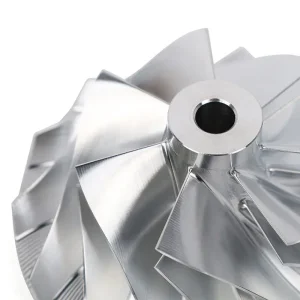
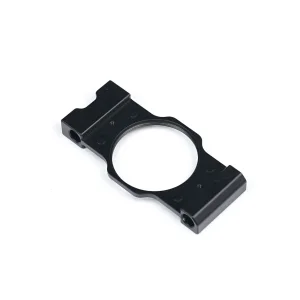
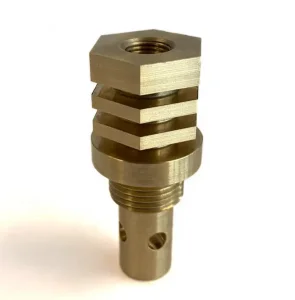
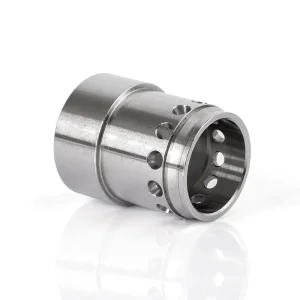
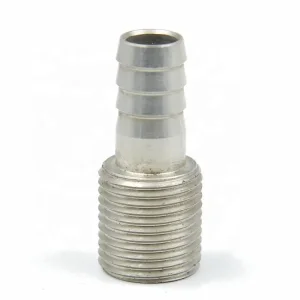
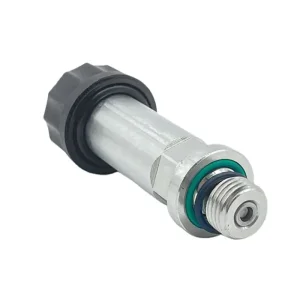
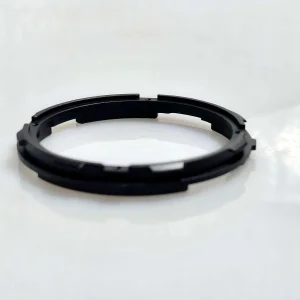
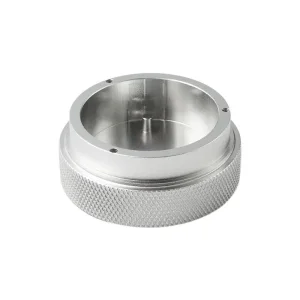
Specialized Precision CNC Turned & Milled Portfolio
Custom hydraulic components, high-speed impellers, optical mounts, and critical industrial control assemblies manufactured under strict process controls.
Ready to Engineer Your Custom Precision Shafts?
Submit your 2D drawings and 3D CAD files for a comprehensive manufacturability and GD&T review with pricing delivered within 24 hours.