Precision Engineering Solutions
Engineered Components & Precision Assemblies
Direct factory fabrication verified with in-house CMM, FAI reporting, and optical profile scanning from prototype runs to million-unit production.
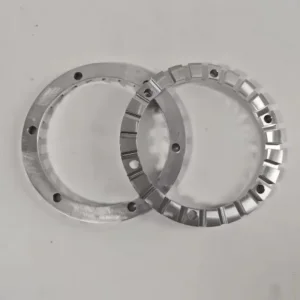
China Custom CNC Machined Anodized Sealing Rings for Semiconductor & Optical Instruments Factories, Factory
View Specifications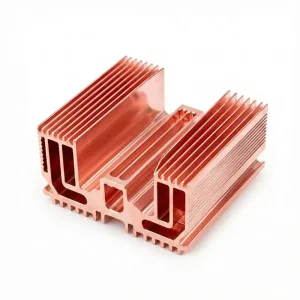
ODM High-Performance Copper Heatsink Manufacturer, Factories
View Specifications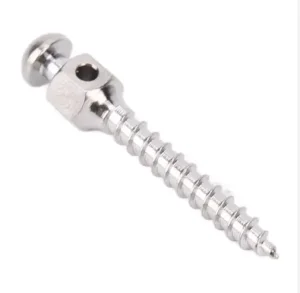
China Custom Precision Titanium Orthodontic Micro Implant Screws Manufacturers, Factories
View Specifications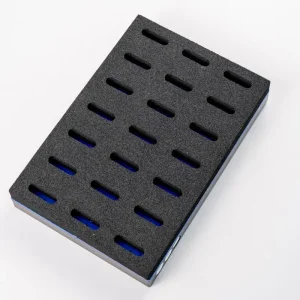
China Custom CNC Machined Foam Vacuum Gripper Plates for Robotic EOAT Manufacturer, Service
View Specifications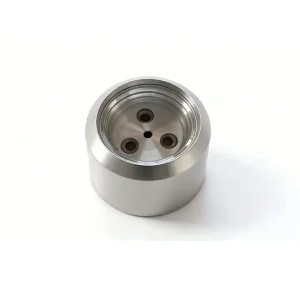
High-Quality Precision CNC Machined High-Voltage Insulator Contact Base Service, Factory
View Specifications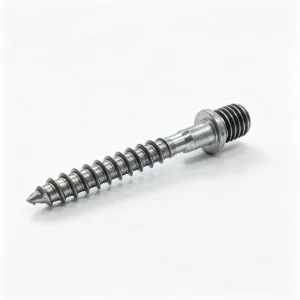
OEM Custom Precision Turned Stainless Steel Dual-Thread Hanger Bolt Manufacturer, Factory
View Specifications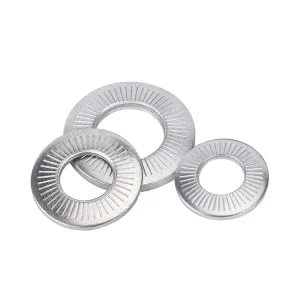
High-Quality Custom Wedge-Lock Washer Pairs Product, Quotes
View Specifications
Industrial Intelligence
Global Commercial Status of Precision Sheet Metal
How international procurement trends, reshoring vs. offshore tier-one supplier strategies, and structural material shifts are shaping global supply chains.
High-Density Consolidation
The global precision sheet metal market is transitioning from fragmented artisan fabricators into automated contract mega-plants. OEMs demand unified vendor networks providing laser nesting, CNC folding, automated welding cells, and powder finishing under ISO-9001 certified governance.
Market CAGR: 6.4%
Laser Automation
Lights-Out Cells
Stringent Aerospace & EV Norms
Electric mobility chassis components, thermal runaway enclosures, and space payload bus brackets require micron-level sheet thickness consistency, grain orientation tracking, and 100% weld verification via non-destructive eddy current and acoustic testing.
Traceability
Grain-Aligned Bending
NDT Testing
Turnkey Hybrid Manufacturing
Pure-play stamping is no longer sufficient. Enterprise procurement directs contracts to hybrid factories pairing progressive deep drawing with secondary 5-axis CNC mill-turn, Swiss lathe insertion, and precision automated hardware insertion (PEM clinch).
PEM Insertion
Hybrid CNC/Stamping
Cleanroom Packaging
Technical Roadmap & Capabilities
State-of-the-Art Production & Material Science
Engineered sheet processing featuring ultra-high power 20kW fiber laser cutters, dynamic crowning press brakes, and continuous statistical process control (SPC).
±0.005mm
CNC Critical Turning & Milling
±0.05mm
CNC Press Brake Forming Tolerance
5,000 t
Annual Stamping & Die Capacity
<24 hrs
DFM Analysis & Quotation Engine
Adaptive Laser Profiling
Intelligent CNC fiber lasers equipped with real-time back-reflection monitoring, dynamic pierce detection, and auto-nozzle cleaning cut stainless steels up to 30mm, copper alloys up to 12mm, and aluminum grades without burr formation.
CNC Folding & Robotics
Electro-hydraulic tandem press brakes feature optical bend-angle sensors capable of calculating springback dynamically per material lot, achieving 0.25° angular precision on complex multi-flange chassis geometries.
Progressive Stamping Dies
In-house CAD/CAM tool and die engineering for continuous progressive stamping up to 800 metric tons. Precision blanking, coining, deep drawing, and thread-tapping integrated directly inside the high-speed press stroke.
Engineering Whitepaper
Macro Solutions & Localized Industrial Deployment
In-depth technical review of how precision sheet fabrication solves thermal dissipation, electromagnetic shielding, and structural endurance across global industrial sectors.
In modern industrial applications, sheet metal fabrication has evolved far beyond rudimentary shearing and manual brake forming. Today, custom sheet metal manufacturing represents a multidimensional intersection of metallurgical science, automated kinematic bending, precision thermal dynamics, and surface passivation engineering. Whether specifying a cold-rolled steel cabinet for utility-scale battery energy storage systems (BESS) or an ultra-clean anodized aluminum chassis for semiconductor wafer-handling apparatus, modern design-for-manufacturability (DFM) requires an exhaustive understanding of tolerance stack-ups, heat-affected zones (HAZ), and grain deformation.
1. Telecom & Hyperscale Server Infrastructure (EMI / RFI Attenuation)
In 5G telecom architectures and edge-compute AI data servers, sheet metal enclosures serve as active electrical grounds and RF Faraday cages. Sunmy Hardware utilizes high-conductivity aluminum alloys (such as AL5052-H32 and AL6061-T6) combined with selective micro-tabbing, robotic laser welding, and conductive trivalent chromate conversion (MIL-DTL-5541 Class 3). This guarantees seamless low-impedance bonding across mating seams, preventing electromagnetic interference (EMI) while maintaining high structural rigidity to support heavy modular server power supplies and liquid cooling blocks.
2. Medical Diagnostic Equipment & Life Sciences
Medical cart frames, MRI spectrometer housings, and laboratory liquid handling machines demand surgical-grade cleanability and rigorous corrosion resistance. We implement passivated austenitic stainless steels (AISI 304 and 316L) processed with nitrogen-assist laser cutting to eliminate oxidation along the cut edges. Subsequent post-processing includes full bead-blasting and non-contaminating electropolishing to reach surface finishes of Ra < 0.4 µm, preventing bacterial pooling and permitting multi-cycle autoclaving.
| Material Family | Standard Grades | Key Engineering Attributes | Recommended Applications | Standard Tolerances |
|---|---|---|---|---|
| Aluminum Alloys | 5052-H32, 6061-T6, 7075-T6 | Exceptional strength-to-weight ratio, excellent anodizing behavior, low mass | Avionics enclosures, heatsink backplanes, robotics | Forming: ±0.10 mm; CNC: ±0.005 mm |
| Stainless Steels | 304, 304L, 316L, 430 | Superior chemical/acid resistance, high yield strength, aesthetic finish | Medical carts, cleanrooms, semiconductor tooling | Forming: ±0.08 mm; Laser: ±0.05 mm |
| Carbon & Mild Steels | SPCC, SECC, Q235B, CR4 | High tensile resilience, low cost, superb powder coating adhesion | BESS chassis, industrial electrical cabinets, automotive | Forming: ±0.15 mm; Punch: ±0.05 mm |
| Copper & Brass | C1100, C1020, C2680, C3604 | Unmatched thermal and electrical conductivity, natural antimicrobials | High-voltage busbars, heat spreaders, sensor pins | Forming: ±0.10 mm; CNC: ±0.005 mm |
3. Industrial Automation & Robotic End-of-Arm Tooling (EOAT)
In collaborative robotics and multi-axis pick-and-place systems, sheet metal components must withstand dynamic acceleration loads exceeding 5G without structural fatigue. We engineer lightweight aluminum gripper backbones and vacuum distributor manifolds using combined CNC punching and mill-turn operations. Clinch nuts, blind broaching standoffs, and captive hardware are positioned with automated optical verification, eliminating missing hardware risks before customer assembly lines.
Quality Assurance Protocols
Measurable QA: From Mill Test Report (MTR) to CMM
Quality is not an aspirational claim—it is a physical trail of calibrated measurements, metallographic verifications, and non-destructive stress tests.
Incoming Material Verification
Every raw sheet batch undergoes spectrometer optical emission analysis to confirm alloy chemistry, tensile yield testing, and coating thickness gauge certification before shearing.
First Article Inspection (FAI)
Full dimensional inspection mapping via automated optical comparator and Zeiss CMM scanning against CAD nominal data. Detailed AS9102-compliant reports provided prior to production ramp.
In-Line SPC Process Control
Statistical process control charts maintain real-time Cpk > 1.67 across critical hole diameters, hole-to-edge tolerances, and bend line angles using electronic digital calipers and calibrated go/no-go pin gauges.
Surface & Environmental Testing
In-house ASTM B117 salt-spray chambers verify corrosion resilience on powder-coated, zinc-nickel plated, and anodized specimens up to 1,000+ hours without blister or red rust formation.
Portfolio Catalog
Custom Machined & Fabricated Solutions
Explore our proven manufacturing portfolio spanning precision turned pins, robot joints, optical enclosures, and complex hydraulic valve components.
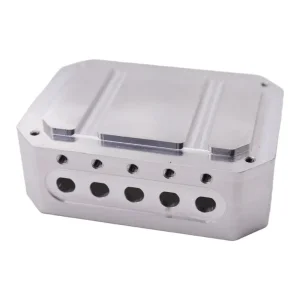
China Custom CNC Machined Aluminum Enclosure for RF & Industrial Sensor Modules Service, Products
View Specifications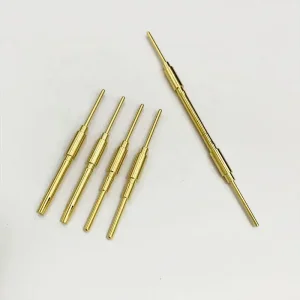
ODM Custom CNC Turned Contact Pins & Test Probe Components Manufacturer, Exporters
View Specifications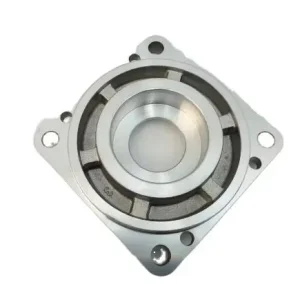
OEM Custom CNC Machining Parts / Precision Bearing Housings / Flanged Bearing Support Components Manufacturers, Service
View Specifications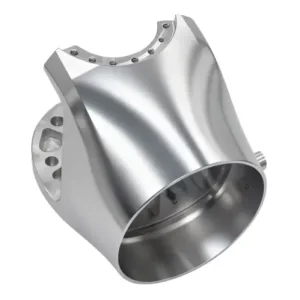
ODM High-Precision Custom 5-Axis CNC Machined Robot Joint & Housing Parts Product, Quotes
View Specifications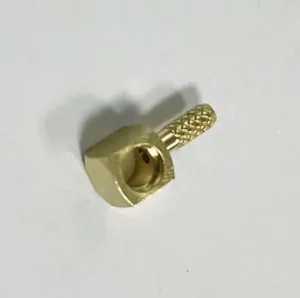
High-Quality Custom CNC Machining Brass Insert Connector with Knurled Pin OEM Suppliers, Products
View Specifications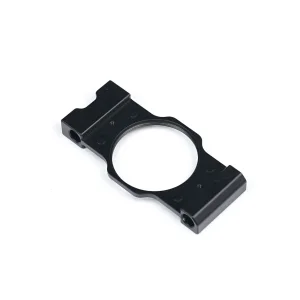
OEM Custom CNC Machined Aluminum Optical Lens Mounting Bracket (Matte Black) Service, Products
View Specifications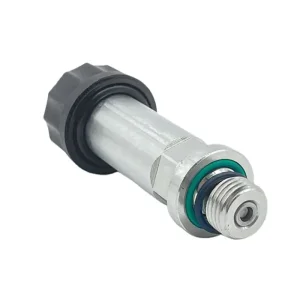
Custom High-Performance Hydraulic Solenoid Valve Core – Precision CNC Turned Excavator Spare Parts Service, Exporters
View Specifications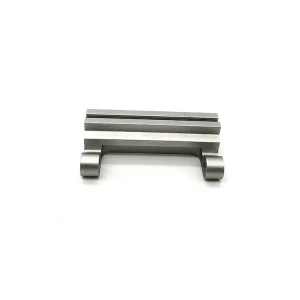
High-Quality Custom CNC Machined Aluminum Hinge Assembly | Grey Anodized Finish Supplier, Quotes
View Specifications
Technical Sourcing Inquiries
Frequently Asked Questions for Sourcing Directors
Direct technical clarifications on sheet metal DFM parameters, minimum bend radii, tooling investment, and export logistics.
What are the standard tolerances achievable for precision custom sheet metal fabrication?
For standard CNC laser cutting and turret punching, Sunmy Hardware routinely holds ±0.05 mm on contour geometry and hole center-to-center pitch. On CNC press brake forming, linear bend tolerances are held to ±0.10 mm with angular repeatability of ±0.25° to ±0.50° depending on alloy grain direction and thickness. For critical features requiring tighter fits (e.g., dowel pin locating holes or precision bearing bores), secondary CNC milling and reaming operations achieve tolerances down to ±0.005 mm.
How does Sunmy Hardware minimize sheet metal bend springback and cracking?
Springback is governed by material yield strength, modulus of elasticity, and tooling geometry. We implement dynamic laser angle measurement systems on our high-precision CNC press brakes that adjust the punch stroke depth in real time per cycle. Furthermore, during our preliminary DFM review, we establish minimum inside bend radii (typically R ≥ 1.0t for ductile alloys like AL5052 and R ≥ 1.5t to 2.0t for harder tempers like AL6061-T6 or stainless 304) and ensure bend axes are oriented perpendicular or diagonal to the metal rolling grain.
Which surface finishing and anti-corrosion treatments can be integrated in-house?
We deliver completely turnkey components with pre-treatments and final finishes. Our automated capabilities include electrostatic thermoset powder coating (Qualicoat standard), electrophoretic coating (E-coat), sulfuric acid Type II/Type III hardcoat anodizing with bead-blast texturing, chemical conversion chromating (trivalent RoHS-compliant), zinc electroplating, passivating, and precision silk-screen or laser engraving. All finishes are tested with ASTM cross-hatch adhesion and salt spray validation.
What are the lead times for sheet metal prototypes versus mass production stamping?
Rapid prototyping using CNC laser cutting, soft-tool bending, and rapid PEM installation typically ships within 3 to 7 working days, allowing engineering teams to validate physical fit and thermal characteristics rapidly. For high-volume progressive die stamping programs, hard tooling fabrication, wire-EDM die cutting, try-out sampling, and full First Article Inspection (FAI) reports generally require 3 to 5 weeks, followed by continuous automated press runs yielding tens of thousands of parts per week.
How does Sunmy protect intellectual property (IP) and proprietary CAD data?
We execute legally binding bilateral Non-Disclosure Agreements (NDAs) prior to receiving proprietary STEP, SLDPRT, or DWG drawings. Furthermore, Sunmy Hardware is an integrated production factory based in Shenzhen, not an intermediary trading vendor; your technical files are hosted on secure, encrypted internal servers accessible solely to assigned tooling engineers and quality technicians, ensuring zero secondary data dispersal.