Custom Fabricated & Machined Product Showcase (Batch I)
Explore precision-manufactured OEM/ODM assemblies, multi-axis sensory brackets, and hydro-abrasive profiled geometries certified to rigorous dimensional tolerances.
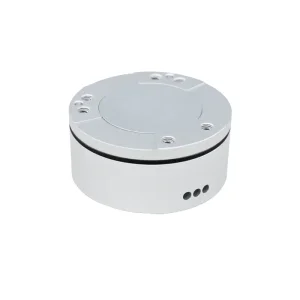
China Custom 6-Axis Force/Torque Sensor Housings & Elastic Elements | OEM/ODM Service, Factories
View Product Specs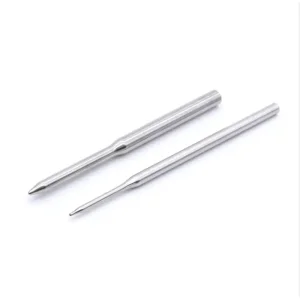
OEM Custom Stainless Steel Waterproof Sensor Probe Housing / Thermowell (OEM Support) Manufacturer, Suppliers
View Product Specs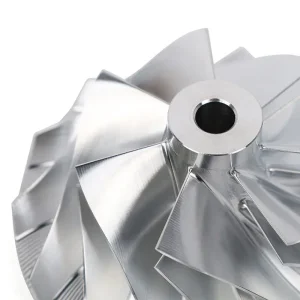
High-Quality Custom 5-Axis CNC Machined Billet Aluminum Impeller Compressor Wheel Manufacturers, Exporter
View Product Specs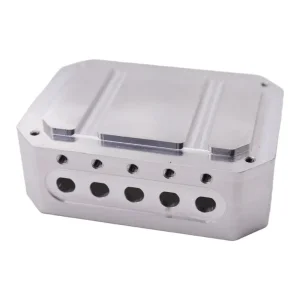
China Custom CNC Machined Aluminum Enclosure for RF & Industrial Sensor Modules Service, Products
View Product Specs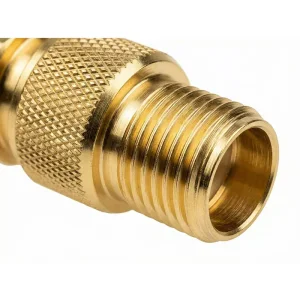
High-Quality Precision Knurled Brass Threaded Connector Manufacturers, Factories
View Product Specs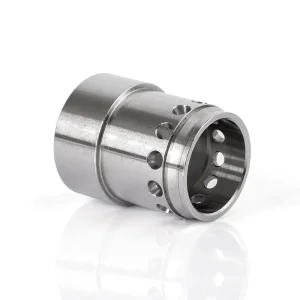
ODM Custom CNC Precision Turned Stainless Steel Filter Sleeve (OEM/ODM Industrial Grade) Manufacturer, Manufacturers
View Product Specs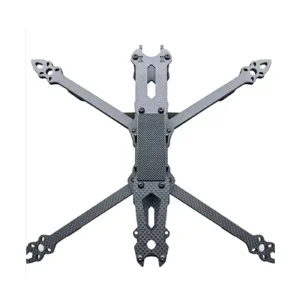
China Custom CNC Machined Carbon Fiber Drone Frame Kits | High-Performance Quad/Hexacopter Frames for Agriculture & FPV Suppliers, Manufacturers
View Product Specs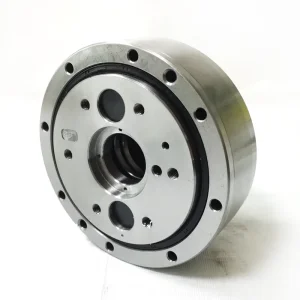
ODM Custom Hollow-Shaft Cycloidal Reducer | OEM Parts & Assembly Product, Exporters
View Product SpecsGlobal Commercial State of Industrial Waterjet Cutting
Comprehensive analysis of capital expenditure allocation, cold supersonic beam physics, material omnivorousness, and global supply chain integration.
The Macro Industrial Landscape: Cold Mechanical Erosion over Thermal Vaporization
In modern advanced manufacturing, custom waterjet cutting occupies a singular technological niche that cannot be supplanted by fiber lasers, wire EDM, or plasma systems. At its physical core, pure and abrasive waterjet cutting operates on the principle of supersonic micro-erosion rather than thermal ablation. Utilizing intensifier and direct-drive pumps generating operating pressures ranging from 3,800 to 6,500 bar (55,000 to 94,000 PSI), water is forced through a synthetic sapphire or diamond orifice as small as 0.07 mm to 0.35 mm in diameter. The resulting coherent hydro-jet achieves velocities exceeding Mach 3 (over 1,000 m/s). When metered with fine garnet abrasives (80 to 220 mesh), the kinetic stream cleanly shears crystalline matrices, refractory metals, thermoset matrices, and high-purity optics without imposing any thermal distortion or metallurgical alteration.
Historically considered a roughing or sheet-metal contouring method, the global waterjet industry has transitioned into a high-precision contract manufacturing pillar. Driven by stringent metallurgical specifications in aerospace (such as Boeing BAC5000 and AMS specifications), military ballistic manufacturing, and medical bio-implants, waterjet cutting is now specified as the mandatory primary blanking and shape-generation technique. The total elimination of the Heat-Affected Zone (HAZ) prevents micro-cracking, phase transformation, decarburization, and internal residual stress buildup, ensuring that components retain 100% of their base tensile strength and fatigue life.
From a commercial sourcing perspective, OEMs across North America, the European Union, and Asia-Pacific leverage Chinese contract manufacturing factories like Sunmy Hardware to balance high-mix low-volume (HMLV) rapid development with aggressive unit cost reductions. By integrating direct CNC waterjet bed setups with in-house 5-axis secondary milling, wire electrical discharge machining (EDM), and Swiss turning under a unified quality assurance management umbrella, Western procurement heads overcome the multi-tier supply chain fragmentation that traditionally inflates lead times.
| Manufacturing Parameter | Abrasive Waterjet Cutting (AWJ) | Fiber Laser Cutting (12kW–30kW) | Wire Electrical Discharge (WEDM) | CNC Router / End Milling |
|---|---|---|---|---|
| Thermal Distortion (HAZ) | Zero (Pure Cold Kinetic Erosion) | Moderate to Severe (0.1mm - 1.2mm) | Micro-Recast Layer (0.01mm - 0.05mm) | Zero (Coolant Dependent) |
| Material Versatility | Universal (Metals, Ceramics, Glass, CFRP) | Conductive & Semi-Reflective Sheets | Electrically Conductive Metals Only | Subject to Tool Wear & Brittleness |
| Maximum Workable Thickness | Up to 250 mm (10.0 in) in Solid Steel | 30 mm – 50 mm (Alloy Dependent) | Up to 400 mm in Hardened Tool Steel | Limited by Tool Flute Reach & Rigidity |
| Taper Control & Accuracy | ±0.025 mm (With 5-Axis Taper Correction) | ±0.05 mm (Degrades above 15mm depth) | ±0.002 mm (Ultra-Precision) | ±0.005 mm (Geometric Limits) |
| Edge Microstructure Integrity | 100% Unaltered Parent Material | Thermal Hardening / Carburization Edge | Micro-Cracking & Tensile Stress | Mechanical Smearing / Work Hardening |
Major Trends Shaping Modern Waterjet Cutting Factories
Five macro vectors re-engineering factory productivity: from micro-waterjetting to closed-loop closed-circuit AI smart nesting.
Micro-Waterjet (Fine Abrasive)
Advancements in micro-nozzle fluid dynamics allow jet diameters as slender as 0.2 mm with 240+ mesh garnet abrasive. Enables micro-fluidic channels, semiconductor test fixtures, and surgical stent prototyping without mechanical burrs.
- Positioning accuracy within ±0.005 mm
- Kerf width under 0.25 mm for dense arrays
- Sub-millimeter bridge retaining tabs
Dynamic 5-Axis Taper Correction
Mathematical modeling algorithms compute natural jet stream lag and kerf taper in real time, articulating the cutting wrist up to 60° to cancel taper completely, generating perpendicular sidewalls on 150mm thick blocks.
- 0.00° true perpendicularity on thick walls
- Weld-prep chamfers and 3D compound bevels
- Automated stream-lag curve compensation
94,000 PSI Hyper-Pressure
The transition from 60,000 PSI to 94,000 PSI reduces garnet abrasive usage by up to 50% while accelerating cut speed by 130-150%. This lowers per-meter cutting cost and yields sharper inner radii.
- 30-50% operational cost reduction
- Faster pierces on brittle sapphire and Inconel
- Reduced consumable abrasive consumption
Eco-Recycling & AI Smart Nesting
Modern factories incorporate closed-loop water deionization, solid cake abrasive extraction, and AI-driven true-shape nesting algorithms that boost raw plate yield above 92%, drastically cutting raw material waste.
- Up to 98% recycled plant process water
- Automated scrap skeleton management
- Common-line cutting algorithms saving pierces
Localized Engineering Application Scenarios
Real-world integration across aerospace structures, robotics motion elements, semiconductor quartz rings, and medical bio-metals.
Aerospace Titanium & CFRP Stacks
Machining bonded stacks of Grade 5 Titanium and Carbon Fiber Reinforced Polymer (CFRP) without mechanical delamination, fiber breakout, or resin melting. Abrasive waterjet preserves the interlaminar bond with no heat transfer.
- Airframe structural gussets & spar blanks
- Jet engine pylon brackets & thermal heat shields
- Acoustic exhaust liners in Inconel 718
Robotics Elastic Elements & Sensors
Crucial for crafting 6-axis force/torque sensor flexures and harmonic drive mounting discs where localized thermal stress would degrade strain gauge linearity and produce calibration hysteresis.
- Spider webs & thin-beam transducer flexures
- High-damping stainless robot wrist housings
- Cycloidal disc eccentric drive blanks
Semiconductor Quartz & Alumina Plates
Semiconductor wafer handling chambers demand high-purity fused silica, CVD silicon carbide, and alumina ceramics. Waterjet processes these brittle substrates without causing micro-fissures or edge chip-out.
- Vacuum chuck ceramic dielectric isolation plates
- Etch chamber viewports & quartz shielding rings
- Photolithography mask alignment fixtures
Medical Implants & Bio-Instrumentation
Orthopedic bone plates and surgical cutting guides fabricated from Tantalum, Nitinol, and PEEK require pristine bio-compatibility. Abrasive waterjet leaves no toxic combustion residue or slag.
- Nitinol shape-memory blank profiling
- Titanium mesh structural cranioplasty plates
- Endoscopic surgical handle ergonomic frames
Architectural & Bulletproof Laminates
Cutting multi-layered bullet-resistant glass, ballistic polycarbonate, and exotic stone inlays. Low-pressure piercing cycles gently penetrate fragile laminates before ramping to full cutting pressure.
- Ballistic armored vehicle vision blocks
- Architectural curved facade structural brackets
- Heavy structural wear plates (Hardox 500/600)
Hybrid Waterjet + CNC Finish Machining
Heavy block hogging: Waterjet removes 80% of internal pocket volume in 300mm aluminum or tool steel billets in minutes, freeing up high-speed 5-axis CNC machines for fine cosmetic finishing only.
- Compressor impeller rough billet profiling
- Heavy machine gearbox flanged foundation plates
- Rapid pre-forms for precision turned sleeves
Technology Roadmap: The Decade Ahead in Hydro-Machining
A strategic timeline mapping the engineering breakthroughs from automated acoustic sensing to closed-loop robotic manufacturing cells.
Acoustic Emission Closed-Loop Control
Real-time ultrasonic piezoelectric sensors mounted directly on the cutting nozzle detect jet deflection, orifice degradation, and garnet starvation, auto-adjusting feed rates within milliseconds to eliminate striated kerfs.
Nanoscale Garnet Suspension Fluids
Colloidal abrasive carriers and engineered sub-micron abrasive particles designed to cut brittle optical silicon, infrared germanium, and quantum computing sapphire wafers with Ra values under 0.2 µm without mechanical polishing.
Hybrid Additive-Abrasive Production Cells
Co-located robotic waterjets integrated with Direct Energy Deposition (DED) 3D metal printing. Waterjets instantly sever support structures and contour outer geometry while the workpiece is still clamped, saving days of offline setup.
Autonomous Lights-Out Hydro-Fab
Zero-operator automated sheet loading, vision-guided remnant registration, real-time sludge evacuation, and in-situ blue-light optical profilometry verifying GD&T prior to automated robotic parts sorting and packaging.
Enterprise Sourcing Solutions: Sunmy Hardware Factory Systems
How an ISO 9001:2015 certified Shenzhen precision parts factory orchestrates engineering DFM, rapid prototyping, mass production, and direct-to-destination global logistics.
The Turnkey Advantage: Unifying Waterjet Pre-Profiling with 5-Axis Milling
Procuring mechanical assemblies directly from Chinese manufacturers frequently introduces quality pitfalls when buyers manage separate vendors for raw material cutting, multi-axis machining, heat treatment, and surface plating. Shenzhen Sunmy Hardware Co., Ltd. eliminates these frictions through an integrated manufacturing framework founded in 2016. By combining owned CNC machining, multi-axis turning, and heavy stamping facilities with strategic hydro-abrasive waterjet cutting partners, Sunmy acts as a single, technically accountable manufacturing partner.
Every customer CAD drawing or physical sample undergoes a rigorous Design for Manufacturability (DFM) review within 24 hours. When processing complex components like 6-axis torque sensor housings or aircraft structural brackets, Sunmy engineers strategically route the rough contouring to abrasive waterjet cutting beds. This achieves rapid material displacement without residual thermal stresses, preserving the internal metallurgical properties of exotic alloys such as 7075-T6 aluminum, 17-4PH stainless steel, or Titanium Grade 5. The blank is then transferred directly into 3, 4, or 5-axis CNC machining centers for precision boring, thread tapping, and surface finishing to critical dimensional tolerances of ±0.005 mm.
Sunmy Hardware enforces complete transparency throughout the procurement cycle. Mutual non-disclosure agreements (NDAs) are signed before receiving CAD models, material chemistry certifications are supplied per heat batch, and export packaging is shock-engineered for damage-free air or ocean freight delivery to North America, Europe, and worldwide hubs.
1. Sourcing & DFM
Review of 2D GD&T drawings, STEP files, and alloy selections. Sourcing of traceable mill-certified billets and sheet stock.
2. Waterjet Blanking
5-axis abrasive waterjet pre-profiling to eliminate HAZ, relieving internal residual stresses and reducing CNC cycle time.
3. Precision CNC Finish
Secondary high-speed CNC milling, turning, thread single-pointing, and reaming to hold ±0.005 mm critical tolerances.
4. In-House CMM & FAI
100% critical feature inspection, optical surface profilometry, micro-hardness verification, and RoHS compliance certificates.
5. Export Packaging
Vacuum-sealed corrosion inhibition, custom foam packaging, and direct door-to-door global logistics clearance.
Custom Fabricated & Machined Product Showcase (Batch II)
Explore high-complexity housings, optical mounts, robotic transmission shells, and specialized electrical connectors built to specification.
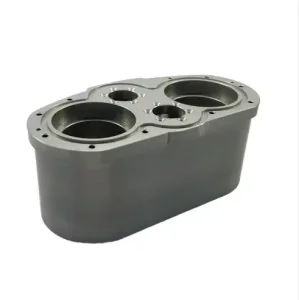
Custom Factory Custom 5-Axis CNC Machined Steel & Aluminum Universal Joint Base and Gearbox Shell for Robotics & Drone Industry Products, Exporters
View Product Specs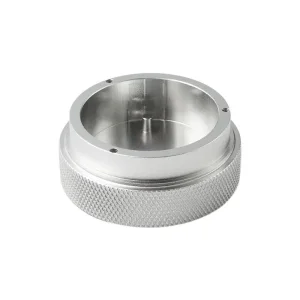
High-Quality Premium Custom CNC Machined Aluminum Control Knobs Manufacturer, Exporters
View Product Specs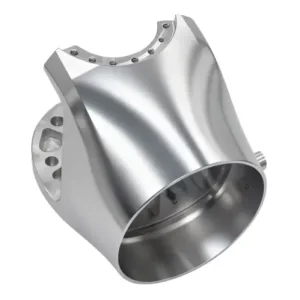
ODM High-Precision Custom 5-Axis CNC Machined Robot Joint & Housing Parts Product, Quotes
View Product Specs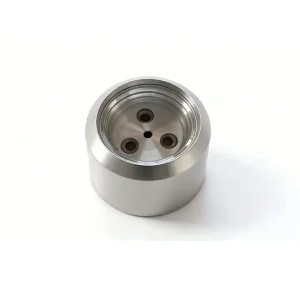
High-Quality Precision CNC Machined High-Voltage Insulator Contact Base Service, Factory
View Product Specs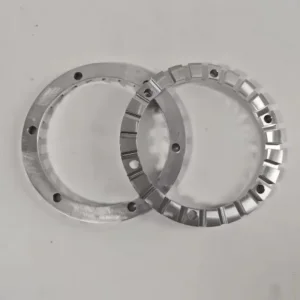
China Custom CNC Machined Anodized Sealing Rings for Semiconductor & Optical Instruments Factories, Factory
View Product Specs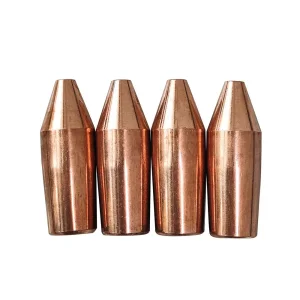
OEM Custom Resistance Spot Welding Electrode Caps Exporters, Factories
View Product Specs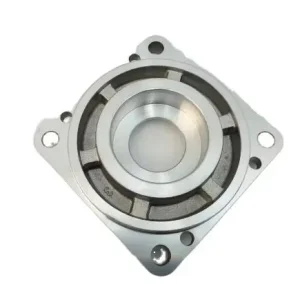
OEM Custom CNC Machining Parts / Precision Bearing Housings / Flanged Bearing Support Components Manufacturers, Service
View Product Specs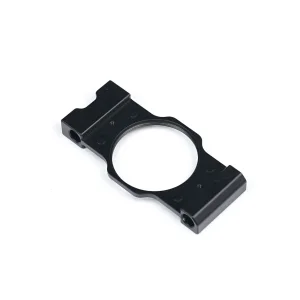
OEM Custom CNC Machined Aluminum Optical Lens Mounting Bracket (Matte Black) Service, Products
View Product SpecsComprehensive Waterjet & Custom Machining FAQ
In-depth technical answers regarding tolerances, cut qualities, material thresholds, and quality assurance protocols for sourcing managers.
What geometric tolerances can an abrasive waterjet cutting factory hold across thick plates?
How does waterjet cutting eliminate the Heat-Affected Zone (HAZ) compared to fiber lasers?
What are the five standardized waterjet edge quality levels (Q1 through Q5)?
Q1 (Separation Cut): Highest speed (3x faster), coarse striations on the lower 50% of the edge, used strictly for rough material separation and scrap trimming.
Q2 (Rough Machining): Evident striations, suitable for parts scheduled for extensive secondary CNC milling where perimeter aesthetics are non-critical.
Q3 (Standard Commercial): The standard balance between feed rate and quality; clean upper 70% edge with slight striations near the jet exit side, typical for general structural components.
Q4 (High Quality Finish): Minimal striations, low Ra surface roughness (typically Ra 3.2 – 6.3 µm), ideal for final part perimeters, weld bevels, and tight slip fits.
Q5 (Precision Finish): Slowest feed rate, virtually zero striations, Ra 1.6 – 3.2 µm, maximum taper control, directly usable for sealing surfaces and visible outer assemblies.