
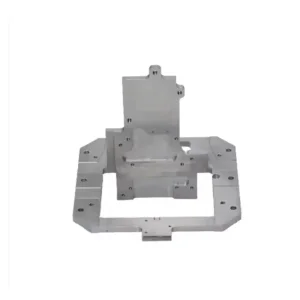
Precision Engineering Solutions
Engineered Aluminum & Multi-Process Component Assemblies
Explore our certified production components spanning 5-axis CNC machining, structural aerospace brackets, titanium medical turnings, and optical housings crafted with exact GD&T parameters.
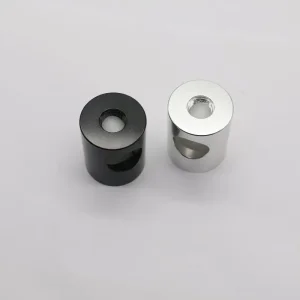
High-Quality Custom Precision CNC Turned Stainless Steel Medical Components
Request Part Quote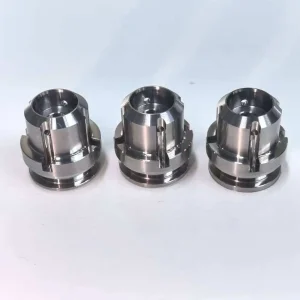
High-Quality Custom Precision Turned Stainless Steel Valve Component
Request Part Quote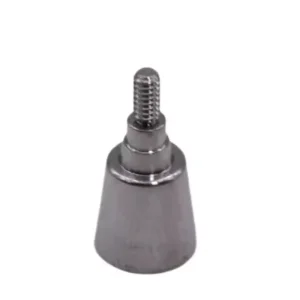
Custom CNC Turned Titanium Abutment Implant Driver & Prosthetic Connector
Request Part Quote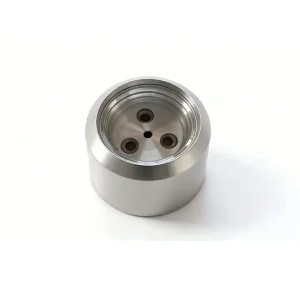
High-Quality Precision CNC Machined High-Voltage Insulator Contact Base
Request Part Quote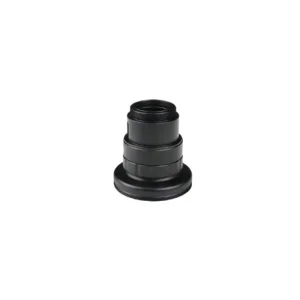
OEM Custom Precision CNC Turned Black Anodized Aluminum Lens Barrel & Optical Housing
Request Part Quote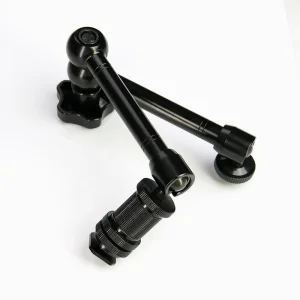
OEM 7-Inch CNC Aluminum Articulating Magic Arm for Camera & Monitor
Request Part Quote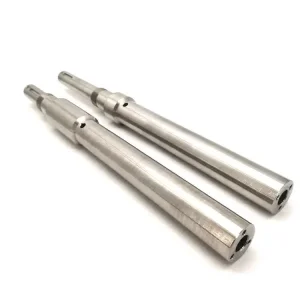
Custom Custom CNC Turned Stainless Steel Stepped Shafts with Keyways
Request Part Quote
Technical Metallurgical Analysis
Engineering Fundamentals: Aluminum Injection Casting vs. Traditional Die Casting
Understanding the microstructural mechanics of high-velocity molten alloy injection, thermal dissipation rates, and the transition from conventional High-Pressure Die Casting (HPDC) to structural squeeze and vacuum casting.
In modern advanced manufacturing, Aluminum Injection Casting (commonly classified under High-Pressure Die Casting (HPDC), semi-solid rheocasting, and squeeze casting) represents the pinnacle of near-net-shape metallurgy. Unlike gravity casting or traditional sand casting, where molten metal fills a mold solely under gravitational acceleration (yielding coarse dendritic microstructures and frequent air entrapment), aluminum injection casting utilizes cold-chamber hydraulic or hybrid-electric shot systems. Molten aluminum alloys are injected into hardened H13 tool steel dies at ram velocities exceeding 40 to 90 meters per second under intensive intensification pressures ranging from 500 to 1,400 bar (50 to 140 MPa).
The consequence of this extreme kinetic and thermal environment is rapid solidification. The thermal conduction of copper-beryllium inserts and oil/water temperature-controlled die channels extracts heat from the melt in milliseconds. This rapid quench suppresses the growth of primary silicon needles, producing a super-fine, eutectic grain structure that imparts outstanding tensile yield strength, superior dimensional fidelity, and thin-walled structural stability. However, improper hydrodynamic gate sizing or uncontrolled venting generates severe gas entrapment, micro-shrinkage, and laminar flow turbulence.
To bridge this physical challenge, top-tier manufacturers like Shenzhen Sunmy Hardware integrate real-time PQ2 machine-tool hydraulic balancing, vacuum-assisted cavity evacuation (reaching sub-50 mbar absolute pressure), and subsequent 5-axis CNC machining. This ensures that sealing faces, bearing bores, and optical registers achieve micro-inch flatness without unsealing subsurface micro-porosities.
| Alloy Classification | Yield Strength (Rp0.2 MPa) | Tensile Strength (Rm MPa) | Thermal Cond. (W/m·K) | Elongation at Break (%) | Primary Industrial Use-Case |
|---|---|---|---|---|---|
| A380 (ANSI) / AlSi8Cu3 | 160 | 320 | 96 | 3.5% | General automotive engine brackets, gearbox housings, consumer chassis |
| A383 (ADC12) / AlSi10Cu2 | 150 | 310 | 110 | 2.5% | Intricate electronic heat sinks, RF shields, thin-walled sensor covers (<1.2mm) |
| AlSi10Mg (EN AC-43000) | 180 (T6: 270) | 300 (T6: 350) | 130–150 | 5.5% – 8.0% | Structural aerospace mounts, robot kinematics, pressure-tight hydraulic valves |
| A356 / AlSi7Mg0.3 (Squeeze) | 190 (T6: 280) | 290 (T6: 360) | 160 | 8.0% – 12.0% | Safety-critical suspension knuckles, high-impact defense assemblies |
| Silafont-36 / CastAl-37 | 120 (T7: 210) | 260 (T7: 310) | 140 | 12.0% – 15.0% | EV mega-castings, crash-box members requiring high ductility and weldability |
Procurement Intelligence
Global OEM Sourcing Demands: Mitigating Landed Risk & Cycle Volatility
How international supply chain executives, vendor quality engineers, and VP-level procurement directors evaluate custom casting partners beyond basic unit part quotations.
Tooling Capital Amortization & Die Longevity
High-pressure injection casting requires substantial upfront capital expenditure in hardened multi-slide tooling. Sourcing teams analyze die steel selection (e.g., Premium Dievar, Böhler W300, or Uddeholm Vidar Superior) and nitriding/PVD coating treatment cycles.
- Guaranteed Tool Life: Tool contracts must define shot guarantees (e.g., 100,000 to 150,000 cycles for aluminum).
- Refurbishment SLA: Routine die preventative maintenance (laser cladding, parting-line rebuilds) baked into part unit costs.
- Rapid Cavity Insert Replacement: Modular sub-inserts for high-erosion gate regions minimize production stoppage.
Total Landed Cost (TLC) Transparency
Leading European and North American buyers avoid "quote illusion" by reviewing detailed Total Cost of Ownership (TCO) breakdowns. Secondary deburring, CNC cycle time, anodizing yield loss, and freight volatility determine bottom-line viability.
- DFM Optimization: Eliminating undercut tooling slides reduces per-part amortization fees by 15–28%.
- Raw Material Escalation Formulas: Clear indexation tied to London Metal Exchange (LME) or Shanghai Metal Exchange (SMM).
- Scrap & Runner Recirculation: In-house closed-loop remelting reduces carbon footprints and unburdened scrap surcharges.
Integrated Secondary Precision Machining
A raw cast part is rarely finished. The primary failure point in offshore manufacturing occurs when casting foundries outsource finish machining to uncontrolled sub-tier job shops, creating finger-pointing on non-conforming GD&T.
- Single-Point Accountability: In-house CNC milling and turning (holding ±0.005 mm) prevents cross-tier vendor disputes.
- Dedicated Cast Fixturing: Hydraulic clamp locating directly from datum targets (as per ASME Y14.5M).
- Leakage Testing: Integrated helium mass spectrometer or dry air decay testing for hermetic sensor and coolant shells.
Industry Applications
Macro Engineering Solutions: Cross-Sector Deployments
Engineered solutions solving extreme thermal bottlenecks, structural payload ratios, and dynamic rotational balances across high-growth international industrial sectors.
E-Mobility & Battery Systems
Vacuum-injected aluminum battery tray cross-members, inverter power electronics housings with integrally cast pin-fin micro-channel liquid coolers, and lightweight structural side-sill crash elements.
Robotics & Harmonic Reducers
Ultra-lightweight cycloidal reducer housings, multi-axis cobot articulation brackets, and 6-axis force/torque sensor chassis requiring high rigidity-to-weight ratios and minimal resonant harmonic amplification.
5G/6G Telecom & RF Shielding
High-conductivity AlSi10Cu2 outdoor massive MIMO radio unit heat-sink covers, waveguide filter cavities, and lightning-surge suppressors with Faraday-cage electromagnetic compatibility (EMC/EMI).
Medical Instrumentation & Avionics
Hermetically enclosed surgical robot base consoles, CT scanner gantry positioning guides, and avionics electronics cold-plates designed to survive severe MIL-STD-810G shock and vibration spectra.
Verification & Governance
Metrological Verification, Regulatory Compliance & Western SLA Direct Support
Defeating international procurement anxiety through fully documented, audited quality gates: AS9102 First Article Inspections, 3D coordinate scanning, non-destructive X-ray spectrometry, and strict IP security.
In-House 3D CMM & Laser Scanning
Dimensional verification is performed inside climate-controlled cleanrooms utilizing multi-sensor Zeiss and Hexagon Coordinate Measuring Machines (CMM) calibrated to ±0.0015 mm volumetric accuracy.
- Continuous Surface Mapping: GD&T true position, parallelism, and flatness verification on complex 3D freeform casting surfaces.
- First Article Inspection (FAI): Detailed ballooned drawing reports per AS9102 Rev B protocols with every initial trial batch.
- SPC Run Charts: Real-time Cp and Cpk capability indexes held above 1.33–1.67 for high-volume serial runs.
NDT Porosity & Metallurgical Validation
Safety-critical casting parts undergo systematic Non-Destructive Testing (NDT) to prevent hidden catastrophic fracture failures under high cyclic mechanical loads.
- Digital Real-Time X-Ray: Detection of shrinkage cavities, blowholes, and inclusions per ASTM E505 reference radiographs.
- Optical Emission Spectrometry (OES): Batch-by-batch melt composition verification to enforce chemical boundary limits.
- Dye Penetrant Inspection (PT): Visual surface fissure checks to ensure defect-free structural fillets and bosses.
Bilingual DFM SLA & Direct Factory Access
Sunmy eliminates the classic "trading broker latency" by connecting international engineering leads directly with factory metallurgical staff.
- Guaranteed 24h DFM Turnaround: Full gate, runner, draft angle (1°–3°), and parting-line simulations in STEP/IGES format.
- Comprehensive NDA Framework: Strict international IP isolation protocols prior to any 3D CAD parameter exchange.
- Turnkey Incoterms: DDP (Delivered Duty Paid), DAP, and FOB fulfillment with ocean and rapid express air options.
Future Manufacturing Horizons
Technological Roadmap: Megacasting, Rheocasting & Circular Metallurgy
The transformation of aluminum injection casting toward sustainable, ultra-large unified structural components and AI-governed cavity process control.
01
Ultra-Large Megacasting
Consolidating 70+ stamped and welded sheet-metal subcomponents into a single, high-integrity rear or front underbody die-cast module. Reduces assembly robotic complexity, weight, and cycle times.
02
Semi-Solid Rheocasting (SSM)
Injecting globular, non-dendritic thixotropic or rheocast slurries at lower melt temperatures. Eliminates turbulent air entrapment, drastically cuts cycle times, and enables reliable T6 heat treatment without surface blistering.
03
IoT AI Cavity Monitoring
Embedding wireless piezoelectric pressure sensors and fiber-optic thermocouple probes directly behind the die cavity wall. Neural network models automatically adjust shot curves millisecond-by-millisecond to counter thermal drift.
04
Decarbonized Circular Alloys
Formulating structural alloys with >85% post-consumer recycled aluminum, paired with renewable solar/hydro smelting. Lowers product carbon footprint (PCF) to under 4.0 kg CO2e per kg of finished structural cast part.
05
Conformal 3D Printed Die Inserts
Laser Powder Bed Fusion (LPBF) additive manufacturing of Maraging steel die cores with internal conformal cooling passages. Decreases hot spots by 40% and boosts injection cycle throughput by up to 30%.
Serial Production Showcase
High-Precision Serial Casting & Multi-Axis Machining Portfolio
Review additional custom manufacturing programs delivered to aerospace, robotics, optoelectronics, and industrial instrumentation leaders globally.
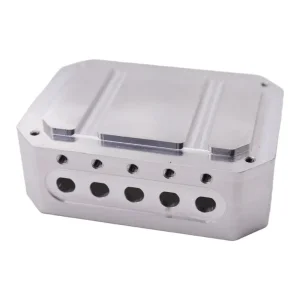
China Custom CNC Machined Aluminum Enclosure for RF & Industrial Sensor Modules
Request Part Quote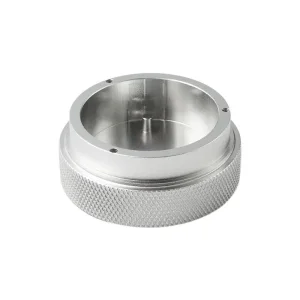
High-Quality Premium Custom CNC Machined Aluminum Control Knobs
Request Part Quote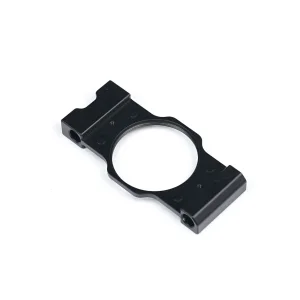
OEM Custom CNC Machined Aluminum Optical Lens Mounting Bracket (Matte Black)
Request Part Quote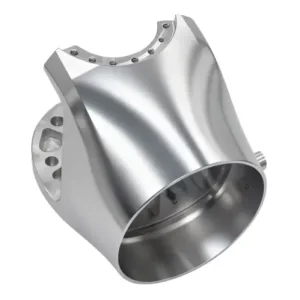
ODM High-Precision Custom 5-Axis CNC Machined Robot Joint & Housing Parts
Request Part Quote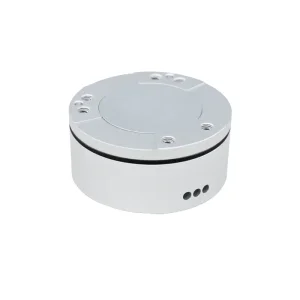
China Custom 6-Axis Force/Torque Sensor Housings & Elastic Elements
Request Part Quote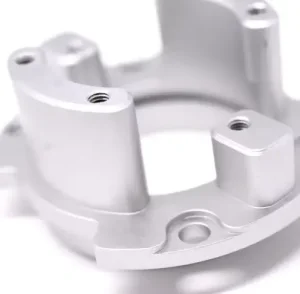
High-Quality Precision 5-Axis CNC Machined Aluminum Housing Mounting Bracket
Request Part Quote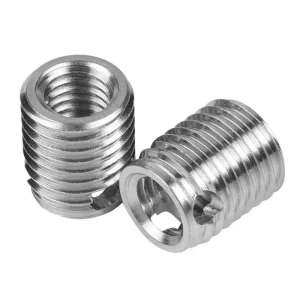
Custom Precision Brass & Stainless Steel Self-Tapping Threaded Inserts
Request Part Quote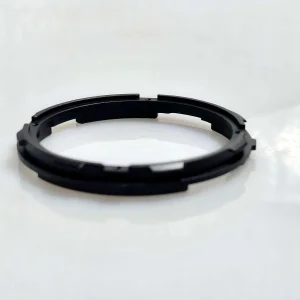
Custom Precision CNC Turn-Milled Bayonet Mount & Locking Ring
Request Part Quote
Procurement & Technical FAQ
Frequently Answered Questions: Aluminum Casting & Precision Quotes
Clear, engineering-level answers addressing tolerances, tooling lead times, porosity management, surface treatments, and quote generation protocols.
What are the definitive dimensional tolerances for as-cast vs. secondary CNC machined surfaces?
As standard in aluminum high-pressure die casting, as-cast linear tolerances adhere to ISO 8062-3 Grade DCTG 6 to DCTG 8 (typically ±0.15 mm to ±0.35 mm depending on parting line placement and nominal wall span). However, for mission-critical interfaces—such as O-ring sealing grooves, high-speed bearing bores, and precision dowel alignments—our in-house 5-axis CNC machining centers post-process raw castings to tolerances as tight as ±0.005 mm (5 microns) with verified true position within 0.012 mm.
How does Sunmy control and eliminate gas and shrinkage porosity in structural castings?
We address porosity through a three-stage metallurgical regime: (1) Moldflow & MAGMAsoft simulation: Optimizing gating and runner profiles to ensure non-turbulent planar filling; (2) Active Vacuum Assist: Drawing cavity atmosphere below 50 mbar absolute pressure prior to shot injection to eliminate trapped gases; and (3) Intensification Squeeze Hydraulics: Applying multi-stage dynamic post-pressures up to 120 MPa during the mushy-phase solidification, feeding shrinkage voids at heavy boss junctions.
What typical tooling lead times and mold life can buyers expect for custom aluminum injection dies?
Standard prototype tooling (utilizing pre-hardened steels like P20) takes 18 to 25 business days and produces 1,000 to 5,000 parts. High-volume serial production tooling (forged Premium H13 or Uddeholm Dievar, heat-treated to 46–50 HRC and multi-layer PVD coated) requires 30 to 45 business days including T0 mold trials. Serial tooling comes with a guaranteed lifecycle warranty ranging from 80,000 to 150,000 shots, with lifetime die maintenance included under long-term supply agreements.
Which surface finishing options are available for cast aluminum components?
Because high-pressure cast aluminum alloys have high silicon content (e.g., 9–11% in A380/ADC12), conventional decorative color anodizing can produce a greyish or mottled appearance. We offer specialized finishes tailored to cast metallurgy: (1) Shot Blasting & Electroless Nickel Plating: Superior corrosion and chemical resistance; (2) Electrostatic Powder Coating & E-Coating (KTL): Salt spray resistance exceeding 500–1,000 hours per ASTM B117; (3) Micro-Arc Oxidation (MAO / PEO): Ultra-hard ceramic layers for extreme dielectric strength and abrasion protection; and (4) Technical Type II/III Hard Anodizing: Applicable on specialized low-silicon alloys like AlSi7Mg.
What files and data are required to receive an accurate, comprehensive injection casting quote?
To provide an itemized quote within 24 hours, our engineering team requires: (1) 3D CAD data in STEP (.stp), IGES (.igs), or Parasolid (.x_t) format; (2) 2D PDF drawings indicating datum structures, critical GD&T, surface roughness (Ra), and tap/thread specs; (3) Specified aluminum alloy grade (or operating mechanical/thermal environment); (4) Annual forecasted volume and initial batch size; and (5) Required inspection deliverables (e.g., FAI, CMM dimensional layout, X-ray NDT, RoHS/REACH compliance certificates).
How does Sunmy protect intellectual property and handle international shipping logistics?
We sign comprehensive bilateral Non-Disclosure Agreements (NDAs) governed by international business law before any proprietary CAD data is transferred. You communicate directly with our Shenzhen engineering hub—no unauthorized third-party broker exposure. For international distribution, our in-house logistics team handles global air freight (DHL, FedEx, UPS door-to-door in 3–5 business days) or consolidated ocean container shipments under FOB, CIF, or DDP terms with all customs clearance, ISF filings, and tariff classifications managed end-to-end.
Initiate Engineering Dialogue
Request an Engineering Review & Comprehensive Part Quotation
Connect directly with Shenzhen Sunmy Hardware's senior metallurgical and CNC tooling engineers. Receive preliminary DFM feedback and a transparent cost model within 24 hours.
Direct Engineering Contact
Bypass commercial middlemen. Discuss draft allowances, parting-line placements, and alloy trade-offs directly with practicing mechanical engineers.
Shenzhen Sunmy Hardware Co., Ltd.
Rm. 1E047, Bldg. 1, China South City (Huanancheng), Pinghu St., Longgang Dist., Shenzhen, Guangdong, China 518111
Direct Phone: +86-13424188702
Engineering Email: [email protected]
WhatsApp (Gavin): +86 185 7673 0322
24-Hour DFM Protocol
Every drawing package submitted undergoes automated and manual engineering screening:
- Wall thickness uniformity & sink-mark vulnerability analysis
- Draft angle clearance verification (minimum 1.0° internal, 0.5° external)
- Ejector pin placement mapping relative to primary datums
- Runner and overflow pocket sizing recommendations
Compliance & Quality Package
Your initial production samples are shipped with an audit-ready traceability pack:
- AS9102 First Article Inspection (FAI) dimensional report
- EN 10204 3.1 Certified Material Test Report (CMTR) with melt chemistry
- CMM 3D point-cloud inspection reports
- RoHS, REACH & Conflict Minerals compliance documentation