Featured Precision Engineering Components: Series 01
Integrated high-tolerance turned components, custom-milled sensor enclosures, and cast-adjacent assemblies engineered for rigorous endurance, zero defect tolerance, and direct supply-chain deployment.
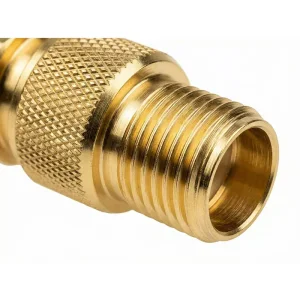
High-Quality Precision Knurled Brass Threaded Connector Manufacturers, Factories
View Specifications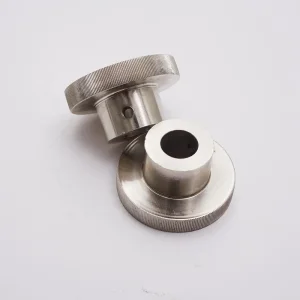
High-Quality CUSTOM CNC KNURLED FEED ROLLERS FOR PACKAGING MACHINERY Products, Factories
View Specifications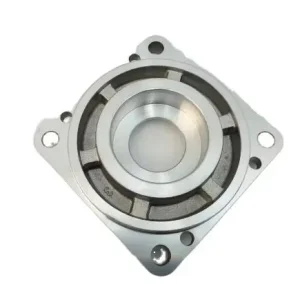
OEM Custom CNC Machining Parts / Precision Bearing Housings / Flanged Bearing Support Components Manufacturers, Service
View Specifications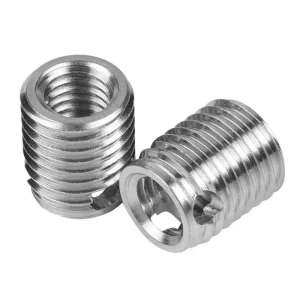
Custom Custom Self-Tapping Threaded Inserts Product, Exporters
View Specifications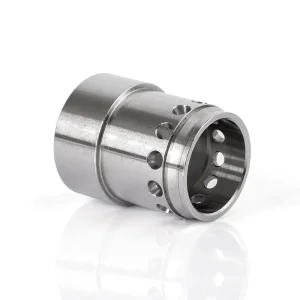
China Custom CNC Stainless Steel Drilled Filter Sleeve & Flow Control Valve Component Supplier, Suppliers
View Specifications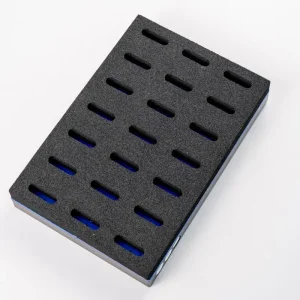
China Custom CNC Machined Foam Vacuum Gripper Plates for Robotic EOAT Manufacturer, Service
View Specifications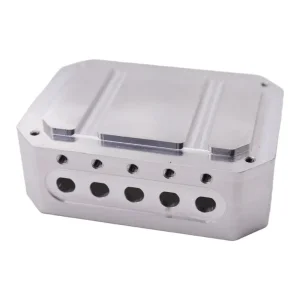
China Custom CNC Machined Aluminum Enclosure for RF & Industrial Sensor Modules Service, Products
View Specifications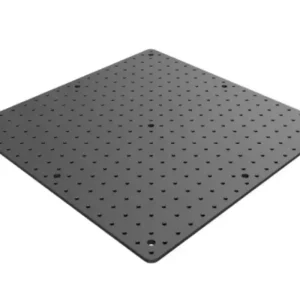
China OEM Custom Precision CNC Machining Non-Standard Solid Aluminum Optical Breadboard Product, Factory
View SpecificationsGlobal Landscape: High-Pressure Die Casting (HPDC) Evolution
High-integrity die casting has transitioned from simple near-net shape production into advanced structural metallurgy, driving energy transition, structural integration, and extreme lightweighting worldwide.
The Strategic Pivot toward Monolithic Structural Castings
In modern global manufacturing ecosystems spanning North America, the European Union, and East Asia, procurement executives and chief mechanical engineers are progressively migrating away from high-labor welded stampings and costly multi-component CNC bill of materials. The paradigm shift is centered on High-Pressure Die Casting (HPDC) and Vacuum-Assisted Die Casting.
By injecting molten non-ferrous alloys—predominantly aluminum (A380, ADC12, AlSi10Mg), zinc (Zamak 3, Zamak 5), and magnesium (AZ91D)—under pressures exceeding 1,000 bar into hardened tool-steel dies, manufacturers achieve intricate thin-walled structural geometries, superior thermal dissipation fins, integrated mounting bosses, and hermetic sealing channels with unprecedented cycle-time economy.
Crucially, this structural integration significantly reduces assembly complexity, eliminates fasteners and weld-seam fatigue points, and provides structural rigidity essential for automotive battery pack enclosures, high-frequency telecommunication heat spreaders, and dynamic robotic kinematic linkages.
Key Macro Sourcing Drivers for Tier-1 OEMs
- Lightweighting Mandates: Tightening global fuel-efficiency standards and EV range preservation require mass reduction through high strength-to-weight ratio aluminum and magnesium castings.
- Electromagnetic Compatibility (EMC/EMI): Cast metal housings inherently block RF noise and electromagnetic interference in ADAS radars, micro-inverters, and 5G/6G wireless transceivers.
- Heat Dissipation Dynamics: Die-cast aluminum alloys deliver thermal conductivities upwards of 130–170 W/m·K, critical for cooling power electronics and artificial intelligence computing modules.
- Total Cost of Ownership (TCO): Die casting amortizes tooling costs over tens of thousands of cycles, driving per-part costs down to a fraction of pure CNC billet subtraction.
Shenzhen & Greater Bay Area: Supply Chain Agility & Efficiency
Leveraging deep industrial concentration in Shenzhen, Sunmy Hardware provides seamless engineering synthesis across toolmaking, robotic high-pressure casting, secondary CNC machining, and automated surface treatment.
Hyper-Localized Die Tooling Cluster
The Greater Bay Area concentrates the world's highest density of precision EDM, wire-cutting, and CNC tool-steel machining centers. Hardened tooling (H13, DIEVAR, DAC55) that takes 12–16 weeks in Western markets is prototyped, sampled, and optimized via Moldflow CAD simulation in just 25 to 35 days.
Turnkey In-House Post-CNC Precision
Raw castings inherently require tight-tolerance secondary operations. Our owned CNC machining lines execute precision bore drilling, tapping, bearing seat milling, and O-ring groove surfacing to ±0.005 mm, eliminating third-party logistical delays and quality buck-passing.
End-to-End Surface Engineering
Complete surface post-treatment protocols are consolidated within our regional industrial cluster: automated shot-blasting, chemical conversion (Chromate, RoHS Passivation), electrolytic micro-arc oxidation, electrophoresis (E-coat), and durable exterior architectural powder coating.
Supply Continuity & Risk Mitigation
Direct upstream raw ingot supply partnerships protect buyers from raw material volatility. Our localized supply chains ensure uninterrupted production cycles even during macro supply crises, backed by strict buffer stocking and real-time inventory visibility.
Mission-Critical Application Scenarios
How our high-pressure precision castings perform in harsh operating environments across automotive electrification, intelligent robotics, telecommunications, and industrial infrastructure.
Electric Vehicles & Powertrain
High-vacuum die-cast motor stator housings, inverter baseplates, onboard charger (OBC) enclosures, and lightweight structural steering knuckles. Engineered with leak-proof cooling channels capable of sustaining 5 bar pneumatic pressure without helium leakage.
Industrial Robotics & EOAT
High-payload articulated robot arm linkages, cycloidal reducer gearboxes, end-of-arm tooling (EOAT) vacuum gripper plates, and joint housings. Cast in high-elongation alloys that absorb cyclic vibrations and resist high torsional dynamic loads.
5G/6G RF & Sensor Cavities
Hermetic radio frequency cavity filters, remote radio unit (RRU) heat sinks, and industrial LiDAR / radar sensor bodies. Integrated micro-fin geometry with 0.8 mm fin thickness for rapid passive thermal rejection and total electromagnetic isolation.
Renewable Energy & Smart Grid
Solar microinverter chassis, high-voltage junction boxes, and grid-monitoring enclosures engineered to withstand NEMA 4X / IP67 outdoor exposure, salt-spray corrosion, and thermal cycling from -40°C to +125°C without dielectric degradation.
Technology Roadmap: Next-Gen Casting Innovations
How our engineering methodology incorporates advanced rheocasting, digital twin simulations, giga-casting architectures, and circular closed-loop sustainability.
AI Moldflow & Digital Twins
Simulating fluid dynamics, turbulent gate velocity, thermal gradient solidification, and air entrapment in virtual space before cutting tool steel. Cuts tooling rework by 85% and eliminates porosity zones.
High-Vacuum HPDC (<30 mbar)
Active vacuum extraction in mold cavities evacuated to under 30 millibars prior to shot injection. Reduces trapped gas volume to permit standard T5/T6 precipitation heat treatment and defect-free robotic laser welding.
Semi-Solid Rheocasting
Injecting alloys at a semi-solid globular slurry stage between liquidus and solidus. Eliminates dendritic porosity, delivers uniform grain refinement, and unlocks mechanical properties comparable to forged components.
Mega-Casting & Green Alloys
Scaling clamping pressures up to 6,000T for single-piece front and rear subframe castings. Utilizing 100% recycled low-carbon certified ingots with full cradle-to-gate LCA environmental declarations.
| Manufacturing Process | Wall Thickness Min (mm) | Tolerance Standard (As-Cast) | Surface Roughness (Ra) | Tooling Amortization Fit | Production Volume Efficiency |
|---|---|---|---|---|---|
| High-Pressure Die Casting (HPDC) | 0.8 – 1.2 mm | ±0.05 to ±0.15 mm | Ra 0.8 – 1.6 μm | Medium to High Initial Tooling | Optimal (> 5,000 pcs/year) |
| Vacuum-Assisted HPDC | 0.6 – 1.0 mm | ±0.03 to ±0.10 mm | Ra 0.8 – 1.2 μm | High Initial (Specialist Seals) | Automotive Tier-1 & EV Parts |
| Gravity / Permanent Mold Casting | 3.0 – 5.0 mm | ±0.25 to ±0.50 mm | Ra 3.2 – 6.3 μm | Low Initial Tooling Cost | Low-Mid Volume Heavy Machinery |
| Direct 5-Axis CNC Billet Machining | 0.4 – 0.8 mm | ±0.005 mm | Ra 0.4 – 0.8 μm | Zero Tooling Cost | Low-Volume Prototyping (< 500 pcs) |
Localized Engineering Support & Regulatory Compliance
Auditable quality management systems adhering to rigorous international regulatory standards, backed by dedicated bilingual project engineers stationed directly in our manufacturing hub.
IATF 16949 & ISO 9001:2015
Fully institutionalized quality management workflows. We maintain complete traceability for every heat batch: optical emission spectroscopy for alloy composition, APQP documentation, FMEA defect analysis, and PPAP Level 3 readiness.
CMM & Non-Destructive Testing (NDT)
Our in-house metrology lab deploys automated Zeiss Coordinate Measuring Machines (CMM) for 3D GD&T verification, high-resolution industrial real-time X-ray radioscopy for subsurface micro-porosity detection, and pneumatic leak test benches.
RoHS, REACH & Conflict Mineral Shield
All cast alloys and post-treatments are 100% compliant with EU RoHS (Directive 2011/65/EU) and REACH (EC 1907/2006). Every export shipment includes third-party verified SGS/TÜV test reports and traceable metallurgical mill certifications.
Direct Engineering & Global Logistics
Cut out non-technical sales brokers. Overseas design teams interface directly with senior bilingual casting tooling engineers via 24-hour DFM turnaround, supported by door-to-door DDP air/sea freight logistics to European and American hubs.
Frequently Asked Questions on Die Casting Procurement
Authoritative technical answers addressing porosity prevention, tool life, alloy trade-offs, secondary CNC tolerances, and production ramp schedules.
What are the definitive differences between A380 and ADC12 aluminum casting alloys?
How does Sunmy Hardware eliminate porosity defects in pressure die castings?
What post-machining tolerances can be held on critical die-cast features?
What is the expected tool life for aluminum, zinc, and magnesium dies?
Can high-pressure die cast parts be welded or heat-treated to T6 temper?
How does Sunmy Hardware safeguard client intellectual property (IP) and proprietary CAD data?
Ready to Engineer Your High-Performance Die Cast Components?
Submit your 3D CAD files (.STEP / .IGES / .X_T) and technical 2D drawings. Our engineering division delivers exhaustive DFM feedback, gating analysis, and quotation breakdowns within 24 business hours.
Request DFM Review & QuotationFeatured Precision Engineering Components: Series 02
Precision-machined structural housings, complex shafts, medical connectors, and robotic components designed to complement high-volume casting integration across critical global programs.
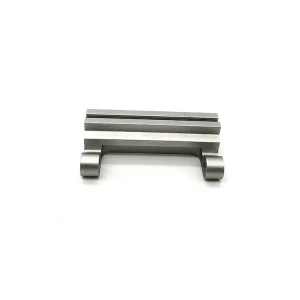
High-Quality Custom CNC Machined Aluminum Hinge Assembly | Grey Anodized Finish Supplier, Quotes
View Specifications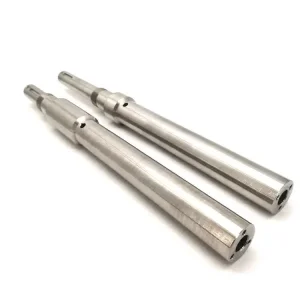
Custom Custom CNC Turned Stainless Steel Stepped Shafts with Keyways Product, Factories
View Specifications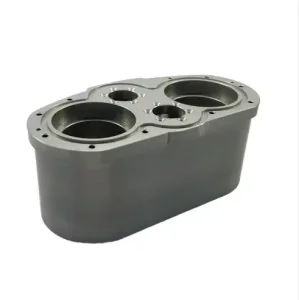
Custom Factory Custom 5-Axis CNC Machined Steel & Aluminum Universal Joint Base and Gearbox Shell for Robotics & Drone Industry Products, Exporters
View Specifications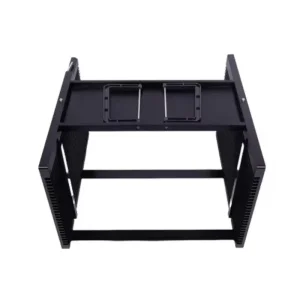
OEM Premium 8-Inch CNC Machined Aluminum Semiconductor Wafer Carrier Factories, Quotes
View Specifications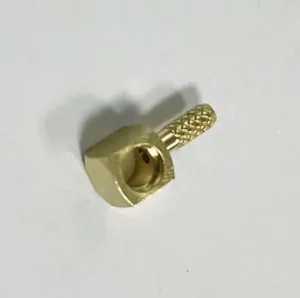
High-Quality Custom CNC Machining Brass Insert Connector with Knurled Pin OEM Suppliers, Products
View Specifications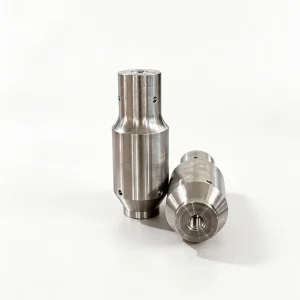
ODM Custom Titanium Ultrasonic Booster Manufacturers, Factory
View Specifications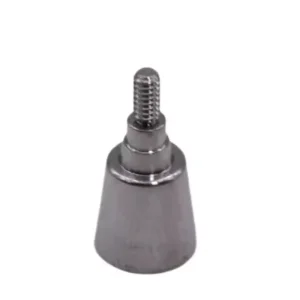
Custom Custom CNC Turned Titanium Abutment Implant Driver & Prosthetic Connector Manufacturers, Product
View Specifications