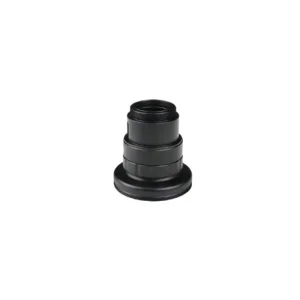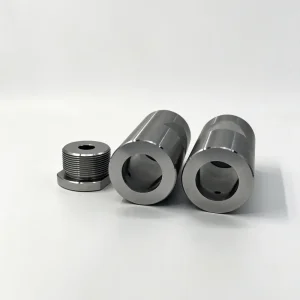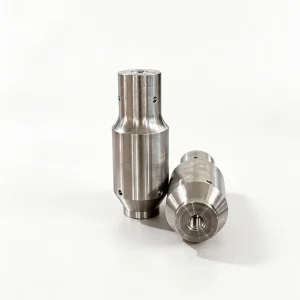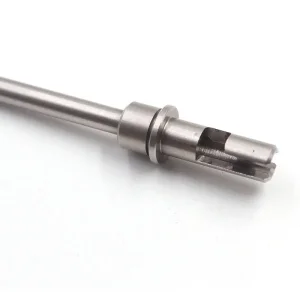
Precision Engineered Medical Machined Components
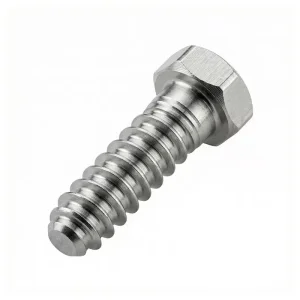
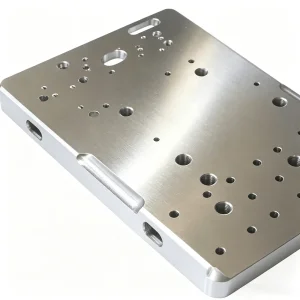
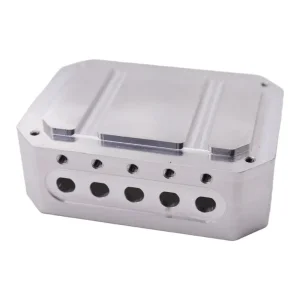
Direct OEM/ODM production of titanium implants, robotic articulating joints, diagnostic fluid sleeves, and surgical housings verified via full Coordinate Measuring Machine (CMM) metrology.
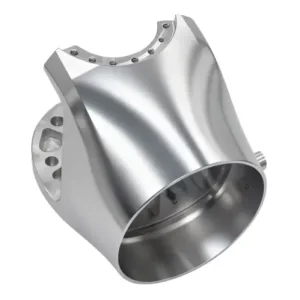
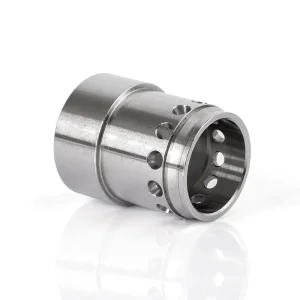
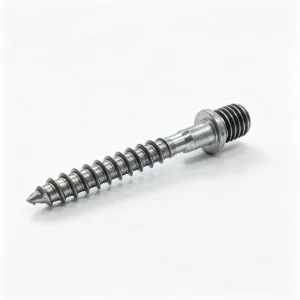
The Global Medical Machining Landscape: High Reliability in Zero-Failure Regimes
Modern medical machining has evolved from standard contract sub-tier machining into a multidisciplinary scientific endeavor characterized by strict risk management, biocompatible metallurgy, and fully automated Swiss turning micro-environments.
Stringent Regulatory Governance
Medical manufacturing mandates compliance with ISO 13485, FDA 21 CFR Part 820, and the European Medical Device Regulation (EU MDR 2017/745). Machining facilities must demonstrate complete lot traceability, device master record (DMR) control, validated pass-fail inspection procedures, and comprehensive cleanroom post-machining passivation regimes.
Multi-Axis Micro-Machining Kinematics
The transition toward minimally invasive surgery (MIS) requires ultra-miniature geometries where components measure under 2.0 mm in total outer diameter. Swiss-type CNC screw turning machines paired with simultaneous 5-axis high-speed spindle centers eliminate multiple fixtures, preserving coaxiality and runout under 0.003 mm across intricate features.
Direct-to-Factory IP Protection
Medical OEMs face significant design exposure when routing through third-party brokers. Direct engineering dialogue ensures that CAD geometries, proprietary osteointegration textures, and patent-sensitive surgical linkages stay shielded under strict legal Non-Disclosure Agreements, audited file-storage controls, and localized CAM computation.
Metallurgy and Exotic Polymers in Medical CNC Production
Every clinical device relies on precise raw material selection. Cutting tool geometry, coolant chemistry, and spindle chip-load management must be meticulously adjusted for difficult-to-machine alloys.
| Material Family | Primary Standard | Key Mechanical Profile | Target Medical Application | Machining Challenges & Solutions |
|---|---|---|---|---|
| Titanium Grade 5 (Ti-6Al-4V ELI) | ASTM F136 / ISO 5832-3 | Extra low interstitials, tensile strength ≥ 860 MPa, superior fatigue limit | Orthopedic bone screws, spinal interbody cages, dental root implants | Low thermal conductivity causing tool wear; resolved via high-pressure through-spindle coolant and carbide micro-grain cutters. |
| Cobalt-Chromium-Molybdenum (CoCrMo) | ASTM F75 / ASTM F1537 | Exceptional wear resistance, high modulus, high hardness (>35 HRC) | Total knee/hip articulating femoral heads, acetabular cups, dental copings | Severe work-hardening behavior; handled by optimized negative rake geometries and continuous chip peeling paths. |
| Surgical Stainless (316LVM / 1.4441) | ASTM F138 / ISO 5832-1 | Vacuum arc remelted (VAR), high pitting resistance (PREN ≥ 26) | Trocar cannulas, surgical scalpel holders, endoscopic articulation links | Burr prevention on micro-threads; handled using dedicated Swiss-lathe deburring tools and ultrasonic citric passivation. |
| Medical Grade PEEK (Polyetheretherketone) | ASTM F2026 | Radiolucent, modulus close to cortical bone (~3.6 GPa), repeated autoclavability | Spinal fusion spacers, suture anchors, neurosurgical cranial plates | Low thermal deflection threshold; managed through stress-relieved annealing cycles and polished diamond-like carbon (DLC) tooling. |
| Nitinol (Nickel-Titanium SMA) | ASTM F2063 | Superelasticity, shape memory effect, extreme strain recovery | Vascular stent delivery mandrels, minimally invasive catheter steerable tips | Severe spring-back and heat build-up; mitigated through micro-wire EDM combined with cryogenic high-speed turning. |
Engineering Solutions Across Specialized Medical Applications
From operating rooms to diagnostic laboratories, our CNC manufacturing cell delivers tailored, repeatable sub-assemblies built to withstand mechanical fatigue and physiological exposure.
Orthopedic & Spinal Implants
Production of cannulated bone screws, dual-lead pedicle screws, and cervical plates. Features include variable pitch helical thread milling, multi-axis torx socket broaching, and automated vibratory tumbling for smooth radii without breaking micro-crests.
Robotic Surgical Manipulators
Lightweight 5-axis titanium and aeronautical aluminum wrist joints, planetary gear carriers, and hollow-shaft cycloidal housings. Backlash is minimized to under 0.005 mm, providing jitter-free motion transmission in surgical robot arms.
Endoscopic & Ophthalmic Tools
Micro-turned stainless steel filter sleeves, multi-lumen trocar shafts, and micro-grippers. Machined on Swiss turning platforms with 12-axis kinematics to drill clean fluid ports down to Φ0.15 mm without burr obstruction.
IVD Fluidics & Dialysis Systems
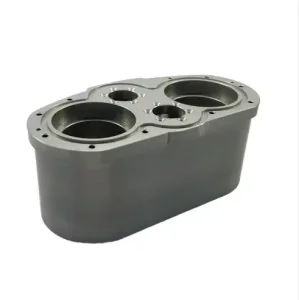
Valves, sensor manifold housings, and stepped fluid control shafts machined in surgical 316L and virgin PTFE. High-precision concentric bores guarantee leak-free seal seating across continuous cyclic fluid pressures up to 150 PSI.
Medical Machining Technical Roadmap: 2025 to 2030
Continuous evolution across predictive computing, closed-loop machine measurement, and clean manufacturing defines our multi-year technology strategy.
In-Situ Closed Loop Probing
Integrating optical machine probes and laser tool setters directly into the CNC work volume. Feature dimensions are verified before unchucking to eliminate relocation error.
Cryogenic CO2 Micro-Cooling
Adopting super-chilled carbon dioxide cooling channels instead of synthetic oils, eliminating hydrocarbon residue inside implant micro-pores and boosting tool edge life by 40%.
Additive-Subtractive Hybrids
Selective Laser Melting (SLM) for trabecular bone growth matrices, followed immediately by 5-axis CNC finishing on critical bearing journals and connection tapers.
Autonomous Lights-Out Production
Cobot-loaded Swiss cells running continuously under AI tool wear compensation, monitored by automated CMM optical scanning stations for statistical process control (SPC).
Macro-Industry Solutions: Mitigating Risk in Critical Supply Chains
Medical OEMs face long validation cycles and stringent liability requirements. Our complete operational workflow guarantees stability from prototype through high-volume production.
24-Hour Medical DFM Feedback
Our experienced manufacturing engineering team analyzes 3D CAD/STEP geometries within 24 hours. We review cutting tool reach, minimum wall thickness, corner relief radii, and GD&T datum structures to eliminate production risks before steel is cut.
Validated Passivation & Cleanliness
Machined parts undergo ultrasonic multi-stage detergent washing, citric or nitric acid passivation in strict accordance with ASTM A967/F86 standards, and packaging designed to prevent surface contamination prior to cleanroom sterilization.
Comprehensive Quality Documentation
Shipments include complete inspection packages: certified mill raw-material heat numbers, First Article Inspection (FAI) reports, CMM point-cloud dimensional inspection logs, and certificate of conformity (CoC) verification forms.
Frequently Asked Questions on Medical Machining & Factory Audits
Detailed technical answers addressing tolerance limits, regulatory compliance, quality verification, and intellectual property protection.
What tolerances can Sunmy Hardware hold on critical medical CNC features?
For precision medical components, we achieve dimensional tolerances down to ±0.005 mm (±5 microns) on critical Swiss-turned diameters and 5-axis milled mating surfaces. Positional true position can be maintained within 0.008 mm, and surface finishes down to Ra 0.2 μm are achieved through micro-abrasive polishing and superfinishing.
How does your factory ensure raw material biocompatibility and lot traceability?
All titanium (Ti-6Al-4V ELI), surgical stainless steels (316LVM, 17-4PH), and medical plastics (PEEK, POM-C) are sourced exclusively from certified raw material suppliers with genuine mill test reports. Each lot is assigned an internal tracking batch code to ensure complete traceability from raw billet to finished component.
Which manufacturing stages are performed in-house versus outsourced?
All primary CNC milling, Swiss-type lathe turning, micro-drilling, deburring, and final coordinate measuring machine (CMM) dimensional checks are completed within our Shenzhen facilities. Specialized external processes, such as vacuum heat treating and Class III specialized anodizing, are performed by audited long-term partners with 100% in-house receiving inspection.
How are customer CAD models and intellectual property safeguarded?
We execute strict bilateral Non-Disclosure Agreements (NDA) before accepting 2D drawings or 3D files (.STEP, .IGES, .X_T). Project data is maintained on segmented local servers with restricted staff access. As a direct manufacturing partner, we never pass customer designs to outside brokerages.
What quality inspection documentation accompanies each shipment?
Every medical shipment includes full inspection documentation: original material mill certificates, First Article Inspection (FAI) reports, multi-point CMM inspection records, surface roughness verification logs, and Certificates of Conformance (CoC) matching purchase order requirements.
Can you assist with rapid prototyping and scale up to mass production?
Yes. Our flexible CNC cells allow rapid prototyping runs from 1 to 50 pieces within 5 to 7 business days, providing full DFM optimization feedback. When clinical trials are finalized, the validated CAM paths transition seamlessly into high-capacity automated production cells.
Clinical-Grade Hardware, Enclosures & Turned Assemblies
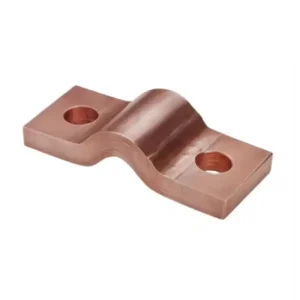
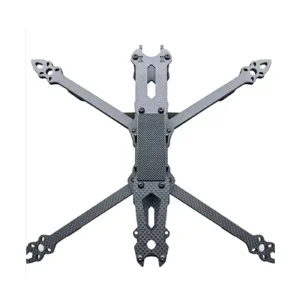
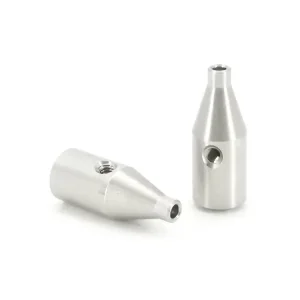
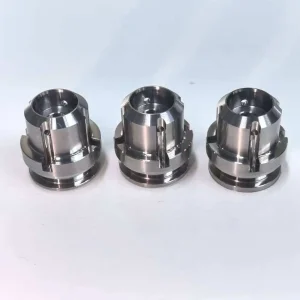
High-reliability components manufactured for optical diagnostics, surgical robotics, cleanroom power supplies, and high-frequency fluid systems.