
Featured Engineered Components & Assemblies
Explore our custom multi-axis CNC and high-performance injection tooling integration, meeting extreme GD&T specifications across demanding mission-critical sectors.
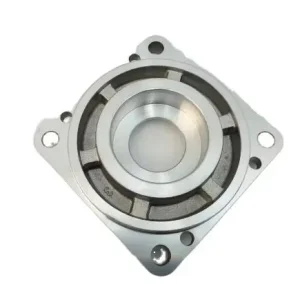
OEM Custom CNC Machining Parts / Precision Bearing Housings / Flanged Bearing Support Components Manufacturers, Service
Explore Component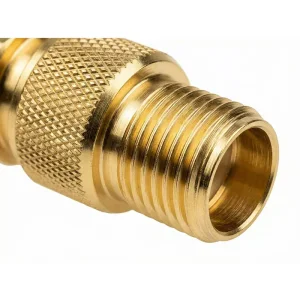
High-Quality Precision Knurled Brass Threaded Connector Manufacturers, Factories
Explore Component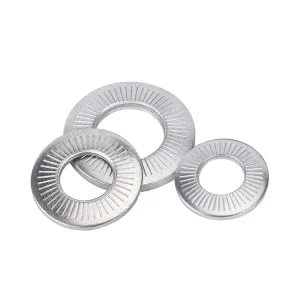
High-Quality Custom Wedge-Lock Washer Pairs Product, Quotes
Explore Component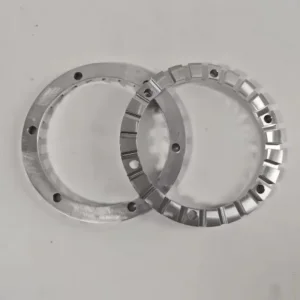
China Custom CNC Machined Anodized Sealing Rings for Semiconductor & Optical Instruments Factories, Factory
Explore Component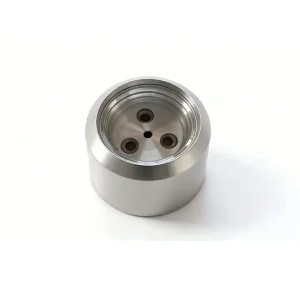
High-Quality Precision CNC Machined High-Voltage Insulator Contact Base Service, Factory
Explore Component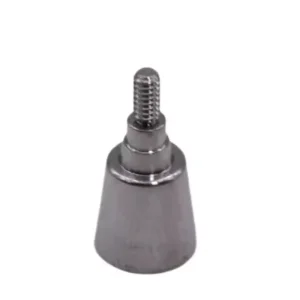
Custom Custom CNC Turned Titanium Abutment Implant Driver & Prosthetic Connector Manufacturers, Product
Explore Component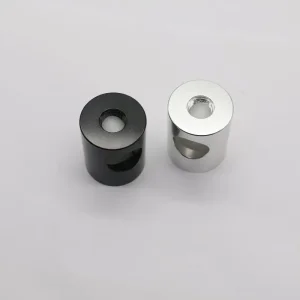
High-Quality Custom Precision CNC Turned Stainless Steel Medical Components Products, Exporter
Explore Component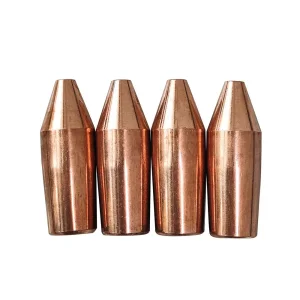
OEM Custom Resistance Spot Welding Electrode Caps Exporters, Factories
Explore ComponentEngineering Polyamide: Precision Tooling, Molecular Crystallinity & Hygrothermal Mechanics
Demystifying the structural behavior of unfilled, reinforced, and specialty aliphatic/aromatic nylons during high-pressure thermal processing.
In modern mechanical and electromechanical engineering, nylon molding (polyamide processing) represents the gold standard for bridging the performance gap between ductile polyolefins and structural die-cast non-ferrous alloys. Due to the recurrent presence of polar amide groups (-CO-NH-) along the aliphatic polymer backbone, polyamides establish robust interchain hydrogen bonding. This distinct semicrystalline morphology gives engineered nylon molded products exceptional tensile modulus, impact energy absorption, wear friction coefficients, and wide thermal endurance limits.
However, injection molding technical nylons (such as PA6, PA66, PA11, PA12, and polyphthalamide PPA) introduces stringent thermodynamic and rheological hurdles. Primary among these are differential anisotropic shrinkage, moisture-dependent dimensional drift, and non-Newtonian shear thinning inside sub-millimeter gate channels. Developing zero-defect nylon molded components requires a systematic engineering approach uniting scientific polymer drying, balanced multi-cavity runner rheology, conformal thermal extraction, and post-molding moisture conditioning.
Polyamide Resin Matrix: Comparative Structural & Thermal Specifications
A side-by-side engineering evaluation for cross-functional hardware procurement, design engineers, and materials scientists.
| Polymer Variant | Tensile Modulus (Dry/Cond.) | HDT @ 1.80 MPa | Equilibrium Moisture Absorption | Mold Shrinkage Rate | Optimal Industrial Application |
|---|---|---|---|---|---|
| PA6 (Polyamide 6) | 2,800 / 1,100 MPa | 65 °C | 2.8% (at 23°C, 50% RH) | 1.2% - 1.8% (Unfilled) | Appliance bezels, structural gears, impact-absorbing power tool chassis. |
| PA66 (Standard) | 3,200 / 1,400 MPa | 85 °C | 2.5% (at 23°C, 50% RH) | 1.3% - 2.0% (Unfilled) | Automotive engine covers, bearing cages, snap-fit electronic housings. |
| PA66 + 30% GF | 8,800 / 6,000 MPa | 250 °C | 1.7% (at 23°C, 50% RH) | 0.3% - 0.7% (Anisotropic) | Under-the-hood coolant reservoirs, structural pump impellers, intake manifolds. |
| PA12 (Low Absorption) | 1,500 / 1,400 MPa | 50 °C | 0.7% (at 23°C, 50% RH) | 0.8% - 1.5% | Subsea sensor housings, precision fluid couplings, flexible hydraulic lines. |
| PPA (Polyphthalamide) | 12,500 / 12,000 MPa | 280 °C | 0.3% (Ultra Low) | 0.2% - 0.5% | High-temperature automotive busbars, SMT solder-reflow terminal connectors. |
Why Global Tier-1 OEMs Source Nylon Molding From Our Shenzhen Facility
Combining world-class tooling engineering, rapid prototyping iterations, integrated multi-process facilities, and complete geopolitical intellectual property protection.
Rapid Steel Tooling Turnaround
Leveraging high-speed Makino CNC centers and AgieCharmilles wire EDM within our Shenzhen hub, Class 101 production molds (hardened H13/S136 steel capable of 1M+ shots) are designed, manufactured, and sampled in 18 to 28 calendar days—slashing launch cycles by 60% compared to Western lead times.
Advanced Multi-Material Overmolding
Specialized twin-barrel machines enable chemical-bonding nylon overmolding with softer elastomers (TPU/TPE) for ergonomic vibration-damped handgrips, as well as high-tensile brass/stainless insert encapsulation with zero flash across micro-threaded profiles.
Supply Chain Cluster Integration
Direct supply line partnerships with global masterbatch and raw resin giants (DuPont Zytel, BASF Ultramid, EMS-Grivory, Solvay) ensure complete batch traceability, certified resin authenticity, and seamless access to custom-compounded flame retardants (UL94-V0) and carbon fiber fillers.
Strict NDA & IP Safeguards
We work directly with foreign engineering directors and enterprise procurement agents under legally enforceable bilateral Non-Disclosure Agreements. CAD/CAM files remain strictly segregated within encrypted offline servers, eliminating trade intermediary leakage risks.
Overcoming Polyamide Challenges: Anisotropic Shrinkage & Moisture Absorption
How our injection engineers resolve hydrolytic degradation, mold warpage, and fiber orientation effects during processing.
Moisture Dehumidification Control
Polyamides are intensely hygroscopic. If processed with moisture content exceeding 0.08%, nylon undergoes hydrolysis at 260°C–310°C, causing polymer chain scission, severe loss of impact strength, splay marks, and cosmetic silver streaking. We deploy automated closed-loop desiccant hopper dryers operating at -40°C dew point for 4–6 hours prior to molding.
Moldflow Simulation & Warpage Mitigation
Glass-fiber filled nylons experience differential shrinkage: along the flow direction (parallel fiber alignment), shrinkage drops to ~0.4%, while across the flow path (transverse), it can reach 1.2%. Through Moldflow finite-element analysis, our tooling engineers optimize gate locations, wall transitions, and runner diameters to prevent volumetric sink, weld-line embrittlement, and asymmetric warp.
Post-Molding Moisture Conditioning
Freshly demolded nylon parts are in a "dry-as-molded" (DAM) state—brittle and susceptible to fracture under shock loading. To achieve dimensional equilibrium and maximum ductility, our facility provides dedicated hot-water bath conditioning or climatic chamber humectation, allowing parts to gently reach 2.0%–2.5% equilibrium moisture without dimensional distortion.
Macro Industry Solutions: Engineering Nylon Applications Across Key Sectors
Meeting exact compliance protocols, flammability standards, and mechanical fatigue requirements for global enterprise operations.
Automotive & Electric Vehicles
High-thermal engine bay housings, turbocharger ducting, coolant valves, structural battery module partitions, and high-voltage busbar overmolds utilizing PA66-GF30 and flame-retardant PPA. Capable of surviving long-term operating exposures from -40°C to +150°C and resistance to glycol, motor oils, and brake fluids.
Robotics & Motion Automation
Low-friction, wear-resistant harmonic drive gears, robotic arm cable carrier links, conveyor rollers, and pneumatic manifold housings molded from MoS2 (molybdenum disulfide) and PTFE-lubricated PA6/PA12 compounds for whisper-quiet dry running and high dynamic cyclability.
Electrical & Telecom Hardware
Terminal blocks, circuit breaker chassis, DIN-rail mounting modules, and outdoor telecom transceiver enclosures engineered from UL94-V0 non-halogenated flame-retardant PA66 with high Comparative Tracking Index (CTI > 600V) and robust dielectric insulation.
Fluid Control & Medical Devices
Hydrolysis-resistant PA12 and aliphatic polyamides designed for sterile peristaltic pump blocks, chemical flowmeter impellers, water filtration manifolds, and diagnostic equipment enclosures conforming strictly to FDA and RoHS/REACH regulatory frameworks.
Total Cost of Ownership (TCO) & Global Supply Chain Strategy
How experienced procurement directors calculate mold amortization, cycle efficiencies, and tariff optimization when sourcing from China.
Procuring custom injection molded nylon parts at an enterprise scale is not merely a piece-price transaction; it requires calculating the complete Total Cost of Ownership (TCO) across the product lifecycle. Forward-thinking procurement officers evaluate multiple interrelated variables that dictate long-term project margins:
1. Tooling Amortization vs Cavity Count
Moving from a 2-cavity bridge mold to an 8-cavity hot-runner hardened steel tool reduces cycle-time-driven unit cost by up to 55%. For annual runs exceeding 100,000 units, the initial tooling expense amortizes within months while freeing capacity.
2. Conformal Cooling & Cycle Time Optimization
Because nylon possesses a relatively high crystallization temperature, cooling time accounts for 65%–75% of the overall molding cycle. Implementing 3D-printed metal conformal cooling inserts drops cycle times from 28s to 19s, generating massive direct piece-part savings.
3. Landed Logistics & Supply Chain Buffer
Our logistics team coordinates EXW, FOB, CIF, and full DDP (Delivered Duty Paid) shipping to major ports throughout North America, Europe, and the APAC region. Integrated sea-freight planning with safety-stock buffering eliminates downtime risks during peak seasonal transitions.
Furthermore, our integrated facility allows buyers to combine CNC metal machining, turned brass thread inserts, and injection molded polyamide components within a single PO. Consolidating sub-assembly operations in Shenzhen eliminates multi-vendor markups, expedites quality auditing, and standardizes First Article Inspection reporting under one roof.
Precision Metrology & Zero-Defect Quality Control Infrastructure
Every dimensional feature, fiber distribution index, and cosmetic attribute is documented by certified metrology engineers before container loading.
Zeiss Coordinate Measuring Machines (CMM)
Equipped with temperature-regulated clean metrology labs, our high-precision multi-sensor tactile and optical CMMs capture complex 3D profiles and GD&T features to within ±0.002 mm accuracy.
Hydrothermal & Tensile Stress Benches
Universal tensile testing machines and environmental thermal-shock testing chambers evaluate tensile yield, flexural modulus, and charpy impact strength under wet and dry conditions.
Standardized FAI & PPAP Level 3
Full documentation packages accompany volume delivery: First Article Inspection (FAI) reports, raw material certs, Moldflow rheology reports, and formal CPK capability indices (CPK > 1.67).
Frequently Asked Questions: Nylon Molding Engineering & Sourcing
Authoritative answers to the most critical technical and supply chain queries raised by procurement teams and manufacturing engineers.
What are the key differences between molding PA6 and PA66?
How do you manage moisture absorption and dimensional instability in nylon parts?
What tolerances can be reliably held on precision nylon molded components?
Why is resin drying so vital for nylon, and what equipment is used?
Can you perform metal insert molding and ultrasonic brass insert staking?
How does your engineering team prevent weld-line weakness in glass-filled nylon?
What are the lead times for mold tooling and first article production?
How do you protect intellectual property and commercial CAD data?
Expanded Catalog: Specialized Machining & Precision Hardware
Discover additional precision-machined elements, custom gearboxes, and structural brackets engineered to complement molded assemblies.
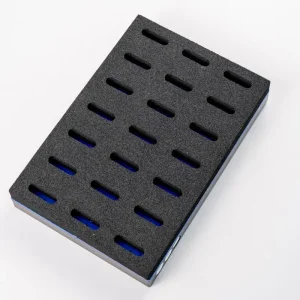
China Custom CNC Machined Foam Vacuum Gripper Plates for Robotic EOAT Manufacturer, Service
Explore Component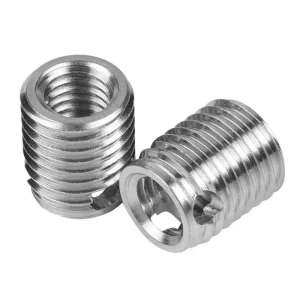
Custom Custom Self-Tapping Threaded Inserts Product, Exporters
Explore Component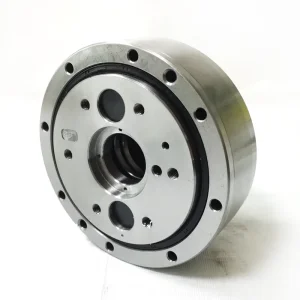
ODM Custom Hollow-Shaft Cycloidal Reducer | OEM Parts & Assembly Product, Exporters
Explore Component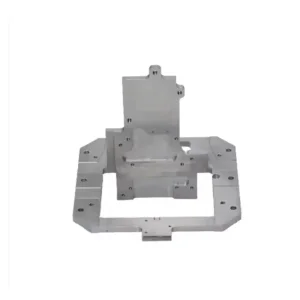
OEM Custom High-Precision CNC Machined Metal Bracket & Structural Frame Wire EDM & Milling for Aerospace & Automotive Applications Manufacturer, Quotes
Explore Component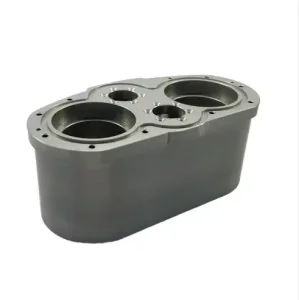
Custom Factory Custom 5-Axis CNC Machined Steel & Aluminum Universal Joint Base and Gearbox Shell for Robotics & Drone Industry Products, Exporters
Explore Component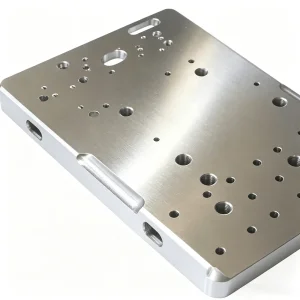
OEM Custom CNC Machined Aluminum Multi-Hole Mounting Plate Manufacturer, Suppliers
Explore Component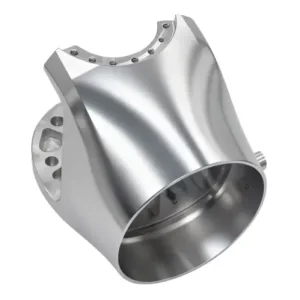
ODM High-Precision Custom 5-Axis CNC Machined Robot Joint & Housing Parts Product, Quotes
Explore Component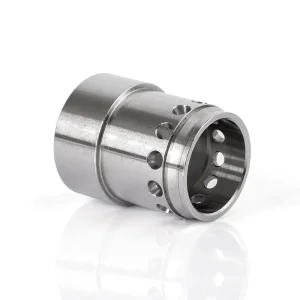
China Custom CNC Stainless Steel Drilled Filter Sleeve & Flow Control Valve Component Supplier, Suppliers
Explore ComponentAccelerate Your Polyamide Engineering Program
Submit your 3D CAD (.STEP / .STP / .IGES) package and 2D critical GD&T drawings today. Our senior engineering staff responds within 24 hours with an extensive DFM manufacturability evaluation, gate flow analysis, and competitive factory-direct quote.
Request Engineering DFM & Quote