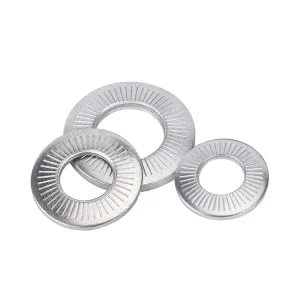
Featured Foundry & Precision Machinery Line
Engineered Fasteners, Valve Interfaces & Structural Housings
Critical fluid management and heavy mechanical assemblies demand complementary precision turning, vibration-proof hardware, and 5-axis milled housings. Inspect our top-tier custom manufactured series.
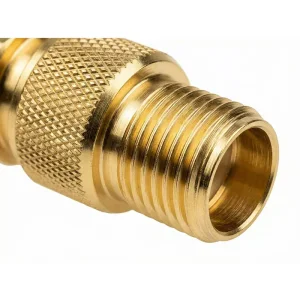
High-Quality Precision Knurled Brass Threaded Connector Manufacturers, Factories
View Product Details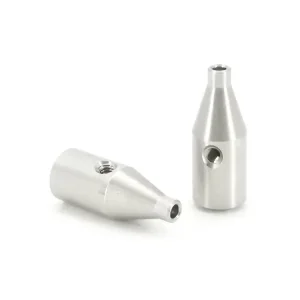
China Custom CNC Turned Aluminum Nozzle & Adapter Bodies Exporter, Factory
View Product Details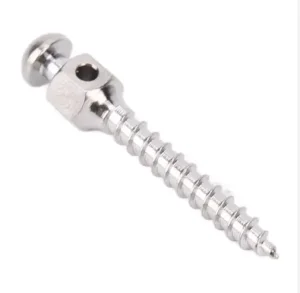
China Custom Precision Titanium Orthodontic Micro Implant Screws Manufacturers, Factories
View Product Details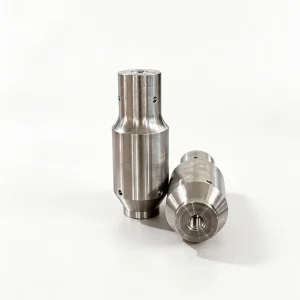
ODM Custom Titanium Ultrasonic Booster Manufacturers, Factory
View Product Details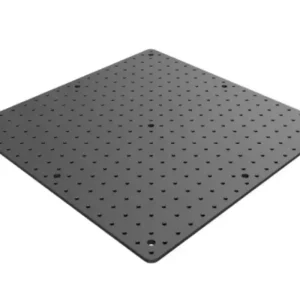
China OEM Custom Precision CNC Machining Non-Standard Solid Aluminum Optical Breadboard Product, Factory
View Product Details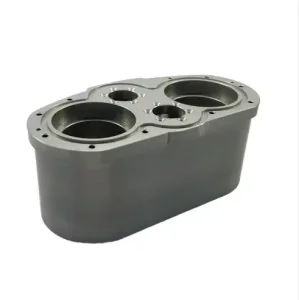
Custom Factory Custom 5-Axis CNC Machined Steel & Aluminum Universal Joint Base and Gearbox Shell for Robotics & Drone Industry Products, Exporters
View Product Details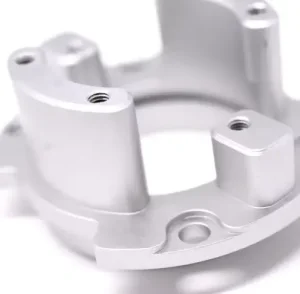
High-Quality Precision 5-Axis CNC Machined Aluminum Housing Mounting Bracket for Aerospace & Automotive Suppliers, Exporter
View Product Details
Industry Economics & Paradigm Shift
Global Landscape of ODM Manifold Casting & Critical Fluid Dynamics
Manifolds serve as the central arterial nodes in fluid power, thermal dissipation, and internal combustion architectures. Whether routing hydraulic oil under 450 bar continuous operating pressure or coordinating multiphase refrigerants across battery cold plates in electric vehicles, the modern industrial manifold is no longer a rudimentary duct. It is a highly engineered, stress-analyzed pressure containment envelope requiring zero subsurface porosity, exceptional dimensional repeatability, and absolute metallurgical purity.
Escalating Hydraulic Working Pressures
Standard industrial hydraulics has migrated from 210 bar systems toward 350-450 bar working thresholds. This systemic escalation renders conventional fabricated or welded manifolds obsolete due to cyclic fatigue failure at internal port intersections. Foundries must deploy High-Density Ductile Irons (EN-GJS-400-15 to EN-GJS-600-3) and vacuum-assisted aluminum alloys capable of enduring up to 10 million hydraulic impulse cycles without microcrack propagation.
E-Mobility & Thermal Integration
Electric vehicle thermal management modules combine coolant routing, expansion valves, and heat exchanger mounts into unified monolithic cast manifolds. Die casting foundries must eliminate macro-inclusions and shrinkage voids to prevent glycol seepage across adjacent circuits, shifting demand heavily toward automated high-vacuum die casting and structural thin-wall aluminum castings.
Cleanliness & Porosity Standards
Procurement teams across aerospace and construction machinery have instituted stringent particulate cleanliness metrics compliant with ISO 4406 and ISO 16232. Cast manifolds require proprietary ultrasonic cleaning, thermal deburring (TEM), and zero-silica residual core wash, preventing catastrophic downstream hydraulic valve jamming.
±0.005mm
Bore Concentricity Accuracy
< 0.2%
X-Ray Vacuum Porosity Rate
600bar
Hydrostatic Proof Threshold
100%
Helium Leak Detection Audit
Sourcing Competitiveness & Scalability
China Foundry Ecosystem: Operational Velocity, Tooling Integration & Cost Parity
Global Original Equipment Manufacturers (OEMs) and Tier-1 systems integrators in North America and Western Europe often confront a trilemma: excessive domestic tooling lead times (often 18 to 26 weeks), high minimum order quantities (MOQs), and fragmented subcontractor handoffs between casting foundries and precision machine shops. China's advanced manufacturing clusters—centered in the Greater Bay Area (Shenzhen, Dongguan, Foshan) and the Yangtze River Delta—have systematically engineered these bottlenecks out of the supply chain.
Compressed Tooling Iteration Cycles
By deploying additive sand printing for prototype cores alongside high-speed 5-axis CNC graphite milling for die-casting molds, Chinese ODM facilities compress the prototype-to-First Article Inspection (FAI) cycle down to 15-21 working days. Tooling revisions are executed in-house, eliminating inter-continental transshipment delays.
Single-Roof Integrated Value Stream
The conventional division between raw casting suppliers and high-precision CNC machining contractors introduces acute accountability hazards, particularly when subsurface porosity is uncovered at the final finish-boring stage. Leading Chinese ODM hubs consolidate raw casting, stress-relief annealing, 5-axis tombstone CNC milling, and CMM inspection under a unified quality contract.
Comprehensive Quality Assurance Ecosystem
Equipped with on-site optical emission spectrometers, real-time industrial X-ray inspection (fluoroscopy), automated Zeiss CMM coordinate measurement systems, and hydrostatic impulse benches, our production protocols ensure that dimensional reports and material test certificates accompany every batch.
Material Selection Guide
Engineering Metallurgy: Manifold Alloy Classifications & Casting Methods
Matching the alloy chemistry to operational thermal gradients, hydraulic surge pressure, and chemical compatibility determines part longevity and minimizes warranty exposure.
| Alloy Specification | Casting Methodology | Tensile Strength (MPa) | Elongation (%) | Primary Industrial Application | Corrosion / Thermal Limits |
|---|---|---|---|---|---|
| EN-GJS-400-15 (Ductile Iron) | Resin Sand / Shell Mold | 400 - 450 | 15 - 18 | High-pressure hydraulic manifold blocks, mobile crane valve banks | Good damping, stable to 350°C; low ambient embrittlement resistance |
| EN-GJS-500-7 (Spheroidal Graphite) | Automated Green Sand / Disamatic | 500 - 550 | 7 - 10 | Excavator main control valves, heavy hydraulic track motor bodies | High yield modulus; requires phosphate coating against fluid oxidation |
| SiMo Ductile Iron (Silicon-Moly) | Furan Sand / Investment Casting | 550 - 650 | 3 - 6 | Turbocharger exhaust manifolds, EGR mixing chambers | Resists thermal fatigue and surface scaling up to 820°C |
| A356.0-T6 (Aluminum Alloy) | Gravity Permanent Mold / Tilt Pour | 290 - 320 | 5 - 8 | Aerospace fuel manifolds, semiconductor precision chiller nodes | High strength-to-weight; exceptional anodizing response |
| AlSi10Mg (High Silicon Aluminum) | High-Vacuum Die Casting (HPDC) | 300 - 340 | 3 - 5 | EV multi-way integrated cooling manifolds, inverter cold bases | Excellent fluid flowability in thin wall cross-sections (down to 2.0 mm) |
| AISI 316L / CF3M (Stainless Steel) | Silica Sol Investment Casting | 485 - 550 | 30 - 40 | Subsea oil & gas injection manifolds, biopharmaceutical skids | Resists severe chloride pitting and aggressive acidic process fluids |
Deployment Scenarios
Mission-Critical Deployment Scenarios for Cast Manifolds
Manifolds operate under severe mechanical vibration, cyclic hydraulic pounding, dynamic thermal expansion, and aggressive media contact. Below are the primary demanding engineering environments in which our ODM cast components excel:
Mobile Hydraulic Control
Agricultural tractors, backhoes, and mining loaders utilize central hydraulic manifolds to coordinate boom articulation, steering, and braking. Cast ductile iron bodies offer sound attenuation and eliminate the exterior oil lines susceptible to physical jobsite damage.
Thermal Exhaust Systems
Heavy-duty diesel and marine engines require cast SiMo or Ni-Resist exhaust manifolds engineered to withstand continuous 750°C to 850°C exhaust gas temperatures, resisting thermal warpage at cylinder head mounting interfaces.
Liquid Immersion Cooling
Hyperscale data center AI compute clusters and wafer fab photolithography tools demand cast aluminum distribution manifolds providing turbulent dielectric coolant flow across multi-kilowatt processing racks without ionic contamination.
Subsea Chemical Injection
Offshore Christmas trees and subsea manifolds require investment-cast duplex stainless steel and superalloys to handle sour gas (H2S), methanol injection, and brine exposure at depths exceeding 2,500 meters under 600 bar external hydrostatic pressures.
Industry 4.0 Foundry Innovations
Technological Frontiers in Manifold Casting
The convergence of simulation modeling, 3D printed sand tooling, and computerized multi-axis machining is redefining the boundary of what can be cast without failure.
Digital Twin Fluid & Thermal Simulation
Prior to cutting mold steel, our engineering division implements advanced MAGMASOFT and FLOW-3D computational fluid dynamics. We simulate molten metal mold filling velocity, air entrapment, and solidification cooling isotherms. Gating runners, overflows, and chill placement are digitally optimized to relocate residual shrinkage voids entirely outside critical internal bore paths.
Binder Jetting 3D Sand Core Integration
Complex internal fluid circuits historically mandated multiple intersecting straight gun-drilled cross-holes, secured with screw plugs that introduce permanent leak-path risks. Utilizing industrial binder jet 3D sand printing, our foundry produces unified serpentine cores with smooth radii. Fluid shear stresses and pressure drops are reduced by up to 28% compared to conventionally machined galleries.
Vacuum High-Pressure Die Casting (HPDC)
By drawing the die cavity down to sub-50 mbar absolute pressure prior to shot sleeve injection, trapped cavity air and volatilized mold lubricants are purged. This allows for structural aluminum manifolds that are fully weldable and amenable to T6 solution heat treatment without blistering, achieving exceptional mechanical elongation properties.
Procurement Intelligence & Quality Governance
Global Procurement Checklist: Auditing an Offshore Casting Partner
Strategic sourcing managers navigating offshore manifold casting vendors must evaluate risk beyond simple piece-price quotes. Sourcing failures in pressure containment parts typically stem from hidden inclusions, inadequate stress relieving, and substandard leak verification. Ensure your prospective ODM partner satisfies this rigorous technical verification framework:
Checklist Item 01
Radiographic & NDT Capabilities
Does the foundry operate an in-house real-time digital X-ray inspection cabinet or industrial computed tomography (CT)? Verify compliance with ASTM E505 for aluminum die castings and ASTM E446 for steel and iron castings to confirm that internal porosity severity levels meet critical valve seat criteria.
Checklist Item 02
Proof & Leak Pressure Testing
Ensure the manufacturing protocol specifies 100% downstream pressure qualification. This includes a hydrostatic proof test at 1.5x design pressure to confirm structural integrity, followed by dry helium mass-spectrometry vacuum leak testing to verify external envelope sealing down to 10⁻⁶ mbar·L/sec.
Checklist Item 03
Particulate Cleanliness Certification
Confirm that your supplier maintains a certified cleanroom washing facility equipped with automated ultrasonic multi-stage agitation and gravimetric particulate analysis membranes. Demand ISO 16232 reporting confirming no residual metallic burrs or silica particles exceeding 200 micrometers.
Checklist Item 04
Traceability & Metallurgical Certs
Traceability must link every finished machined manifold to its specific molten ladle melt number. Mill test certificates per EN 10204 Type 3.1 must document chemical composition (spark emission spectroscopy) along with tensile test specimens and nodularity percentages for ductile irons.
Checklist Item 05
Precision Post-Machining Alignment
Verify whether the machining cell utilizes multi-axis CNC machines equipped with in-process optical touch probes (such as Renishaw). This guarantees that casting core datum shift is automatically compensated before cutting tight valve cavity bores (SAE, ISO 4401, or DIN 24340).
Checklist Item 06
PPAP Level 3 Documentation
For automotive and volume machinery production, confirm that your manufacturing partner supports Production Part Approval Process (PPAP) Level 3 submission, including DFMEA/PFMEA, Control Plans, Process Capability studies (Cpk > 1.67), and Gage R&R validation.
Engineering Knowledgebase
Frequently Asked Sourcing & Metallurgical Questions
Clear, definitive answers to complex technical challenges encountered during custom manifold design, alloy selection, and foundry qualification.
What is the standard tolerance capability on as-cast vs. finish-machined manifolds?
As-cast linear dimensional tolerances generally adhere to ISO 8062-3 Grade CT6 to CT8 for precision investment and permanent mold casting, and Grade CT9 to CT11 for sand casting. Following secondary 5-axis CNC machining, critical feature dimensions—such as cartridge valve cavity bores, O-ring seal grooves, and mounting face flatness—are routinely maintained to ±0.005 mm (±0.0002 in), with surface finishes down to Ra 0.4 µm (16 µin).
How do you prevent subsurface porosity from ruining machined valve cavity ports?
Subsurface shrinkage porosity occurs when heavy material sections freeze later than surrounding thin walls. We eliminate this issue via three integrated countermeasures: first, MAGMASOFT solidification modeling to adjust gating and feeder sleeve positioning; second, the deployment of internal chills or cooling pins in the mold tooling adjacent to critical port zones; and third, vacuum-assisted metal injection during high-pressure die casting to suppress gas entrainment.
Why choose Ductile Iron (EN-GJS) over Billet Steel for hydraulic manifold blocks?
While billet steel is common for bespoke prototypes, cast ductile iron (such as EN-GJS-400-15 or 500-7) provides dramatic advantages for production volumes exceeding 250 units: it reduces raw material waste by 40-60%, dampens high-frequency hydraulic pressure ripple and acoustic resonance, offers self-lubricating properties during machining due to graphite spheroids, and reduces overall tool wear by over 30%.
What measures are taken to ensure internal passages are free of sand and burrs?
Residual core sand particles cause instant hydraulic pump failure. We employ specialized synthetic resin-bonded sand systems with high thermal breakdown characteristics, followed by automated shot blasting, high-temperature thermal energy deburring (TEM), chemical pickling, and high-pressure immersion washing up to 100 bar. Residual particulate levels are verified via ISO 16232 gravimetric filtration.
Can you manufacture manifolds using additively manufactured (3D printed) sand cores?
Yes. We regularly employ industrial binder jet 3D sand core printing for both rapid prototyping and low-volume production. This enables fluid channels with organic internal radii that eliminate the right-angle flow restrictions typical of traditional cross-drilling. It also eliminates exterior drill plug ports, creating leak-free monolithic assemblies.
How are intellectual property (IP) and proprietary CAD files protected?
We enforce strict IP protocols. We execute comprehensive, legally enforceable Non-Disclosure Agreements (NDAs) prior to receiving any 3D models or 2D technical drawings. CAD data is stored on encrypted, access-restricted internal design servers, and manufacturing files are routed directly to CAM stations without third-party broker or trading intermediary exposure.
Comprehensive OEM / ODM Precision Catalog
Advanced Turned Components, Thermal Modules & Subassemblies
Explore our extended precision catalog, spanning semiconductor handling, titanium medical implants, high-performance copper heat sinks, and precision drive shafts.
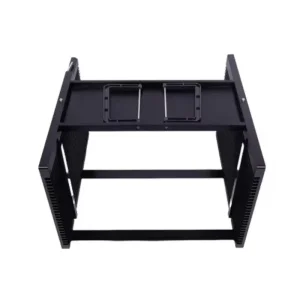
OEM Premium 8-Inch CNC Machined Aluminum Semiconductor Wafer Carrier Factories, Quotes
View Product Details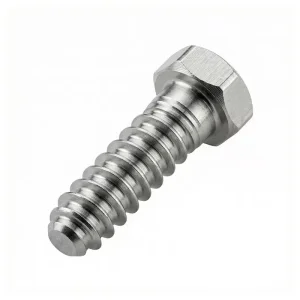
Custom Titanium Medical Implant / Bone Screw Exporter, Factories
View Product Details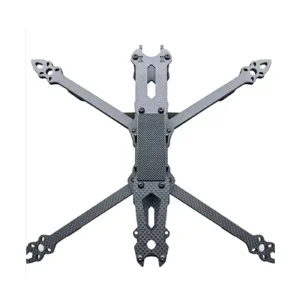
China Custom CNC Machined Carbon Fiber Drone Frame Kits | High-Performance Quad/Hexacopter Frames for Agriculture & FPV Suppliers, Manufacturers
View Product Details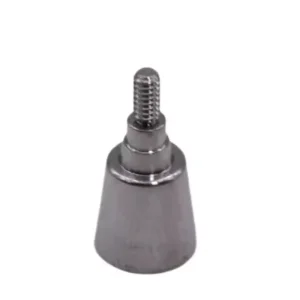
Custom Custom CNC Turned Titanium Abutment Implant Driver & Prosthetic Connector Manufacturers, Product
View Product Details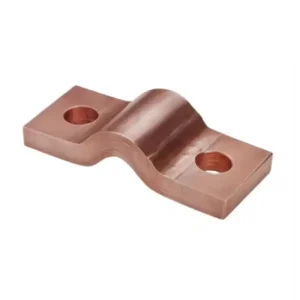
Custom Custom Flexible Laminated Copper Busbar for Battery & Electrical Equipment Service, Products
View Product Details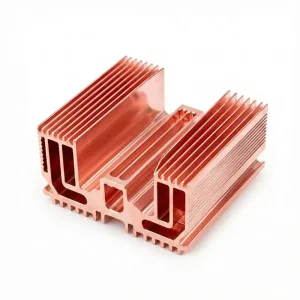
ODM High-Performance Copper Heatsink Manufacturer, Factories
View Product Details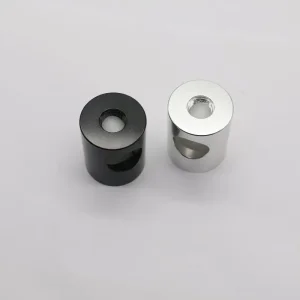
High-Quality Custom Precision CNC Turned Stainless Steel Medical Components Products, Exporter
View Product Details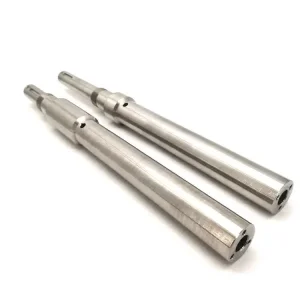
Custom Custom CNC Turned Stainless Steel Stepped Shafts with Keyways Product, Factories
View Product DetailsReady to Engineer Your Custom Manifold Casting?
Upload your 2D and 3D technical drawings (STEP, IGES, DXF, or PDF). Our senior metallurgical and tooling engineering team will respond within 24 hours with a comprehensive DFM manufacturability evaluation, gating proposal, and commercial quotation.