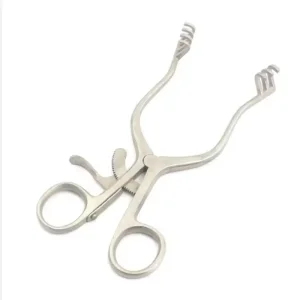
China Professional Quality Stainless Steel Custom Surgical Retractor Service, Exporter
Get Quote & Specs
Directly engineered assemblies, multi-axis milled fixtures, and surgical-grade hardware built to rigorous drawing specifications.
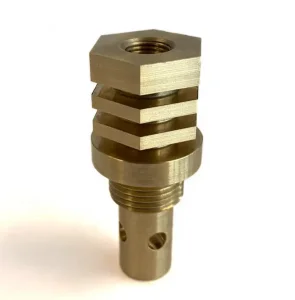
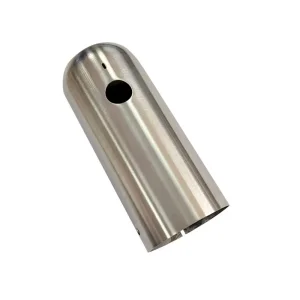
A technical guide for procurement directors, mechanical architects, and supply chain leaders seeking near-zero porosity and precision repeatability.
Permanent mold casting (gravity die casting) utilizes reusable tool steel dies (typically H13 or premium cast iron) that enforce controlled, accelerated directional solidification. Compared to sand casting, this rapid heat dissipation produces extraordinarily dense dendritic microstructure, reducing gas and shrinkage voids for safety-critical pneumatic and hydraulic blocks.
The microstructural compactness inherent in permanent mold processing permits thorough downstream T5/T6 precipitation heat treatment without surface blistering or thermal distortion. Components achieve higher ultimate tensile strength (UTS) and fatigue boundaries, which are paramount in structural automotive suspension nodes and aviation hydraulic manifolds.
While high-pressure die casting (HPDC) requires heavy tooling investments exceeding six figures, permanent mold tooling costs represent an accessible middle ground. For production runs spanning 2,000 to 50,000 units annually, permanent mold casting amortizes capital rapidly while avoiding the surface finish deficits and sand inclusion risks of sand casting.
| Parameter / Metric | Permanent Mold Casting | High-Pressure Die Casting (HPDC) | Sand Casting |
|---|---|---|---|
| Typical Tooling Life (Cycles) | 100,000 – 250,000 | 80,000 – 150,000 | Pattern Dependent (Low) |
| Internal Gas Porosity Risk | Extremely Low (Laminar Fill) | Elevated (Turbulent Jetting) | Moderate to High (Sand Outgassing) |
| Heat Treatment Suitability (T6) | Fully Capable; No Blistering | Severely Limited (Special Vacuum Only) | Fully Capable |
| Dimensional Repeatability | ±0.25 mm to ±0.50 mm (As-Cast) | ±0.10 mm to ±0.20 mm | ±0.80 mm to ±1.50 mm |
| Surface Finish (RMS) | 63 – 125 µin (Smooth Matte) | 32 – 63 µin | 250 – 500 µin (Coarse Granular) |
Bridging the disconnect between OEM functional intent, design for manufacturability (DFM), and rigorous supply assurance.
Global Tier-1 buyers mandate chemical spectrum analyses across ingots and heat logs (such as A356, A380, ADC12, or custom bronze). Every melt heat must be certified and verifiable with optical emission spectrometry (OES).
Specifications frequently require class-defined radiographic inspection (ASTM E155) and fluorescent penetrant testing (ASTM E1417) to eliminate subsurface discontinuities prior to high-speed 5-axis CNC finishing.
Castings alone rarely meet functional mating tolerances. Modern ODM contracts require unified supplier accountability: from molten pour through CNC milling down to ±0.005 mm, deburring, anodizing, and final multi-sensor CMM inspection.
Buyers need transparent tooling amortization and detailed cycle-time metrics. Eliminating trading intermediaries through direct Shenzhen factory engineering minimizes landed part costs and protects proprietary product geometries.
Real-world integration of permanent mold casting across safety-critical commercial sectors.
Permanent mold A356-T6 housings for high-power inverters, battery management fluid cooling bases, and steering knuckles. These parts satisfy high burst pressures and stringent leak rates under ASTM bubble and helium mass spectrometry evaluations.
Cast copper and dense aluminum heat-sink enclosures for commercial utility convertors. Permanent steel molds maintain wall-thickness uniformity across tall cooling fins without the cold-shut risks inherent to high-temperature alloys.
Structural swing links, harmonic reducer mount shells, and surgical cart bases. Our multi-axis CNC cells post-machine critical bores down to ±0.005 mm to achieve accurate bearings seating and zero angular play.
Enterprise procurement requires reliable engineering accountability. We protect your intellectual property and guarantee regulatory conformity at every step.
We execute enforceable bilateral Non-Disclosure Agreements prior to receiving 2D/3D CAD models. Clients interface directly with our Shenzhen engineering staff, eliminating exposure through trading intermediaries.
Every casting run includes comprehensive documentation: First Article Inspection (FAI) reports, in-house Zeiss CMM dimensional records, melt analysis logs, and certified RoHS/REACH compliance documentation.
We provide full-service export documentation across DDP, FOB, and CIF arrangements. Custom crating, anti-corrosion VCI packaging, and secure freight management ensure parts reach destination ports without damage or customs friction.
Bilingual project engineers manage design changes, mold iterations, and quality control. You discuss tooling drafts, venting modifications, and tolerances directly with the manufacturing team in real time.
How we are advancing gravity die casting through sensor analytics, computational thermal modeling, and hybrid manufacturing.
Integrating advanced CFD and finite element thermal simulation (AnyCasting/MAGMA) early during DFM. We model turbulent fronts, chill patterns, and vent dynamics before cutting tool steel, eliminating trial-and-error scrap cycles.
Deploying negative-pressure die evacuation during the pour phase. This eliminates counter-pressure air pockets in thin-wall heat dissipation fins and guarantees complete cavity filling for low-density alloys.
Incorporating 3D-printed tool steel inserts with conformal cooling micro-channels directly into heavy-wear die segments. This enables localized thermal control and reduces cycle times by up to 28%.
Clear, direct engineering answers for procurement managers qualifying permanent mold casting suppliers.
Complementary multi-axis CNC milled parts, precision aero-brackets, and engineered components manufactured across our verified Shenzhen facility.