Specialized Engineering & Component Assemblies
Explore Sunmy Hardware’s precision CNC machined components, sensor housings, and custom alloy parts built to micron-level tolerance specifications for Tier-1 OEMs worldwide.
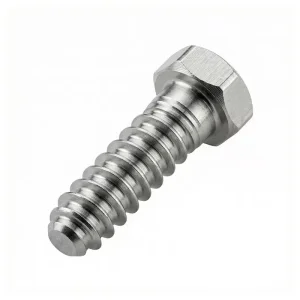
Custom Titanium Medical Implant / Bone Screw Exporter, Factories
Inquire Product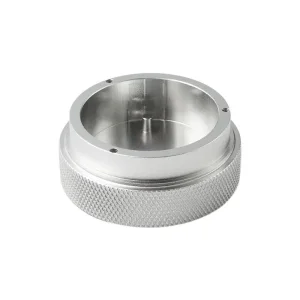
High-Quality Premium Custom CNC Machined Aluminum Control Knobs Manufacturer, Exporters
Inquire Product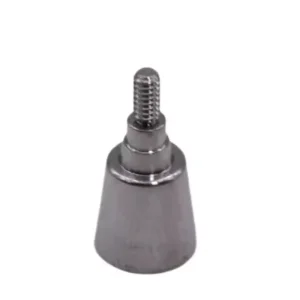
Custom Custom CNC Turned Titanium Abutment Implant Driver & Prosthetic Connector Manufacturers, Product
Inquire Product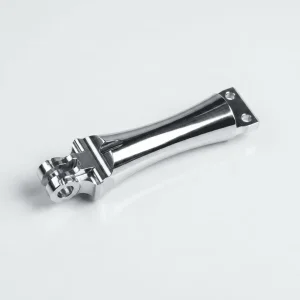
Custom Custom CNC Machined Robot Finger Joint Link Manufacturers, Exporter
Inquire Product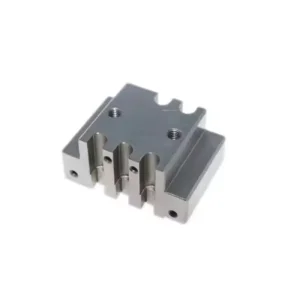
ODM OEM Precision CNC Machining Aluminum Parts & Custom Industrial Components Exporters, Quotes
Inquire Product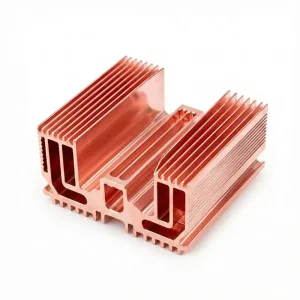
ODM High-Performance Copper Heatsink Manufacturer, Factories
Inquire Product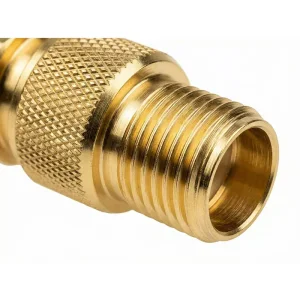
High-Quality Precision Knurled Brass Threaded Connector Manufacturers, Factories
Inquire Product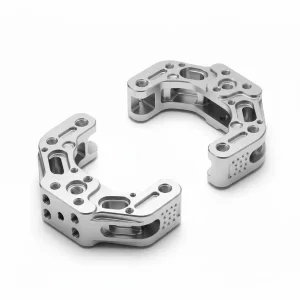
High-Quality Custom CNC Machined Robotic Gripper Jaws Service, Quotes
Inquire ProductGlobal Commercial & Industrial Status of Transmission Case Castings
The transmission case casting ecosystem is experiencing a seismic paradigm shift driven by e-mobility, structural integration, and extreme lightweighting initiatives across heavy industry and automotive engineering.
Electric Drive Unit (EDU) Convergence
Traditional multi-stage gearboxes have given way to integrated "3-in-1" and "8-in-1" e-Axle housings. These consolidate the motor casing, inverter compartment, and planetary reduction gearbox into a monolithic thin-walled high-pressure die casting (HPDC) to slash weight, packaging size, and assembly touchpoints.
High-Integrity Vacuum Die Casting
Demands for absolute zero leakage in hydraulic and oil-cooling circuits mandate High-Vacuum Die Casting (HVDC). Maintaining cavity pressure below 30 mbar virtually eliminates gas porosity, enabling post-casting heat treatment (T6/T7) without blister formation, thus elevating tensile yield strength past 240 MPa.
Giga-Casting Scalability
Press capacities exceeding 4,000 to 9,000 metric tons are redefining industrial economics. What formerly required 20+ bolted steel-stamping subcomponents is now engineered as a single-piece aluminum structural casting, significantly improving torsional rigidity and natural vibrational frequency (NVH) resistance.
Holistic Transmission Casting Architecture
Overcoming structural porosity, micro-cracking, and thermal distortion via physics-driven casting simulations and integrated 5-axis robotic finishing cells.
Thermal Rheology & Moldflow DFM
Sunmy's engineering cadre executes multi-physics computational fluid dynamics (CFD) and solidification modeling prior to steel cutting. Gating designs, conformal chill vents, and thermal sleeves are configured to eradicate cold shuts and shrinkage voids across complex internal ribbing.
Single-Clamping CNC Finish-Machining
Differential gearbox alignments demand strict bearing concentricity and flatness within 0.015 mm across wide mating flanges. Sunmy implements bespoke tombstone tooling and high-precision 5-axis horizontal machining centers (HMC) to finalize all critical bores in a single setup, eliminating stack-up errors.
Non-Destructive Testing & Traceability
Every casting batch is supported by real-time X-ray radioscopy for internal pore classification according to ASTM E505, computerized coordinate measuring machines (CMM) mapping GD&T, and differential-pressure helium leak decay stations ensuring zero fluid permeation under high operational pressures.
Mission-Critical Industrial Deployment Scenarios
From high-speed electric sedans to mining machinery gear trains, our ODM casting formulations match extreme mechanical stress requirements.
Electric Vehicle e-Axles & Hybrid Transaxles
Designed for rotational input speeds above 18,000 RPM. Thin-walled A380/AlSi10Mg cast alloy cases provide high damping to absorb electromagnetic hum and high-frequency gear mesh whine, while incorporating integrated water-glycol cooling jackets with O-ring sealing grooves.
Heavy Commercial & Off-Highway Powertrains
For construction equipment, agricultural tractors, and haul trucks, ductile iron (QT450/QT500) and heavy-gauge AlSi9Cu3 die cast cases absorb extreme shock loadings, low-gear torque spikes, and sustained torsional deflections in punishing environments.
Precision Robotics & Cycloidal Drives
Collaborative and six-axis articulating robots demand zero backlash and ultra-low rotating inertia. Our cast and machined transmission shells for harmonic and cycloidal drives deliver micron-level bearing face runout, preventing erratic motor loads and thermal drift.
Technological Trajectory of High-Integrity Castings
How our metallurgical team and smart manufacturing infrastructure are scaling to address next-generation commercial powertrain challenges.
Semi-Solid Rheocasting (SSM)
Transitioning from turbulent liquid injection to laminar globular-structure slurry rheocasting. Yields near-zero shrinkage, 99.8% internal density, and pristine surface finishes suitable for structural anodization.
Integrated Sensor Embedding
Casting in-situ cavities and mounting portals for wireless thermal probes and vibration accelerometers, empowering real-time predictive maintenance for industrial powertrain gearboxes.
Al-Sc / Al-Ce Next-Gen Alloys
Formulating lightweight high-conductivity alloys modified with trace scandium and cerium, boosting high-temperature creep resistance up to 280°C without microstructural degradation.
Closed-Loop Digital Twins
Deploying automated vision AI at die release linked to real-time closed-loop shot monitoring, adjusting melt temperature and vacuum parameters dynamically per cycle to achieve Six Sigma reliability.
Transmission Case Casting Technical FAQ
Transparent insights answering mission-critical technical, dimensional, and metallurgical sourcing requirements.
What alloy compositions are recommended for high-performance transmission cases?
For high-performance automotive and industrial applications, hypoeutectic alloys like A380, ADC12, and AlSi10Mg are standard for high pressure die casting due to their excellent fluidity and low shrinkage. When pressure tightness and post-weld/post-heat treatment elongation are paramount (such as in EV hybrid gearboxes), low-iron A356 or AlSi7Mg alloys processed via vacuum die casting or low-pressure casting are chosen to maximize yield strength and elongation beyond 8%.
How does Sunmy Hardware guarantee pressure tightness and prevent oil weeping?
Fluid seepage in cast transmission walls typically stems from dendritic micro-porosity during cooling. We mitigate this through three lines of defense: First, vacuum venting (<30 mbar) evacuates gases during the injection phase. Second, optimized mold thermal balancing using pressurized hot-water/oil cooling lines accelerates solidification in hot-spot areas. Third, 100% helium sniffer leak testing or wet pressure decay tests are applied to verify wall integrity prior to shipment. Where necessary, vacuum resin impregnation according to US MIL-I-17563C is applied.
What geometric tolerances can be maintained across wide transmission housings?
While raw HPDC casting tolerances generally fall within ISO 8062-3 DGB2/3 standards, all critical mating features, gasket sealing faces, and bearing centerlines are finish-machined in our 5-axis CNC centers. We maintain bearing bore centerlines and diameters within ±0.005 mm to ±0.010 mm, mating flange flatness within 0.02 mm across 500 mm distances, and perpendicularity to internal spline axes within 0.015 mm, verified with Zeiss coordinate measuring machines.
How are tool wear and mold maintenance handled over multi-year production programs?
High-volume die life is critical to piece-price consistency. We fabricate die casting dies utilizing premium imported hot-work tool steels (e.g., Dievar, Bohler W303, or AISI Premium H13) treated with multi-layer PVD coatings (CrN, TiAlN). Shot counters and automated infrared thermal imaging flag localized mold erosion or heat check fatigue, allowing scheduled preventive polishing, laser texturing, and sleeve replacements before flash or dimensional drift exceeds allowable limits.
High-Precision Turned, Cast & Machined Assemblies
Fully integrated OEM/ODM component solutions, directly manufactured and audited in Shenzhen for global tier suppliers.
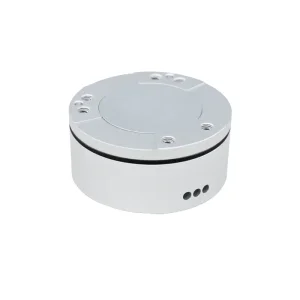
China Custom 6-Axis Force/Torque Sensor Housings & Elastic Elements | OEM/ODM Service, Factories
Inquire Product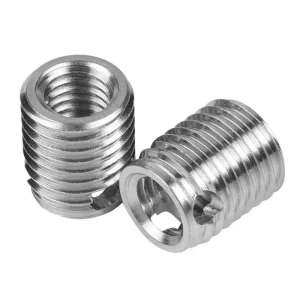
Custom Custom Self-Tapping Threaded Inserts Product, Exporters
Inquire Product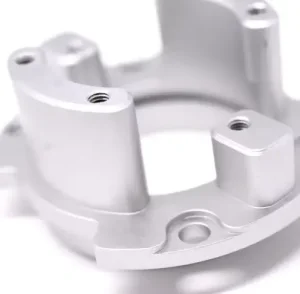
High-Quality Precision 5-Axis CNC Machined Aluminum Housing Mounting Bracket for Aerospace & Automotive Suppliers, Exporter
Inquire Product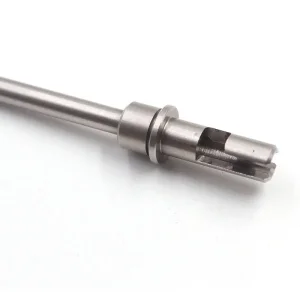
OEM Precision CNC Turned Stainless Steel Stepped Shaft Service, Products
Inquire Product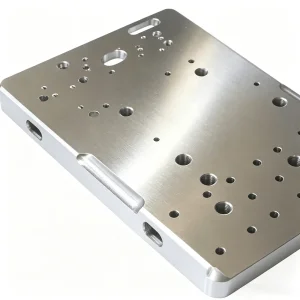
OEM Custom CNC Machined Aluminum Multi-Hole Mounting Plate Manufacturer, Suppliers
Inquire Product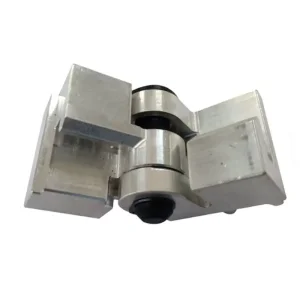
OEM Custom Precision CNC Machined Aluminum Hinge Assembly Structural Connector Supplier, Service
Inquire Product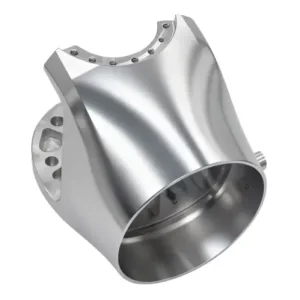
ODM High-Precision Custom 5-Axis CNC Machined Robot Joint & Housing Parts Product, Quotes
Inquire Product