Component Matrix A
Precision Cast & Machined Components (Batch 01)
Engineered hardware combining metallurgical density with precision CNC finishing, tailored for mission-critical assemblies.
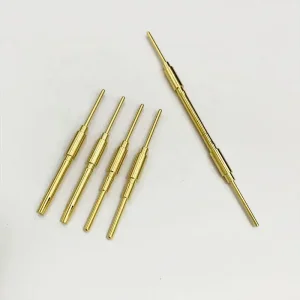
ODM Custom CNC Turned Contact Pins & Test Probe Components
View Component Specifications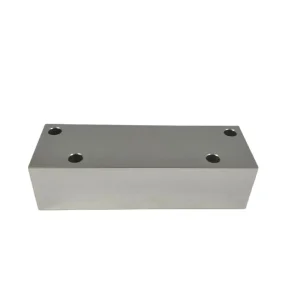
ODM Custom CNC Machined Aluminum Vacuum Manifold Block
View Component Specifications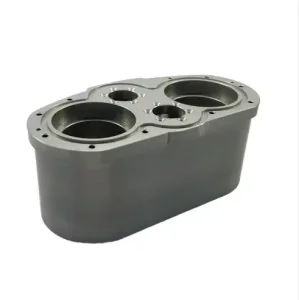
Custom 5-Axis Machined Steel & Aluminum Universal Joint Base and Gearbox Shell
View Component Specifications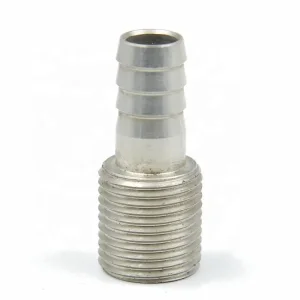
OEM Custom CNC Turned Hose Barb Fittings & Threaded Adapters
View Component Specifications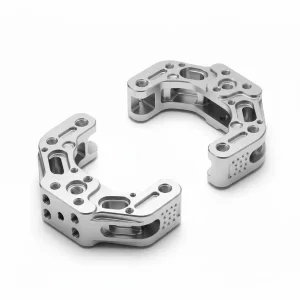
High-Quality Custom CNC Machined Robotic Gripper Jaws Service
View Component Specifications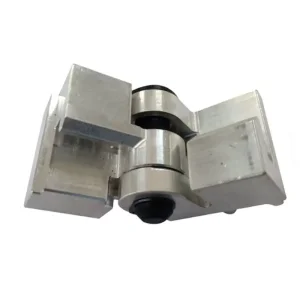
OEM Precision CNC Machined Aluminum Hinge Assembly Structural Connector
View Component Specifications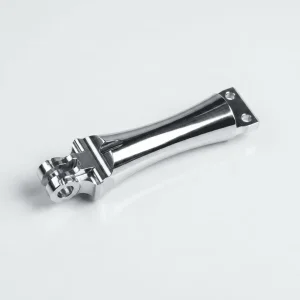
Custom CNC Machined Robot Finger Joint Link Manufacturers
View Component Specifications
Industry Macro Intelligence
Macro Industry Transformation: Why High-Vacuum Die Casting Is Replacing Conventional Casting
As tier-1 automotive suppliers, aerospace contractors, and telecom manufacturers move toward structural electrification, traditional High-Pressure Die Casting (HPDC) hits metallurgical limits due to gas entrapment and air retention.
Thermal Treatability (T6/T7)
Conventional HPDC parts contain compressed gas pores that blister during solution heat treatment. High-vacuum technology evacuates air down to <30 mbar, eliminating blistering and unlocking heat-treatable alloys with tensile strength exceeding 320 MPa.
- Eliminates surface blistering under 500°C+ thermal cycles
- Enables automotive crash-relevant elongation (>10-12%)
- Yields structural integrity comparable to forged alloys
Thin-Wall Structural Integration
Driven by the global mega-casting and giga-casting trend, industrial equipment demands single-piece castings that combine up to 40 stamped parts. High-vacuum systems remove mold backpressure, letting liquid metal fill 1.5mm wall profiles seamlessly.
- Smooth laminar mold-filling velocities across long travel paths
- Substantial consolidation of structural sub-assemblies
- Direct weight reductions between 25% and 40%
Hermetic Seal & Weldability
Porosity in structural housings causes leakage under pressure. Vacuum die-cast enclosures can be electron-beam or laser-welded with zero pinhole ejection, satisfying IP67/IP69K sealing criteria for battery trays and liquid-cooled heat exchangers.
- Zero gas expulsion during robotic laser or friction-stir welding
- Defect-free sealing surfaces without vacuum impregnation
- Compliant with 100% helium mass-spectrometer leak tests
<30 mbar
Cavity Evacuation Level
−80%
Internal Porosity Reduction
±0.005mm
Post-CNC Precision Machining
100%
CMM & X-Ray Inspected Batches
Engineering Deep-Dive
High-Vacuum Die Casting vs. Standard Casting: Technical Comparison
An engineering breakdown showing how mold venting, shot sleeve evacuation, and thermal balancing change the metallurgical behavior of aluminum and zinc components.
| Evaluation Parameter | Standard High-Pressure Die Casting (HPDC) | High-Vacuum Die Casting (Sunmy ODM Method) | Measurable Engineering Impact |
|---|---|---|---|
| Mold Cavity Pressure | Atmospheric (~1013 mbar) to compressed | Controlled deep vacuum: 20 to 50 mbar | Removes trapped air; stops micro-void formation |
| Gas Content (cc/100g Al) | 10 – 25 cc/100g metal | < 1 – 3 cc/100g metal | Enables blister-free heat treatment and ductile response |
| Secondary Heat Treatment | Limited to T4 stress relief; high blistering risk | Fully compatible with T6 and T7 heat treating cycles | Improves yield strength by up to 60% over standard casting |
| Laser / Friction Stir Welding | Not recommended; molten pool bubbles cause blowholes | Seamlessly weldable via automated laser/TIG | Enables multi-component weldments for battery trays |
| Minimum Wall Thickness | 2.2 – 3.0 mm for uniform flow | 1.2 – 1.8 mm over long flow lengths | Reduces component mass while maintaining structural stiffness |
| Critical Feature Machining | Exposure of sub-surface porosity causes scrap | Dense internal structure preserves mirror-smooth faces | Allows ±0.005mm machining tolerances without pinhole defects |
Localized Use Cases
Global Industrial Deployment & Local Application Scenarios
Discover how international engineering teams integrate our vacuum-assisted components into mission-critical assemblies.
EV Powertrain & Inverter Housings
German and American electric mobility manufacturers deploy our vacuum die-cast aluminum inverter shells. Integrated cooling jackets require pore-free metallurgy to hold continuous 5-bar coolant pressure without seal degradation.
- Helium leak-tested to 10⁻⁶ mbar·l/s
- Integrated liquid cooling channels via core-pull technology
- Post-machined face flatness within 0.02 mm
5G Telecom Massive MIMO Chassis
Outdoor mastheads installed across North America face wide thermal swings and humidity. Our cast thin-wall zinc and aluminum radio chassis maintain high heat dissipation with built-in EMI/RF shielding across complex heatsink geometries.
- Aspect ratios up to 1:25 on cooling fin arrays
- Conductive chromate conversion and outdoor powder coating
- Structural resonance damping for outdoor wind loads
Robotic Articulating Arms & Exoskeletons
Collaborative robotics manufacturers in Japan and Europe require light arm castings with high dynamic stiffness. Vacuum-cast structural components give actuators the rigidity they need to run millions of duty cycles without fatigue cracks.
- High fatigue limits under cyclic reversing loads
- 5-axis CNC-machined bearing bores within ±0.005 mm
- Custom anodized and passivated finishes
Supply Chain & Compliance Assurance
Audited Quality Systems, Material Traceability & Global Shipping
Protecting intellectual property, ensuring RoHS/REACH compliance, and delivering documented quality records directly to your engineering docks.
Traceable Metallurgical Reports
Every melt batch undergoes optical emission spectrometry (OES) analysis to verify chemical balance before casting. We supply full heat certificates and raw ingot mill reports alongside parts.
- Material certs conforming to EN 10204 Type 3.1
- Full traceability from ingot supplier to delivery box
- RoHS, REACH, and conflict-mineral compliant
In-House Non-Destructive Testing (NDT)
We confirm internal density through real-time X-ray fluoroscopy and industrial CT scanning, catching shrinkage flaws before raw castings move into secondary CNC machining.
- Radiographic porosity inspection conforming to ASTM E505
- 100% CMM coordinate inspection for critical tolerances
- Pre-shipment First Article Inspection (FAI) packages
Tariff Planning & Direct Logistics
Our Shenzhen logistics team ships DDP, FOB, or CIF directly to your factories across the US, Europe, and Asia-Pacific. We provide full customs paperwork to avoid port delays.
- Engineered anti-corrosion barrier and VCI export packaging
- Direct coordination under mutual Non-Disclosure Agreements (NDA)
- Short feedback cycles: technical DFM analysis within 24 hours
Technology Trajectory
Engineering Roadmap: Next-Generation Casting Technologies
A look at how we are upgrading mold design, simulation software, and casting lines to support emerging hardware requirements.
PHASE 01 // DEPLOYED
AI Cavity Evacuation
Dynamic sensor-driven vacuum valves that adjust shutoff times dynamically in milliseconds, matching molten front positions to hold cavity pressures under 20 mbar.
PHASE 02 // VALIDATED
Low-Carbon Recycled Alloys
Processing scrap-recycled structural alloys with modified iron/manganese ratios to preserve ductility while reducing embedded carbon footprints by up to 70%.
PHASE 03 // ACTIVE
Conformal Cooling Die Inserts
3D-printed tool-steel inserts with internal conformal cooling paths. They shorten cooling cycle times by 30% and eliminate local thermal hotspots that cause shrinkage.
PHASE 04 // 2026 HORIZON
Integrated Mega-Casting Support
Expanding machine clamping ratings up to 6,000+ tons with integrated robotic post-machining cells to produce large vehicle floorpans and architectural nodes.
Technical Clarifications
Frequently Asked Questions on Vacuum Die Casting & ODM Services
Direct answers for tooling engineers, sourcing managers, and supplier-quality directors.
How does cavity evacuation lower overall manufacturing costs?
While vacuum die casting tooling requires precision seal lines and vacuum chill valves, it reduces the scrap rates caused by internal porosity during post-CNC machining. It also eliminates the need for resin vacuum impregnation on pressure-tight parts, which lowers your total unit cost at scale.
Which aluminum and zinc alloys are recommended for vacuum die casting?
Common options include A380, ADC12, and AlSi10Mg for general structural and thermal housings. For automotive components requiring T6 heat treatment, crash ductility, or elongation over 10%, we recommend low-iron high-purity alloys such as AlMg5Si2Mn (Magsimal-59) or Silafont-36.
What tolerances can Sunmy achieve on cast vs. machined features?
As-cast dimensional profiles typically conform to ISO 8062-3 DKG 4 to 6 standards. For bearing seats, sealing surfaces, and precision threads, our in-house 4-axis and 5-axis CNC machining centers hold critical tolerances down to ±0.005 mm, verified directly via CMM.
How does Sunmy protect overseas buyer IP during development?
We execute standard mutual NDAs before you transfer 2D or 3D CAD files. Since all engineering design feedback, DFM reviews, and CNC post-machining work are managed directly by our Shenzhen team, your proprietary files are never circulated through external trading intermediaries.
Component Matrix B
Precision Cast & Machined Components (Batch 02)
Advanced turned, milled, and die-cast solutions built to customer specifications across industrial, robotic, and optical markets.
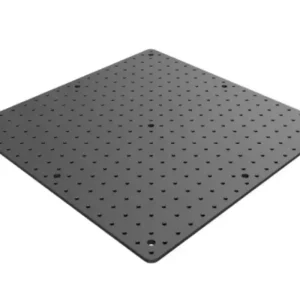
China OEM Custom Precision CNC Machining Non-Standard Solid Aluminum Optical Breadboard
View Component Specifications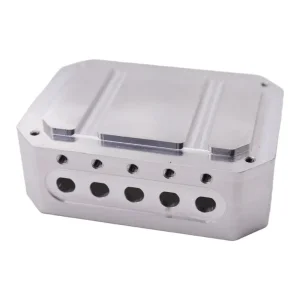
China Custom CNC Machined Aluminum Enclosure for RF & Industrial Sensor Modules
View Component Specifications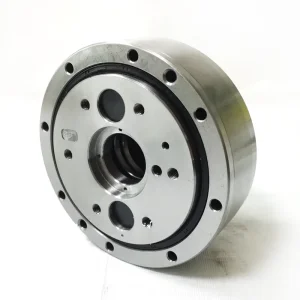
ODM Custom Hollow-Shaft Cycloidal Reducer | OEM Parts & Assembly
View Component Specifications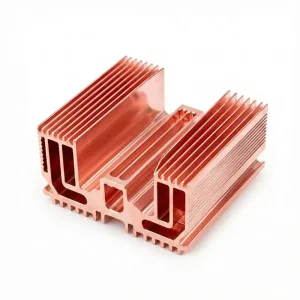
ODM High-Performance Copper Heatsink Manufacturer
View Component Specifications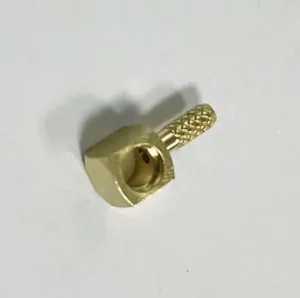
High-Quality Custom CNC Machining Brass Insert Connector with Knurled Pin
View Component Specifications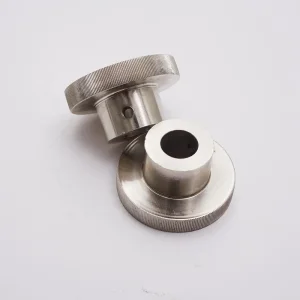
High-Quality Custom CNC Knurled Feed Rollers for Packaging Machinery
View Component Specifications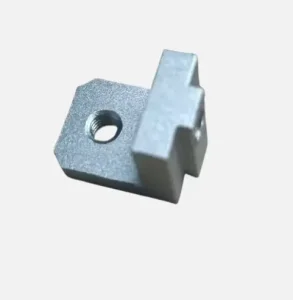
Custom CNC Milled Aluminum Alloy Right Angle Mounting Bracket
View Component Specifications