
Featured Precision Components for Overmolding Inserts
Precision-machined metal inserts, high-voltage busbars, optical housings, and sensor chassis manufactured to tight tolerances ready for cohesive elastomer and engineering thermoplastic overmolding.
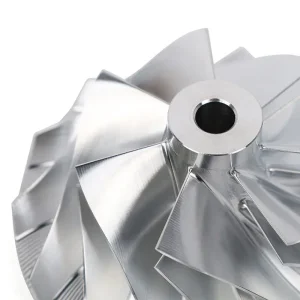
High-Quality Custom 5-Axis CNC Machined Billet Aluminum Impeller Compressor Wheel
Explore Specifications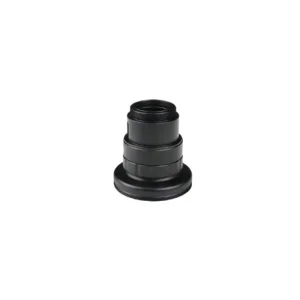
OEM Custom Precision CNC Turned Black Anodized Aluminum Lens Barrel & Optical Housing Components
Explore Specifications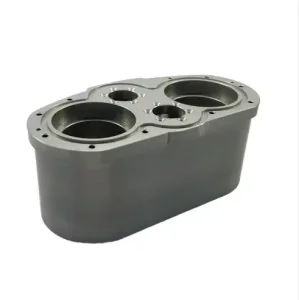
Custom 5-Axis CNC Machined Steel & Aluminum Universal Joint Base and Gearbox Shell
Explore Specifications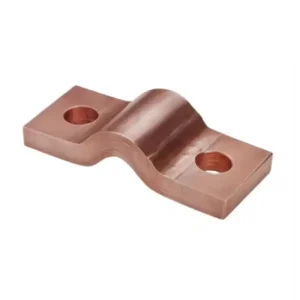
Custom Flexible Laminated Copper Busbar for Battery & Electrical Equipment Overmolding
Explore Specifications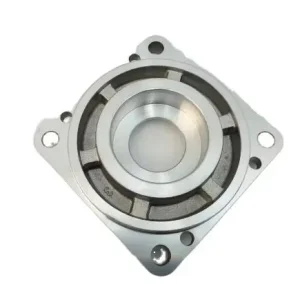
OEM Custom CNC Machining Parts / Precision Bearing Housings / Flanged Bearing Supports
Explore Specifications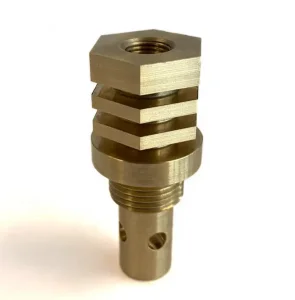
China Custom Precision CNC Machined Brass Cooling Block for Thermal Systems
Explore Specifications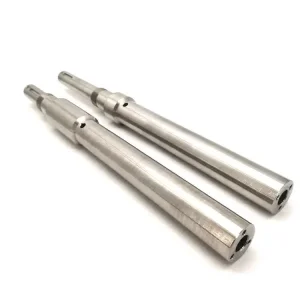
Custom CNC Turned Stainless Steel Stepped Shafts with Interlocking Keyways
Explore Specifications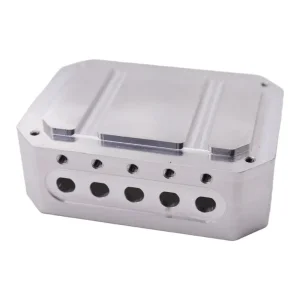
Custom CNC Machined Aluminum Enclosure for RF & Industrial Sensor Modules
Explore SpecificationsThe Engineering Paradigm Shift in OEM Overmolding
Modern high-reliability hardware engineering has outgrown conventional secondary fastening and manual O-ring assembly. As smart connected devices shrink in footprint and operate in volatile thermal and mechanical operating envelopes, overmolding (multi-shot and insert molding) has emerged as the definitive manufacturing process for consolidating disparate components into unified, ruggedized architectures.
Hermetic Environmental Sealing
By directly encapsulating metal contact pins, CNC-turned bosses, or stamped busbars with engineered Thermoplastic Elastomers (TPE) or Liquid Silicone Rubber (LSR), overmolding eliminates leak paths, achieving true IP67, IP68, and steam-washdown IP69K ratings without external adhesives.
Mechanical Consolidation & Dampening
Fusing soft-touch resin layers over high-modulus rigid skeletons (aluminum, brass, PEEK, or glass-filled PA66) damps severe dynamic harmonics in autonomous robotics and absorbs high-impact kinetic drops in defense grade handheld devices.
Electrical Isolation & Safety
In electric vehicle (EV) battery packs and power conversion units, precision overmolding coats conductive copper busbars with flame-retardant (UL94-V0) polyamide or polycarbonate, offering dielectric breakdown resistances surpassing 25 kV/mm.
Engineering Material Compatibility & Interfacial Bonding
Achieving cohesive interfacial bonding between hard substrate cores and overmolded elastomer skins requires rigorous alignment of chemical polarity, melt temperature windows, and thermal contraction dynamics.
| Substrate Core Material | Compatible Overmolding Resin | Adhesion Mechanism | Tensile Bond Strength | Typical Industrial Application |
|---|---|---|---|---|
| 6061-T6 Aluminum / Brass / C1100 Copper | TPU / Polyether-Based TPE / Liquid Silicone | Mechanical Undercut & Silane Primer | 12 - 18 MPa (Cohesive failure) | EV Battery Busbars, RF Sensor Housings, Tool Grips |
| Polyamide 6/66 (30% Glass Filled) | TPE (Styrenic block copolymer) / TPU | Thermal Melt Fusion (Chemical) | > 22 MPa (Substrate break) | Power Tool Enclosures, Under-the-Hood Auto Connectors |
| Polycarbonate / PBT / ABS Blends | Medical TPU / SEBS-based TPE | Polymer Chain Diffusion | 16 - 20 MPa | Surgical Handpieces, Wearable Diagnostic Monocasing |
| 316L Stainless Steel / Titanium Gr. 5 | Fluoropolymer Elastomers / LSR (Liquid Silicone) | Plasma Etch + Platinum Cure Agent | 14 - 17 MPa | Surgical Retractors, Drone Gimbal Pivots, Optical Barrels |
| PEEK / PEI (Ultem®) High-Temp Resin | High-Durometer Fluoroelastomer / FKM | Laser Micropatterning + Interlock | 15 - 19 MPa | Downhole Oil & Gas Sensors, Aerospace Avionics Rings |
Global Procurement Requirements for OEM Overmolding
Strategic sourcing teams across North America and Europe evaluate tier-1 overmolding contract manufacturers through strict operational frameworks designed to mitigate yield fallout, interfacial delamination, and intellectual property leak risks.
Insert Positional Precision
Metal inserts undergo high hydraulic pressures during polymer injection. Sourcing teams mandate insert retention tolerances under ±0.01 mm to prevent tooling cavity crush and shut-off blowouts.
Moldflow Thermal Balancing
Thorough CAE rheology simulation to predict knit lines, air traps, differential thermal shrinkage, and pre-heat protocols for metal cores to eliminate interfacial delamination during life-cycle shock.
Single-Roof Ownership
Eliminating subcontracted finger-pointing by maintaining internal CNC tooling fabrication, Swiss turning, high-tonnage stamping, and multi-shot molding within audited clean facilities.
Auditable Traceability
Complete batch documentation: resin drying logs, barrel thermocouple readouts, spectroscopic material melt certifications, First Article Inspection (FAI) reports, and CMM scans.
Macro Industry Solutions Powered by Overmolding
From extreme surgical sterility to harsh automotive underbody environments, our custom OEM overmolding factory integrations resolve complex cross-industry engineering bottlenecks.
Medical & Surgical Instrumentation
Medical-grade silicone and bio-compatible TPE encapsulation over surgical-grade 316L stainless steel and titanium shafts. Engineered to withstand over 1,000 autoclave steam sterilization cycles while maintaining tactile slip resistance and zero biological entrapment crevices.
Automotive & e-Mobility Systems
Direct high-tonnage overmolding of flame-retardant polyamide over thick copper laminated busbars, high-voltage battery quick-connectors, and wheel-speed ABS sensors. Delivers thermal endurance from -40°C to +150°C and dielectric isolation exceeding 1,000V DC.
Industrial Robotics & Smart IoT
Multi-shot elastomeric bumper encapsulation over CNC-machined 6061-T6 aluminum shells, multi-axis force-torque sensor collars, and robotic end-effector grippers. Engineered for continuous flex endurance, oil resistance, and environmental sealing to IP68 standards.
Global Compliance Assurance & In-House Metrology
Sunmy Hardware operates under rigorous international quality management systems. Sourcing teams rely on direct access to engineering verification records, eliminating cross-border compliance ambiguities.
First Article Inspection (FAI)
Complete AS9102-style FAI reports covering full ballooned drawings, tool steel heat-treat logs, core retraction sequences, and interfacial adhesion mechanical shear test outcomes.
In-House Zeiss CMM Verification
Multi-sensor Coordinate Measuring Machines (CMM) and optical 3D surface scanning verify post-mold contraction, true position of floating pins, and critical parting-line flash boundaries.
RoHS, REACH & Conflict Minerals
Certified raw stock supply chain. All elastomer masterbatches, thermoplastic resins, and metal alloys comply with EU Directives 2011/65/EU (RoHS) and EC 1907/2006 (REACH).
NDA & Intellectual Property Defense
Mutual Non-Disclosure Agreements executed prior to CAD exchange. Direct bilateral engineering communication removes trading brokers and shields proprietary design IP.
Technology Roadmap: Next-Generation Overmolding
As industrial and consumer electronics demand deeper functional integration, overmolding is expanding beyond conventional dual-material aesthetics toward smart structural intelligence.
In-Mold Electronics (IME) Overmolding
Integrating printed conductive silver traces, capacitive touch pads, and micro-SMD LEDs directly onto flexible films, then back-molding with structural polymers to create 3D monolithic user interfaces without mechanical switches.
Sub-Millimeter Micro-Overmolding
Deploying high-speed electric injection units with micro-screw plasticizing to encapsulate sub-miniature medical hearing transducers, neurovascular micro-connectors, and high-frequency RF micro-antennas down to 0.1 mm shot weights.
Circular Bio-Elastomers & Recyclability
Pioneering bio-attributed Thermoplastic Copolyesters (TPC) and reversible debonding chemical primers that maintain high operating bond strengths during product lifecycle yet enable clean material separation at end-of-life recycling.
Featured Hardware for High-Torque & Sealed Assembly
High-precision threaded brass knurled inserts, self-tapping studs, surgical linkages, and multi-thread hardware fabricated in-house to reinforce molded housings and guarantee pull-out resistance.
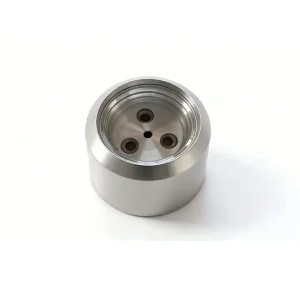
Precision CNC Machined High-Voltage Insulator Contact Base Service
Explore Specifications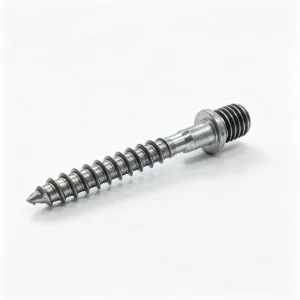
OEM Precision Turned Stainless Steel Dual-Thread Hanger Bolt Fasteners
Explore Specifications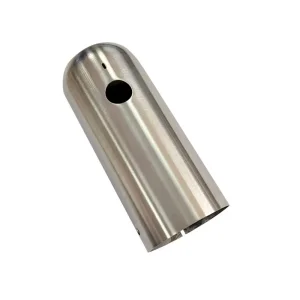
China Custom Precision CNC Turned Medical Sleeve Bushing Core Inserts
Explore Specifications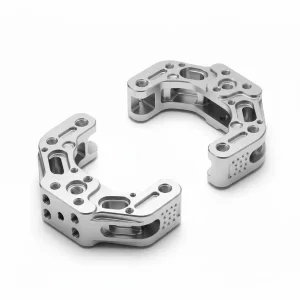
High-Quality Custom CNC Machined Robotic Gripper Jaws with Polyurethane Pads
Explore Specifications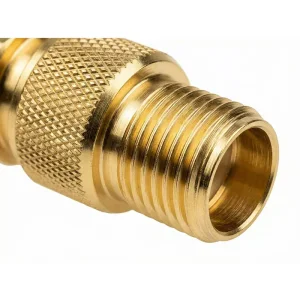
Precision Diamond Knurled Brass Threaded Connector for Plastic Overmolding
Explore Specifications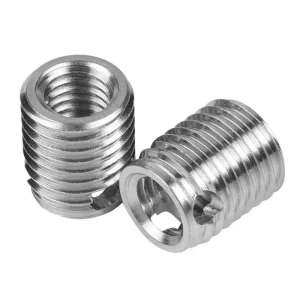
Custom Precision Self-Tapping Threaded Inserts for Structural Engineering Resin
Explore Specifications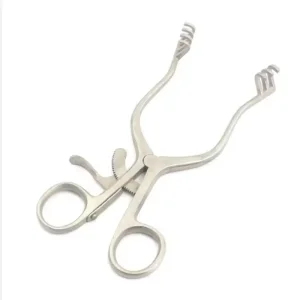
Stainless Steel Custom Surgical Retractor with Soft-Touch Overmolded Handle
Explore Specifications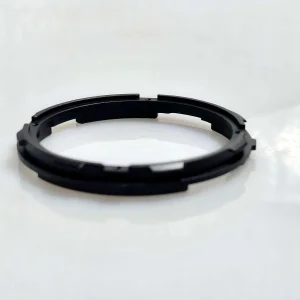
Custom CNC Turn-Milled Bayonet Mount & Locking Ring for Sealed Enclosures
Explore SpecificationsFrequently Asked Questions for OEM Overmolding
Direct engineering answers addressing critical design-for-manufacturing queries, tooling life cycles, interfacial bond assurance, and turnkey qualification procedures.
What is the primary difference between two-shot (2K) molding and insert overmolding?
How do you guarantee that the overmolded elastomer will not peel or delaminate over time?
How are inserts positioned inside the mold without shifting during high-pressure injection?
What quality documentation and inspection reports are provided before shipment?
Can you assist in rapid prototyping before cutting high-volume production steel tooling?
Initiate Your Custom Overmolding Sourcing Project
Upload your 3D CAD files (.STEP, .STP, .X_T) and 2D engineering drawings. Our senior tool design engineers will conduct a comprehensive DFM review within 24 hours—optimizing gate shut-offs, draft angles, and substrate adhesion mechanisms.
Consult With Senior Engineers