High-Tolerance Cast & CNC Machined Assemblies
Engineered for critical mission profiles across aerospace, robotics, surgical instrumentation, and extreme-environment energy networks. Inspected via in-house CMM and fully certified.
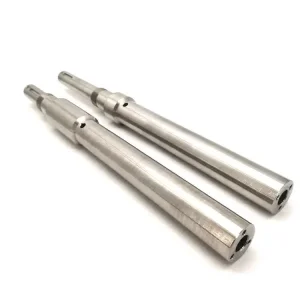
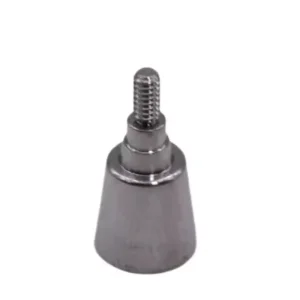
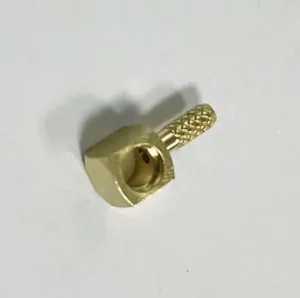
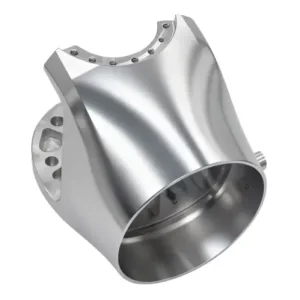
Macro Industrial Dynamics & Global Procurement Complexities
Strategic shifting from fragmented subcontracting to unified Tier-1 manufacturing ecosystems for safety-critical structural castings.
Total Cost of Acquisition
Global procurement teams in North America and Western Europe have transitioned from evaluating raw piece-part pricing to Total Cost of Acquisition (TCA). Substandard casting runs from secondary vendors create hidden vulnerabilities—such as internal micro-porosity exposed only at high-speed CNC finish turning, dimensional creep across unmonitored thermal batches, and unexpected transit scrap rates.
Process Integration Matrix
The modern supply chain rejects the disjointed workflow of sourcing raw cast blanks from one facility, machining in another, and applying anti-corrosion coatings via a third party. Sunmy Hardware operates an integrated OEM infrastructure: high-vacuum die casting and silica sol investment casting are tightly coupled with owned 5-axis CNC machining, coordinating quality protocols across a single engineering department.
Microstructural Determinism
Aerospace actuators, EV drivetrain brackets, and medical surgical tools require verifiable metallurgical integrity. Modern engineering RFQs explicitly dictate boundary phase morphology, dendritic arm spacing (DAS), and precise gas porosity limits evaluated under ASTM E155 X-ray standards, demanding foundational foundry control from alloy melting to thermal stabilization.
Precision Casting Engineering Solutions & Process Comparative Matrix
Selecting the optimal near-net-shape manufacturing pathway based on geometric complexity, wall thickness, metallurgical integrity, and lifecycle volume.
Vacuum High-Pressure Die Casting (HPDC)
Configured for high-volume aluminum (A380, ADC12, AlSi10Mg) and zinc (Zamak 3, 5) applications requiring thin walls (down to 1.2 mm) and heat sinks. Incorporating multi-stage vacuum assist during shot injection evacuates air from the die cavity, suppressing gas entrapment porosity by up to 80% to ensure pressure tightness and thermal conductivity.
Silica Sol Investment Casting (Lost Wax)
The standard for stainless steels (316L, 304, 17-4PH), high-nickel superalloys, and titanium alloys where complex undercuts and razor-sharp profiles forbid conventional die extraction. Utilizing robotic ceramic shell dipping and dewaxing autoclaves produces an isotropic grain structure, linear tolerances within ISO 8062-3 CT4-CT6, and surface finishes down to Ra 3.2 µm.
Post-Cast 5-Axis CNC Integration
Near-net-shape castings undergo high-speed finishing across multi-axis machining centers. By constructing customized pneumatic clamping fixtures directly matched to coordinate datums on the casting tool, we machine bearing bores, critical o-ring sealing grooves, and micro-threaded keyways down to ±0.005 mm without cumulative setup error.
| Casting Methodology | Compatible Alloys | As-Cast Tolerance | Surface Roughness (Ra) | Secondary Machining Interface | Typical Volume Scope |
|---|---|---|---|---|---|
| Vacuum HPDC | AlSi10Mg, A380, ADC12, Zamak 3/5 | ±0.10 – ±0.25 mm | 1.6 – 3.2 µm | CNC Boring, Facing, Threading | >3,000 to Millions pcs/yr |
| Silica Sol Investment | 316L, 17-4PH, Inconel 718, Ti6Al4V | ±0.08 – ±0.15 mm | 3.2 – 6.3 µm | Datum Alignment, Reaming, Tapping | 100 to 50,000 pcs/yr |
| Low-Pressure Die Casting | A356, AlSi7Mg0.3 (T6 Heat Treatable) | ±0.15 – ±0.30 mm | 3.2 – 6.3 µm | High-Speed 5-Axis Profiling | 500 to 20,000 pcs/yr |
| Sunmy Turnkey Flow | Full Metal Spectrum + Heat Treat | Down to ±0.005 mm | Down to 0.4 µm (Turn/Mill) | Single-Setup Complete In-House | Prototypes to Scale |
Technological Roadmap: AI In-Cavity Sensing & Foundry 4.0
Transitioning from reactive defect inspection to predictive defect prevention via finite-element simulation, thermal cycle telemetry, and closed-loop process control.
Predictive CAE Solidification Modeling
Before steel is cut for gating, runner trees, or cooling lines, Sunmy engineers execute full-physics computational modeling (MAGMASoft & ProCAST). Melt front progression, air evacuation, cooling gradients, and shrinkage concentrations are simulated iteratively. This engineering-first approach eliminates short shots, cold shuts, and internal hot tears during pilot runs.
In-Cavity Pressure & Thermal Telemetry
Smart die systems leverage piezoelectric in-cavity pressure sensors and high-speed infrared thermal probes. Real-time feedback loops control shot injection dynamics and intensifier pressure ramps. If temperature variance occurs, cycle timing automatically adjusts to ensure consistent crystallization across millions of cycles.
Closed-Loop Metrology & Adaptive CNC Tooling
Post-cast coordinate measurements via automated Zeiss CMM feedback directly into machining center tool offsets. Thermal expansion or slight shrinkage drift is compensated through real-time G-code offset adjustments, guaranteeing critical bearing alignments remain within ±0.005 mm regardless of environmental shifts.
Auditable Compliance, Traceability & Risk Mitigation
Bridging overseas procurement gaps with enterprise-grade quality infrastructure, documented material traceability, and robust intellectual property protection.
AS9100 / ISO 9001:2015
Documented procedural control from raw ingot spectroscopic chemistry verification to final cleanroom packing. Calibrated multi-sensor inspection ensures repeatability on every batch.
Material Traceability
Each melt lot is validated via optical emission spectrometry. Full EN 10204 Type 3.1 chemical composition and mechanical test certificates (yield, tensile, elongation) accompany every shipment.
Direct NDA Execution
CAD data is never exposed to brokers or sub-tier trading houses. Sunmy operates a direct engineering liaison model: NDAs are executed before STEP/IGES transfer, securing sensitive designs.
Global Logistics & DDP
Export compliance, HS tariff categorization, and moisture-sealed vacuum vapor corrosion inhibitor (VCI) maritime packing guarantee parts arrive free from oxidation or transit damage.
Engineering & Procurement FAQ
Direct answers addressing technical feasibility, tooling amortization, and quality protocols for precision casting programs.
How do you isolate and eliminate internal porosity in structural aluminum castings?
Porosity mitigation begins at the design and melting phases. We employ rotary degassing using high-purity nitrogen/argon to eliminate dissolved hydrogen from molten aluminum below 0.12 cm³/100g. In high-pressure die casting, vacuum chill blocks evacuate cavity gas below 50 mbar prior to liquid metal entry. For safety-critical structural castings, parts undergo automated X-ray radiography inspection (ASTM E505) and can be treated with Hot Isostatic Pressing (HIP) to diffusion-bond residual microporosities.
What parameters drive tooling life cycles and amortization across casting runs?
Die casting die life depends on alloy chemistry, thermal shock intensity, and die steel grade. For aluminum alloys, dies made from Premium H13 or Uddeholm Dievar deliver 80,000 to 120,000 shots when maintained with stress-relief tempering every 25,000 shots. Zinc alloys, melting at lower temperatures, regularly achieve 500,000 to 1,000,000 shots. In silica sol investment casting, aluminum wax-injection tooling lasts indefinitely, requiring only minor gate and ejector pin servicing.
When is it more cost-effective to transition from pure CNC machining to near-net casting?
The economic breakeven threshold generally balances material buy-to-fly ratios and cycle runtimes. When subtractive CNC milling results in more than 60% billet swarf loss—common with complex thin-walled manifolds, pump impellers, and motor enclosures—investment or die casting becomes cost-positive at volumes as low as 250 to 500 units. Near-net shape blanks consolidate cycle times down to minutes of fine surface finishing, eliminating raw material waste.
What exact validation documentation accompanies First Article Inspection (FAI)?
All FAI packages align with AS9102 aerospace or PPAP Level 3 conventions. Deliverables encompass 100% ballooned engineering drawing reviews, Zeiss CMM volumetric coordinates, OES chemical spectrometry reports, mechanical tensile and yield test records, cross-sectional metallographic grain size evaluations, ASTM salt-spray corrosion certifications, and RoHS/REACH compliance documentation.
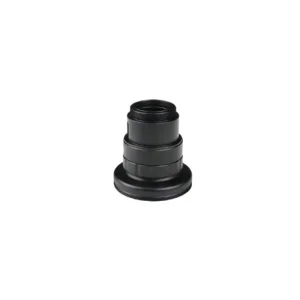
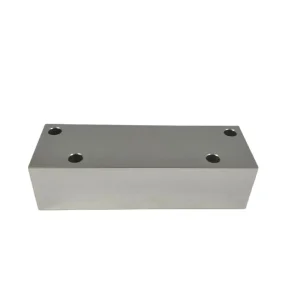
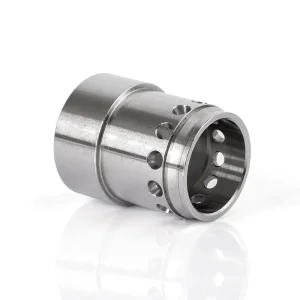
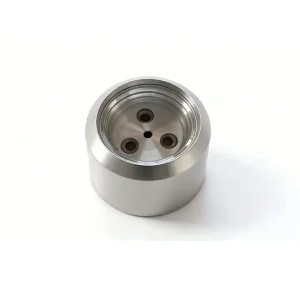
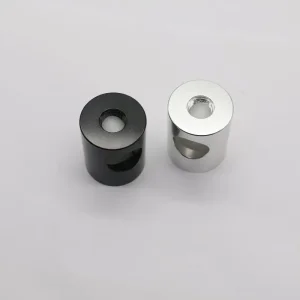
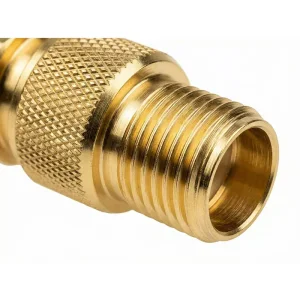
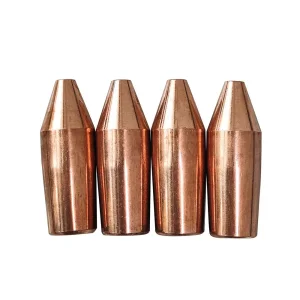
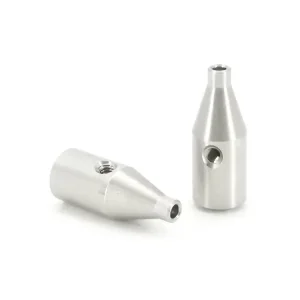
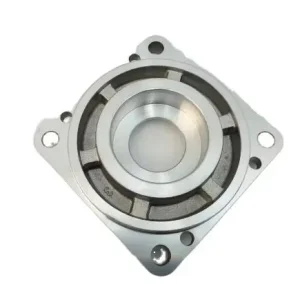
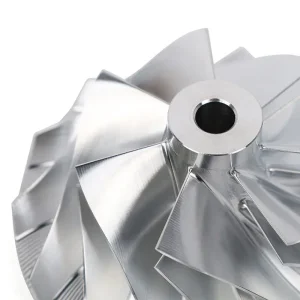
Precision Turned, Cast & High-Tolerance Multi-Axis Components
Engineered to withstand extreme cyclical pressure, tight hermetic seals, and high dynamic loads. Manufactured under disciplined QA workflows.
Ready to Accelerate Your Casting & CNC Machining Program?
Submit your 2D/3D CAD data (STEP, STP, IGES, X_T, PDF) directly to our senior engineering team. Receive detailed manufacturability analysis, parting line evaluation, draft optimization, and transparent tiered factory quotes within 24 hours.