Featured Custom Tooling & High-Tolerance Components
Direct OEM/ODM production outputs across 5-axis CNC machining, structural casting, and micro-tolerance turning—verified via in-house CMM and non-destructive testing.
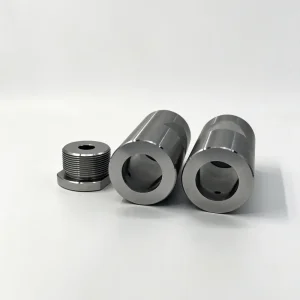
China Custom CNC Turned Tooling Sleeves & Threaded Retaining Plugs
View Specifications →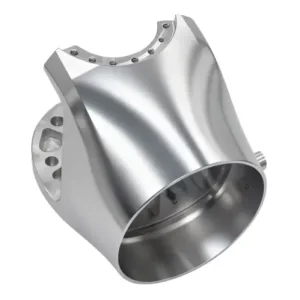
ODM High-Precision Custom 5-Axis CNC Machined Robot Joint & Housing Parts
Request Quotation →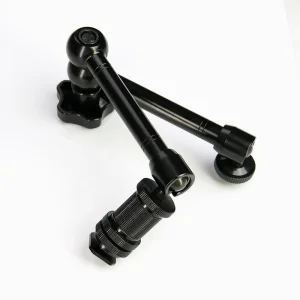
OEM 7-Inch CNC Aluminum Articulating Magic Arm for Camera & Monitor
Technical Specs →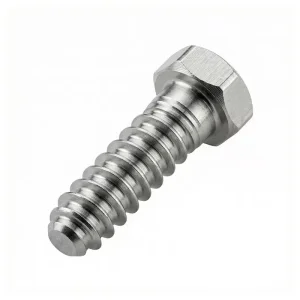
Custom Titanium Medical Implant / Bone Screw Exporter, Factories
Explore Implant Line →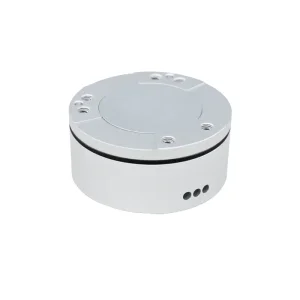
China Custom 6-Axis Force/Torque Sensor Housings & Elastic Elements
Sensor Enclosures →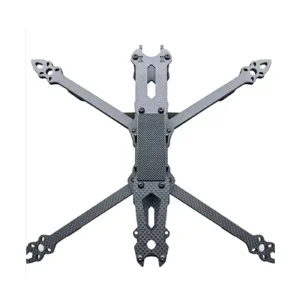
China Custom CNC Machined Carbon Fiber Drone Frame Kits
UAV Frame Kits →
OEM Custom CNC Machined Aluminum Optical Lens Mounting Bracket
Optical Mounts →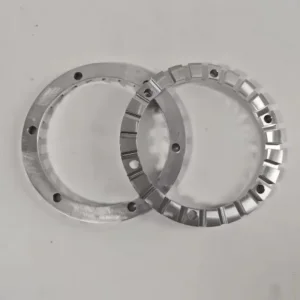
China Custom CNC Machined Anodized Sealing Rings for Semiconductor
Sealing Assemblies →Strategic Sourcing: The Structural Advantages of Chinese Die Casting Mold Factories
The global high-pressure die casting (HPDC) tooling landscape has undergone a tectonic shift. Beyond straightforward cost differentials, premier Chinese mold manufacturers combine full-scale supply chain density with world-class metallurgy, cutting-edge multi-axis machining centers, and shortened engineering iteration cycles.
Ultra-Dense Supply Clusters
Concentrated in the Greater Bay Area (Shenzhen, Dongguan) and Yangtze River Delta, our ecosystem integrates certified tool steel suppliers, specialized vacuum heat-treatment furnaces, deep-hole drilling specialists, and laser cladding facilities within a 30-kilometer radius.
- Lead Time: T0 sampling reduced from 14 weeks to 28-35 days
- Material Traceability: Certified melt origins with mill test sheets
- Logistics Synergy: Immediate air/sea departure via Shenzhen & Hong Kong
Advanced Tooling Metallurgy
Die longevity is dictated by thermal fatigue resistance and toughness. We machine premium imported and high-tier domestic tool steels (Uddeholm Dievar, Böhler W300, DIN 1.2344 ESR, Premium Grade H13) treated under multi-stage vacuum quenching.
- Core Hardness: Vacuum quenched to 46-50 HRC with double tempering
- Thermal Fatigue Resistance: Controlled microsegregation and grain refinement
- Surface Engineering: PVD CrN/TiAlN multi-layer anti-soldering coatings
Direct-to-Engineering DFM Agility
Eliminating intermediate broker layers, European and American engineering teams collaborate synchronously with our bilingual tooling engineers. We validate gate geometry, parting lines, venting channels, and ejector pin layouts before steel is cut.
- Simulation: AnyCasting and Moldflow thermal & flow balance modeling
- Intellectual Property: Strict NDA compliance and secure CAD handling
- Iteration Speed: Real-time tooling modification updates within 12 hours
Die Casting Tool Steel Selection & Process Parameter Matrix
Tool steel selection dictates cycle time, maintenance overhead, and total shot life. Our Shenzhen facility engineers multi-cavity dies matching specific cast alloys (A380, ADC12, AlSi10MnMg, Zamak 3/5, AZ91D).
| Steel Grade | Hardness (HRC) | Optimal Alloy Application | Expected Shot Life | Key Mechanical Properties |
|---|---|---|---|---|
| Uddeholm Dievar | 46 – 50 HRC | Structural Aluminum & Large Automotive EV Castings | 150,000 – 250,000+ | Exceptional ductility, high hot-yield strength, premier thermal shock resistance. |
| Böhler W300 / DIN 1.2344 ESR | 44 – 48 HRC | Automotive Powertrain, Industrial Inverters, Telecom Heatsinks | 100,000 – 160,000 | Electro-slag remelted purity, uniform grain orientation, high resistance to thermal cracking. |
| Premium North American H13 | 44 – 48 HRC | General Aluminum (ADC12, A380) & Magnesium Parts | 80,000 – 120,000 | Versatile air-hardening grade with balanced impact toughness and machinability. |
| DIN 1.2343 (AISI H11 ESR) | 46 – 50 HRC | Thin-walled Enclosures, Complex Optical Instrument Bodies | 90,000 – 140,000 | Higher impact toughness than standard H13 at elevated preheating temperatures. |
| NAK80 / 1.2311 (Pre-hardened) | 36 – 40 HRC | Zinc Alloy Die Casting (Zamak 3, 5, ZA8) | 300,000 – 500,000+ | Excellent mirror polishability, no secondary heat-treat distortion, ideal for aesthetic parts. |
Technological Frontiers in High-Pressure Die Casting (HPDC)
Modern manufacturing mandates higher yield, zero gas entrapment, and thinner wall thicknesses. Sunmy Hardware incorporates AI-driven thermo-fluid dynamic simulations, additive conformal cooling, and vacuum extraction systems.
Conformal Cooling Inserts
Using Selective Laser Melting (SLM / DMLS 3D printing) with high-strength maraging steel (MS1/1.2709), we embed curved conformal cooling channels directly beneath hot spot surfaces, cutting cycle times by 20% to 35% and mitigating sink marks.
High-Efficiency Vacuum Systems
For high-ductility automotive crash-box nodes and heat-treatable (T6/T7) components, we employ sub-50 mbar multi-point vacuum valves to evacuate air and cavity gas in milliseconds, virtually eliminating internal gas porosity.
Giga-Casting Tooling
To meet the rising demand for integrated rear underbodies and battery packs, our engineering partners leverage 6,000T to 12,000T die blocks, incorporating segmented modular cores for easy maintenance and localized thermal regulation.
Wear-Resistant PVD Coating
We utilize physical vapor deposition (PVD) to coat high-velocity molten aluminum impact areas with specialized CrN, TiAlN, or multi-nanolayer ceramic coatings, drastically reducing molten metal soldering, erosion, and maintenance downtime.
Localized Application Scenarios & Sector-Specific Solutions
Precision die cast tooling serves across diverse sectors with exacting tolerances, surface cosmetics, and metallurgical standards. Here is how Sunmy Hardware tailors tooling solutions to major industries:
Automotive & Electric Vehicle (EV) Systems
Structural crash management nodes, battery module side-rails, motor inverter housings, and transmission cases. We focus on lightweighting via low-iron aluminum alloys (AlSi10MnMg), requiring thermal balance modeling to prevent warping across broad profiles.
- Leak Tightness: Pressure testing verified up to 3.5 bar with zero seepage
- Post-Machining Stability: Integrated stress relief anneal cycles
- Quality Compliance: Full IATF 16949 control plans and PPAP Level 3 documentation
Industrial Robotics & Automation Actuators
Robotic articulating knuckles, hollow-shaft harmonic drive chassis, and sensorized gripper bases. High torque transmission demands casting cores with zero shrinkage porosity at structural bolt bosses, backed by secondary 5-axis CNC post-machining.
- Precision Tolerances: Dowel pin centers and bearing bores maintained to ±0.008 mm
- Structural Integrity: Non-destructive X-ray CT testing (ASTM E505 Level 1/2)
- Rigidity: Optimized internal rib structures via finite element topology analysis
5G/6G Telecom & High-Frequency Active Radios
Thin-walled Massive MIMO cavity filters, RF heat sinks, and outdoor transceivers. These parts require ultra-high thermal conductivity alloys (such as cast aluminum Al-Si-Fe-Cu alloys reaching 150-180 W/m·K) paired with thin fin drafts (0.7°-1°).
- Fin Density: Aspect ratios exceeding 18:1 with smooth thermal fin pullout
- Corrosion Barrier: Salt-spray resistance testing up to 1,000+ hours with trivalent chromate
- Shielding: Cast-in conductive gasket channels for IP67/IP68 weather sealing
Medical Devices & Optical Instrumentation
Centrifuge chassis, diagnostic imaging arm brackets, surgical microscope arms, and optoelectronic frames. Demands cosmetic defect-free finishes suitable for hospital-grade chemical wipe-down and precision optical mounting planes.
- Cosmetic Finishing: Defect-free surface preparation for Class-A medical powder coating
- Cleanliness: Ultrasonic washing and cleanroom packing for zero particulate transfer
- Bio-compatible Anodizing: Hardcoat anodizing and passivated passivation matrices
What Global Supply Chain Directors Audit in a Chinese Mold Factory
When Western engineering buyers qualify a tooling vendor in China, they need reliable operational verification rather than generic promises. Below is our standard auditable framework for tooling construction and part approval.
Standardized Tooling Architecture
We manufacture mold bases utilizing standard DME, HASCO, or LKM sizing to guarantee overseas toolrooms can readily interchange core pins, ejectors, cooling baffles, and hydraulic cylinders during mass production lifecycle runs.
First Article Inspection (FAI) & CMM
Every dimension on the customer 2D blueprint is ballooned and checked across our Zeiss / Hexagon coordinate measuring machines (CMM). Critical features are accompanied by Cp/Cpk statistical process capability studies (Cpk ≥ 1.67).
Defect Mitigation & Moldflow
Before machining raw steel, we provide Moldflow filling and cooling simulations identifying potential air traps, cold shuts, shrinkage porosities, and thermal hot spots. Gating and venting layouts are frozen only with client sign-off.
Frequently Asked Questions for Die Casting Tooling Sourcing
Clear engineering insights answering critical questions from technical directors, tooling engineers, and procurement managers.
What tolerances can Sunmy Hardware maintain on die casting mold cores and cavities?
Which tool steels are recommended for high-volume aluminum die casting?
Can Sunmy build export-ready molds that run in Western die-casting machines?
How do you prevent porosity and internal gas entrapment during HPDC?
What is the typical lead time from 3D CAD sign-off to First Article Inspection (T0)?
How does Sunmy Hardware protect customer IP and proprietary engineering drawings?
Explore Allied Custom Components & Specialized Hardware
From specialized thermal copper heatsinks to titanium medical prosthetics, our multi-facility manufacturing capabilities deliver complete turnkey solutions from prototype to volume production.
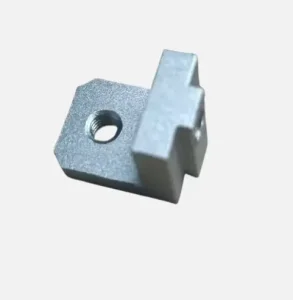
Custom CNC Milled Aluminum Alloy Right Angle Mounting Bracket
Explore Product →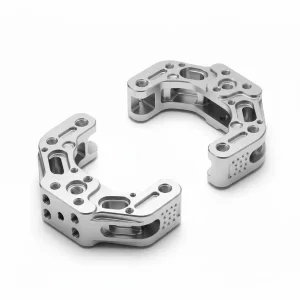
High-Quality Custom CNC Machined Robotic Gripper Jaws
View Gripper Jaws →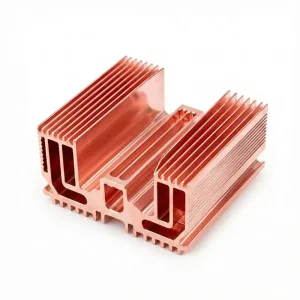
ODM High-Performance Copper Heatsink Manufacturer
Thermal Heatsinks →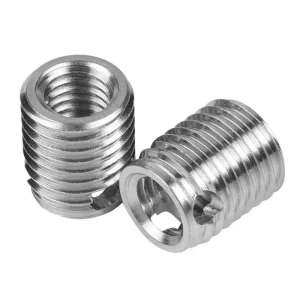
Custom Custom Self-Tapping Threaded Inserts Product
Threaded Inserts →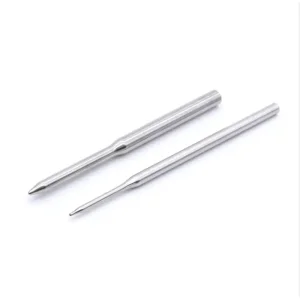
OEM Custom Stainless Steel Waterproof Sensor Probe Housing
Probe Housings →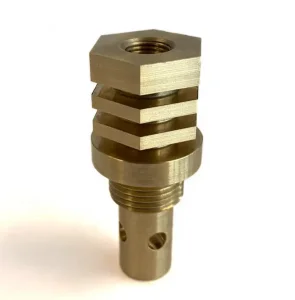
China Custom Precision CNC Machined Brass Cooling Block
Cooling Blocks →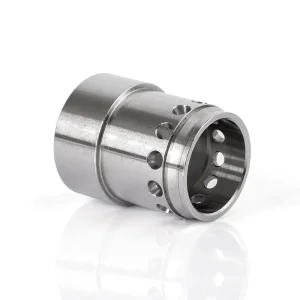
ODM Custom CNC Precision Turned Stainless Steel Filter Sleeve
Filter Sleeves →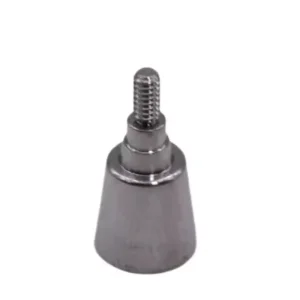
Custom CNC Turned Titanium Abutment Implant Driver & Connector
Prosthetic Connectors →Accelerate Your Die Casting Program with Chinese Tooling Precision
Send your 2D drawings with GD&T specifications and 3D STEP/IGES models. Our senior tooling engineers deliver an exhaustive DFM report, filling simulation, and tooling cost analysis within 24 hours.