
High-Integrity Custom Hardware Solutions
Explore precision-engineered hardware components manufactured under sub-millimeter tolerances and verified for mission-critical mechanical systems.
-
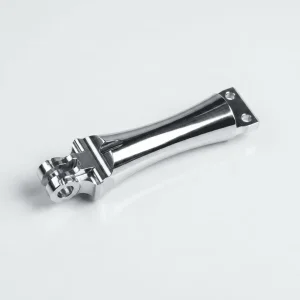
Custom Custom CNC Machined Robot Finger Joint Link Manufacturers, Exporter
-
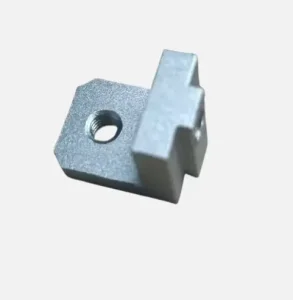
Custom Custom CNC Milled Aluminum Alloy Right Angle Mounting Bracket Manufacturer, Supplier
-
-
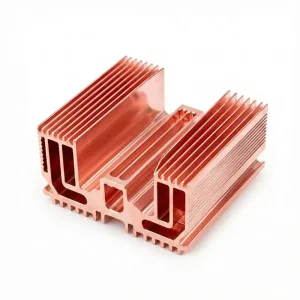
ODM High-Performance Copper Heatsink Manufacturer, Factories
-
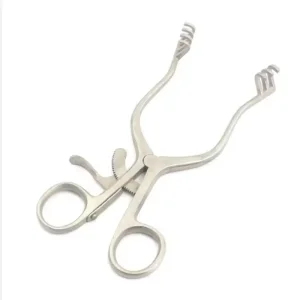
China Professional Quality Stainless Steel Custom Surgical Retractor Service, Exporter
-
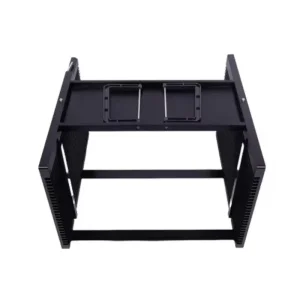
OEM Premium 8-Inch CNC Machined Aluminum Semiconductor Wafer Carrier Factories, Quotes
-
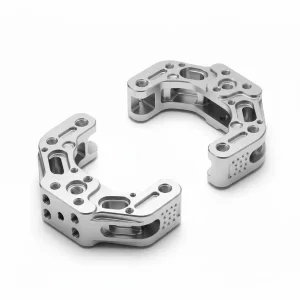
High-Quality Custom CNC Machined Robotic Gripper Jaws Service, Quotes
-
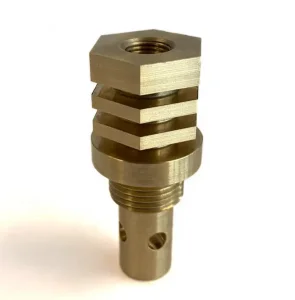
China Custom Precision CNC Machined Brass Cooling Block Factories, Quotes
Macro-Industrial Landscape of Marine Hardware Sourcing
Strategic offshore procurement in marine engineering has transitioned from cost-arbitrage purchasing to deep-tier technological alignment and supply chain resilience.
Severe Environment Metallurgy
Global shipbuilders, commercial operators, and subsea instrument makers face punishing chloride ions and electrolytic degradation. Procurement teams prioritize suppliers offering traceable AISI 316L, Duplex 2205, and titanium alloys to secure 30-year operational design lifespans.
Supply Chain Redundancy
Supply disruptions have forced global marine OEMs to consolidate vendor tiers. By operating in-house CNC machining and stamping while orchestrating casting partners under a unified QA protocol, our integrated Shenzhen hub removes tiered supplier vulnerabilities.
Zero-Intermediary Direct Supply
Naval architecture and precision sensor development demand direct interaction with process engineers. Sunmy eliminates export brokers and trading companies, executing bilateral NDAs prior to CAD transfers and preserving IP integrity through every manufacturing cycle.
End-to-End Marine Hardware Manufacturing Solutions
From initial Design for Manufacturability (DFM) reviews to precision machining and protective passivation, our workflows adhere to rigorous international maritime standards.
Multi-Axis Precision CNC Machining
Equipped with 3, 4, and 5-axis CNC machining centers and Swiss turning machines, we produce complex marine components like sensor housings, articulated joint links, and propeller hubs with tight positional tolerances down to ±0.005 mm.
Silica Sol Investment & Die Casting
For deck fittings, cleat cleats, through-hull fittings, and structural hinges, our casting technologies provide dense, non-porous microstructure. Post-casting CNC milling guarantees dimensional compatibility with zero structural compromise.
Advanced Maritime Surface Engineering
Corrosion mitigation is engineered into the surface. We provide electropolishing, citric and nitric acid passivation, Type III hardcoat anodizing for marine aluminum (6061/5083), and specialized multi-layer PVD coatings that consistently exceed ASTM B117 salt spray benchmarks.
Engineering Roadmap: The Next Era of Marine Component Manufacturing
The convergence of autonomous marine robotics, hybrid electric propulsion, and smart sensor integration demands next-generation hardware manufacturing frameworks.
Hybrid Additive & Subtractive Workflows
Integrating Selective Laser Melting (SLM) for titanium boosters and conformal cooling channels with high-speed multi-axis CNC finishing. This approach reduces component weight by up to 40% while preserving hydrostatic pressure ratings in deep-sea environments.
Predictive In-Situ Quality Assurance
Real-time CNC tool-wear tracking and digital twin machining environments verify surface roughness (Ra < 0.4 µm) and geometry in-line, providing transparent metallurgical validation for each production batch.
Circular Metallurgy & Carbon Neutrality
Transitioning toward low-carbon billet casting, verifiable green aluminum alloys, and closed-loop scrap reclamation. We provide global OEMs with Scope 3 carbon footprint verification across machined and stamped product lines.
Verification, Traceability & Risk Mitigation
Operational integrity in commercial and naval applications is supported by complete documentation, material trace certs, and certified quality protocols.
First Article Inspection (FAI) & CMM
Every initial production run is backed by comprehensive First Article Inspection (FAI) reports compliant with AS9102 protocols. In-house Coordinate Measuring Machines (CMM) evaluate all key GD&T parameters prior to mass production.
EN 10204 3.1 Traceability
Raw materials—ranging from 316 stainless steel to naval bronze and aircraft-grade aluminum—are supplied with EN 10204 3.1 inspection certificates. Chemical composition and mechanical tensile properties are verified to protect against counterfeit alloys.
Global DDP Fulfillment Logistics
With direct engineering representation serving North American, European, and Asia-Pacific supply networks, we offer integrated export management including DDP, air, and ocean freight logistics, protected by moisture-barrier export crating.
Frequently Asked Questions for Marine Hardware Sourcing
Key technical and procurement details addressed by our engineering team to streamline supplier qualification and new product introduction.
What specific stainless steel and alloy grades do you recommend for marine deck hardware versus submerged applications?
How do you verify anti-corrosion properties and surface integrity before shipping?
Can Sunmy transition parts from rapid prototype machining to volume casting or stamping?
What is your standard protocol for protecting intellectual property and CAD models?
What are your typical lead times for tooling, prototypes, and production volumes?
Advanced Marine, Optical & Industrial Systems
Review additional custom OEM/ODM production parts produced across our CNC machining, turning, and multi-process stamping facilities.
-
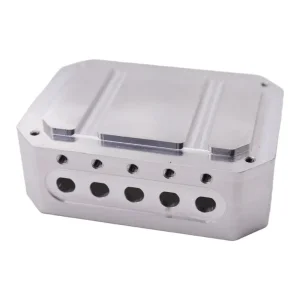
China Custom CNC Machined Aluminum Enclosure for RF & Industrial Sensor Modules Service, Products
-
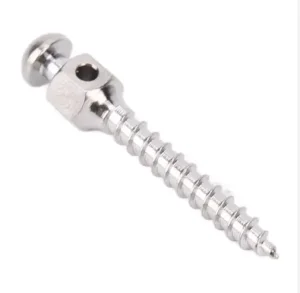
China Custom Precision Titanium Orthodontic Micro Implant Screws Manufacturers, Factories
-
-
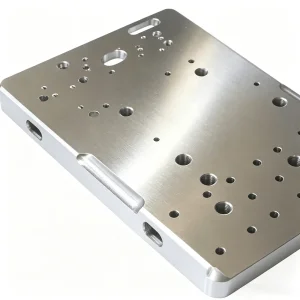
OEM Custom CNC Machined Aluminum Multi-Hole Mounting Plate Manufacturer, Suppliers
-
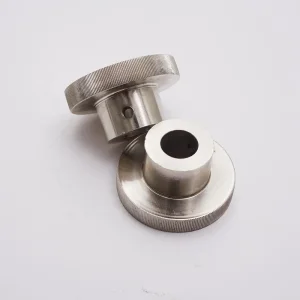
High-Quality CUSTOM CNC KNURLED FEED ROLLERS FOR PACKAGING MACHINERY Products, Factories
-
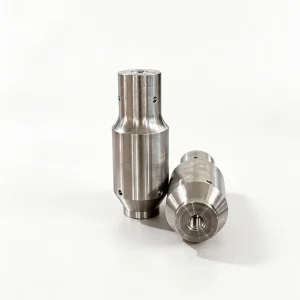
ODM Custom Titanium Ultrasonic Booster Manufacturers, Factory
-
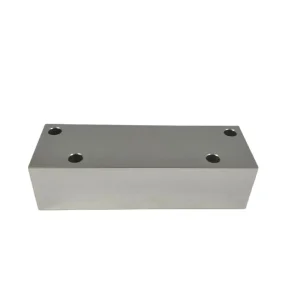
ODM Custom CNC Machined Aluminum Vacuum Manifold Block Manufacturer, Products
-
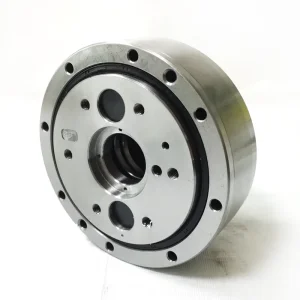
ODM Custom Hollow-Shaft Cycloidal Reducer | OEM Parts & Assembly Product, Exporters