Rapid Prototyped Hardware & Precision Components
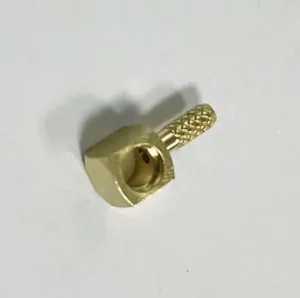
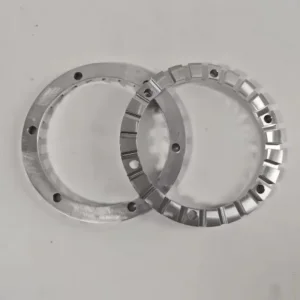
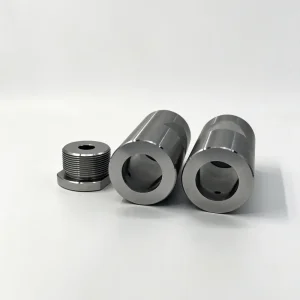
Direct factory execution for custom turned bushings, sensor bodies, micro-fixtures, and optical housings supporting quick-turn sheet metal and mechanical assemblies.
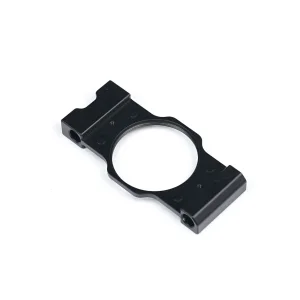
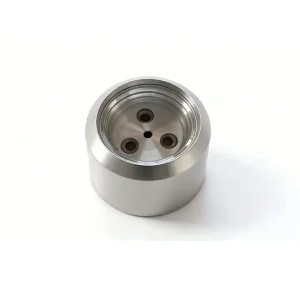
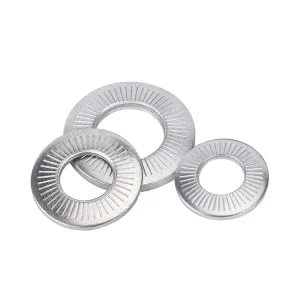
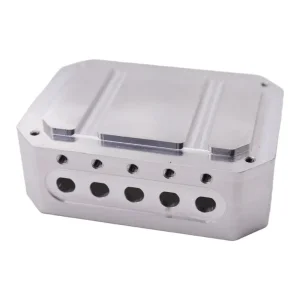
The Evolution of Precision Sheet Metal Prototyping: 2025–2030 Trends
Modern sheet metal fabrication has evolved far beyond traditional stamping. Driven by Industry 4.0 automation, ultra-high-power fiber lasers, and agile digital manufacturing, engineering procurement teams can now transition from CAD to physical prototype within hours rather than weeks.
Tooling-Free Rapid Iteration
By leveraging high-speed 12kW-30kW fiber laser cutters and multi-axis electric CNC press brakes, prototype runs bypass costly progressive dies. This eliminates 4- to 8-week tooling lead times, enabling R&D engineering teams to test physical forms, verify thermal management, and adjust hole patterns dynamically.
Design for Manufacturability (DFM)
Advanced algorithmic sheet metal unfolding software calculates precise bend deductions, neutral axis shifts (K-factor), and minimum flange heights before a single cut is made. Automated DFM prevents flange tearing, minimizes corner notch stress risers, and guarantees tight enclosure seams.
Hybrid Sheet-CNC Integration
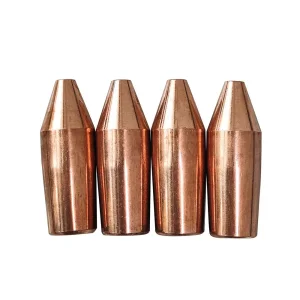
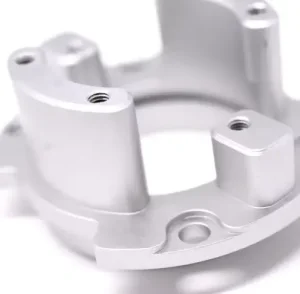
Modern complex enclosures require more than folded plate; they demand turned threaded bosses, milled O-ring gland faces, laser-cut louvers, and spot-welded grounding studs. Shenzhen Sunmy unites precision turning, 5-axis milling, and stamping under one accountability umbrella.
China Factory 4.0: Speed, Capacity, and Total Cost Advantage
Global supply chain directors face a volatile macroeconomic landscape: escalating nearshore labor expenses, tight domestic machine capacity, and extended lead times for tooling. The Greater Bay Area manufacturing cluster in southern China delivers unmatched ecosystem density that solves these bottlenecks.
The Pain Points of Western Sourcing
When North American and European enterprises source domestic prototypes, they encounter steep minimum order charges ($500–$1,200 for basic chassis), 3- to 6-week turnaround queues, and fragmented subcontractor networks where laser cutting, bending, plating, and silkscreening are executed by separate firms. Any design revision causes catastrophic schedule slippage.
- High hourly machine rates ($120–$180/hr) inflating prototype budgets.
- Limited surface finishing tanks locally, causing out-of-house finishing delays.
- Inflexibility in accommodating rapid engineering change orders (ECO).
The Shenzhen Sunmy Ecosystem Advantage
In Shenzhen, material distributors, raw sheet coil stockists, powder coating lines, and RoHS-compliant electroplating baths operate within a 20-kilometer radius. Our facility runs 24/7 automated nesting software that batches prototypes alongside low-volume pilot runs, passing dramatic efficiencies directly to clients.
- 24-Hour Quotation Turnaround: Fully itemized quotes with DFM feedback.
- Direct Engineering Dialogue: Work directly with tooling masters, not brokers.
- Seamless Ramp: Shift from 5 functional prototypes to 50,000 progressive stamped units.
Prototyping Process Capabilities & Engineering Limits
Precision sheet metal fabrication is ruled by physics: metal ductility, grain direction, springback, and heat distortion during laser piercing. Sunmy Hardware adheres to DIN ISO 2768-m/f standards to verify strict geometric compliance.
| Operation | Material Scope | Thickness Capability | Achievable Tolerance | Key Value Proposition |
|---|---|---|---|---|
| Fiber Laser Cutting | AL 5052/6061, SUS304/316, SPCC, SECC, Copper, Brass | 0.3 mm – 25.0 mm | ±0.05 mm (±0.002 in) | Nitrogen-assist cutting eliminates oxide edge, ready for immediate powder coat or welding. |
| CNC Press Brake Bending | Aluminum Alloys, Stainless Steel, Carbon Steel, Spring Steel | 0.5 mm – 12.0 mm | ±0.15 mm (Angle ±0.5°) | Dynamic hydraulic crowning and laser angle sensors prevent bow and springback error. |
| Turret Punching & Forming | Cold-rolled steel, Galvanized sheet, Aluminum | 0.8 mm – 4.0 mm | ±0.08 mm | Cost-effective louvers, embosses, countersinks, and card guide lance slots without secondary stamping. |
| Hardware Insertion (PEM) | Clinch nuts, threaded studs, standoffs, flush head pins | M2 through M10 studs | Push-out / Torque-out verified | Automated bowl-fed insertion presses ensure zero missing hardware or sheet distortion. |
| TIG / MIG / Laser Welding | Stainless steel, Aluminum, Structural carbon steel | 0.8 mm – 15.0 mm | Hermetic sealing / Clean ground | Hand-ground sanitary welds for medical/food cabinets; continuous seam laser welding. |
| Surface Finishing | All industrial alloys | Sub-micron to 120µm | ISO 9227 Salt Spray up to 720h | Anodizing (Type II & III), powder coating (RAL match), chem film (SurTec 650), passivation, silk-screen. |
Mission-Critical Deployment Across Global Industries
Prototyped sheet metal components must withstand real-world operational environments: vibration resonance in EV battery compartments, EMI isolation in high-frequency telecommunications, and harsh sterilization cycles in surgical instrumentation.
EV & Clean Energy Storage
Aluminum 3003 and 5052-H32 busbar trays, inverter enclosures, and liquid cooling cold plates. Prototyping demands Helium leak testing, dielectric powder coating, and laser-welded structural rigidity to endure high-G mechanical shock.
Telecom & Data Center Enclosures
19-inch 1U-4U rackmount sub-racks, server chassis, and RF shielding enclosures. Fabricated from galvanized SECC and aluminum with precise honeycomb ventilation arrays for maximum airflow and EMI attenuation compliance.
Medical Diagnostics & Lab Devices
Precision cart frames, centrifuge covers, and analyzer chassis bent from austenitic 304/316L stainless steel. Features include seamless weld blending, passivated anti-corrosive surfaces, and zero crevice traps for biological containment.
Industrial Robotics & AGV Chasses
Structural wear plates, articulated link arms, and heavy-duty chassis bases. Sunmy combines heavy-gauge high-strength steel plate bending (Q345/Strenx) with high-accuracy CNC machined bearing mounts to support payload stability.
Commercial Point-of-Sale & Kiosks
Interactive display bezels, internal payment terminal brackets, and secure cash-vault shells requiring flush cosmetic reveals, anti-vandal lock fittings, and ultra-smooth, fine-texture polyurethane powder finishes.
Aerospace & Defense Avionic Racks
Weight-optimized 6061-T6 and 7075-T6 sheet metal housings with lightened cutouts, chem-filmed per MIL-DTL-5541 Class 1A/3, maintaining structural integrity across extreme vibrational harmonics and thermal cycling.
How We Calculate Sheet Metal Prototyping Quotes
Unlike broker platforms with opaque markups, Shenzhen Sunmy Hardware operates an open-book pricing model driven by pure manufacturing economics: material nest utilization, laser runtime, bend complexity, and secondary processes.
1. Material Yield & Raw Sheet Index
Quotes are calculated using automated nesting algorithms that determine raw material consumption from standard commercial sheet sizes (e.g., 1220 x 2440 mm or 1500 x 3000 mm). High nesting density directly slashes unit costs for small prototype batches.
2. Machine Arc-Time & Laser Geometry
Cutting cost is governed by linear cutting meterage, material thickness, assist gas type (Oxygen vs. high-pressure Nitrogen for clean edges), and the total count of laser piercing operations. Small hole arrays consume more pierce time than straight profiles.
3. Brake Setup & Bend Stroke Sequence
Each distinct flange angle and bend radius requires dedicated brake tooling setup. Parts designed with identical internal bend radii throughout minimize machine setup charges, allowing rapid production at significantly reduced quote rates.
Dimensional Verification & Quality Documentation
A prototype is worthless if it cannot validate your CAD assembly tolerances. Our quality control lab bridges the gap between digital simulation and certified physical hardware.
In-House CMM Inspection
Coordinate Measuring Machines (CMM) accurately verify true position of mounting holes, flange squareness, and flatness down to ±0.005 mm on critical machined bosses.
Full FAI Documentation
Every initial run is accompanied by a First Article Inspection (FAI) report with 100% ballooned drawings, comparing measured dimensions directly against client 2D print GD&T.
Raw Material Mill Certs
All sheet metal coils and plates arrive with authentic 3.1 chemical composition and tensile strength mill certificates. RoHS & REACH compliance documented per batch.
Coating Thickness & Salt Spray
Magnetic and eddy-current film gauges verify plating and powder coat dry film thickness (DFT). Accelerated ASTM B117 salt spray testing guarantees exterior durability.
Frequently Asked Questions: Sourcing Sheet Metal From China
Engineering buyers and procurement managers evaluate critical technical parameters before onboarding a new overseas supplier. Below are direct, fact-checked responses to common sourcing inquiries.
For simple laser-cut and bent sheet metal parts without post-plating (e.g., raw aluminum or brushed stainless steel), our prototype turn time is 3 to 5 business days from CAD release. Assemblies requiring secondary operations such as PEM insertion, robot TIG welding, custom powder coating, or silk-screen branding typically ship in 7 to 10 working days via express air courier (DHL/FedEx/UPS), reaching European and North American destinations within 3–4 days.
For instant quotation and automated DFM check, we prefer 3D native CAD files in STEP (.stp), IGES (.igs), or Parasolid (.x_t) format, paired with a vectorized 2D engineering drawing in PDF or DWG format. The 2D drawing is essential because it specifies tolerance callouts (GD&T), threaded PEM hardware types, surface roughness, grain direction, weld symbols, and specific finishing specs (e.g., RAL color code, anodize type).
We execute binding bilateral Non-Disclosure Agreements (NDAs) governed by international business law before our clients upload any 3D models or product designs. Furthermore, our internal enterprise CAD servers partition project access so that only the assigned project engineer and CAM programmers handle sensitive drawings. As an owner-managed manufacturing facility, we do not share files with third-party brokers or trading intermediaries.
Yes. This is one of Sunmy's greatest core strengths. During initial prototype validation (1 to 50 pcs), we use CNC laser cutting and brake bending to refine geometry without tooling capital expenditure. Once design freeze is attained and projected demand reaches 5,000+ units annually, our in-house tooling division designs and machines single-hit compound or high-speed progressive stamping dies, amortizing initial prototype insights directly into minimal unit production costs.
The most frequent issues identified during our DFM reviews include: (1) Holes placed too close to a bend radius (minimum distance should equal 2x material thickness + bend radius) which causes hole deformation during bending; (2) Inadequate flange heights below the brake die V-opening limit; (3) Omitting corner bend reliefs, resulting in uncontrolled tearing at overlapping seams; and (4) Mixing disparate bend radii within the same part, which increases tool setup changes and setup labor charges.
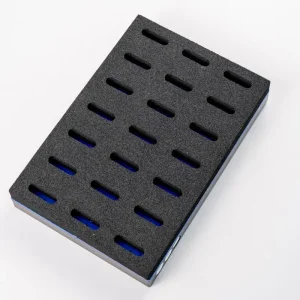
Cosmetic sheet metal prototypes (such as bead-blasted anodized panels or gloss powder-coated enclosures) are individually shrink-wrapped with protective static-free PE peel-ply films, isolated in custom-cut EPE foam cradles, and packed in reinforced double-wall corrugated cartons or fumigated export plywood crates. Drop tests and vibration simulations ensure components arrive at your facility with zero cosmetic abrasions or bent tabs.
Precision Turned & Hybrid CNC Machined Assemblies
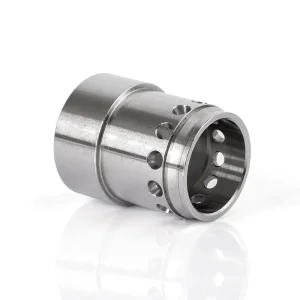
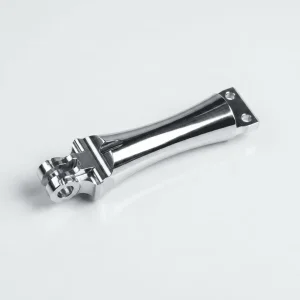
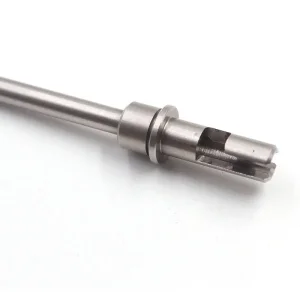
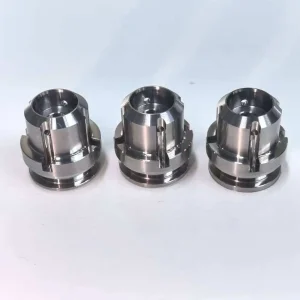
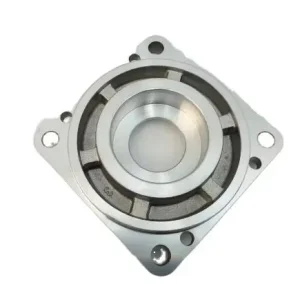
Explore our precision CNC turned and multi-axis machined parts engineered to seamlessly integrate with custom sheet metal chassis, robotic armatures, and fluid control enclosures.
Submit Your STEP Files for Guaranteed 24H Feedback
Talk directly with our tooling design directors in Shenzhen. We assess bend interference, minimum radius constraints, weld seam accessibility, and grain alignment before quoting.