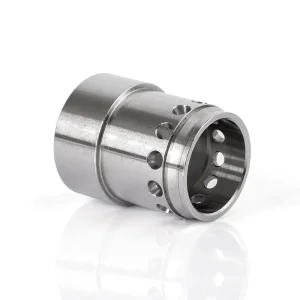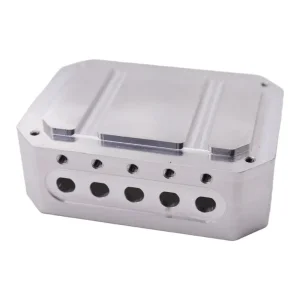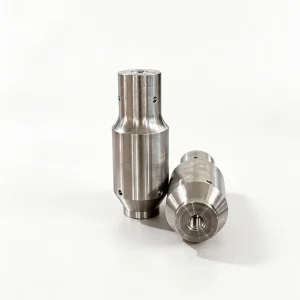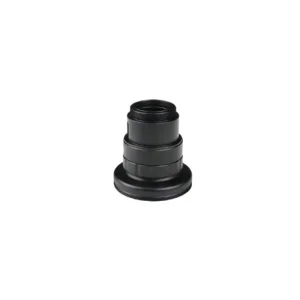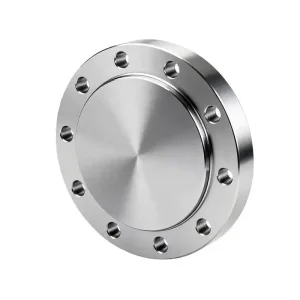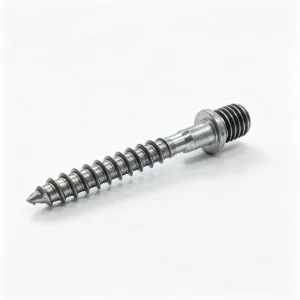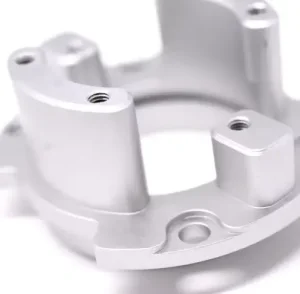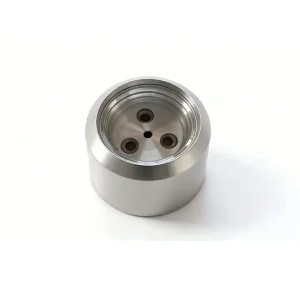
High-Precision Assemblies & Complementary Machined Components
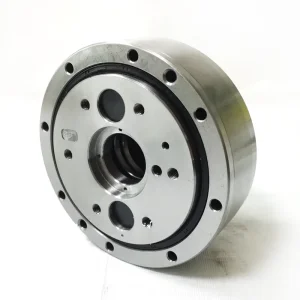
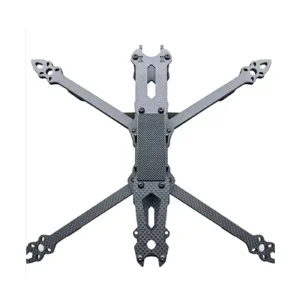
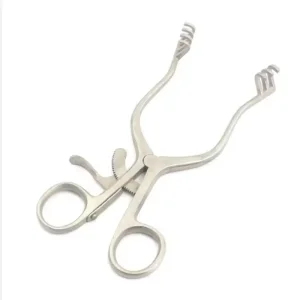
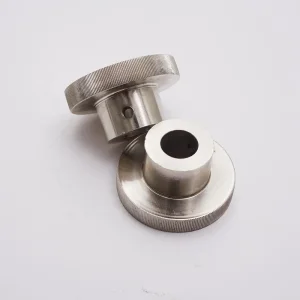
Combining industrial SLS polymer parts with high-tolerance CNC fixtures, sub-assemblies, and precision-turned inserts creates integrated production pipelines designed for aerospace, robotics, and medical devices.
The Global Status of Selective Laser Sintering (SLS) Manufacturing
Selective Laser Sintering has transitioned from a rapid prototyping medium to an industrial-grade additive manufacturing process that directly competes with, and complements, low-to-mid volume plastic injection molding.
Isotropic Mechanical Integrity
Unlike Fused Deposition Modeling (FDM), which suffers from shear-plane delamination along the Z-axis, industrial SLS parts exhibit near-isotropic mechanical strength (tensile properties reaching 92-95% of injection-molded standards).
This allows functional PA12, PA11, and carbon-fiber-reinforced composites to withstand real-world vibration, cyclic fatigue, and high operating stresses.
Bridge Production Economics
For production runs between 200 and 15,000 units, the upfront tooling expenditure and long lead times of high-cavitation injection molds ($15,000 - $60,000; 6-10 weeks) cannot compete with nested SLS build volumes.
Global original equipment manufacturers (OEMs) leverage Chinese SLS printing factories to compress product lifecycles and fulfill just-in-time (JIT) demands without tooling lock-in.
Supply Chain Diversification
Supply chain shocks highlight the fragility of single-node manufacturing. Advanced SLS service providers function as virtual inventories, storing digital CAD assets instead of warehousing physical stock.
Direct export logistics and on-demand powder-bed fusion production prevent overstock depreciation and eliminate inventory obsolescence risks for industrial customers.
China SLS Factory Advantages: Scale, Integration & Process Economics
Why Tier-1 hardware teams and enterprise innovators select Chinese powder-bed fusion hubs for mission-critical parts, balancing laser sintering with comprehensive downstream post-processing.
High-Density 3D Nesting
By using automated spatial packing algorithms, Chinese SLS facilities achieve nesting packing densities above 18-22% per build envelope, reducing electricity, inert nitrogen purge, and cycle runtime per unit.
Integrated Machining Setup
Sunmy's Shenzhen factory integrates SLS printing with secondary 3/4/5-axis CNC machining, allowing critical mating faces, bearing journals, and O-ring seats to hit tight ±0.005 mm tolerances.
Raw Material Synergies
Direct domestic supply agreements with Tier-1 powder compounders (PA12, PA11, PA6-CF, TPU, PEEK) reduce raw material costs by 35-50% compared to Western regional suppliers, lowering price-per-part thresholds.
Advanced Surface Finishing
Industrial SLS outputs move straight to automated de-powdering, micro-bead blasting, automated chemical vapor smoothing, and deep dyeing, yielding water-sealed surfaces matching injection molding.
| Parametric Indicator | China Industrial SLS Factory | Western SLS Service Bureaus | Conventional Injection Molding |
|---|---|---|---|
| Initial Capital Cost (Tooling) | $0 (Direct CAD slicing) | $0 (Direct CAD slicing) | $12,000 - $65,000+ (Steel Tooling) |
| First Article Lead Time | 24 - 48 Hours | 3 - 7 Business Days | 25 - 45 Business Days |
| Batch Cost Elasticity (100-2,000 pcs) | Extremely High ($/unit stays flat) | Moderate ($/unit inflated by labor) | Poor amortized ROI on short runs |
| Dimensional Precision (As-printed) | ±0.15 mm to ±0.20 mm | ±0.15 mm to ±0.25 mm | ±0.05 mm to ±0.10 mm |
| Hybrid Precision (With CNC Secondary) | ±0.005 mm (In-house CNC pairing) | Third-party outsourcing needed | ±0.005 mm (EDM / CNC required) |
High-Demanding Engineering Scenarios for SLS Additive Parts
SLS provides distinctive engineering advantages where functional durability, fluid mechanics, complex internal venting, or weight reduction are primary technical requirements.
Automotive & EV Thermal Systems
Custom cooling jackets, serpentine battery ducting, and lightweight air intake manifolds. SLS enables single-piece structural consolidation without split molds or welding assembly lines, preventing fluid leakage under dynamic automotive vibrations.
Robotics & End-of-Arm Tooling
Complex robot gripper assemblies, finger joint links, and hollow-core articulating housings require low mass to minimize servo motor inertia. SLS printing in carbon-reinforced PA6/PA12 optimizes structural rigidity-to-weight ratios.
Medical Diagnostics & Orthotics
Biocompatible ISO 10993 and USP Class VI compliant PA11/PA12 powders enable custom patient-specific orthoses, complex prosthetic interfaces, surgical drill guides, and fluidic manifolds for laboratory analyzers.
Emerging Trends Reshaping the SLS Industrial Landscape
The convergence of advanced optical laser arrays, AI-driven thermal feedback, and sustainable material recycling is elevating SLS printing from niche prototyping into mainstream enterprise production.
Multi-Laser Optical Sintering Arrays
Next-generation SLS machines deploy dual and quad fiber/CO2 laser scanheads. By distributing real-time sintering tasks across large 600×600×800mm build chambers, production throughput increases up to 350%, cutting per-part build cycle costs.
In-Situ Thermal Imaging & Closed Loops
Advanced Chinese SLS facilities implement real-time IR pyrometer monitoring and thermal cameras. Computer vision inspects each recoated layer for cold spots or thermal gradients, maintaining ±0.5°C bed consistency to eliminate localized part warpage.
High-Performance Engineering Thermoplastics
Beyond traditional PA12, the SLS ecosystem is expanding toward flame-retardant (UL94-V0) powders, high-temperature PEEK and PEKK, and flexible, tear-resistant thermoplastic polyurethanes (TPU) for automotive interior gaskets and robotic dampers.
Global Enterprise Sourcing Criteria for Chinese SLS Printing Partners
Procuring functional 3D printed components across borders requires structured evaluation standards to ensure dimensional repeatability, mechanical longevity, and intellectual property security.
1. Virgin vs. Recycled Mix Ratios
Always audit powder management. Premium parts require a 50/50 or 40/60 virgin-to-recycled powder blend. Higher recycled ratios cause "orange peel" surface textures, lowered elongation at break, and unpredictable tensile metrics.
2. IP & CAD Security Protocols
Verify direct-to-factory communication without trading intermediaries. Ensure non-disclosure agreements (NDAs) are signed prior to CAD transfer, backed by enterprise-grade data isolation on local on-premise slicing servers.
3. Metrology Verification (CMM & FAI)
Ensure suppliers verify critical GD&T datums on Zeiss or Mitutoyo coordinate measuring machines (CMM) and provide First Article Inspection (FAI) dimensional reporting to validate sintering shrinkage calculations.
4. Certified Vapor Smoothing
Ensure the facility operates closed-loop chemical vapor smoothing systems. Vapor-sealed SLS components eliminate internal micro-porosity, yielding hydrostatic seal integrity up to 3.5 bar and cleanable cosmetic surfaces.
Frequently Asked Questions: Industrial SLS Printing & Sourcing
Authoritative technical guidance covering build envelopes, tolerances, finishing options, and multi-process hybrid integration.
What tolerances can Chinese SLS printing factories realistically achieve?
As-printed SLS parts achieve standard general tolerances of ±0.15 mm to ±0.20 mm or ±0.002 mm/mm, adhering to ISO/ASTM 52902 standards. For critical bore journals, threads, or flat reference surfaces, Sunmy integrates secondary CNC milling and turning directly on-site to reach precision tolerances down to ±0.005 mm.
Why is SLS preferred over SLA or FDM for end-use functional assemblies?
SLS melts thermoplastic powders into homogenous, self-supporting structures without requiring sacrificial scaffolding. This allows complex hollow internal channels and interlocking moving joints. SLA parts tend to be brittle and degrade under UV light, whereas SLS Nylon (PA12/PA11) provides durable impact strength, chemical resistance, and long-term thermal stability.
How does chemical vapor smoothing improve SLS nylon components?
As-sintered SLS nylon exhibits a matte, slightly textured surface (Ra 6.3 - 8.5 µm) due to bonded powder boundaries. Automated vapor smoothing exposes parts to controlled solvent vapors, melting surface peaks and sealing microscopic surface pores. This yields a smooth gloss finish (Ra < 1.5 µm), improves tensile elongation, and prevents bacterial growth in fluidic and medical devices.
How do you verify internal porosity and dimensional repeatability?
We combine in-line optical sensor scans with post-build CMM touch-probe coordinate metrology and high-resolution optical profile projectors. First Article Inspection (FAI) reports and material composition certifications are supplied with shipments, confirming that sintered tensile and density metrics match engineering specifications.
Can threaded metal fasteners be integrated directly into SLS printed parts?
Yes. While threads can be directly 3D printed for non-critical assembly, high-load industrial connections use brass or stainless steel heat-set threaded inserts or self-tapping inserts pressed into precisely sintered receiver bosses. Alternatively, precision-turned fasteners can be integrated through secondary operations.
What is the standard production and shipping turnaround time?
Engineering DFM feedback is provided within 24 hours of receiving CAD models (.STEP / .STP). Rapid prototype SLS sintering cycles complete within 48 to 72 hours. Bridge production runs of 100 to 5,000 units are dispatched via express air freight (DHL, FedEx, UPS) within 5 to 9 business days directly from our Shenzhen facility.
Precision Turned Components, Housings & Specialized Hardware
Review our specialized machining, turned fittings, RF sensor enclosures, and hardware sub-assemblies built to support high-performance industrial and additive engineering architectures.