China Stainless Steel Fabrication Manufacturer & Engineering Products
End-to-end CNC mill-turning, 20kW fiber laser profiling, multi-axis bending, robotic welding, and automated surface treatment for high-integrity components across North American and European OEM supply chains.
High-Precision Fabricated Assemblies & Specialized Turned Components
Verified on coordinate measuring machines (CMM) to critical tolerances down to ±0.005 mm with complete metallurgical material test reports (MTR EN 10204 3.1).
Stainless Steel Fabrication in Modern Industrial Sourcing
Navigating global supply chain volatility, raw material volatility (LME nickel and molybdenum indices), and the structural shift toward automated custom fabrication in China's Greater Bay Area industrial corridor.
Supply Chain Realignment & TCO
Global procurement directors face rising landed costs when relying on disjointed subcontracting tiers. Sourcing custom stainless steel components directly from an integrated Shenzhen manufacturer collapses intermediate markups, stabilizes lead times, and eliminates communication drag between tooling, laser profiling, and multi-axis finishing centers.
Strict Metallurgical Integrity
Austenitic (AISI 304, 316, 316L), duplex (2205, 2507), and precipitation-hardening alloys (17-4PH) require rigorous chemical composition tracking. Our integrated facility enforces optical emission spectrometry (OES) verification on raw ingots and sheet billets, mitigating sensitization risks and preventing intergranular corrosion failures.
High-Precision Agile Scalability
Modern engineering cycles cannot afford long tooling setup delays. By pairing digital CAD/CAM programming with 20kW nitrogen-assisted fiber lasers, robotic hydraulic press brakes, and 5-axis DMG MORI and Mazak machining stations, we transition smoothly from 5-piece functional prototypes to 50,000-piece annual production runs.
Comprehensive Metallurgical Matrix & Fabrication Capability Matrix
Selecting the optimal stainless alloy balances machinability, yield strength, PREN pitting resistance, and post-weld corrosion behavior. Below is an engineering selection guide across common fabricated alloys.
| Alloy Grade | Microstructure | Yield Strength (MPa) | PREN Index | Machinability Index (%) | Key Fabrication Advantage | Primary Industrial Use Case |
|---|---|---|---|---|---|---|
| AISI 304 / 304L | Austenitic | ≥ 205 | 18.0 – 20.0 | ~ 45% (B1112=100) | Superb drawability, economical deep-drawing & bending | Industrial sensor housings, kitchenware, brackets |
| AISI 316 / 316L | Austenitic (2-3% Mo) | ≥ 220 | 23.0 – 25.0 | ~ 40% | Resists chloride pitting, clean passivation compatibility | Marine hardware, pharmaceutical skids, dialysis pumps |
| Duplex 2205 | Austenitic-Ferritic | ≥ 450 | 34.0 – 36.0 | ~ 30% | Double yield strength of 316, stress corrosion resistance | Offshore pressure flanges, chemical heat exchangers |
| 17-4 PH (AISI 630) | Martensitic (Precipitation) | ≥ 725 – 1170 | ~ 16.0 | ~ 48% (Condition A) | High strength post H900/H1150 aging, minimal distortion | Aerospace actuators, pump shafts, turbine blades |
| AISI 430 | Ferritic | ≥ 260 | ~ 16.0 | ~ 55% | Magnetic, stress corrosion immune, cost-efficient | Appliance trims, architectural panels, flue liners |
Thermal Distortion & Heat-Affected Zone (HAZ) Control
Stainless steel possesses approximately 50% higher thermal expansion and one-third the thermal conductivity of mild carbon steel. Our CNC fiber laser systems deploy high-purity (99.999%) nitrogen assist gas up to 25 bar pressure, preventing exothermic iron-oxygen reactions and preserving parent metal grain boundaries without carbide precipitation.
Mission-Critical Application Scenarios in Global Industry
Sunmy Hardware engineers custom fabricated stainless steel assemblies engineered for extreme service conditions: cryogenic temperatures, high-vacuum seals, corrosive saline atmospheres, and ultra-sanitary fluidics.
Robotics & 6-Axis Multi-Component Sensors
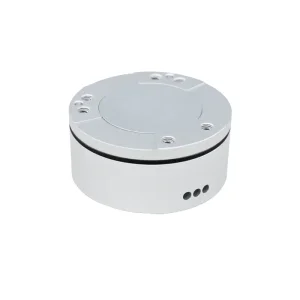
Dynamic robotic wrists demand elastic spring elements exhibiting zero mechanical hysteresis and high fatigue thresholds. We machine sensor cores from vacuum-degassed precipitation-hardened stainless alloys, holding planar parallelisms within 0.003 mm across flexure arms to safeguard strain gauge calibration.
Medical Diagnostics & Surgical End-Effectors
Biocompatible medical instruments fabricated from medical-grade 316L and 17-4PH. Components undergo automated ultrasonic degreasing, validated ASTM A967 citric acid passivation, and micro-deburring down to Ra 0.2µm, eliminating bacterial entrapment sites in surgical tools.
Semiconductor UHV Vacuum Chambers & Manifolds
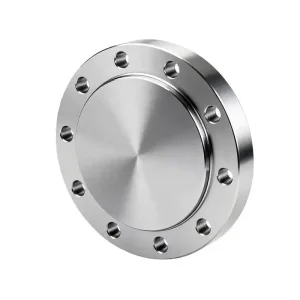
Ultra-High Vacuum (UHV) applications require helium leak rates below 1×10⁻⁹ mbar·l/s. We fabricate electropolished 316L stainless steel chambers with knife-edge CF flange profiles, eliminating virtual leaks through cleanroom orbital TIG welding in Class 10,000 cleanrooms.
Marine Subsea & Chemical Processing
Offshore equipment components fabricated from Duplex 2205 and Super Duplex 2507 for long-term immersion in high-chloride ocean water. Engineered to resist micro-cracking and localized pitting corrosion under cyclic hydrostatic loading.
Aerospace Fuel System Flanges & Bushings
Machined from heat-treated condition H1025 17-4PH stainless steel, meeting AS9102 First Article Inspection benchmarks. Features high fatigue strength, certified roundness down to 0.004 mm, and defect-free magnetic particle inspection (MPI).
Renewable Energy & Hydrogen Fuel Cell Skids
Hydrogen permeation and embrittlement resistance via stable low-carbon 316L sheet fabrication. Bipolar balance-of-plant manifolds laser welded with micro-kerf profiles under high-purity argon enclosures.
End-to-End Production Process: From CAD Vector to Export Packing
A closed-loop manufacturing system that safeguards intellectual property, mitigates dimensional tolerances early, and ensures 100% material traceability from Shenzhen to worldwide production floors.
Design For Manufacturability
Engineering review within 24 hours. Finite Element Analysis (FEA) of sheet bend radii, K-factor compensation, grain alignment check, and machine cycle time optimization.
CNC Fiber Laser & Press Brake
High-speed 20kW fiber laser profiling under N2 assist gas. Automated CNC multi-axis press brakes with real-time laser bend angle feedback to neutralize springback variations.
Multi-Axis CNC & Clean TIG
Prismatic feature finishing on 5-axis machining stations in single-clamping setups. Automated orbital TIG/laser welding under pure argon backing shields to eliminate internal oxidation.
Metrology & Global Release
Zeiss coordinate measuring machine inspection, optical profilometry, salt-spray corrosion chamber testing, and AS9102-compliant documentation before vacuum barrier crating.
Frequently Asked Questions for Stainless Steel Fabrication
Direct metallurgical and operational answers addressing the questions engineering buyers ask when auditing a precision China fabrication partner.
What dimensional tolerances can Sunmy Hardware hold on custom stainless fabrications?
For CNC mill-turned stainless components, we hold tolerances of ±0.005 mm on critical diameters and bore concentricities. For CNC laser cut features, edge positions are controlled within ±0.05 mm, and press brake bends maintain ±0.2° angular precision via adaptive laser angle sensors.
How do you prevent heat-affected zone (HAZ) discoloration and oxidation during welding?
We deploy closed-chamber orbital TIG welding or automated robotic fiber laser welding systems paired with high-purity argon backing purge (residual oxygen < 20 ppm). All weldments subsequently undergo chemical pickling and ASTM A967 passivation to fully restore the protective chromium oxide film.
Can you provide EN 10204 3.1 chemical and mechanical material certifications?
Yes. Every raw material heat lot is tracked through receiving inspection and verified with our in-house optical emission spectrometer. We supply original mill test certificates (EN 10204 3.1) showing chemical composition breakdown, tensile strength, yield strength, and elongation percentages with each batch.
How does Sunmy Hardware compensate for springback in duplex stainless sheet bending?
Duplex stainless grades like 2205 feature twice the yield strength of austenitic 304/316, resulting in substantial elastic recovery (springback). Our CAD/CAM software calculates cold-work hardening coefficients and over-bends accordingly, using dynamic pressure compensation to guarantee accurate post-release bend geometry.
What surface finishing options are supported for stainless steel fabrications?
Our in-house and audited finishing lines perform non-magnetic glass bead blasting, chemical pickling and passivation, brush satin mechanical polishing (#4 finish), mirror polishing (#8 finish), and chemical electropolishing capable of achieving surface roughness figures down to Ra 0.2µm.
How are intellectual property (CAD drawings) and prototype data protected?
All drawings, STEP files, and engineering requirements are protected by non-disclosure agreements (NDAs) signed prior to transmission. You interface directly with Sunmy Hardware's factory engineering personnel in Shenzhen without trading company intermediaries.
Precision Fabricated Tooling, Sensor Enclosures & Kinematic Assemblies
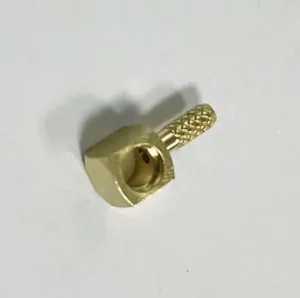
Complementary engineering processes spanning 5-axis CNC machining, composite frame routing, high-thermal copper dissipation, and custom knurling.