
Precision OEM Components & Assemblies
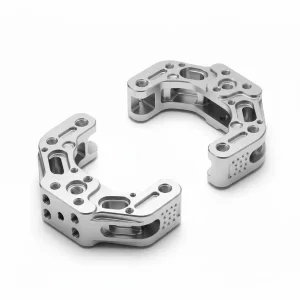
Explore a selection of our high-precision CNC machined, cast, and turned industrial components delivered to Tier-1 machinery leaders across global markets.
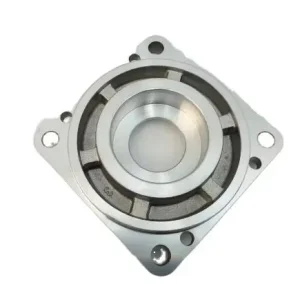
Evolutionary Trends in Industrial Pump Body Casting
As modern process plants push thermodynamic thresholds higher, pump bodies and volute casings face unprecedented pressure-velocity-temperature gradients. Discover the structural shifts redefining fluid machinery manufacturing.
Severe-Service Metallurgy
Standard ductile irons no longer suffice for aggressive slurry, subsea hydrocarbon handling, and chemical recirculation. Global OEMs require targeted precipitation alloy structures:
- Super Duplex Stainless Steels (2507, 1.4410): PREN > 42 for supreme pitting resistance in offshore chloride environments.
- Nickel-Hard & High-Chrome Irons: Hardness profiles exceeding 60 HRC for severe particulate transport.
- Hastelloy & Monel Castings: High-vacuum induction casting to eradicate hot-tearing and volatile chemical corrosion.
CFD-Optimized Geometry
Next-generation hydraulic efficiency demands internal spiral volutes with ultra-smooth hydrodynamic continuity. Casting processes must reconcile extreme geometric variations:
- Sub-Millimeter Thin Cutwaters: Precise mould-flow gating ensures full molten penetration without premature chilling or cold shuts.
- Dual-Curvature Vane Cavities: Soluble core ceramic tooling reproducing complex 3D internal discharge waterways.
- Turbulence Suppression Surfaces: Ra ≤ 3.2 µm unmachined cast finishes reducing boundary layer drag and parasitic power draw.
Pressure Boundary Reliability
Zero tolerance for sub-surface microporosity under cyclic cyclic hydraulic loads. Modern casting leverages multiphysics solidification simulation:
- Thermal Gradient Modulus Management: Algorithmic placement of exothermic risers eliminating shrinkage voids along thick bearing seats.
- Vacuum Assisted Degassing: Eliminating trapped hydrogen and entrapped gas inclusions in aluminum and steel melts.
- Non-Destructive Radiographic Baseline: Meeting ASTM E446 Level I and II radiographic acceptance prior to precision tooling setup.
Evaluating Casting Methodologies Against Procurement Criteria
Global procurement teams must balance initial tooling capex, piece price, internal flow complexity, and surface integrity. Compare primary casting architectures engineered in our audited manufacturing ecosystem.
| Casting Methodology | Optimal Alloy Systems | Dimensional Tolerance | Internal Core Intricacy | Tooling Amortization | Primary Industrial Use-Cases |
|---|---|---|---|---|---|
| Resin Sand Casting (No-Bake) | Ductile Iron (GGG40/50), WCB Carbon Steel, Gray Iron | ISO 8062 CT9–CT11 | Exceptional (Complex multi-piece baked sand cores) | Low to Medium (Pattern life ~20,000 shots) | Large multi-stage centrifugal pumps, municipal split-case pumps, wastewater volutes. |
| Silica Sol Investment Casting | 316L, CF8M, Duplex 2205, Hastelloy C276 | ISO 8062 CT4–CT6 | Superior (Lost-wax intricate closed-vane channels) | Medium (High precision aluminum dies) | Sanitary food & pharma pumps, chemical dosing pumps, magnetic drive hermetic bodies. |
| High-Pressure Vacuum Die Casting | A380, ADC12, AlSi10Mg, Zamak Zinc Alloys | ISO 8062 CT3–CT5 | Moderate (Demands straight draft angles & slides) | High (Hardened H13 thermal-balanced tool steel) | High-volume automotive water/oil pumps, EV thermal management recirculation casings. |
| Low-Pressure / Gravity Casting | A356-T6, AlSi7Mg, Nickel-Aluminum Bronze | ISO 8062 CT6–CT8 | High (Sand/metallic hybrid tooling) | Medium (Permanent steel molds) | Marine seawater intake pumps, defense hydraulic pumps, heavy mobile hydraulic pumps. |
Turnkey Casting-to-Assembly Engineering Capabilities
Sunmy Hardware resolves the fractured supply chain challenge by centralizing foundry operations, high-speed 5-axis CNC machining, metallurgical heat treatment, and hydrostatic testing into a unified manufacturing pipeline.
Full-Cycle DFM & Solidification FEA
Prior to tooling fabrication, our senior metallurgical engineers run comprehensive simulations (MAGMA / AnyCasting) on your STEP / CAD files:
- Liquid-phase velocity profiles to prevent oxide formation and turbulent inclusions.
- Optimized chill placement and core venting layouts to eliminate internal hot spots.
- Uniform wall-thickness rationalization to prevent cold cracking and post-weld distortion.
5-Axis Finish Milling & Boring
Cast pump casings feature severe positional GD&T requirements. In our owned precision machining plant, we bridge raw castings to finished mechanical assemblies:
- Single-clamping operations on DMG MORI 5-axis machining centers to secure bearing bore coaxiality ≤ 0.008 mm.
- Flange sealing face finish up to Ra 0.8 µm for high-pressure O-ring and spiral-wound gasket seals.
- Precision thread milling of port connections according to ANSI B16.5, DIN, or JIS standards.
Hydrostatic & Non-Destructive QA
Every cast pump body represents a critical pressure containment vessel. We eliminate field failures through severe inspection gates:
- Hydrostatic pressure proof testing up to 150% rated design pressure with 30-minute dwell times.
- Helium mass spectrometry vacuum testing for zero-emission toxic or flammable media applications.
- Complete ZEISS CMM multi-plane dimensional reports, full chemical spectrometry, and mechanical tensile/impact certs.
Global Pressure Directives & Traceable Quality Gateways
Engineering buyers from Germany, North America, Japan, and the UK require strict alignment with global statutory mandates. We provide end-to-end supply chain transparency with zero intermediaries.
Statutory & Pressure Directives
Manufacturing pump casings according to international compliance frameworks with full audited documentation:
- EU PED 2014/68/EU: Module H/H1 conformities for pressurized fluid bodies.
- ASME Boiler & Pressure Vessel Code (BPVC Sec VIII Div 1): Material qualification and structural casting design factors.
- API 610 / ISO 13709: Centrifugal pumps for petroleum, petrochemical, and natural gas industries.
Heat-Batch Metallurgical Traceability
Every casting heat is serialized with engraved or cast micro-matrix codes linked directly to furnace ladles:
- Optical Emission Spectroscopy (OES): Full 28-element chemical composition breakdown per ladle.
- Mechanical Coupon Destructive Testing: Yield, tensile, elongation, and Charpy V-notch impact validation down to -46°C.
- Microstructural Metallography: Nodularity verification ≥ 90% for ductile cast irons (ASTM A536).
Direct-to-Engineer Agile Support
Streamlined Western business communication backed by on-the-ground manufacturing agility in Shenzhen:
- Direct engineering correspondence without non-technical sales agents or broker interference.
- Comprehensive First Article Inspection (FAI) packages matching AS9102 / VDA 6.3 standards.
- Standard Non-Disclosure Agreements (NDA) executed prior to STEP / 3D model receipt, safeguarding proprietary IP.
2026–2030 Roadmap: Next-Gen Pump Body Manufacturing
The convergence of generative AI topology optimization, additive sand printing, and sustainable electric smelting is actively redefining modern foundry engineering.
Binder-Jet 3D Sand Printing (BJSP)
Bypassing hard pattern tooling entirely for rapid prototype validation and high-mix, low-volume pump casing runs:
- Turnaround times for initial physical casting reduced from 8 weeks to under 10 business days.
- Zero draft angle constraints enabling radical internal cooling jackets and hydraulic spiral diffusers.
- Seamless integration of monolithic sand cores, mitigating core shift and wall-thickness variance.
AI Solidification & Digital Twins
Transforming static foundry recipes into real-time closed-loop predictive manufacturing processes:
- In-mold wireless thermocouple telemetry feeding real-time digital twin solidification models.
- Neural networks predicting micro-porosity nucleation sites based on ladle slag chemistry variations.
- Dynamic compensation milling routines: toolpaths auto-adjust to scan data of individual raw castings.
Green Foundry Carbon Decarbonization
Aligning with European CBAM and corporate ESG mandates across global equipment supply channels:
- 100% Medium-frequency electric induction melting eliminating coal-fired cupola emissions.
- Up to 95% thermal sand reclamation rates minimizing landfill burden and silica environmental impact.
- Verified Scope 1 & Scope 2 product-level carbon footprint accounting for export customs clearance.
Frequently Answered Technical & Sourcing Questions
Precise engineering insights addressing the primary concerns of mechanical designers and global procurement officers qualifying casting vendors.
What are the key differences between casting a pump body via investment casting versus resin sand casting?
How do your engineers eliminate sub-surface porosity on critical pump sealing faces and bearing bores?
Can you support small-batch pilot prototypes before authorizing mass-production tooling?
What documentation is provided to satisfy global Pressure Equipment Directive (PED) and OEM supplier audits?
How does Sunmy Hardware ensure intellectual property (IP) protection for custom hydraulic designs?
Specialized OEM Hardware & Fluid Handling Components
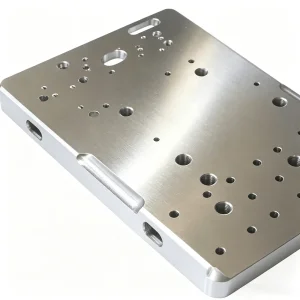
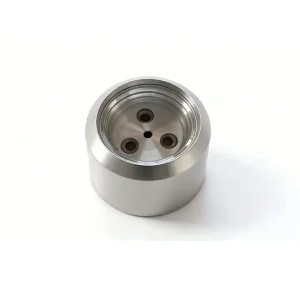
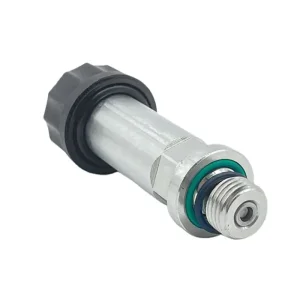
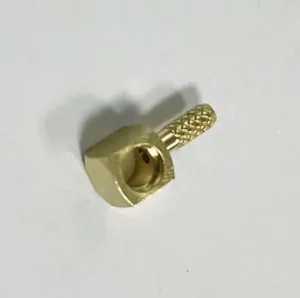
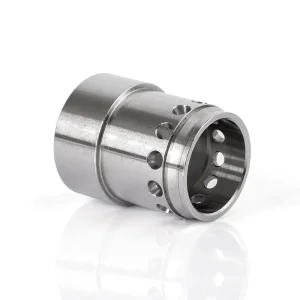
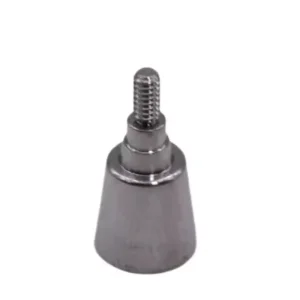
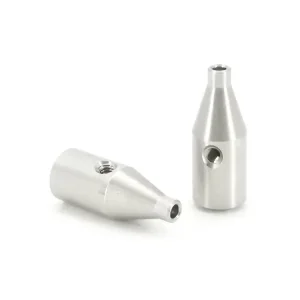
Discover our complementary line of hydraulic valve spools, optical housings, robotic end-effectors, and stainless steel filter systems.
Request an Engineering DFM Review & Quotation
Submit your pump body casting drawings (STEP, IGES, or PDF). Receive an actionable manufacturability critique and quotation within 24 business hours directly from our engineering team.