
Precision Turned & Milled Complex Assemblies
Engineered hardware delivered with micrometer repeatability, 100% CMM batch verification, and comprehensive material traceability.
Macro Trends in Ultra-Precision Subtractive Manufacturing
How technical convergence, simultaneous 5-axis toolpaths, and automated quality loops are redefining high-complexity parts production globally.
Geometric Consolidation
Global original equipment manufacturers are pivoting rapidly toward multi-functional monolithic components. By combining assemblies that once required eight to twelve distinct stamped, cast, or turned elements into a single 5-axis contoured billet component, design teams systematically eradicate dimensional tolerance stacking, mitigate mechanical failure thresholds, and dramatically curtail downstream assembly overhead.
Exotic Metallurgy Processing
Modern applications within aerospace propulsion, surgical implants, and advanced thermal conductors necessitate flawless precision machining across difficult-to-cut metals. Machining parameters must mitigate severe work-hardening across Inconel 718, grade 5 titanium (Ti-6Al-4V), and medical-grade CoCr alloys, relying on dynamic tool pathing, high-pressure cryo-cooling, and adaptive feed algorithms to prevent micro-fracturing.
In-Line Metrology Integration
Traditional quality inspection models that relegate metrology to disconnected end-of-line verification are increasingly obsolete. Modern precision manufacturing mandates on-spindle laser touch probes combined with automated continuous coordinate measuring machines (CMM) to maintain closed-loop process capability (Cpk ≥ 1.67) directly inside climate-controlled clean room environments.
1. The International Landscape of High-Complexity Machining
The manufacturing environment for complex CNC parts is experiencing an unprecedented structural transition. Driven by exponential demands across medical diagnostics, autonomous industrial robotics, advanced optical instrumentation, and electric vehicle (EV) sub-assemblies, sourcing directors can no longer afford the risks of traditional distributed sub-contracting models. Component miniaturization paired with stringent hermetic sealing standards requires tolerances frequently falling under the ±0.005 mm threshold.
Sunmy Hardware bridges this engineering gap by operating an integrated industrial model based out of Shenzhen, combining owned milling and turning infrastructure with centralized quality oversight. This operational methodology circumvents the typical failure modes observed when sourcing complex geometric hardware: miscommunicated geometric dimensioning and tolerancing (GD&T), unverified internal stress releases during multi-axis material removal, and surface oxidation resulting from delayed post-processing cycles.
2. Material Dynamics & Processing Matrix
High-complexity CNC parts necessitate an exhaustive understanding of mechanical metallurgy. The removal of substantial volumes of raw stock from solid billet stock invariably unlocks residual internal stresses, risking axial distortion and circular runout errors after part release. Sunmy Hardware incorporates intermediate sub-critical stress-relief annealing and optimized trochoidal milling routines to guarantee structural equilibrium.
| Material Category | Alloy Grades | Achievable Tolerance | Optimal Surface Roughness | Primary Application |
|---|---|---|---|---|
| Aerospace Aluminum | 6061-T6, 7075-T651, 2024 | ±0.005 mm | Ra 0.4 μm (32 μin) | Structural Brackets, Optical Mounts |
| Austenitic/Martensitic Steels | SS304, SS316L, 17-4PH | ±0.008 mm | Ra 0.2 μm (16 μin) | Hydraulic Valves, Fluid Manifolds |
| Refractory & Medical Metals | Ti-6Al-4V Gr5, Inconel 625 | ±0.005 mm | Ra 0.2 μm (8 μin) | Implant Screws, Booster Assemblies |
| Engineering Polymers | PEEK, POM (Delrin), PTFE | ±0.015 mm | Ra 0.8 μm (63 μin) | Insulators, Vacuum Grippers |
3. Roadmap: Automation, Micro-Machining, and Sustainable Green Manufacturing
The roadmap for complex precision manufacturing extends deeply into AI-driven toolpath optimization and Lights-Out automated manufacturing cycles. Through continuous feedback from spindle torque sensors and acoustic emission monitors, cutting-tool deflection is corrected synchronously in real time, preventing catastrophic tool breakages during deep internal cavity boring and multi-lead thread cutting.
Additionally, modern supply-chain audits demand verified environmental sustainability. Sunmy Hardware incorporates closed-circuit coolant filtration and metal swarf briquetting systems, enabling a 98% reclamation rate on raw aluminum and brass scrap while meeting rigorous RoHS and REACH direct chemical restrictions.
End-to-End Solutions for Advanced Industrial Demands
Eliminating process hand-offs with an integrated single-source contract manufacturing model.
Rigid IP & NDA Safeguards
Direct interaction with our senior engineering division guarantees client STEP, IGES, and DWG packages remain strictly guarded behind robust digital protections without intermediation leaks.
Comprehensive DFM Reviews
Every batch inquiry initiates a critical design-for-manufacturability study flagging internal wall thickness risks, extreme aspect-ratio blind bores, and custom fixture design points prior to metal cutting.
Single-Setup Mill-Turn Precision
Leveraging cutting-edge multi-axis live-tooling lathes eliminates second-operation re-clamping deviations, assuring complete concentricity between intricate turned threads and cross-drilled port channels.
Certified Metrology Documentation
All production releases arrive with full raw material melt certificates, First Article Inspection (FAI) records, surface roughness verification profiles, and full Zeiss CMM multi-point coordinate data.
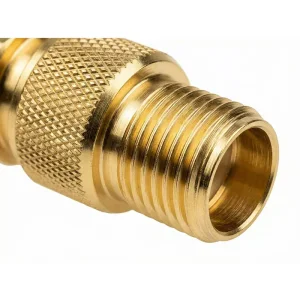
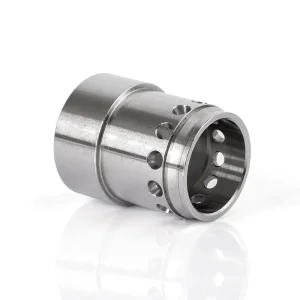
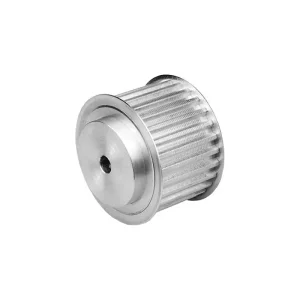
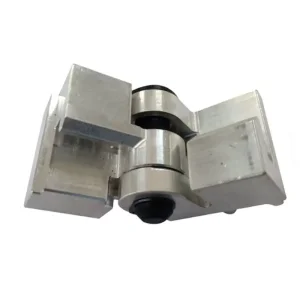
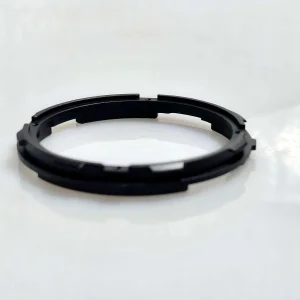
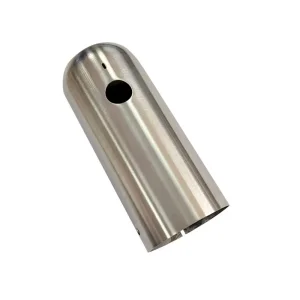
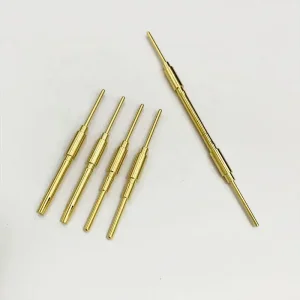
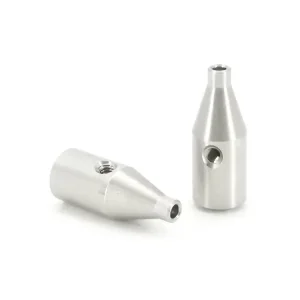
High-Tolerance Custom Turn-Milled Components
Engineered for fluid automation, high-frequency electronics, precision optics, and medical apparatus.
Frequently Answered Engineering Inquiries
Direct technical answers addressing tolerances, quality documentation, supply-chain agility, and specialized finishing.