Integrated Assemblies & Component Families
Precision Engineered Assemblies Ready for Welding & System Integration
Explore our foundational CNC-machined, stamped, and turn-milled structural subassemblies engineered to integrate seamlessly into complex welded sheet metal frameworks.
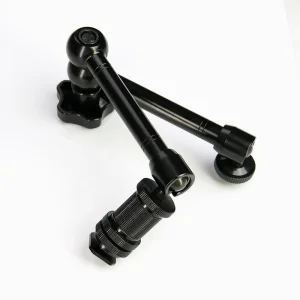
OEM 7-Inch CNC Aluminum Articulating Magic Arm for Camera & Monitor Service, Product
Get Product Quote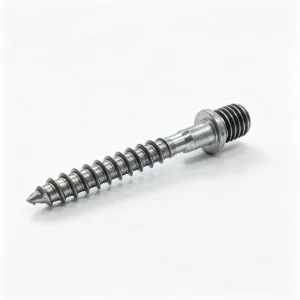
OEM Custom Precision Turned Stainless Steel Dual-Thread Hanger Bolt Manufacturer, Factory
Get Product Quote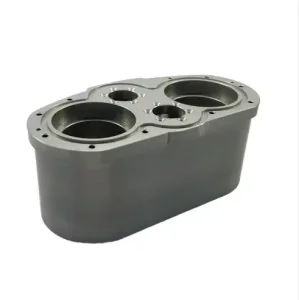
Custom Factory Custom 5-Axis CNC Machined Steel & Aluminum Universal Joint Base and Gearbox Shell for Robotics & Drone Industry Products, Exporters
Get Product Quote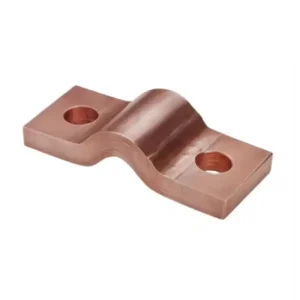
Custom Custom Flexible Laminated Copper Busbar for Battery & Electrical Equipment Service, Products
Get Product Quote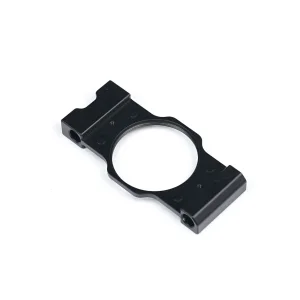
OEM Custom CNC Machined Aluminum Optical Lens Mounting Bracket (Matte Black) Service, Products
Get Product Quote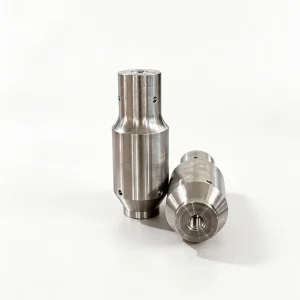
ODM Custom Titanium Ultrasonic Booster Manufacturers, Factory
Get Product Quote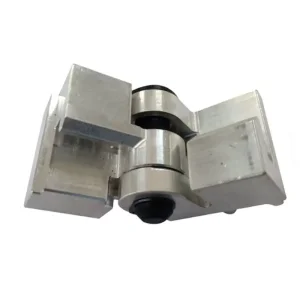
OEM Custom Precision CNC Machined Aluminum Hinge Assembly Structural Connector Supplier, Service
Get Product Quote
Technical White Paper
Precision ODM Sheet Metal Welding: Metallurgical Mechanics & Thermal Management
In high-reliability sheet metal fabrication, welding is an exact thermal, chemical, and physical science. Mitigating heat-affected zones (HAZ) and managing residual stresses dictate structural lifespan.
≤ 0.15mm
Post-Weld Frame Planarity
100%
NDT Penetrant / X-Ray Tracked
±0.05mm
Robotic Continuous Repeatability
< 24h
DFM Engineering Response Time
| Welding Process | Heat Input Intensity | Sheet Thickness Range | Distortion Potential | Shielding Gas Formulation | Target Applications |
|---|---|---|---|---|---|
| Continuous Fiber Laser (CW) | Ultra-Low (Localized) | 0.3 mm – 4.0 mm | Minimal (≤ 0.08 mm/m) | 99.999% Pure Argon / N₂ | Battery Packs, Sensor Cases, Medical Housings |
| Robotic TIG (GTAW) | Medium - High | 0.8 mm – 6.0 mm | Moderate (Controlled by Jigs) | 100% Ar / Ar + He mix | Food Machinery, Pressure Ducting, Aesthetic Seams |
| Cold Metal Transfer (CMT) | Ultra-Low (Spatter-Free) | 0.6 mm – 5.0 mm | Very Low | Ar + CO₂ (82/18) or Pure Ar | Automotive Thin Sheets, Al-Steel Dissimilar Joints |
| Pulsed MIG (GMAW-P) | Medium | 1.5 mm – 12.0 mm | Moderate to High | Ar + 2-5% O₂ / Ar-CO₂ blends | Heavy Equipment Brackets, Energy Racks, Chassis |
| Resistance Spot (RSW) | Localized / Instantaneous | 0.5 mm + 0.5 mm to 3.0 mm | Negligible | None (Solid State Interface) | Automotive Panels, Server Racks, Enclosures |
Thermal Heat-Affected Zone (HAZ) Control
Rapid thermal dissipation is achieved through active copper chill tooling and back-purged root gas channels. This eliminates recrystallization grain coarsening and preserves tensile properties in aluminum 5052/6061 and austenitic 304/316L stainless steels.
Grain Size Optimization
Interpass Temp ≤ 100°C
Finite Element Distortion Prediction
Every custom ODM assembly undergoes numerical weld sequencing modeling prior to tool clamping. By pre-stressing sheet components and simulating cooling contraction rates, we eliminate post-weld oil-canning and maintain plane true-position tolerances within ±0.15 mm.
Weld Sequencing CAM
Pneumatic Clamping Jigs
Hermetic Seal & Gas Tightness Verification
For IP66, IP67, and ultra-high vacuum applications, all welds are qualified via vacuum decay differential testing and helium mass spectrometer leak sniffing, guaranteeing rejection rates below 1×10⁻⁹ mbar·l/s for defense and power electronics.
Helium Leak Detection
IP67 Enclosures
Technology Roadmap
Next-Generation Sheet Metal Welding: 2026-2030 Innovation Trajectory
As precision manufacturing transitions toward micro-tolerances and lightweighting, Sunmy Hardware integrates autonomous sensing, laser-arc hybrid techniques, and AI-governed metallurgy into our daily ODM production.
Real-Time Machine Vision Adaptive Seam Tracking
High-frequency structured laser light sensors continuously scan joint bevels 100 milliseconds ahead of the welding arc. Integrated neural networks dynamically modulate wire feed speeds, voltage, and torch oscillation to compensate for thermal expansion drift and stamping tolerance variances in real time.
Sub-Millimeter Seam Tracking
Dynamic Arc Modulation
Wobble-Head Multi-Kilowatt Fiber Laser Welding
By superimposing high-speed galvanometric beam oscillations onto the primary translation axis, wobble-head fiber laser welding widens the melt pool without sacrificing keyhole penetration depth. This enables pore-free joins in copper alloys and 6000-series aluminum sheets previously prone to solidification cracking.
Galvo High-Speed Oscillation
Zero Keyhole Porosity
In-Situ Melt Pool Pyrometric Diagnostics
Coaxial optical spectrometers capture infrared thermal emissions directly from the molten weld pool at 10 kHz. In-line algorithms cross-reference temperature signatures against certified Welding Procedure Specifications (WPS), flagging burn-through, lack of fusion, or shielding gas contamination instantaneously.
10 kHz Spectral Sensing
100% Weld Traceability
Macro-Industry Solutions
Engineered Fabrications Across Critical Mission Profiles
From hermetic energy enclosures to lightweight aerospace avionics racks, our welding processes are custom-tuned to pass stringent functional qualification tests.
Automotive & Electric Mobility
Battery tray chassis, power distribution units (PDU), and crash-resistant inverter cases. Incorporates Cold Metal Transfer (CMT) joining of thin aluminum extrusions to stamped bottom plates with continuous helium-leak tested sealing.
IP69K Immersion Sealing
IATF 16949 Audited
Aerospace & Satcom Hardware
Ultra-thin 6061-T6 and titanium Gr.5 waveguide channels, phased-array antenna brackets, and lightweight avionics bays fabricated with pulsed micro-TIG under full argon vacuum glove boxes to prevent oxidation brittleness.
AS9100 Process Flow
Zero Alpha-Case Surface
Medical Diagnostic Equipment
Cleanroom-grade diagnostic cart frames, MRI structural shielding, and surgical laser chassis. All external welds are hand-dressed, orbital-sanded, and electro-polished to Ra < 0.4 μm to eliminate bacterial catch points.
Ra < 0.4μm Sanitary Passivation
ISO 13485 Compliant
Cloud Datacenter & Telecom Racks
Seismic Zone 4 compliant 19-inch high-density server enclosures, cold aisle containment frames, and liquid-cooling manifold ducts fabricated via high-speed robotic MIG and resistance projection nut welding.
GR-63-CORE Seismic
Automated Stud Welding
Supply Chain Resilience
China Factory 4.0: Shenzhen Engineering Ecosystem & Rapid Scaling
Combining proprietary high-precision welding cells with the world's most concentrated hardware supply chain enables our overseas clients to reduce development cycles by over 50% while capturing significant economies of scale.
Full-Cycle Vertical Cluster in Shenzhen
Within a 30-kilometer radius of our Longgang facility, we access primary mills for certified sheet stock (AL 5052/6061, SUS304/316, SPCC, SECC), precision chemical etching, laser tooling centers, and Class-A cleanroom powder coaters, shrinking multi-tier lead times down to days instead of months.
Sub-Tier Traceability
48-Hour Rapid Raw Sourcing
Automated Fixture Design & In-House Tooling
We do not rely on generic modular clamps. Our internal 5-axis CNC center machines custom hard-anodized welding fixtures with pneumatic toggle linkages within 72 hours of CAD sign-off, guaranteeing strict repeatability for volume runs ranging from 100 to 500,000 units.
Dedicated Poka-Yoke Jigs
In-House CNC Fabrication
Zero-Intermediary Direct Engineering Protocol
Clients communicate directly with Senior Welding Engineers and Metallurgists via real-time project management channels. Design changes (ECN) are pushed immediately onto shop floor PLC control systems, eliminating trading company markup, misinterpretations, and intellectual property leaks.
Bilingual Engineering Direct
Rigorous NDA Architecture
Quality Assurance & Procurement Framework
Global Enterprise Sourcing Audit: Compliance, Inspection & Standards
Tier-1 sourcing managers require complete documentation trails. We deliver turnkey audit packages backing every lot delivered to North American and European ports of entry.
International Welding Certifications
Fabrication operations strictly adhere to AWS D1.1 (Structural Steel), AWS D1.2 (Structural Aluminum), ISO 3834-2 (Comprehensive Quality Requirements for Fusion Welding), and EN 15085-2 CL1 for railway vehicle assemblies, verified by certified Welding Inspectors (CWI).
AWS D1.1 & D1.2
EN 15085-2 Certified
Metrology & NDT Quality Architecture
Every critical lot undergoes non-destructive evaluation (Dye Penetrant Testing ISO 3452, Radiographic X-Ray inspection, and Ultrasonic testing). Finished geometries are cross-referenced with Zeiss CMM laser probes against original 3D STEP models to verify GD&T datums.
Zeiss 3D CMM Metrology
ISO 9712 NDT Level II
Full PPAP & Material Traceability
We provide full Production Part Approval Process (PPAP Level 3) packages, including Failure Mode and Effects Analysis (FMEA), Control Plans, Gage R&R studies, and EN 10204 3.1 Material Test Reports (MTR) confirming chemical analysis and mechanical tensile specs.
PPAP Level 3 Deliverables
EN 10204 3.1 Mill Certs
Frequently Asked Questions
Engineering Questions: Tolerances, Metallurgy & ODM Sourcing
In-depth responses curated by Sunmy Hardware’s manufacturing and metallurgical engineering team for enterprise procurement and quality leaders.
What general and positional tolerances can be maintained across welded sheet metal assemblies?
Welding inherently introduces localized thermal stresses that cause shrinkage and angular distortion. By utilizing precision-machined pneumatic clamping jigs, balanced stitch welding sequences, and automated robotic fiber laser systems, we routinely hold standard overall linear tolerances of ±0.20 mm to ±0.40 mm for general sheet metal fabrications (in accordance with ISO 13920 Class B or Class C). For critical datum holes and precision mounting interfaces, we incorporate post-weld secondary CNC machining operations, achieving positional tolerances within ±0.015 mm to ±0.025 mm directly on the welded chassis.
How does continuous fiber laser welding compare to traditional TIG and MIG for thin-gauge sheet metal?
Continuous Wave (CW) fiber laser welding delivers an energy density significantly higher than arc-based processes like TIG (GTAW) or MIG (GMAW). This high concentration generates a deep "keyhole" welding mode with an exceptionally narrow Heat-Affected Zone (HAZ), reducing the total thermal input by up to 75%. As a result, thermal distortion is virtually negligible (≤ 0.05 mm across typical panels), and welding speeds are 3x to 5x faster. TIG remains preferred for heavy-gauge fillets, sanitary pipe bevels, and cosmetic corner joints requiring manual filler blending, while laser excels in high-volume, automated thin-gauge (0.5 mm to 3.0 mm) enclosures.
What metallurgical precautions are taken when welding 5000 and 6000 series aluminum alloys?
Aluminum alloys exhibit high thermal conductivity, high coefficient of thermal expansion, and a refractory aluminum oxide (Al₂O₃) surface layer with a melting point exceeding 2000°C. For 5052-H32 sheets, we utilize matching ER5356 or ER4043 filler rods to prevent solidification cracking while employing AC-TIG or pulsed MIG to achieve cathodic oxide clearing. For heat-treatable 6061-T6, we tightly control interpass temperatures below 120°C to minimize strength degradation in the HAZ; where structural yield strength is paramount, post-weld heat treatment (solution heat treatment back to T4 or artificial aging to T6) is executed in calibrated drop-bottom quench furnaces.
How do you protect client intellectual property and 3D CAD data during the quoting phase?
Prior to the transmission of any proprietary 2D prints, 3D STEP models, or project documentation, Sunmy Hardware executes bilateral Non-Disclosure Agreements (NDAs) enforceable under international jurisdiction. All customer design assets are stored on segmented, encrypted on-premise servers with role-based access restricted solely to assigned lead project engineers. We operate our own CNC machining and sheet metal facilities in Shenzhen, preventing the circulation of proprietary prints among untrusted third-party broker networks.
What non-destructive testing (NDT) reports and documentation accompany ODM shipments?
Standard production runs include a comprehensive First Article Inspection (FAI) report prepared in accordance with AS9102 guidelines, 100% optical dimensional inspection on critical datums via Zeiss CMM, and certified Mill Test Reports (EN 10204 Type 3.1) establishing batch chemical and mechanical compliance. Depending on client application requirements, we perform and document Liquid Dye Penetrant Testing (PT), Radiographic Testing (RT) for internal pore/void sizing, Helium Mass Spectrometer leak testing for hermetic boxes, and salt-spray corrosion resistance tests (ASTM B117) for electro-polished or powder-coated weldments.
Can Sunmy Hardware handle post-weld surface finishing, assembly, and integration?
Yes, we provide end-to-end turnkey contract manufacturing. Our facility features dedicated post-weld dressing stations where seams are ground flush, blend-sanded, or bead-blasted. Downstream chemical surface finishing includes chromate conversion (MIL-DTL-5541), Type II and Type III hardcoat anodizing, electro-polishing, chemical pickling and passivation (ASTM A967), and electrostatic powder coating. In our mechanical assembly bay, we install captive fasteners (PEM studs and nuts), hinges, latches, EMI shielding gaskets, and internal cabling before final export packaging.
What information is required to receive a formal DFM review and production quote within 24 hours?
To provide an accurate engineering quote and comprehensive Design for Manufacturability (DFM) feedback, our engineers require: (1) A complete 3D CAD model (.STEP, .STP, .IGES, or .X_T format); (2) Fully dimensioned 2D engineering drawings (.PDF or .DWG) denoting all critical GD&T datums, linear tolerances, and weld joint callouts (AWS A2.4 symbols); (3) Material grade specifications (e.g., Al 5052-H32, 304 Stainless Steel, Q235B); (4) Required surface finishes; and (5) Prototype sample requirements along with anticipated annual production volumes (EAU).
How do you manage post-weld distortion when joining thin sheet metal to thick CNC-machined parts?
Joining components of disparate cross-sectional thicknesses (e.g., a 1.2 mm sheet metal shroud welded to a 15.0 mm CNC milled mounting flange) presents severe thermal mass imbalance. The thin sheet reaches fusion temperatures almost instantaneously, while the thick block dissipates heat away into its core. We resolve this by: (1) Machining relief heat-sink steps or weld preps directly into the thicker flange to match the localized thermal mass of the mating sheet; (2) Employing pulsed laser or Cold Metal Transfer (CMT) welding with specialized beam biasing toward the heavier section; and (3) Preheating the CNC component to 150°C to minimize thermal shock and localized contraction differential.
Precision Subcomponents & Advanced Hardware
High-Tolerance Components for Welded Housings & Complex Machinery
Browse our precision-machined electrode consumables, high-voltage contact bases, turned sleeves, and custom electronic enclosures ready for global deployment.
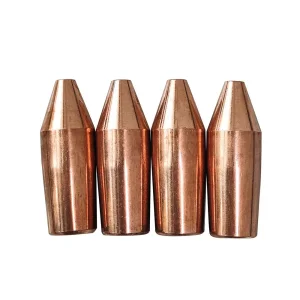
OEM Custom Resistance Spot Welding Electrode Caps Exporters, Factories
Get Product Quote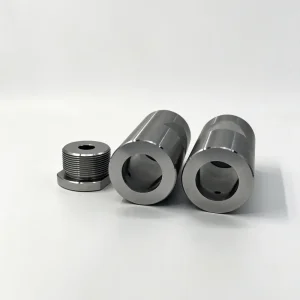
China Custom CNC Turned Tooling Sleeves & Threaded Retaining Plugs Products, Exporter
Get Product Quote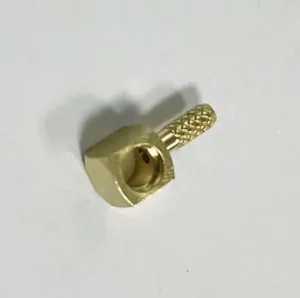
High-Quality Custom CNC Machining Brass Insert Connector with Knurled Pin OEM Suppliers, Products
Get Product Quote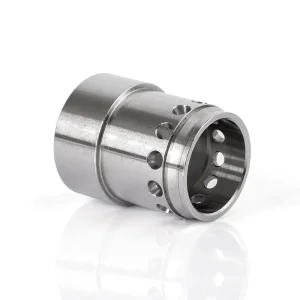
ODM Custom CNC Precision Turned Stainless Steel Filter Sleeve (OEM/ODM Industrial Grade) Manufacturer, Manufacturers
Get Product Quote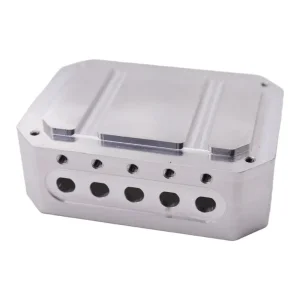
China Custom CNC Machined Aluminum Enclosure for RF & Industrial Sensor Modules Service, Products
Get Product Quote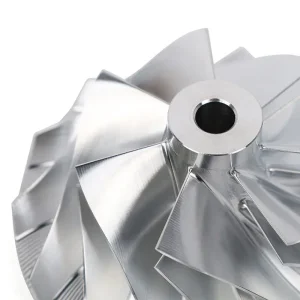
High-Quality Custom 5-Axis CNC Machined Billet Aluminum Impeller Compressor Wheel Manufacturers, Exporter
Get Product Quote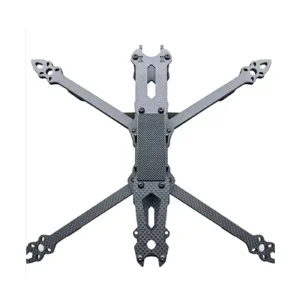
China Custom CNC Machined Carbon Fiber Drone Frame Kits | High-Performance Quad/Hexacopter Frames for Agriculture & FPV Suppliers, Manufacturers
Get Product Quote