
Precision Automotive & Mechatronic Components
Explore custom robotic end-effectors, precision surgical and aerospace pins, CNC turned bushings, and structural assemblies engineered for demanding OEM tolerances.
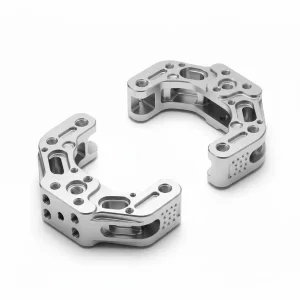
High-Quality Custom CNC Machined Robotic Gripper Jaws Service, Quotes
Request Quote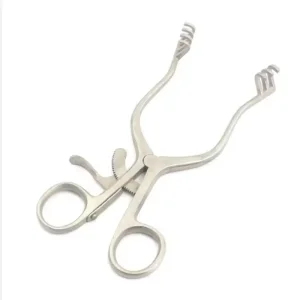
China Professional Quality Stainless Steel Custom Surgical Retractor Service, Exporter
Request Quote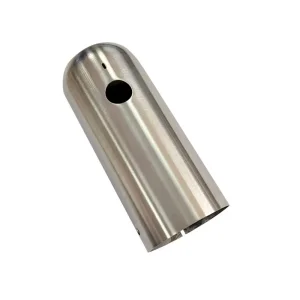
China Custom Precision CNC Turned Medical Sleeve Bushing Suppliers, Factory
Request Quote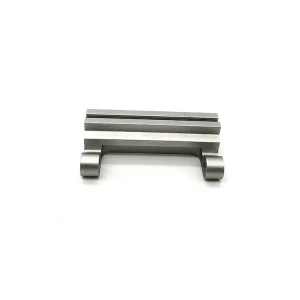
High-Quality Custom CNC Machined Aluminum Hinge Assembly | Grey Anodized Finish Supplier, Quotes
Request Quote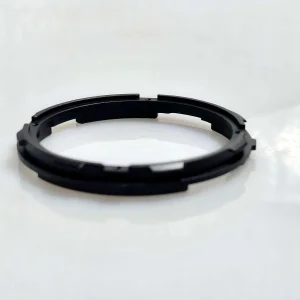
Custom Custom CNC Turn-Milled Bayonet Mount & Locking Ring Supplier, Suppliers
Request Quote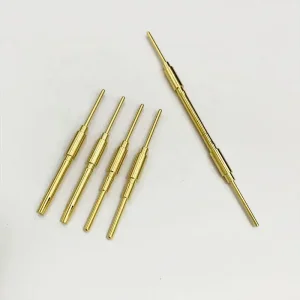
ODM Custom CNC Turned Contact Pins & Test Probe Components Manufacturer, Exporters
Request Quote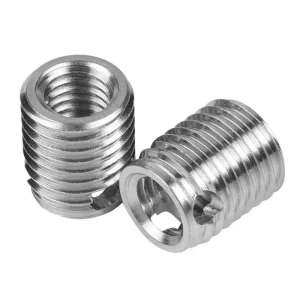
Custom Custom Self-Tapping Threaded Inserts Product, Exporters
Request Quote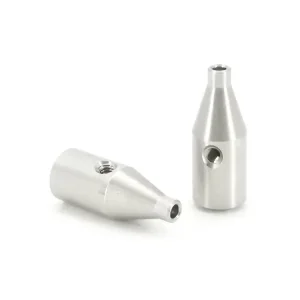
China Custom CNC Turned Aluminum Nozzle & Adapter Bodies Exporter, Factory
Request QuoteAutomotive Molding Megatrends: The EV and Intelligent Cockpit Paradigm
The transition toward battery electric vehicles (BEVs), autonomous driving systems, and interconnected smart vehicle cabins is fundamentally disrupting global automotive injection molding and precision tooling requirements.
Lightweighting & Metal-to-Polymer Conversion
Automotive OEMs are aggressively replacing die-cast zinc, aluminum, and stamped sheet metals with fiber-reinforced engineering plastics (PA66-GF30, PPA, PPS, PEEK). In EV structural battery packs and powertrain mounts, every 10% mass reduction translates directly to a 6-8% expansion in operational battery range.
- Continuous fiber-reinforced organosheet overmolding
- MuCell® microcellular physical foaming technology
- Dimensional stability under -40°C to +150°C thermal cycles
Smart Cockpits & In-Mold Electronics (IME)
Traditional automotive dashboards and consoles are transforming into seamless monolithic smart surfaces. Through IME, capacitive touch traces, printed circuitry, dynamic backlighting, and haptic feedback actuators are molded directly into the Class-A polycarbonate exterior shells, removing dozens of fasteners.
- Film Insert Molding (FIM) with optical grade clarity
- Elimination of tactile mechanical switch cavities
- Zero-defect Class-A cosmetic surface finish criteria
ADAS Sensor Integration & Radar Permeability
Autonomous driving relies on radar, LiDAR, and camera radomes embedded into exterior bumpers and grilles. Molded covers must provide ultra-tight dielectric constant control, zero metallic inclusions, and perfect wall thickness uniformity to prevent radar signal distortion and refraction.
- 77 GHz / 79 GHz radar radome polymer qualification
- Two-shot (2K) hard-soft sealing for IP69K moisture barrier
- Laser-welded optical filter housings for ADAS vision
What Global Automotive OEMs Demand from Custom Molding Exporters
Sourcing directors and supplier quality managers from Detroit to Stuttgart evaluate tooling vendors through rigorous technical audits, risk mitigation matrices, and documented quality compliance.
Full PPAP Level 3 Submission
Every automotive production tooling project must be backed by complete Production Part Approval Process (PPAP) documentation, including Design FMEA, Process FMEA, Control Plans, MSA gauge studies, and full dimensional inspection sheets.
CPK / PPK ≥ 1.67 Capability
For critical safety and functional dimensions, statistical process capability indices (CPK/PPK) must strictly exceed 1.67 over a minimum continuous multi-cavity run of 300 to 500 parts, proving ultra-stable injection mold rheology and temperature control.
Tooling Longevity: SPI Class 101
Automotive export molds require premium imported steels (Böhler M333, ASSAB Stavax, H13, DAC55) hardened to 48-54 HRC. Guarantees of 1,000,000+ continuous production cycles without flash formation or critical core fatigue.
Dual-Sourcing Supply Resilience
OEMs demand transparent contingency protocols, robust tooling maintenance schedules, localized spare cavity blocks, and rapid prototyping-to-bridge tooling paths to prevent assembly line stoppages.
Macro Industry Engineering Solutions in Automotive Molding
From high-tonnage multi-shot presses to conformal cooling 3D printed mold inserts, our end-to-end engineering infrastructure eliminates traditional injection defect modes before steel is cut.
| Automotive Application Domain | Molding & Tooling Methodology | Polymer Selection & Reinforcement | Tolerance & Surface Criteria | Engineering Benefit |
|---|---|---|---|---|
| EV Battery Module End Plates & Busbars | Automated Copper Insert Molding + Multi-Cavity Hot Runner | PA66-GF30 / PBT V0 Flame-Retardant | ±0.025 mm / Zero Dielectric Flash | Integrated electrical isolation with high structural impact absorption |
| Aerodynamic Grilles & Exterior Trims | High-Tonnage Hydraulic-Electric Injection (1200T-2500T) | PC/ABS, High-Impact PMMA, ASA | Class-A High Gloss, SPI-A1 Optical Polish | Elimination of weld lines and sink marks across 1.4-meter single-shot spans |
| HVAC Dual-Zone Flaps & Seals | 2K Two-Shot Rotary Table Molding (Rigid Core + Soft Lip) | POM Core + EPDM/TPV Seal Lip | ±0.030 mm / Molecular Chemical Bond | Hermetic acoustic isolation, zero manual gasket assembly errors |
| Powertrain High-Flow Fluid Connectors | Hot Runner Side Gating + Sliding Core Actions | PA612, PPS (Polyphenylene Sulfide) | ±0.015 mm / Barbed sealing profile | Continuous resistance to hot ethylene glycol, diesel, and motor oils |
| Underbody Acoustic Aero Shields | Compression Injection Molding & Organosheet Stamping | PP-LGF40 (Long Glass Fiber Polypropylene) | ±0.150 mm / High Stiffness to Mass | 40% lighter than aluminum stampings with superior gravel impact resistance |
Moldflow® Numerical Simulation
Every automotive tooling geometry undergoes full rheological, thermal, and warpage simulation before CNC tool-path generation. We simulate gate freezing times, fiber orientation vectors, volumetric shrinkage differentials, and air trap venting.
SLM Conformal Cooling Inserts
By leveraging Selective Laser Melting (SLM) metal 3D printing, we engineer curved cooling channels that follow complex cavity geometries at a uniform distance. This cuts injection cycle times by 20-35% and drastically reduces residual thermal warpage.
Ultra-Precision In-House Toolmaking
Operating high-speed 5-axis CNC machining centers (Makino, GF AgieCharmilles) holding ±0.005 mm positioning, mirror EDM spark erosion (Ra 0.1 µm), and precision wire cutting, our Shenzhen facilities deliver tools that assemble with micron-level alignment.
Engineering Case Studies: Challenge, Process & Measured Results
Documented technical case studies demonstrating how rigorous DFM review, mold optimization, and precision CNC post-processing solve chronic injection molding failure modes.
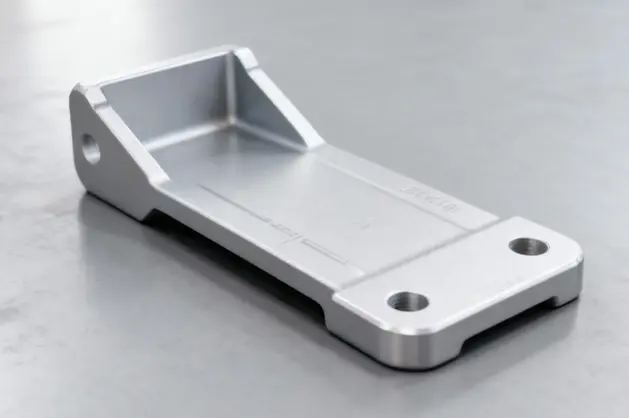 AUTOMOTIVE POWERTRAIN
Structural Die-Cast & Overmolded Bracket
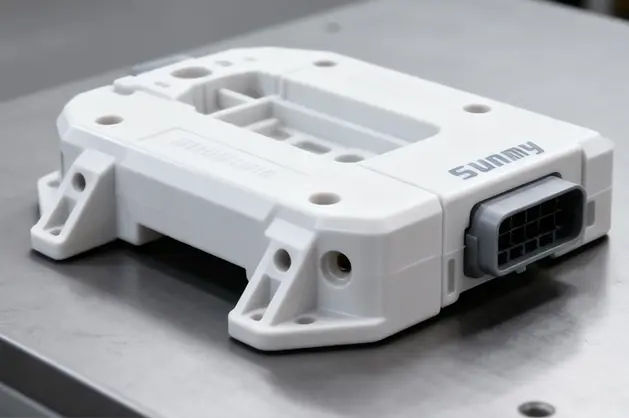 MECHATRONIC HOUSINGS
Fiber-Reinforced Actuator Gear Housing
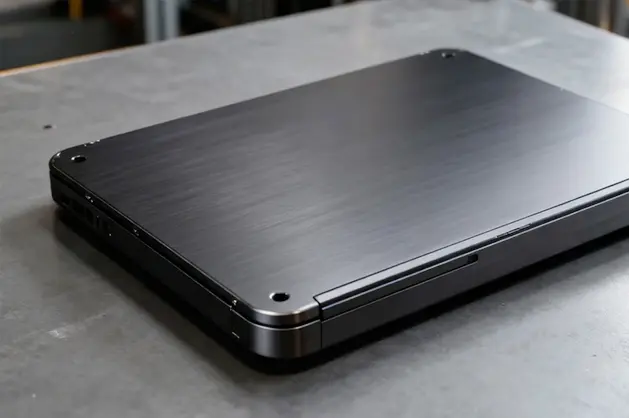 SMART COCKPIT INTERFACE
Precision Anodized Center Console Bezel
Localized Support, Auditing Readiness & Compliance Assurance
Overseas procurement is more than tool steel. Sunmy Hardware integrates comprehensive global compliance protocols, direct factory-to-engineer communication, and strict chain-of-custody tracking.
IATF 16949 / ISO 9001 Alignment
From initial design intent verification to end-of-line packaging, operations align strictly with automotive APQP milestones. We utilize AIAG-compliant FMEA matrices, Gage R&R repeatability calibrations, and structured 8D problem-solving protocols.
- In-house Zeiss CMM 3D coordinate inspection
- Optical projector & profile contour verification
- Hardness, melt flow index (MFI), and ash testing
IMDS & Environmental Stewardship
We actively manage International Material Data System (IMDS) declarations, ensuring full transparency across all resins, color masterbatches, and additive chemistries. 100% compliance with EU REACH (SVHC list) and RoHS 3 directives.
- Conflict-free mineral sourcing verification
- PCR/PIR recycled polymer blend documentation
- Complete batch traceability via laser-engraved 2D DataMatrix
Export Logistics & Sea/Air Protection
Exporting molds and sensitive automotive parts across North America and Europe requires specialized packaging. Molds receive heavy vapor-phase corrosion inhibitors (VCI), nitrogen-sealed shrink wrapping, and fumigated steel-reinforced maritime crates.
- Tool maintenance kits & complete spare core/cavity inserts included
- Detailed 2D/3D native tool schematics and hot runner diagrams
- Direct factory engineering contact; zero trading markup
Automotive Molding Technology Roadmap & Future Outlook
The manufacturing technologies driving next-generation automotive programs over the coming decade, bridging autonomous vehicle hardware with AI-driven production cells.
AI Closed-Loop Injection Molding
Deployment of in-cavity piezo-electric pressure and infrared temperature sensors feeding neural networks. The press dynamically compensates for melt viscosity batch variations in real time, achieving self-tuning, scrap-free injection runs.
Structural Thermoplastic Composites
High-volume robotic pick-and-place of continuous unidirectional carbon-fiber tapes into high-speed injection molds. The resultant hybrid components replace primary steel chassis elements at 50% mass reduction.
Monolithic Display & Lidar Skinning
Complete integration of LiDAR sensors and optical wave-guides into aerodynamic bumper skins. Special multi-material injection molding prevents signal attenuation while resisting harsh highway abrasive degradation.
Closed-Loop Circularity
Full deployment of post-consumer closed-loop automotive polymers. Zero degradation re-compounding technologies coupled with bio-derived monomers meeting identical tensile, thermal, and cosmetic Class-A specifications.
Frequently Asked Questions: Automotive Molding & Tooling Exports
Comprehensive engineering and procurement inquiries answered directly by our senior tooling design and metrology engineers.
What tolerances can Sunmy Hardware hold on automotive molded components and mold tooling?
How does your engineering team validate tool designs before steel cutting begins?
Can you support full PPAP Level 3 documentation and automotive Tier-1 supplier audits?
What tooling steels do you import and utilize for high-volume automotive production?
How is intellectual property and CAD geometry protected when working with Sunmy?
What are your capabilities regarding multi-shot (2K) and metal insert molding?
Do you offer rapid prototyping and bridge tooling before mass automotive tooling launch?
Precision Shafts, Reducers, Heatsinks & Aerospace Housings
A continuation of our multi-process manufacturing capabilities, highlighting high-performance copper heatsinks, cycloidal reducers, turned stepped shafts, and 5-axis structural shells.
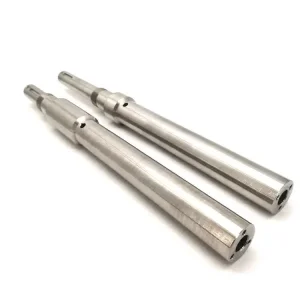
Custom Custom CNC Turned Stainless Steel Stepped Shafts with Keyways Product, Factories
Request Quote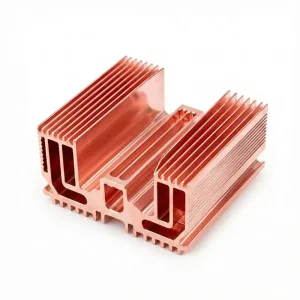
ODM High-Performance Copper Heatsink Manufacturer, Factories
Request Quote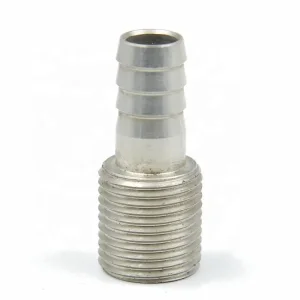
OEM Custom CNC Turned Hose Barb Fittings & Threaded Adapters Manufacturer, Factory
Request Quote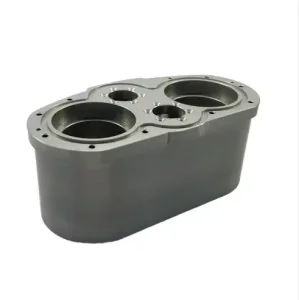
Custom Factory Custom 5-Axis CNC Machined Steel & Aluminum Universal Joint Base and Gearbox Shell for Robotics & Drone Industry Products, Exporters
Request Quote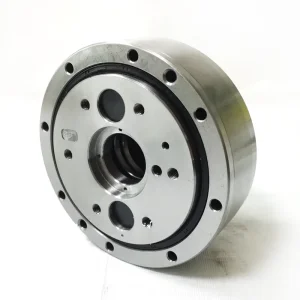
ODM Custom Hollow-Shaft Cycloidal Reducer | OEM Parts & Assembly Product, Exporters
Request Quote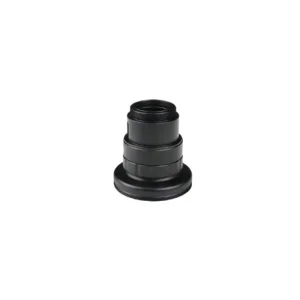
OEM Custom Precision CNC Turned Black Anodized Aluminum Lens Barrel & Optical Housing Components Manufacturer, Product
Request Quote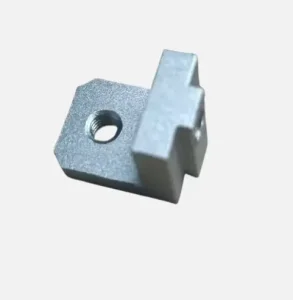
Custom Custom CNC Milled Aluminum Alloy Right Angle Mounting Bracket Manufacturer, Supplier
Request Quote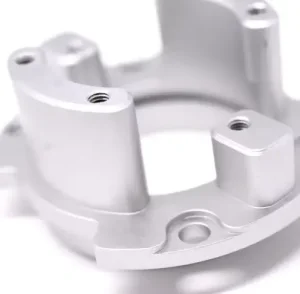
High-Quality Precision 5-Axis CNC Machined Aluminum Housing Mounting Bracket for Aerospace & Automotive Suppliers, Exporter
Request QuoteReady to Launch Your Automotive Tooling & Molding Program?
Upload your 2D drawings and 3D CAD models (.STEP, .IGES, .X_T, .DWG). Our senior automotive tooling engineers will review your geometry, analyze mold flow constraints, and provide comprehensive DFM feedback and competitive production quotes within 24 hours.