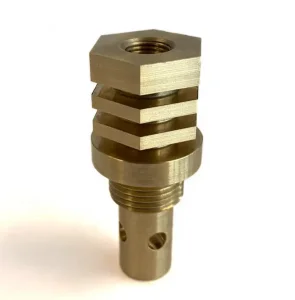
Featured Precision Automotive & High-Spec Components
Explore production-grade 5-axis CNC machined housings, structural brackets, electrical busbars, and micro-tolerance connectors manufactured under direct factory quality control.
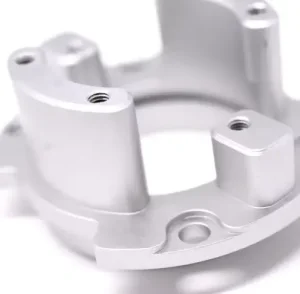
High-Quality Precision 5-Axis CNC Machined Aluminum Housing Mounting Bracket for Aerospace & Automotive Suppliers, Exporter
Configure Specification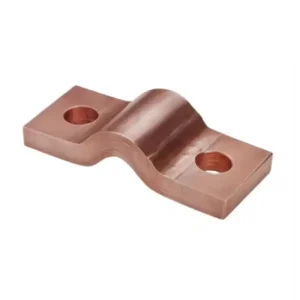
Custom Custom Flexible Laminated Copper Busbar for Battery & Electrical Equipment Service, Products
Configure Specification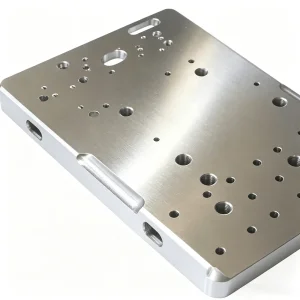
OEM Custom CNC Machined Aluminum Multi-Hole Mounting Plate Manufacturer, Suppliers
Configure Specification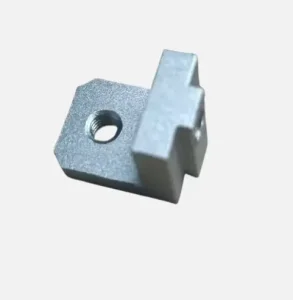
Custom Custom CNC Milled Aluminum Alloy Right Angle Mounting Bracket Manufacturer, Supplier
Configure Specification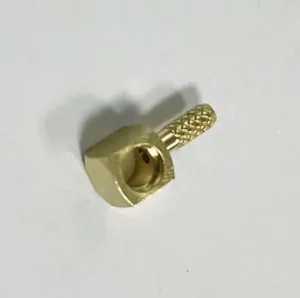
High-Quality Custom CNC Machining Brass Insert Connector with Knurled Pin OEM Suppliers, Products
Configure Specification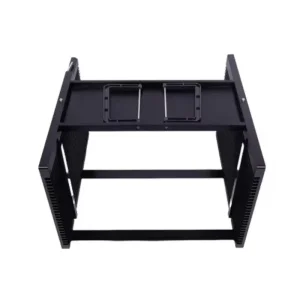
OEM Premium 8-Inch CNC Machined Aluminum Semiconductor Wafer Carrier Factories, Quotes
Configure Specification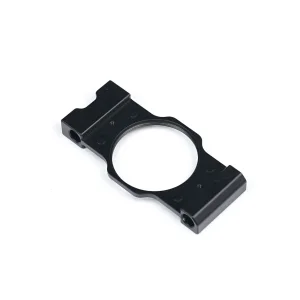
OEM Custom CNC Machined Aluminum Optical Lens Mounting Bracket (Matte Black) Service, Products
Configure Specification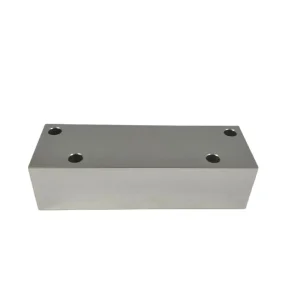
ODM Custom CNC Machined Aluminum Vacuum Manifold Block Manufacturer, Products
Configure SpecificationThe Global Macro Shift in Precision Automotive Subsystems
Automotive electrification, autonomous driving, and decarbonization have radically altered OEM procurement metrics. Precision subtractive manufacturing has transitioned from a supporting operation to an indispensable core discipline.
E-Mobility & Powertrain Decoupling
Traditional internal combustion engines (ICE) required complex cast blocks with loose tolerances. In contrast, electric drive units (EDUs) and e-axles demand precision-machined aluminum rotor housings, ceramic-coated bearing sleeves, and thermal-interface inverter trays with strict planarity requirements under 0.02 mm.
- Inverter heat sink flatnesses: ≤ 0.015 mm
- High-speed rotor journals: dynamic runout ≤ 0.003 mm
- Thin-wall aluminum enclosures without stress distortion
Autonomous Perception & Optoelectronics
L2+ to L4 autonomous platforms incorporate multi-modal sensor arrays including LiDAR, 4D imaging radar, and stereoscopic camera mounts. Sensor perception fidelity relies fundamentally on CNC-milled rigid structural frames that maintain zero angular deflection under automotive vibrational shocks (-40°C to +125°C).
- Optical axis mounting true position: Ø 0.01 mm
- Hard anodized matte-black internal optical anti-reflection
- IP68 hermetic sealing groove milling with zero burrs
Braking-by-Wire & Micro-Hydraulics
Electro-hydraulic brake systems (EHB) and active suspension valves require hydraulic spool sleeves and solenoid cores turned from magnetic stainless steels (1J50, 430FR). Sub-micron bore concentricity and Ra 0.2 μm micro-finishes are paramount to eliminate fluid bypass and response latencies.
- Spool bore cylindrical error: ≤ 0.002 mm
- Micro-deburring inspected under 50x magnification
- Ultra-high cycle endurance (> 10 million cycles)
Procurement Reality: The Failure of Commodity Sourcing
Tier-1 automotive integrators are systematically abandoning low-tier brokers. Modern automotive CNC contracts demand absolute geometric dimensioning and tolerancing (GD&T) adherence, statistical process control (Cpk ≥ 1.67), documented material pedigree, and direct DFM review directly with manufacturing metallurgists rather than sales intermediaries.
| Manufacturing Route | Achievable Dimensional Tolerance | Surface Roughness (Ra) | Tooling Capital Expenditure | Rapid Iteration Agility | Optimal Production Scale |
|---|---|---|---|---|---|
| 5-Axis Simultaneous CNC | ±0.005 mm | Ra 0.4 μm – 0.8 μm | Zero Hard Tooling ($0 NRE) | Ultra High (< 24h DFM) | Prototypes to 50,000 pcs/yr |
| High-Pressure Die Casting (HPDC) | ±0.100 mm – ±0.250 mm | Ra 1.6 μm – 3.2 μm | High ($25k – $150k+) | Slow (6 – 12 Weeks Re-tooling) | 50,000 to 1,000,000+ pcs/yr |
| Die Cast + CNC Post-Machining | ±0.010 mm (Critical Bores) | Ra 0.8 μm (Machined Faces) | High (Tooling + CNC Fixtures) | Moderate (Fixture changes only) | 20,000 to 500,000 pcs/yr |
| Metal Stamping & Deep Draw | ±0.050 mm – ±0.150 mm | Ra 1.6 μm | Moderate to High ($15k – $80k) | Slow (Die modification required) | 100,000+ continuous runs |
Why Shenzhen’s Greater Bay Area Outperforms Global Machining Hubs
The efficiency of Sunmy Hardware’s Shenzhen precision machining cluster is not merely a matter of labor economics. It is anchored in an unmatched density of raw metallurgical suppliers, specialized surface treatment chemistry, and localized toolmakers.
Sub-30km Component Supply Ecosystem
Within a 30-minute radius of Sunmy’s facilities lie certified raw bar-stock extruders (AL6061-T6, AL7075, C11000 electrolytic copper, SUS304/316), precision tungsten carbide tool grinders, multi-stage vacuum heat-treatment furnaces, and anodizing lines compliant with international environmental directives.
Zero Intermediary Risk & Direct DFM
Western procurement teams engage directly with Sunmy hardware engineers. By eliminating trading intermediaries, 3D CAD data, STEP assemblies, and critical GD&T revisions are reviewed directly on CAM simulators. This eradicates translation loss, prevents IP slippage, and cuts weeks off pre-production ramp-ups.
Agile Tooling & High-Mix Hybrid Scaling
Whether handling a pre-series validation batch of 50 prototypes or scaling to 250,000 units, Sunmy seamlessly bridges rapid multi-axis CNC subtractive routing into custom progressive die-stamping or high-pressure die casting without needing supplier requalification.
Mission-Critical Automotive CNC Application Scenarios
High-precision vehicle assemblies operate under punishing vibrational spectra, severe thermal cycling, and high-voltage environments. Review where our engineered components serve Tier-1 vehicle programs.
EV Battery Enclosures & Busbars
Precision-machined structural busbar clamps and ultra-flexible diffusion-bonded laminated copper busbars handling 800V architecture fast-charging current loads with near-zero interfacial electrical resistance.
ADAS Vision & Radar Brackets
Precision 5-axis milled bracketry for LiDAR emitter modules, optical lens barrels, and multi-axis torque-sensor housings ensuring micro-radian calibration stability across all road surface vibrations.
Chassis Uprights & Suspension Knuckles
Billet-machined aerospace-grade 7075-T6 aluminum suspension wishbone brackets, steering knuckles, and articulating links optimized for minimum un-sprung mass and extreme fatigue thresholds.
Thermal Management Manifolds
Multi-port liquid cooling manifold blocks, vacuum accumulator distributors, and integrated heat-exchanger cold plates with vacuum-brazed sealed channels leak-tested to 50 bar hydrostatic pressure.
Emerging Trends Transforming Automotive Precision Manufacturing
Leading Tier-1 automotive programs are embracing hyper-advanced CNC engineering methods to satisfy sustainability mandates, cycle-time reductions, and extreme geometric complexities.
One-Setup Mill-Turn Multitasking
Legacy workflow split parts between turning lathes, 3-axis mills, and EDM cells, introducing cumulative stack-up errors across chuck re-clampings. Today, combined 5-axis mill-turn centers execute high-speed turning, off-axis angled cross-hole drilling, helical milling, and internal gear-hobbing in a singular setup. This retains pitch, runout, and concentricity within 0.005 mm.
AI Adaptive Toolpath Simulation
Integrating AI algorithms into volumetric CAM programming dynamically regulates chipload and spindle feed speeds in real time based on instantaneous cutter deflection and metallurgical hardness variations. This mitigates tool resonance chatter, optimizes thin-wall rigidity, and extends cutting tool lifespan while preventing microscopic micro-cracks in aerospace-grade alloys.
Closed-Loop On-Machine Metrology
Modern automotive CNC machines integrate kinematic touch-trigger ruby probes directly into automatic tool changers. In-process probing measures datum references and critical bore diameters before unchucking. If thermal expansion causes dimensional drift, the CNC controller automatically compensates tool wear offsets in real-time, delivering zero-scrap manufacturing runs.
Global Enterprise Procurement & Compliance Standards
International automotive supply chains demand unwavering documentation. Sunmy Hardware operates an IATF 16949-aligned quality ecosystem, providing comprehensive documentation packages with every shipment.
PPAP Level 3 Documentation
Production Part Approval Process (PPAP) deliverables include Design FMEA, Process Flow Diagrams, Process FMEA, Control Plans, Measurement System Analysis (Gage R&R < 10%), and Initial Process Capability Studies confirming Cpk > 1.67 on all defined critical characteristics.
Full Lot Traceability & Certs
Every raw billet is verified via optical emission spectrometers to guarantee precise chemical composition matching EN 10204 Type 3.1 standards. Lot tracking is laser-etched with 2D DataMatrix codes directly onto components to deliver complete cradle-to-grave traceability throughout vehicle service life.
Zeiss CMM Metrology Lab
Our temperature-controlled metrology laboratory (20°C ± 0.5°C) houses multi-sensor CNC Coordinate Measuring Machines, Mitutoyo surface roughness profilometers, optical profile projectors, and helium mass spectrometer leak detection equipment for thermal manifolds.
Frequently Asked Technical Sourcing Questions
Direct answers to critical questions commonly raised by procurement managers, supplier quality assurance (SQA) leads, and chief automotive mechanical engineers.
Under climate-controlled conditions using high-end 5-axis CNC machining centers, we routinely hold true positional tolerances of Ø 0.010 mm on mating bores and linear dimensional tolerances down to ±0.005 mm. Standard high-speed machining delivers surface finishes of Ra 0.8 μm, and we can achieve Ra 0.2 μm on valve seats and bearing journals via fine single-point diamond turning or internal roller burnishing.
We execute binding bilateral Non-Disclosure Agreements (NDAs) prior to receiving any proprietary CAD, STEP, or PDF files. Your drawing packages reside within secured, air-gapped internal PLM servers accessible only to authorized lead project engineers. Unlike trading brokers who distribute drawings broadly to external workshops, all Sunmy machining and stamping happens in audited, proprietary, secure production facilities.
Yes. For automotive tier programs, our dedicated quality assurance team produces full PPAP Level 3 documentation, including ballooned drawings matching our CMM First Article Inspection (FAI) reports, Process Flow, PFMEA, Control Plans, Gage R&R, and mill material test certificates (MTC) verifying chemical and physical composition to international standards.
For deep pocketed, thin-walled brackets and battery trays, residual internal stresses in extruded aluminum billets can induce warping after tool egress. We utilize pre-stretched certified temper stock (such as 6061-T651 or 7075-T651) and implement roughing-roughing-finishing cycles interspersed with intermediate vibrating stress-relief or thermal aging cycles to secure geometric stability.
Our facility bridges low-volume engineering builds into high-scale production. We produce rapid prototypes (1 to 50 pcs) within 3 to 7 working days via multi-axis CNC. As project demand expands into thousands of units, we transition manufacturing to automated multi-pallet CNC horizontal centers, custom progressive die stamping lines, or vacuum die-casting cells to minimize unit costs.
We provide complete surface treatments including Type II sulfur anodizing, Type III hardcoat anodizing with PTFE sealing, electroless nickel plating (ENP), micro-sandblasting, powder coating, passivation, and automated chemical cleaning compliant with RoHS, REACH, and California Proposition 65 directives.
Specialized Turn-Milled Elements, Sensor Housings & Hydraulic Cores
Explore our custom multi-axis torque-sensor elements, solenoid valve cores, structural frames, and thermal management cooling blocks tailored for industrial automation and automotive tier-one assemblies.
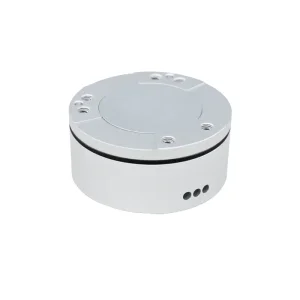
China Custom 6-Axis Force/Torque Sensor Housings & Elastic Elements | OEM/ODM Service, Factories
Configure Specification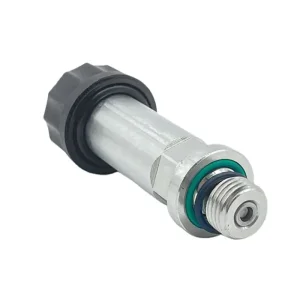
Custom High-Performance Hydraulic Solenoid Valve Core – Precision CNC Turned Excavator Spare Parts Service, Exporters
Configure Specification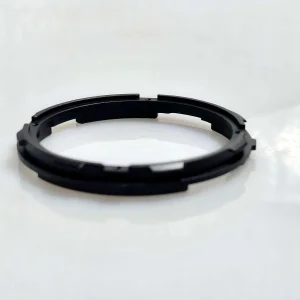
Custom Custom CNC Turn-Milled Bayonet Mount & Locking Ring Supplier, Suppliers
Configure Specification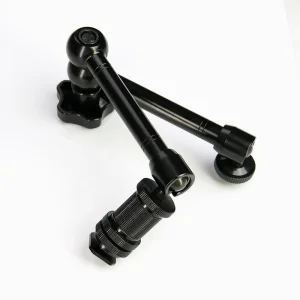
OEM 7-Inch CNC Aluminum Articulating Magic Arm for Camera & Monitor Service, Product
Configure Specification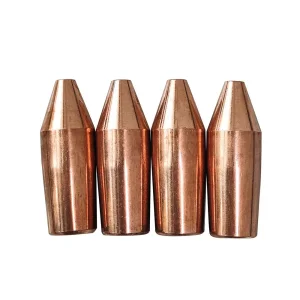
OEM Custom Resistance Spot Welding Electrode Caps Exporters, Factories
Configure Specification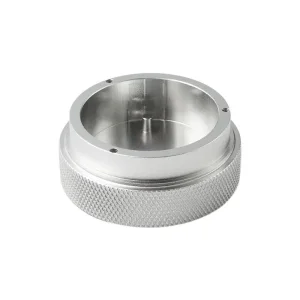
High-Quality Premium Custom CNC Machined Aluminum Control Knobs Manufacturer, Exporters
Configure Specification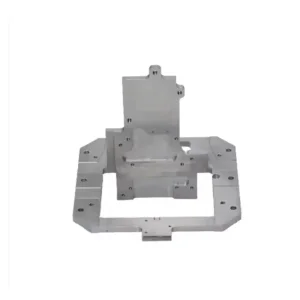
OEM Custom High-Precision CNC Machined Metal Bracket & Structural Frame Wire EDM & Milling for Aerospace & Automotive Applications Manufacturer, Quotes
Configure Specification